
Understanding For Sale By Owner Home Sales
A practical legal and financial guide to selling your home yourself, from pricing and marketing to negotiations, contracts, and closing.
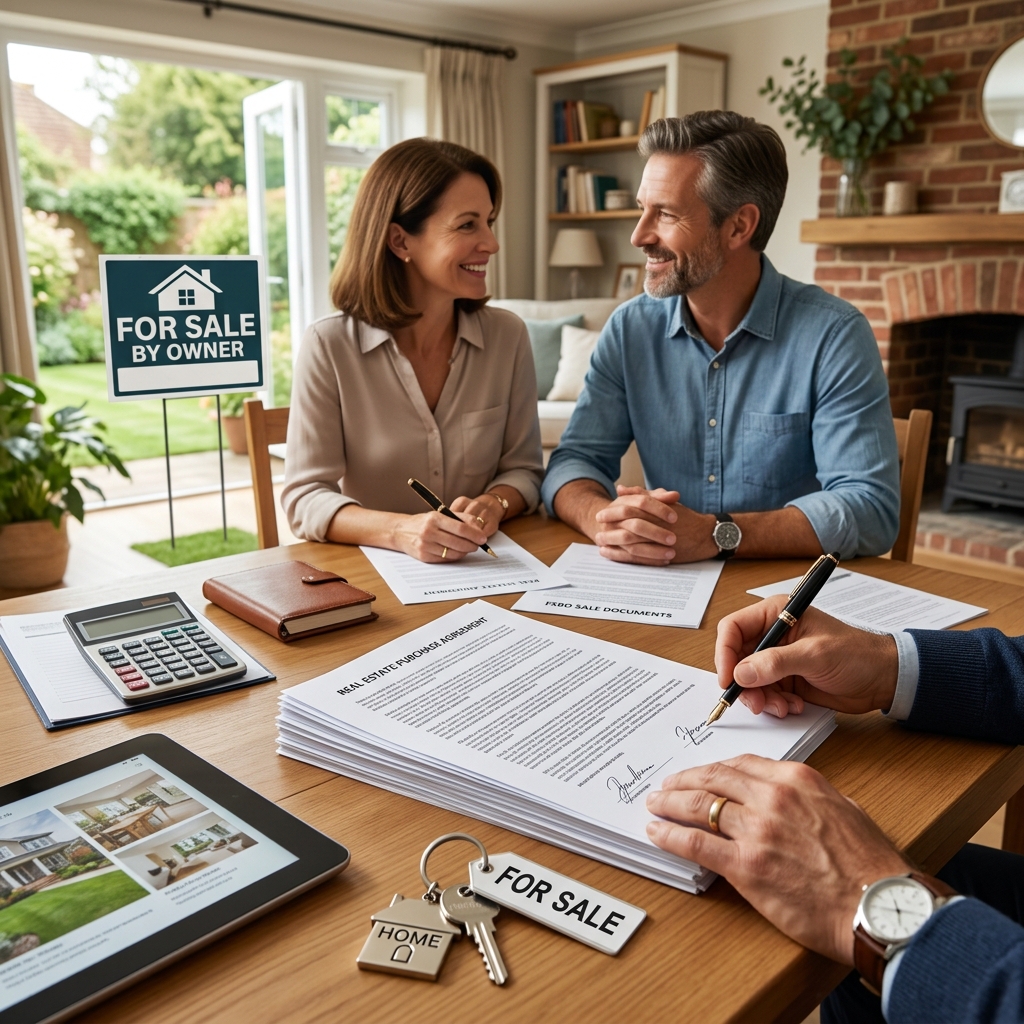
“For Sale By Owner” (often shortened to FSBO) describes a home sale where the owner sells the property directly instead of hiring a listing real estate agent.[10] This approach can reduce commission costs but also shifts marketing, negotiation, and legal responsibilities onto the seller. Understanding how FSBO works is essential before deciding to sell your home on your own.
What For Sale By Owner Means in Practice
In a typical real estate transaction, a listing agent represents the seller and a buyer’s agent may represent the buyer. In an FSBO sale, the seller does not hire a listing agent, but buyers may still be represented by their own agents.[10] The seller becomes the point person for pricing, advertising, showings, and much of the paperwork.
Official and financial guidance sources describe FSBO as a transaction where the owner lists, markets, and negotiates the sale directly, handling many tasks traditionally performed by an agent.
| Aspect | Traditional Agent Sale | FSBO Sale |
|---|---|---|
| Listing & pricing | Handled by listing agent | Handled by owner |
| Marketing & advertising | Agent places MLS listing and runs marketing | Owner creates ads, may use FSBO or flat-fee MLS services |
| Showings & open houses | Agent schedules and hosts | Owner coordinates and hosts |
| Negotiations | Agents negotiate on behalf of parties | Owner negotiates directly with buyer or buyer’s agent |
| Legal documents | Agent helps prepare forms; lawyer or title company assists | Owner must ensure documents comply with state law, often with an attorney |
| Commission costs | Seller typically pays 5–6% of sale price in commissions | Seller may pay only buyer’s agent commission, or none if buyer is unrepresented |
Key Reasons Homeowners Choose FSBO
Many owners are drawn to FSBO because of potential cost savings, control over the process, or personal experience with real estate. Financial institutions and industry sources highlight several common motivations.
- Saving on listing commissions
Commission fees can be a major expense in selling a home. By not hiring a listing agent, FSBO sellers aim to keep more of the sale proceeds, though they may still pay a buyer’s agent. - Greater control over the sale
FSBO sellers manage pricing strategy, marketing decisions, and negotiations themselves. This can appeal to owners who want direct oversight and personal contact with potential buyers. - Familiarity with real estate or law
Some sellers are experienced investors, former agents, or have legal backgrounds, and feel comfortable handling documents and negotiations on their own. - Desire for a simpler, local sale
In situations where a buyer is already identified (for example, a relative or neighbor), FSBO can streamline the transaction by avoiding listing and extensive marketing.
Step-by-Step Overview of an FSBO Sale
Although FSBO removes the listing agent, the basic structure of the transaction remains similar to any home sale. Financial institutions and mortgage providers describe a series of core steps: pricing, marketing, negotiating, contracting, and closing.
1. Researching Market Value and Setting a Price
Setting an appropriate asking price is crucial. Bank and lender guidance recommends evaluating comparable sales and, in some cases, obtaining professional valuation support.
- Review comparable properties (“comps”)
Look at recent sales of similar homes nearby in terms of size, age, condition, and location. Many sellers use public sales data or real estate listing sites to identify realistic price ranges. - Consider a professional appraisal
Bankrate, for example, notes that a licensed appraiser can provide an independent opinion of value, which can help avoid overpricing or underpricing. - Account for unique features and repairs
Adjust your price for upgrades, deferred maintenance, or unique property attributes that affect value.
2. Preparing the Home for the Market
Before listing, homes typically need cosmetic and functional preparation. Financial education resources emphasize that clean, well-presented homes can attract better offers.
- Cleaning and decluttering
Deep cleaning and removing excess items help buyers see the space clearly. Some sellers hire professional cleaners or organizers. - Minor repairs and maintenance
Address obvious issues such as leaky faucets, damaged flooring, or peeling paint. These improvements can reduce objections during inspections. - Staging and photography
Staging involves arranging furniture and decor to highlight the home’s strengths. Professional-quality photos are important because most buyers begin their search online.
3. Marketing the Property Without a Listing Agent
FSBO sellers must generate interest on their own. Large lenders and real estate platforms recommend a mix of online and offline strategies.
- Online listings
Post your property on FSBO websites or listing platforms that accept owner postings. Some sellers use flat-fee services to place their home on a local multiple listing service (MLS) while still managing the sale themselves. - Yard signs and printed materials
A visible yard sign with contact information can attract local interest. Printing fact sheets with basic details and price gives visitors something to take away. - Open houses and private showings
Schedule certain hours when potential buyers can walk through the home. Sellers typically host these events personally, greeting visitors and answering questions. - Social media and community boards
Sharing the listing on neighborhood groups or personal accounts can increase exposure within your local area.
4. Qualifying Buyers and Reviewing Offers
When buyers express interest, FSBO sellers must determine which offers are serious and financially solid. Mortgage education materials advise verifying financing early in the process.
- Proof of financing
For financed purchases, request a preapproval letter from a lender, not just a basic prequalification. Preapproval typically involves a review of credit and income. - Proof of funds for cash buyers
Cash offers should be backed by a bank statement or similar evidence that the buyer can complete the purchase. - Offer terms and contingencies
Consider not only the price but also contingencies (such as financing, inspection, and appraisal), requested closing dates, and any seller concessions like closing cost credits.
5. Negotiating Directly With Buyers
FSBO sellers often negotiate either directly with the buyer or through the buyer’s agent. Real estate and lender guides recommend planning in advance how flexible you are on key terms.
- Identify your minimum acceptable price
Before negotiations begin, decide the lowest price you are willing to accept after considering your mortgage payoff and selling costs. - Evaluate contingencies carefully
Inspection and appraisal contingencies can protect buyers but may introduce more negotiation later. Understand what each contingency implies for timelines and risk. - Use counteroffers strategically
If an offer is close to your target but not ideal, you may submit a counteroffer adjusting price or terms. Buyers can respond with further counters until agreement or withdrawal.
6. Drafting a Purchase Agreement and Required Disclosures
Once an offer is accepted, the parties usually sign a written contract covering price, contingencies, dates, and responsibilities. Banks and legal commentators often advise FSBO sellers to involve a lawyer or a title company at this stage.[10]
- Purchase and sale agreement
This document sets out the core terms: purchase price, earnest money, closing date, included fixtures, contingencies, and remedies if a party breaches the contract. - Property disclosures
Most U.S. states require sellers to provide written disclosures about known material defects, environmental hazards, and other issues. Noncompliance can lead to legal exposure, so using state-approved forms is important. - Supporting documents
Common documents include the deed, tax records, homeowners association information, and any inspection or repair reports relevant to the transaction.
7. Inspection, Appraisal, and Title Work
For financed purchases, the period after contract signing often involves inspections, appraisals, and title research. These steps help ensure the property condition and legal status meet lender and buyer expectations.
- Home inspection
A licensed inspector examines the property’s systems and structure and issues a report. Buyers may request repairs or credits based on the findings. - Appraisal
Lenders usually order an appraisal to confirm the property value supports the loan amount. If the appraisal comes in low, the parties may renegotiate price or adjust financing. - Title search
A title company or attorney reviews public records to verify the seller’s ownership and check for liens or other encumbrances. Any title problems must be resolved before closing.
8. Closing the Transaction
Closing is the formal completion of the sale. Bank and lender guidance explain that both parties sign final documents, funds are transferred, and the deed is recorded.
- Final walkthrough
Shortly before closing, buyers often perform a final walkthrough to confirm that the property remains in the agreed condition and that negotiated repairs were completed. - Signing closing documents
At a title company, attorney’s office, or via remote closing, parties sign documents including the settlement statement, deed, mortgage paperwork for the buyer, and any affidavits. - Transferring funds and keys
Once the buyer’s funds are disbursed and the deed is recorded, the seller turns over keys, codes, and instructions for property systems. - Post-closing notices
Financial institutions recommend notifying local tax authorities of the change in ownership and updating mailing addresses for utilities and insurance policies.
Advantages and Challenges of FSBO
Going agent-free can be rewarding but demanding. Official financial education sources and real estate guides highlight both potential benefits and risks.[10]
Potential Benefits
- Reduced commission costs
Sellers may avoid listing agent commissions, which can represent a significant percentage of the sale price.[10] - Direct communication with buyers
FSBO allows sellers to speak directly with buyers, which some find faster and more transparent. - Customized marketing approach
Owners can tailor advertising to their property and community, experimenting with different strategies without following a standard brokerage template.
Common Difficulties
- Time and effort
FSBO requires substantial work: scheduling showings, answering inquiries, preparing documents, and coordinating closing logistics. - Pricing and negotiation expertise
Without an agent’s guidance, some sellers may misprice their home or struggle with negotiations, potentially affecting net proceeds.[10] - Legal and regulatory compliance
Real estate transactions involve contracts, state-specific disclosures, and other legal requirements. FSBO sellers must ensure compliance, often by hiring an attorney or relying on title professionals.[10]
Risk Management Tips for FSBO Sellers
While FSBO puts more responsibility on the homeowner, careful planning can reduce risk. Financial institutions and consumer resources commonly recommend professional support at key points.[10]
- Use state-approved forms
Whenever possible, rely on standardized purchase agreements and disclosure forms recognized in your state. These documents are designed to comply with local law and reduce ambiguity. - Hire a real estate attorney or closing professional
Even without a listing agent, many sellers hire an attorney or title company to oversee the contract and closing. This can help avoid mistakes in deed preparation, lien releases, or settlement statements.[10] - Keep detailed written records
Document all offers, counteroffers, repair agreements, and communications. Clear records can be helpful if disputes arise. - Be realistic about time investment
FSBO can save money but may require evenings and weekends spent answering questions, showing the home, and handling follow-up.
Frequently Asked Questions About FSBO
Do buyers still use agents in an FSBO sale?
Yes. FSBO only means the seller is not using a listing agent. Buyers may still be represented by their own agents, and sellers may agree to pay a commission to that buyer’s agent as part of the deal.[10]
Can an FSBO home be listed on the MLS?
Multiple listing services (MLS) are generally accessible through licensed brokers. Some FSBO sellers use flat-fee or limited-service brokerages to place their home on the MLS while still managing negotiations and showings themselves.
Is FSBO suitable for first-time sellers?
First-time sellers can use FSBO, but they should be prepared for a learning curve. Sources that advise consumers often suggest extra reliance on attorneys, title companies, and standardized forms if sellers lack experience.
Does FSBO change the mortgage or closing process for buyers?
The lending and closing steps—such as appraisal, underwriting, and document signing—are largely the same whether or not a listing agent is involved. The primary difference is that communication about repairs, access for appraisers and inspectors, and closing logistics happens directly between the buyer (or buyer’s agent) and the owner.
What if the FSBO process becomes too complex?
Some sellers start as FSBO but later decide to hire a listing agent if marketing or negotiations become overwhelming. Others remain FSBO but increase professional support from attorneys or closing companies. The choice depends on the seller’s comfort level and market response.
References
- For Sale by Owner (FSBO): Definition, Costs, Benefits, and Risks — Investopedia. 2024-02-21. https://www.investopedia.com/terms/f/for-sale-by-owner.asp
- How to Sell a House by Owner: Step-by-Step Guide — JPMorgan Chase Bank, N.A. 2024-04-10. https://www.chase.com/personal/mortgage/education/owning-a-home/how-to-sell-a-house-by-owner
- How To Sell A House Without A Realtor — Bankrate. 2024-03-05. https://www.bankrate.com/mortgages/how-to-sell-house-by-owner/
- How To Sell A House By Owner: Step-by-Step Guide — Opendoor. 2023-09-15. https://www.opendoor.com/articles/how-to-sell-a-house-by-owner
- What does FSBO mean when buying a home? — Rocket Mortgage (Quicken Loans). 2023-11-01. https://www.rocketmortgage.com/learn/buying-house-for-sale-by-owner
Similar Articles








Read full bio of Sneha Tete


