
South Dakota Will Requirements and Estate Planning Basics
Understand South Dakota’s will laws, probate rules, and intestate succession so you can protect your family and control how your property is distributed.
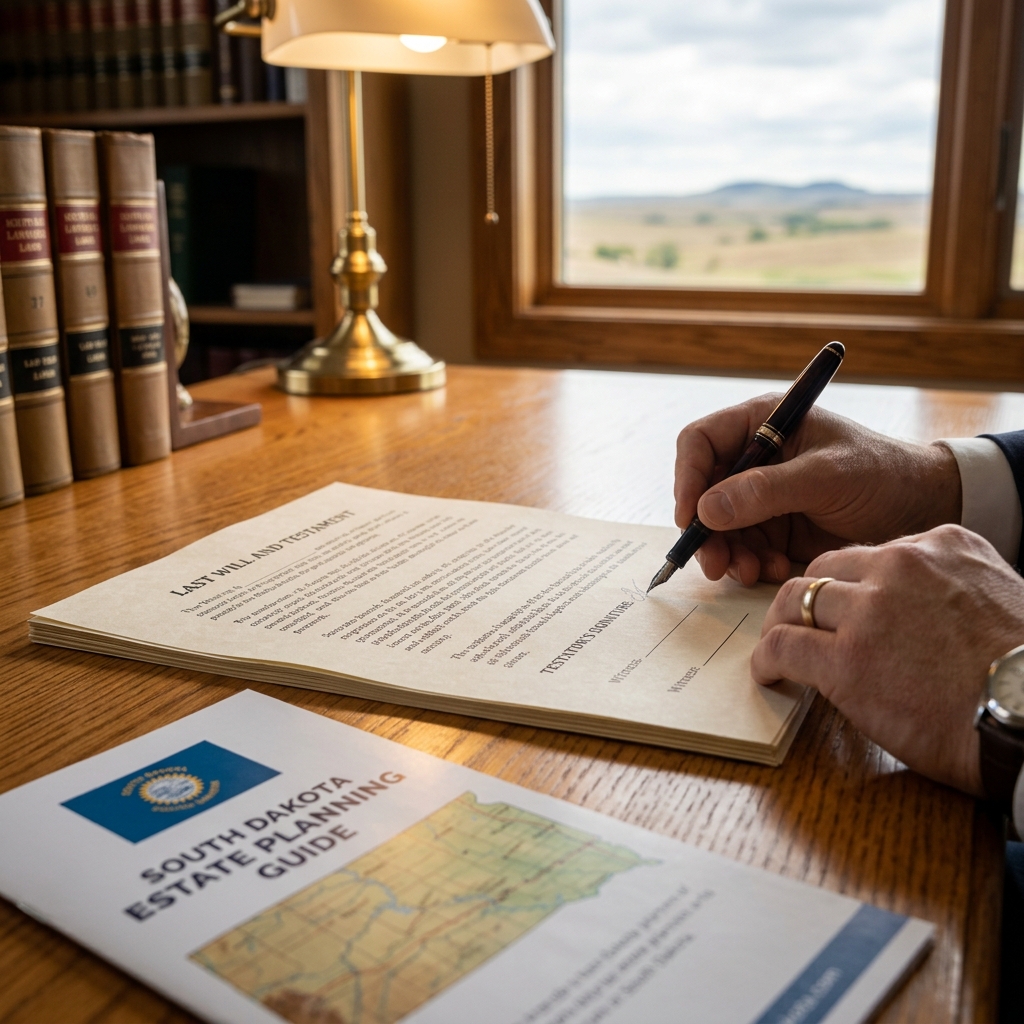
Creating a legally valid will in South Dakota is one of the most effective ways to control what happens to your property after you die, provide for loved ones, and minimize disputes among family members. Without a valid will, state intestate succession rules decide who receives your assets, regardless of your personal wishes.
This guide explains who can make a will in South Dakota, the formal requirements for a valid will, special rules for handwritten wills, how probate works, and what happens if you die without a will. It is for general information only and is not a substitute for personalized legal advice.
Why Having a Will Matters in South Dakota
A will is a written document that states how and to whom your property should be distributed after your death. In South Dakota, a properly drafted will allows you to:
- Choose your beneficiaries, including family, friends, or charities.
- Appoint a personal representative (executor) to manage and distribute your estate.
- Coordinate with other planning tools, such as trusts and beneficiary designations.
- Reduce uncertainty and conflict by providing clear instructions for your estate.
If you do not leave a will, South Dakota law applies a default formula to distribute your estate, known as intestate succession. This may benefit people you would not have chosen or leave out people you intended to provide for.
Who Can Make a Will in South Dakota?
South Dakota law sets clear baseline requirements for who may make a will. In general, you must:
- Be at least 18 years old at the time you make the will.
- Be of sound mind, meaning you understand the nature of making a will, the property you own, and the people who would normally be expected to inherit from you.
Being of sound mind generally means you have not been adjudicated incompetent in a prior legal proceeding and can make rational decisions regarding your property and beneficiaries. If capacity is in doubt, interested parties may later challenge the will in probate court.
Core Legal Requirements for a Valid Will
To be valid in South Dakota, a will must meet several formal requirements. These rules help courts confirm that a document truly expresses the testator’s last wishes.
Written Form
South Dakota generally requires that a will be in writing. Written wills include typed, printed, or handwritten documents. A purely oral (spoken) will is not recognized as a standard method of transferring property at death and is valid, if at all, only under limited and unusual circumstances.
Signature of the Testator
The will must be signed by the testator, the person whose property is being disposed of. If the testator cannot physically sign, they may direct someone else to sign on their behalf, but the signature must be made at the testator’s direction and in their presence.
Witness Requirements
For most typed or printed wills, South Dakota requires at least two competent witnesses to sign the will in the testator’s presence. A competent witness is someone who is legally able to testify in court, typically an adult with the mental capacity to understand that they are witnessing a will.
Key points about witnesses include:
- Each witness should sign the will while the testator is present and aware of the signing.
- Witnesses may be beneficiaries, but it is strongly recommended that witnesses be disinterested—that is, they do not stand to gain under the will—so their testimony is less likely to be challenged.
Using disinterested witnesses can reduce the risk of claims that a witness influenced the testator or benefited unfairly.
Optional Notarization and Self-Proving Affidavits
South Dakota does not require that a will be notarized to be valid. However, the law allows a will to be made self-proving through a notarized affidavit signed by the testator and witnesses.
A self-proving affidavit:
- Is typically attached to or incorporated into the will.
- Includes sworn statements that the will was properly signed and witnessed.
- Allows the court to accept the will’s authenticity without requiring witnesses to testify in person during probate.
This procedure can streamline probate and reduce delays and costs associated with locating witnesses years after the will was signed.
Handwritten, Oral, and Electronic Wills
Modern estate planning often raises questions about handwritten notes, spoken instructions, and digital documents. South Dakota law addresses these forms specifically, and the rules differ from some other states.
Handwritten (Holographic) Wills
A holographic will is a will entirely written in the testator’s own handwriting. South Dakota recognizes holographic wills under certain conditions. In many situations, if the will is dated, and the signature and instructions are all in the testator’s handwriting, witnesses may not be required.
While this can make a handwritten will easier to execute, it also presents risks:
- Handwritten documents are more prone to ambiguity and unclear language.
- Informal revisions in the margins or between lines may not be legally effective.
- Disputes about authenticity or intent are more common.
For these reasons, many people prefer a typed will that clearly expresses their wishes and complies with standard witnessing and execution procedures.
Oral Wills
Spoken instructions given to family members near the end of life, sometimes called oral or nuncupative wills, do not function as a standard will in South Dakota. The state requires wills to be in writing, and oral directions about property are generally not legally binding as a will.
Electronic Wills
Some jurisdictions now recognize electronic wills that are stored and signed fully online. Under current South Dakota law, wills must be hard-copy documents, and the state does not permit purely electronic wills such as digital files signed or witnessed electronically.
Digital tools may be useful for drafting or storing documents, but the final will should be printed, properly signed, and executed according to South Dakota’s formal requirements.
Changing, Revoking, and Storing Your Will
Life changes—such as marriage, divorce, the birth of children, or acquiring significant new assets—often require updating your estate plan. South Dakota recognizes several methods for changing or revoking a will.
Updating Your Will
Handwritten notes or cross-outs on an existing will are often ineffective or legally unclear. Instead, you generally have two reliable options:
- Execute a new will that expressly revokes all prior wills and codicils.
- Sign a codicil, a formal, written amendment to your existing will that follows the same execution requirements as a will.
Each approach should conform to the same witness and signature rules that apply to original wills.
Revoking a Will
A will may be revoked by creating a new will that expressly replaces earlier versions or by physically destroying the document with intent to revoke. Because disputes can arise, it is good practice to:
- Communicate clearly with your attorney and personal representative about new documents.
- Collect and mark prior copies as “revoked” or destroy them safely.
Safekeeping and Deposit With the Court
South Dakota law allows a testator or their agent to deposit a will with a court for safekeeping. The will is sealed, kept confidential, and may only be opened under specific legal procedures.
Other common safekeeping options include:
- A fireproof home safe.
- A bank safe deposit box (being mindful of who can access it after death).
- Your attorney’s secure file storage.
Whatever method you choose, make sure your personal representative knows where the original will is located and how to access it.
What Happens If You Die Without a Will?
When a person dies without a valid will, they are said to die intestate. In that situation, South Dakota law applies a statutory formula to determine who inherits the estate. These rules focus on relationships to the decedent rather than personal preferences.
Spouse and Descendants
If you die intestate in South Dakota, your surviving spouse typically receives the entire estate, unless you have descendants (children or further direct descendants) from a prior marriage or relationship. When descendants from a prior relationship exist, the spouse is entitled to a fixed amount plus a share of the remaining estate:
| Family Situation | Spouse’s Intestate Share |
|---|---|
| Spouse survives, no descendants from prior relationship | Spouse receives the entire intestate estate. |
| Spouse survives, decedent has descendants from a prior relationship | Spouse receives $100,000 plus half of the remaining estate. |
The remaining portion of the estate (if any) goes to descendants in shares determined by statute. If no spouse or descendants exist, more distant relatives such as parents, siblings, or nieces and nephews may inherit according to the statutory order of priority.
Children’s Rights and Conservatorships
Minor children who inherit property may require a court-appointed conservator to manage the assets until they reach adulthood. The conservator must account to the court for the property’s management and use.
South Dakota law does not require you to leave any share of your estate to your children through a will, though minors may have rights to certain allowances and occupancy of a homestead. Intestate succession rules, however, often provide for children automatically when no will exists.
Non-Probate Assets
Not all property passes under a will or intestate rules. Examples of non-probate assets include:
- Joint tenancy property, which usually passes to the surviving joint tenant by operation of law.
- Life insurance or retirement accounts with named beneficiaries.
- Certain payable-on-death (POD) or transfer-on-death (TOD) accounts.
Tenants in common, by contrast, do not enjoy automatic survivorship rights; a deceased tenant in common’s share passes either under their will or under intestate law.
Probate in South Dakota: How the Will Is Carried Out
Probate is the court-supervised process by which a decedent’s will is validated (if any), debts are paid, and remaining property is distributed to heirs and beneficiaries. If there is no will, the court applies intestate succession rules instead.
Basic Steps in Probate
While procedures can vary depending on the size and complexity of the estate, probate generally involves:
- Filing the will (or intestate petition) with the appropriate court.
- Appointment of a personal representative (executor or administrator).
- Identifying and inventorying the estate’s assets.
- Paying valid creditor claims, taxes, and administration expenses.
- Distributing remaining property to beneficiaries under the will or intestate rules.
Some smaller estates may qualify for simplified procedures. For example, if the estate’s value does not exceed a certain threshold and consists solely of personal property, transfer of assets may sometimes be accomplished by affidavit rather than full probate.
Role of the Personal Representative
The personal representative, often named in the will, is responsible for managing the estate through probate. Their duties typically include:
- Collecting and safeguarding estate assets.
- Notifying creditors and paying legitimate claims.
- Maintaining accurate records of receipts and disbursements.
- Distributing assets according to the will or court orders.
Because this role involves legal and fiduciary responsibilities, many personal representatives work closely with an attorney to navigate probate efficiently.
Practical Tips for Creating Your Will in South Dakota
While the legal rules define minimum requirements, careful planning can make your will clearer and more effective.
- List your assets before drafting the will, including real estate, financial accounts, business interests, and personal items of value.
- Decide on your beneficiaries and consider contingent beneficiaries in case someone predeceases you.
- Choose a trustworthy personal representative who is willing and able to fulfill the required duties.
- Coordinate beneficiary designations on life insurance and retirement accounts with your overall plan.
- Review your will periodically, especially after major life events such as marriage, divorce, or the birth of a child.
- Consult a qualified attorney familiar with South Dakota estate law to reduce the likelihood of errors or disputes.
Frequently Asked Questions (FAQ)
Do I need a lawyer to make a will in South Dakota?
South Dakota law does not require you to use an attorney when making a will. However, because mistakes can cause a will to be invalid or difficult to interpret, many people choose to work with a lawyer experienced in estate planning to ensure their will complies with state law and reflects their intentions clearly.
Can I leave nothing to my children?
Yes. South Dakota law does not obligate you to leave a share of your estate to your children in your will. However, minor children may have rights to certain allowances and protections under other statutes, and intestate succession rules can provide for children if no will exists.
Is a handwritten will enforceable?
A handwritten will may be enforceable in South Dakota if it meets the state’s legal requirements, including being in the testator’s handwriting and properly dated and signed. Nonetheless, handwritten wills are riskier and more likely to generate litigation, so many individuals prefer formally drafted and witnessed documents.
What if my estate is small?
Small estates may qualify for simplified procedures, such as transfer of assets by affidavit rather than full probate, provided certain conditions are met. Even for smaller estates, a clear will can reduce complication and help your loved ones manage the process smoothly.
Where should I keep my will?
Your will should be stored in a safe, accessible location, such as a fireproof home safe, a bank safe deposit box (with appropriate access arrangements), an attorney’s office, or deposited with a court according to South Dakota law. Inform your personal representative and key family members where the original document can be found.
References
- Wills & Trusts Fast Facts — South Dakota Office of Attorney General, Consumer Protection Division. 2023-05-01. https://consumer.sd.gov/fastfacts/wills.aspx
- Codified Law 29A-2 — South Dakota Legislature. 2024-01-10. https://sdlegislature.gov/Statutes/29A-2
- Basic Requirements for a Last Will and Testament in South Dakota — LawInfo. 2022-09-15. https://www.lawinfo.com/resources/wills/south-dakota/
- How to Make a Will in South Dakota FAQ — FindLaw. 2023-06-20. https://www.findlaw.com/forms/resources/estate-planning/last-will-and-testament/how-to-make-a-will-in-south-dakota-faq.html
- Wills & Estates Information — State Bar of South Dakota. 2022-08-01. https://findalawyerinsd.com/pages/areas-will
- Probate Pamphlet — Ellsworth Air Force Base Legal Office. 2021-04-30. https://www.ellsworth.af.mil/Portals/146/15_%20Probate%20pamphlet.pdf
Similar Articles








Read full bio of Sneha Tete


