
Sole Proprietor Bankruptcy: Risks, Options, and Protection
Understand how bankruptcy affects sole proprietors, from personal asset exposure to choosing the right chapter and planning a safer restart.
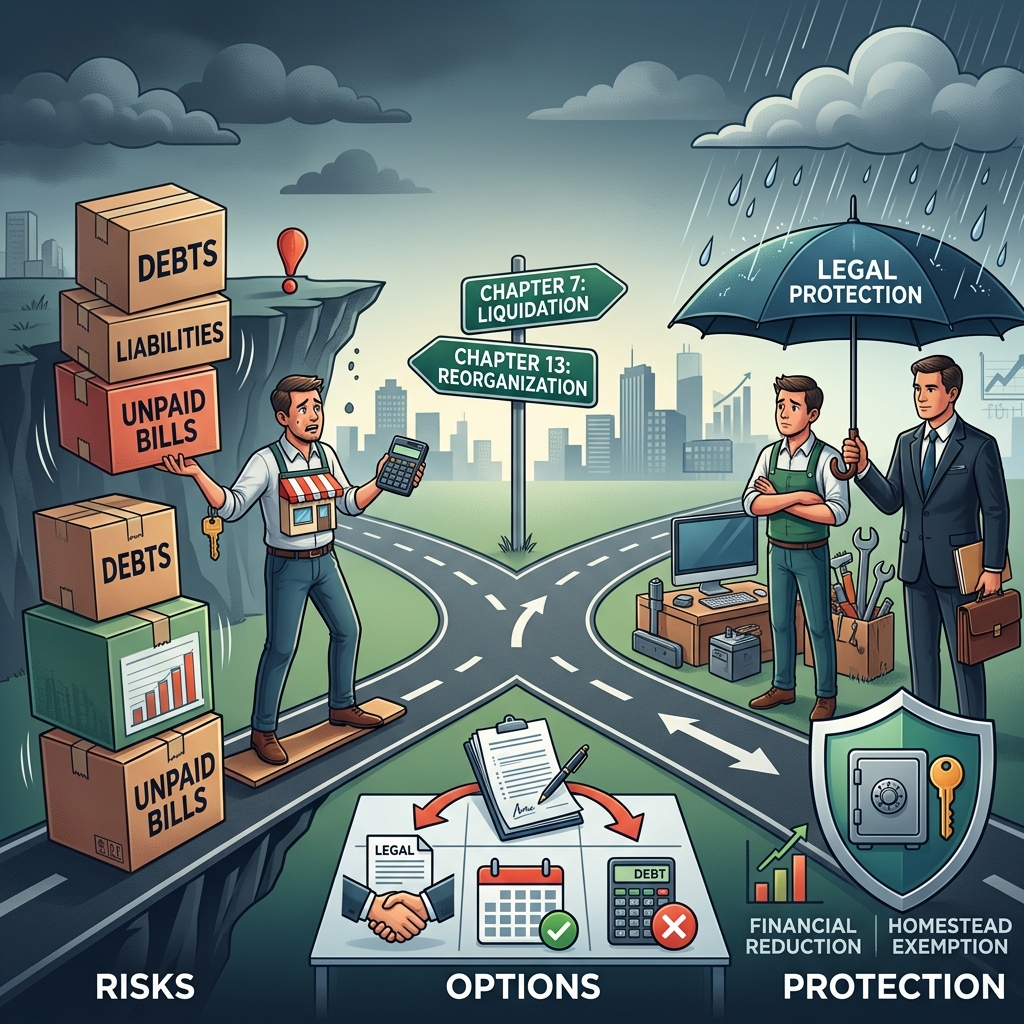
For a sole proprietor, business and personal finances are legally intertwined. When the business cannot pay its bills, creditors can often reach your personal bank accounts, home equity, and other assets. Filing bankruptcy may bring relief, but it also forces you to confront how closely your personal life is tied to your company.
This guide explains what is at stake when a sole proprietor files for bankruptcy, the main chapter options, how your assets and credit may be affected, and the practical steps to protect yourself before and after filing. It is informational only and not a substitute for advice from a qualified bankruptcy attorney.
1. Why Sole Proprietor Bankruptcy Is Different
A sole proprietorship is the simplest business form: there is no separate legal entity, no shareholders, and typically no separate tax return. Legally, the business and the owner are treated as one person. That simplicity has a serious downside when debt becomes unmanageable.
1.1 One Legal Identity, One Risk Pool
Because you and your business are the same legal entity as a sole proprietor, there is no limited liability shield like there is for an LLC or corporation.
- Business debts = personal debts: Credit card balances, vendor invoices, back rent, and lawsuit judgments arising from the business are treated as your personal obligations.
- Personal assets exposed: Creditors may pursue your home equity (subject to homestead exemptions), vehicles, non-retirement savings, and other property, not just business equipment or inventory.
- Bankruptcy filing covers both: When you file as a sole proprietor, the case typically includes both business and personal debts in one proceeding.
1.2 How This Compares to LLCs and Corporations
| Business Structure | Legal Relationship to Owner | Personal Liability for Business Debts | Bankruptcy Implication |
|---|---|---|---|
| Sole proprietorship | No separate entity; owner and business are the same | Full personal liability for most business debts | Personal and business debts usually handled together in personal bankruptcy |
| Partnership (general) | Partners share ownership | Each partner personally liable for partnership debts | Partners often need personal bankruptcy if the business fails |
| LLC / Corporation | Separate legal entity | Owners generally not personally liable unless they guarantee debts or commit misconduct | Business bankruptcy may affect entity only, not owners, unless guarantees are involved |
2. First Signs Your Sole Proprietorship May Need Bankruptcy
Bankruptcy is intended as a last-resort tool for people and businesses that cannot realistically repay their debts. Key warning signs for a sole proprietor include:
- Using personal credit cards or home equity to keep the business afloat month after month.
- Falling behind on payroll, sales tax, or other priority obligations.
- Receiving lawsuits, judgments, or bank levy threats from creditors.
- Juggling payments, paying one creditor only by skipping another.
- Seeing no realistic path to profitability even with cost cutting.
If several of these issues are present, it is time to evaluate whether restructuring, downsizing, or bankruptcy is the most rational path forward.
3. Bankruptcy Chapters Commonly Used by Sole Proprietors
When a sole proprietor files bankruptcy, they file as an individual, but the case may be driven largely by business-related debt. The bankruptcy chapter you choose determines how your assets, debts, and business operations are handled.
3.1 Chapter 7: Liquidation and a Fresh Start
Chapter 7 is often called “liquidation bankruptcy.” An independent trustee is appointed to gather and sell non-exempt assets, then distribute proceeds to creditors. In exchange, most remaining unsecured debts are wiped out (discharged).
For sole proprietors, Chapter 7 has distinctive features:
- Single filing for business and personal debt: You can discharge qualifying business and personal obligations together in one case.
- Risk to business assets: Inventory, receivables, equipment, and sometimes the entire business may be sold off if they are not protected by exemptions.
- Possible loss of the business: Many sole proprietorships cease operations in Chapter 7, especially if they rely heavily on non-exempt assets.
- Quicker process: Typical cases last only a few months from filing to discharge.
On the upside, Chapter 7 can eliminate overwhelming unsecured debt, including unpaid vendor invoices, business credit cards, personal credit cards used for the business, and many judgments. Certain debts, like recent income taxes or domestic support obligations, are generally not dischargeable.
3.2 Chapter 13: Reorganizing While You Keep Operating
Chapter 13 is a reorganization chapter for individuals with regular income, and sole proprietors are eligible to use it even though businesses generally cannot. Instead of liquidating assets, you propose a three- to five-year repayment plan.
- Keep operating: Many sole proprietors continue running their businesses while making plan payments, subject to court approval and plan feasibility.
- Catch up on key debts: Chapter 13 can help you cure mortgage arrears or other secured debts over time while protecting essential property from immediate foreclosure or repossession.
- Protect more assets: Because you are paying part of your debts through the plan, you may keep more property than in Chapter 7.
- Longer commitment: Plans typically run three to five years, requiring stable income and disciplined budgeting.
For sole proprietors who believe their underlying business is viable but overloaded with legacy debt, Chapter 13 may allow a reset without shutting the doors.
3.3 Chapter 11: A Rare Path for Larger Sole Proprietors
Chapter 11 is usually associated with large companies, but individuals who operate substantial businesses may occasionally use it. Chapter 11 allows significant flexibility in restructuring complex debt, but it is costly and procedurally demanding.
A sole proprietor might consider Chapter 11 if:
- Business debts exceed Chapter 13 eligibility limits.
- The operation is large, involving multiple locations, employees, or significant secured debt.
- There is a realistic plan to restore profitability with court-supervised restructuring.
Because of the complexity and legal fees associated with Chapter 11, it is relatively uncommon for small sole proprietors.
4. What Happens to Your Assets in Bankruptcy
A central concern for any sole proprietor is: What do I lose if I file? The answer depends on your state’s exemption laws, how your assets are titled, and which chapter you choose.
4.1 Exempt vs. Non-Exempt Property
Every bankruptcy system includes exemptions—categories of property that you are allowed to keep, up to certain dollar limits. While exemptions vary by state, common examples include:
- A portion of equity in your primary residence (homestead exemption).
- One or more vehicles up to a value cap.
- Retirement accounts such as 401(k) and many IRAs.
- Basic household goods, clothing, and personal items.
- Tools of the trade necessary to earn a living.
In Chapter 7, non-exempt assets can be sold by the trustee, with proceeds distributed to creditors. In Chapter 13, you generally keep your assets, but the value of non-exempt property can influence how much you must repay over the life of the plan.
4.2 Business Property in a Sole Proprietorship
Because there is no legal separation between you and the business, business property is part of your bankruptcy estate unless an exemption applies.
- Equipment and inventory: May be sold in Chapter 7 unless fully covered by a “tools of the trade” or other exemption.
- Accounts receivable: Money your customers owe you can be collected by the trustee in Chapter 7.
- Goodwill and trade name: In some cases, the trustee might sell your customer list, trade name, or other intangible value.
For owners who wish to continue the same line of business post-bankruptcy, it is crucial to understand which assets might be lost and whether Chapter 13 or a non-bankruptcy workout could preserve more value.
5. Impact on Your Credit, Licenses, and Future Business
5.1 Credit Report and Future Borrowing
A personal bankruptcy filing appears on your credit report for up to ten years, depending on the chapter, and may initially reduce your credit score. However, many debtors begin rebuilding credit within one to two years by paying ongoing obligations on time and using new credit cautiously.
Lenders and landlords may ask about your bankruptcy history. You can prepare by clearly explaining that the filing was tied to a failed business venture and emphasizing the steps you have taken to stabilize your finances.
5.2 Professional Licenses and Business Operations
Most professional and occupational licenses are not automatically revoked solely because of a bankruptcy filing, though regulatory bodies may scrutinize cases involving trust funds or client money. It is critical to maintain ethical and legal compliance regarding client funds separate from the bankruptcy process.
You can generally start a new business after bankruptcy, but you may face challenges such as:
- Limited access to credit or trade accounts.
- Higher security deposits for leases or utilities.
- Difficulty qualifying for certain types of financing in the early years after discharge.
6. Steps to Take Before Filing Bankruptcy as a Sole Proprietor
Before deciding to file, there are several practical steps that can clarify your options and strengthen your position.
6.1 Take a Hard Look at Your Financial Picture
- List all business and personal debts, including interest rates, collateral, and any personal guarantees.
- Identify all assets: real estate, vehicles, equipment, inventory, receivables, cash, retirement accounts, and intangible property.
- Analyze your income trends, both business and non-business, over at least the last 6–12 months.
- Prepare a realistic monthly budget, including taxes, insurance, and irregular expenses.
This information will be required in any bankruptcy filing and is also necessary to evaluate alternatives such as negotiated settlements or restructuring.
6.2 Consult a Qualified Bankruptcy Attorney
Bankruptcy law is technical and varies by jurisdiction. While individuals may file without a lawyer, including sole proprietors, most benefit significantly from professional guidance. An experienced attorney can:
- Explain how exemptions work in your state and what property you are likely to keep.
- Help you choose between Chapter 7, 13, or possibly 11 based on your income, assets, and goals.
- Spot issues like recent transfers, preferential payments, or tax liabilities that could affect your case.
- Evaluate non-bankruptcy options, including settlements, workouts, or business closure without filing.
6.3 Complete Mandatory Credit Counseling
Federal law requires most individuals to complete a credit counseling course from an approved agency before filing bankruptcy. This session reviews your financial situation and may explore alternatives; the certificate must be filed with the court as part of your petition.
7. Protecting Personal Assets Before and After Bankruptcy
Even if bankruptcy is inevitable, thoughtful planning can reduce the damage to your personal finances, provided you avoid fraudulent transfers or other prohibited actions.
7.1 Keep Business and Personal Finances Separate
Although a sole proprietorship does not provide legal separation, maintaining separate accounts and records is still vital. Clear separation helps:
- Demonstrate which expenses are business vs. personal.
- Avoid accusations of commingling that could complicate your case.
- Provide cleaner documentation for the trustee and creditors.
7.2 Understand and Use Exemptions Strategically
Within the law, you may be able to restructure your holdings so that more of your wealth falls into exempt categories (for example, funding retirement accounts within allowed limits). This kind of planning must be done carefully and well in advance of filing, as courts can undo transfers intended to hinder, delay, or defraud creditors.
7.3 Consider Entity Formation for Future Ventures
If you plan to start another business after bankruptcy, it may be wise to consider forming an LLC or corporation for future operations. While this does not automatically protect you from all liability—personal guarantees and misconduct can still create personal exposure—it can create an important layer of separation between business and personal assets when properly maintained.
8. FAQs: Sole Proprietorship and Bankruptcy
8.1 Can I keep my business if I file Chapter 7 as a sole proprietor?
In many cases, no. Chapter 7 is designed to liquidate non-exempt assets, which may include business equipment, inventory, and receivables. If your business has little or no non-exempt value—such as a service business that relies mainly on your labor—it might be possible to continue operating, but you must discuss this carefully with a bankruptcy attorney.
8.2 Can a sole proprietor use Chapter 13 to save the business?
Yes, Chapter 13 is available to individuals, including sole proprietors, and can sometimes allow you to keep running your business while restructuring your debts through a court-approved repayment plan. You must show that your income is stable enough to fund the plan.
8.3 Are my retirement accounts safe if my business fails?
In many cases, tax-qualified retirement accounts such as 401(k) plans and certain IRAs receive strong protection in bankruptcy, often being fully exempt up to high dollar limits. The exact protection depends on federal and state law, so confirm with your attorney how your specific accounts will be treated.
8.4 Will bankruptcy wipe out all my business-related debts?
Bankruptcy can discharge many unsecured debts, including credit cards, unsecured loans, and some judgments. However, certain obligations—like some taxes, domestic support, and debts incurred through fraud or intentional misconduct—may not be dischargeable. Debts secured by collateral, such as equipment loans or mortgages, may require you to surrender the property or continue payments if you want to keep it.
8.5 Do I need a lawyer to file bankruptcy as a sole proprietor?
Individuals, including sole proprietors, are not legally required to hire a lawyer to file bankruptcy. However, because your personal and business interests are intertwined and the stakes for asset loss are high, most experts strongly recommend at least consulting an attorney before deciding whether and how to file.
References
- How to Protect Personal Assets During a Small Business Bankruptcy — Blazek & Blazek, P.C. 2024-03-01. https://blazek-law.com/blog/how-to-protect-personal-assets-during-a-small-business-bankruptcy/
- Filing for Bankruptcy as a Sole Proprietor: What You Should Know — Caplan Bankruptcy. 2023-06-15. https://www.attorneyfortampabay.com/blog/filing-for-bankruptcy-as-a-sole-proprietor-what-you-should-know/
- Sole proprietorships and bankruptcy — Miller & Miller Law, LLC. 2022-09-20. https://millermillerlaw.com/sole-proprietorships-and-bankruptcy/
- Chapter 7 for Small Business Owners: An Overview — Nolo. 2024-01-10. https://www.nolo.com/legal-encyclopedia/chapter-7-bankruptcy-small-businesses.html
- How Do You File for Bankruptcy If You Are a Sole Proprietorship? — Cooney Law Offices, P.S. 2025-09-01. https://www.cooneylawyers.com/blog/2025/09/how-do-you-file-for-bankruptcy-if-you-are-a-sole-proprietorship/
- Making Heads and Tails of Small Business Bankruptcy — Patriot Software. 2023-04-05. https://www.patriotsoftware.com/blog/accounting/bankruptcy-options-small-business/
- Bankruptcy: Options for Small Businesses in Distress — City Bar Justice Center. 2016-09-01. https://www.citybarjusticecenter.org/wp-content/uploads/2016/09/Small-Business-Bankruptcy-Book.pdf
Similar Articles








Read full bio of medha deb




