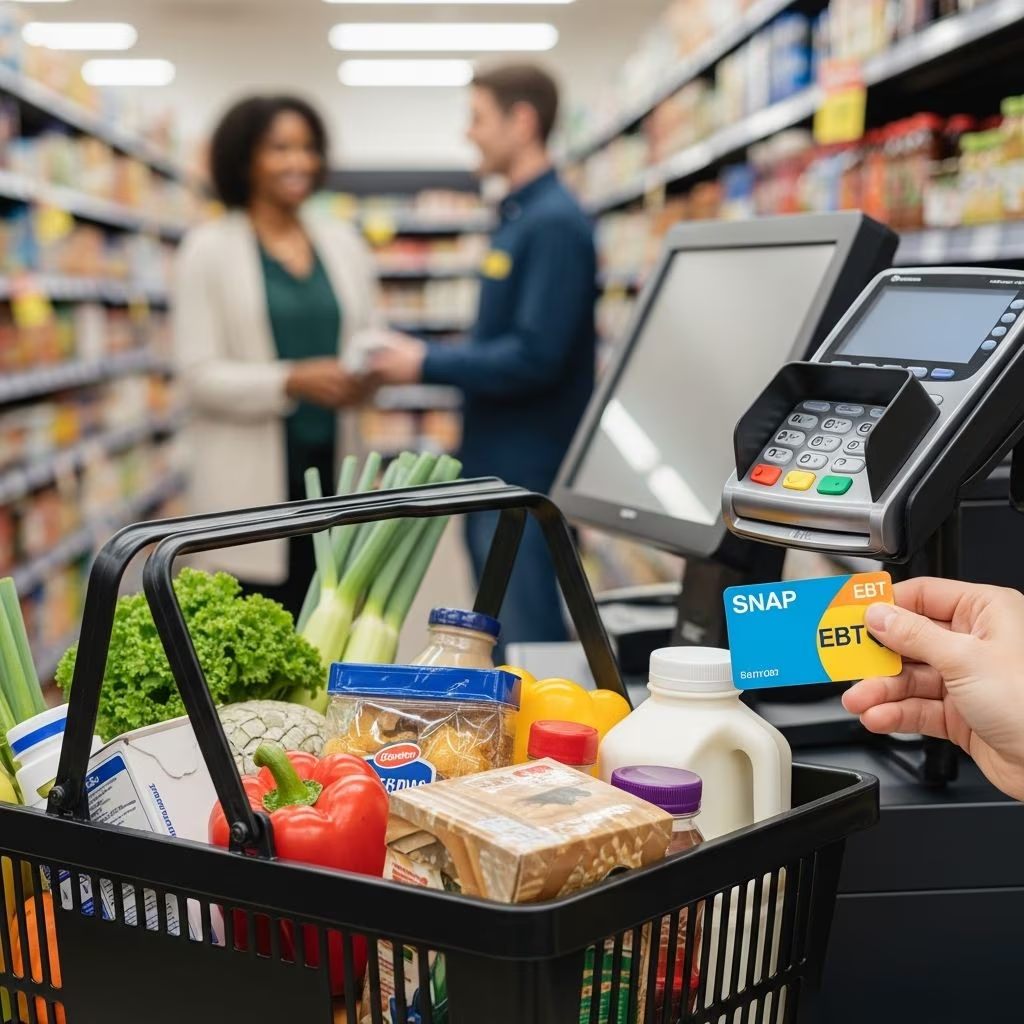
Understanding SNAP Retailer Authorization and Its Business Value
The Supplemental Nutrition Assistance Program (SNAP) represents a significant opportunity for retail businesses to expand their customer base and increase revenue. By becoming an authorized SNAP retailer, your store gains access to millions of eligible customers who depend on benefits to purchase groceries. The authorization process, while requiring attention to detail and specific inventory standards, is straightforward and designed to integrate seamlessly into existing retail operations. Understanding the pathway to SNAP acceptance begins with recognizing that this program serves a vital social function while simultaneously offering measurable business benefits to participating retailers.
Determining Your Store’s SNAP Eligibility Status
Before investing time in the application process, you must honestly assess whether your current business model aligns with SNAP program requirements. The USDA establishes clear criteria that retailers must satisfy, and these standards exist to ensure program integrity while maintaining consistent access to nutritious foods for SNAP participants. Eligibility is determined through two distinct pathways, each with specific performance metrics and inventory benchmarks.
The first eligibility route focuses on your store’s inventory composition and product variety. Under this approach, referred to as the staple food inventory method, your business must maintain a carefully balanced selection of essential food items across four primary food categories. Your store must continuously stock at least three different varieties within each of these four staple categories: meats, poultry and fish; bread and grain products; fresh fruits and vegetables; and dairy products. Additionally, for each of the three varieties you carry in these categories, you must maintain a minimum of three stocking units available for purchase at all times. This mathematical requirement totals 36 individual food items across your inventory. Beyond this baseline, your store must also stock at least one perishable food item—such as fresh, refrigerated, or frozen products—in at least two of the four staple categories. This requirement ensures that SNAP participants have access to fresh, nutritious options rather than exclusively shelf-stable processed foods.
The alternative eligibility pathway emphasizes sales composition rather than specific inventory counts. Under this method, your store’s total gross retail sales from staple foods must exceed 50 percent of your overall business revenue. This approach particularly benefits specialty retailers such as butcher shops, seafood markets, or produce stands that may not carry comprehensive selections across all four staple categories but generate the majority of their income from eligible food sales. Stores operating under this criterion often serve niche market segments while still providing vital access points for SNAP participants.
Store Types That Commonly Qualify for SNAP Authorization
Various retail formats can successfully integrate SNAP acceptance into their operations, though certain business models align more naturally with program requirements than others.
- Full-service grocery stores typically exceed SNAP requirements significantly, maintaining diverse inventory across all staple categories and often carrying specialty items that enhance customer experience.
- Convenience stores and small grocers frequently qualify under the inventory-focused criterion by carefully curating their product mix to include the required staple foods alongside other convenience items.
- Specialty food retailers such as butcher shops, fish markets, and produce stands often meet eligibility through the sales-composition method, where their specialized offerings represent more than half of total revenue.
- Farmers’ markets in some regions participate in SNAP, though authorization varies by location and market structure; you should verify participation status with your local market management.
Conversely, certain business formats face inherent obstacles to SNAP authorization. Restaurants and food service establishments cannot generally accept SNAP benefits unless they operate within a state offering the Restaurant Meals Program, a limited initiative serving elderly and disabled individuals. Businesses where prepared or heated foods exceed 50 percent of sales are classified as restaurants regardless of self-identification and face automatic ineligibility.
Prohibited Items and Eligible Food Categories
SNAP authorization comes with explicit restrictions on merchandise categories. Understanding these boundaries is essential for accurate inventory planning and customer service protocols.
| Eligible Items | Prohibited Items |
|---|---|
| Fresh fruits and vegetables (produce) | Alcohol and tobacco products |
| Meat, poultry, and fish (raw or frozen) | Hot or prepared foods ready for consumption |
| Dairy products (milk, cheese, yogurt) | Pet food and supplies |
| Bread and grain products | Cleaning supplies and household items |
| Frozen fruits and vegetables | Vitamins and nutritional supplements |
| Canned and shelf-stable fruits and vegetables | Lottery tickets and gambling items |
| Beans, legumes, and plant proteins | Gift items and ornamental products |
| Nuts and seeds in shell | Live animals (except fish/shellfish sold) |
This distinction between eligible and ineligible items creates important operational considerations. Deli counters offering hot rotisserie chickens or prepared salads cannot process SNAP payments for these items, though raw poultry from the meat department qualifies. Similarly, a store selling both groceries and household supplies must maintain clear separation in pricing and transactions to ensure SNAP funds support only food purchases.
Gathering Required Documentation for Your Application
The application process begins long before submission, during a documentation preparation phase that determines both approval speed and likelihood of success. Incomplete or inaccurate documentation frequently delays authorization or results in rejection, requiring reapplication after a waiting period.
You must assemble comprehensive documentation demonstrating business legitimacy and ownership transparency. Essential documents include your business tax return from the previous fiscal year, establishing that your operation generates legitimate revenue and maintains proper tax reporting. Each owner, partner, manager, or member of the business entity must provide a valid driver’s license and Social Security number, information that the USDA uses for background verification. Your business license, demonstrating state and local authorization to operate, serves as proof of legal business status.
Additional documentation depends on your specific business operations. If your store sells alcoholic beverages, you must provide your state liquor license. Similarly, if you sell tobacco products, your tobacco license becomes part of the required documentation set. Some jurisdictions require lottery licenses for stores selling lottery tickets; these must also be included if applicable. The USDA conducts background checks on all ownership parties, and this documentation facilitates that verification process.
Timing matters significantly in the documentation phase. Your application can only be submitted if your business is already operational and conducting sales, or if you are within 10 days of executing a purchase agreement or lease for a location where you will begin SNAP-eligible operations. This timing requirement prevents pre-establishment applications and ensures the USDA can verify your actual business operations and inventory.
Navigating the Online Application Process
The USDA maintains a centralized online portal for SNAP retailer applications at the Food and Nutrition Service website. This digital platform streamlines submission and tracking, though it operates within specific procedural constraints you must observe.
Once you initiate your application, you have precisely 30 days to complete and submit all required information. If your application remains incomplete after this window, the system automatically deletes it, requiring you to restart the entire process. This time constraint necessitates having all documentation prepared and organized before you begin the actual application entry.
Your application must include comprehensive store information: your business name exactly as registered, all owner names and addresses, your primary business location, and reliable contact information. You will need to provide an estimate of your anticipated annual SNAP redemption volume, a figure based on your customer demographics and sales projections. This estimate, while not binding, helps the USDA assess program capacity and participation levels. The application system provides specific instructions for document submission, and you must follow these precisely to ensure proper file upload and processing.
Retailers with multiple locations face an important requirement: each store location requires a separate application and individual authorization. If your business operates as a small chain or has multiple storefronts, you cannot obtain a single authorization covering all locations. Instead, each address must go through independent evaluation and approval, a process that accounts for variations in local inventory requirements and community food access needs.
The USDA Review and Approval Timeline
After submission, your application enters the USDA’s review queue, where it undergoes verification and background checks. The agency typically responds to complete applications within 30 to 90 days, though processing times vary based on application volume and request complexity. This window provides time for the USDA to verify your submitted information, conduct background checks on all ownership parties, and assess whether your business meets the stated eligibility criteria.
If the USDA identifies inconsistencies or requires additional information during this review period, agency staff will contact you to request clarification or supplementary documentation. Responding promptly to these requests prevents processing delays and demonstrates good-faith cooperation with program requirements. Conversely, if your application is rejected, you may submit a new application after a one-year waiting period, allowing time for business adjustments that might position you for future approval.
The absence of application fees removes financial barriers to authorization attempts, though your business investment in inventory adjustments and operational changes to meet requirements may involve costs. This fee-free approach reflects the USDA’s commitment to expanding retailer participation and improving SNAP participant food access across diverse communities.
Communicating Your SNAP Authorization to Customers
Upon receiving your FNS authorization permit, you gain both a credential and a marketing asset. Your permit documentation should be retained in your business files as proof of authorization, accessible if the USDA conducts subsequent compliance reviews or if customers question your participation status.
Equally important is making your SNAP acceptance visible and prominent throughout your business environment. Display your FNS authorization signage prominently near your store entrance and at checkout locations where customers complete transactions. Include SNAP acceptance information on your website, highlighting this capability in homepage content and product pages where applicable. Integrate SNAP messaging into your marketing materials, from email newsletters to social media communications, actively encouraging eligible customers to shop with their benefits at your location.
This outreach strategy serves multiple purposes beyond compliance. It builds customer loyalty among SNAP participants who may have previously been uncertain whether your store accepted their benefits. It differentiates your business from competitors, particularly in communities with limited SNAP retailer options. It demonstrates your commitment to food security and community welfare, positioning your business as a community partner rather than merely a commercial establishment.
Operational Considerations After Authorization
SNAP authorization is not a permanent, universal credential. Your authorization applies specifically to your current business location and ownership structure. If your store relocates to a different address, or if ownership changes through sale or partnership restructuring, your existing authorization does not transfer to the new situation. Instead, you must obtain new authorization reflecting the changed circumstances. This requirement ensures the USDA maintains current information about all authorized retailers and their specific locations.
Additionally, maintaining SNAP authorization requires ongoing compliance with inventory and conduct standards. While the USDA does not conduct continuous real-time monitoring, periodic compliance reviews assess whether your store continues to meet the inventory or sales criteria on which your authorization was based. Significant changes to your product mix or business operations could trigger re-evaluation of your eligibility status.
Frequently Asked Questions About SNAP Retailer Authorization
Q: Is there a cost to apply for SNAP retailer authorization?
A: No. The USDA charges no application fees for SNAP retailer authorization. This eliminates financial barriers to participation and reflects the program’s commitment to expanding food access through diverse retail channels.
Q: How quickly will I know if my application is approved?
A: The USDA typically processes complete applications within 30 to 90 days. Response time varies based on application volume and the complexity of your specific request, so patience is warranted during this evaluation period.
Q: Can I apply for SNAP authorization before my store officially opens?
A: Your store must either be currently operating or be within 10 days of a purchase agreement or lease signing for your location. This ensures the USDA can verify your actual business operations and inventory capacity.
Q: What if my application is denied?
A: If denied, you may reapply after one year has passed. Use this interval to adjust your inventory mix, increase eligible food sales, or address any issues the USDA identified in the rejection notice.
Q: Do online retailers or delivery services face different authorization requirements?
A: The search results do not address online retailers specifically. Contact the USDA Food and Nutrition Service directly for guidance on digital retail platforms and alternative delivery models.
Q: Can restaurants participate in SNAP?
A: Generally, restaurants cannot accept SNAP benefits. Only restaurants in states with the Restaurant Meals Program (RMP) serving elderly or disabled individuals may participate. Standard food service establishments are automatically ineligible.
References
- EBT Qualifications: How Your Business Can Accept EBT — GetVMS. 2024. https://www.getvms.com/ebt-qualifications-how-your-business-can-accept-ebt/
- How Can a Small Business Qualify for EBT / SNAP Benefits Permit? — NRS Plus. 2024. https://nrsplus.com/blog/how-small-businesses-qualify-for-snap-benefits-permit-ebt/
- How Do I Accept Food Stamps at My Business? — MarkPOS. 2024. https://www.marktpos.com/blog/how-do-i-accept-food-stamps-at-my-business
- Requirements to Accept EBT for SNAP Benefits for Retailers — goEBT. 2024. https://goebt.com/requirements-to-accept-ebt-for-snap-benefits-for-retailers/
- Store Eligibility Requirements — USDA Food and Nutrition Service. 2025. https://www.fns.usda.gov/snap/retailer/eligible
- How Do I Apply to Accept SNAP Benefits? — USDA Food and Nutrition Service. 2025. https://www.fns.usda.gov/snap/retailer/apply-to-accept