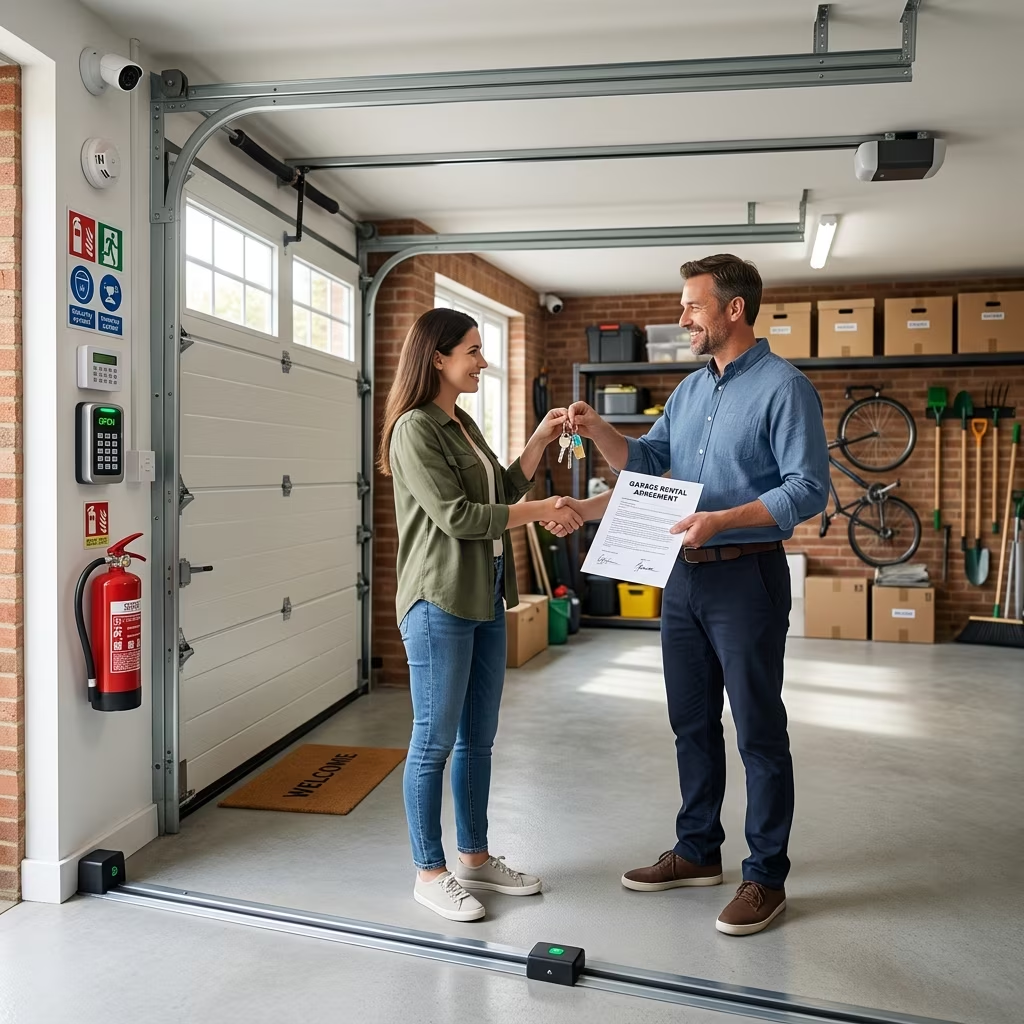
Why garage rentals can work well
Renting out a garage can turn unused space into steady income, especially in areas where parking is limited or storage is expensive. The arrangement can be simple, but it still needs a clear plan so both sides understand what is being rented, how it may be used, and who is responsible for damage, access, and payment.
A garage rental is often more flexible than a full residential lease. In some cases, the space is used only for vehicle parking; in others, it is used for boxes, furniture, tools, or hobby equipment. That flexibility is useful, but it also means the owner should define the permitted use in writing before handing over a key or code.
Start by confirming you are allowed to rent it
Before advertising the garage, confirm that local rules, neighborhood restrictions, and your own property documents allow the rental. If the garage is part of a homeowners association, a condominium, or a managed community, there may be limits on commercial use, outside storage, signage, vehicle repairs, or business activity.
If you do not own the property outright, check your lease or obtain written permission from the owner. A tenant generally cannot sublease a garage or driveway without consent if the lease restricts subletting or third-party use. If the garage is part of a mixed-use property, review zoning and occupancy rules as well, since some jurisdictions treat parking-only use differently from storage or workshop use.
Decide what kind of rental you are offering
Not every garage arrangement is the same. A good listing should make it clear whether the renter is getting one parking stall, the entire garage, a locked storage bay, or access to the whole structure. The more specific the offer, the fewer disputes you are likely to have later.
- Parking-only use: best for cars, motorcycles, boats, or seasonal vehicles.
- Storage use: suitable for boxes, household goods, equipment, or business inventory if allowed.
- Restricted access: useful if the renter can visit only at certain times or with advance notice.
- Full access: appropriate only when the renter needs regular entry and the space is secured accordingly.
Clarity matters because the risks differ. Parking a car creates concerns about leaks, battery charging, doors, and liability for vehicle damage. Storage creates concerns about moisture, pests, fire risk, prohibited items, and the possibility that the renter will keep something hazardous inside without telling you.
Set the rental terms in writing
A written agreement is the most important protection for a garage owner. Even when the arrangement feels informal, a short contract can prevent confusion and reduce the chance of a dispute. The agreement should identify the parties, describe the space, state the rent amount, and spell out how the arrangement can end.
At minimum, the contract should cover:
- the exact location and dimensions of the garage space
- the permitted use of the space
- whether the renter has exclusive or shared access
- payment due dates and late fees, if any
- the length of the rental term
- renewal and termination rules
- security deposit terms
- responsibility for utilities, if applicable
- insurance requirements
- rules on prohibited items and activities
It is also wise to state that the space is being rented for passive parking or storage only unless you explicitly want to allow something else. That helps avoid arguments over whether the renter may use the garage as a workshop, repair bay, business warehouse, or overnight living space.
Price the space according to use and local demand
The value of a garage depends on location, size, security, drive-up access, lighting, and whether the renter receives exclusive use. A garage in a dense city neighborhood or near transit may command a higher rate than a similar structure in a less crowded area. A detached garage with good security may also be worth more than a shared or open carport-style setup.
When setting price, compare several factors rather than guessing:
| Pricing factor | Why it matters |
|---|---|
| Location | High-demand areas usually support higher rents. |
| Access | 24/7 access often increases value. |
| Security | Locks, cameras, and gated entry can justify a premium. |
| Condition | Dry, clean, and well-lit spaces attract better tenants. |
| Use type | Vehicle parking and business storage may be priced differently. |
You should also decide whether rent is monthly, seasonal, or short-term. A monthly arrangement is easier to manage for most owners, while a shorter term may work better if you only want temporary storage during a move or renovation.
Screen the renter before handing over access
Even though a garage is not the same as an apartment, it is still worth screening the renter. You are allowing another person to store property on your premises, and that creates risks if the person is unreliable, careless, or planning uses you did not approve.
Simple screening can include a name, contact information, intended use, and references if needed. For a higher-value arrangement, you may want to verify identity, ask about the type of vehicle or goods being stored, and request proof of insurance. If the renter will have regular entry, trust and communication are especially important.
Screening also helps you spot red flags, such as requests to store hazardous materials, offers to pay without paperwork, or pressure to ignore access limits. Those are signs that the arrangement could become complicated later.
Protect the property with practical rules
A garage rental should include basic house rules. These rules are not just formalities; they reduce fire hazards, damage, and conflict. If the space is attached to your home or near other occupied structures, the rules become even more important.
- No gasoline, propane, fireworks, chemicals, or other dangerous materials unless specifically allowed by law and by the agreement.
- No living, sleeping, cooking, or business activity unless you have approved it in writing.
- No repairs, welding, paint spraying, or mechanical work unless the garage was intended for that purpose.
- No blocking driveways, walkways, or emergency access paths.
- No overloading outlets, using unsafe extension cords, or making unauthorized electrical changes.
If the renter will store a vehicle, the agreement should address whether the car must be operable, registered, insured, and free of leaks. If the renter stores household goods, the agreement should define whether items must be boxed, labeled, and placed on shelving rather than on the floor.
Handle insurance and liability carefully
Insurance deserves special attention because garage rentals create exposure for both property damage and personal injury claims. Your homeowners or landlord policy may not automatically cover a third-party rental arrangement, particularly if the garage is used for commercial storage or paid parking. You should ask your insurer whether the rental is covered and whether the policy needs an endorsement or separate commercial protection.
It is also reasonable to require the renter to carry their own coverage. For vehicle parking, that may mean auto insurance remains in force. For storage, the renter may need renters insurance, tenant property coverage, or another policy that protects their stored items. A contract can require proof of insurance before move-in and at renewal.
Liability language in the agreement should state what you are and are not responsible for. You may want to disclaim responsibility for theft, weather damage, mechanical failure, or damage caused by the renter’s own negligence, to the extent permitted by law. That said, a disclaimer does not replace insurance, and it may not protect you if your own negligence caused the loss.
Make access, keys, and security procedures simple
Access rules should be easy to follow. If you provide a key, code, remote, or gate card, record who has it and how it must be returned when the agreement ends. If multiple people may enter, specify whether the renter may share the code or must obtain approval before letting others in.
Security works best when the garage has clear boundaries. Good lighting, strong locks, and a maintained entry area reduce misuse and make inspections easier. If you keep the garage attached to your house or near other living areas, consider whether cameras, motion lights, or a separate padlock are appropriate.
It also helps to reserve the right to inspect the space with reasonable notice. That does not mean you should enter at random, but it does let you confirm that the renter is complying with the agreement and not storing prohibited items.
Plan for tax and bookkeeping obligations
Any income from a garage rental should be tracked carefully. Keep a record of rent received, deposits, repairs, insurance, utility contributions, and any other expenses tied to the rental. Good records help you report income correctly and may support deductions where the law allows them.
If the garage is part of your home or a mixed-use property, you may need to allocate income and expenses based on the portion used for the rental. The tax rules vary by jurisdiction, so it is important to confirm how the arrangement should be reported before the first payment is collected.
If the rental becomes regular, business-like, or high volume, the tax treatment may be more complex than a one-off informal arrangement. A tax professional can help you determine whether the garage rental should be reported differently from ordinary home use.
Know when to end the agreement
A garage rental should end cleanly, with enough notice and a clear move-out process. The contract should explain how much notice either side must give, what happens if the renter does not remove items on time, and how abandoned property will be handled if permitted by law.
Before termination, inspect the space, document the condition, and compare it to any move-in notes or photographs. If the renter caused damage, follow the agreement and local law when deciding whether to keep part of the deposit or seek additional compensation.
If the renter has been storing valuable items, consider requiring a final confirmation that the space is empty and the keys or access devices have been returned. That simple step can prevent disputes about whether the rental truly ended.
Common mistakes to avoid
Most problems in garage rentals come from unclear expectations rather than complicated law. A few avoidable mistakes tend to create the most trouble.
- Renting out space without checking HOA, lease, zoning, or permit restrictions
- Using a vague verbal agreement instead of a written contract
- Failing to specify whether the space is for parking, storage, or both
- Ignoring insurance questions until after a loss occurs
- Allowing unsafe or prohibited materials to be stored
- Giving access to the garage without tracking keys, codes, or cards
- Not keeping records of payments, deposits, and repairs
When these basics are handled early, renting out a garage becomes much easier to manage and far less likely to turn into a dispute.
Frequently asked questions
Can I rent my garage if I still live on the property?
Yes, in many cases you can, but you should still check local rules, insurance coverage, and any restrictions in your mortgage, HOA documents, or lease. Living on the property does not remove the need for a clear written agreement.
Do I need a formal lease for a garage rental?
A short written agreement is strongly recommended. Even a simple document is better than relying on memory or texts alone because it clarifies payment, access, permitted use, and termination rules.
Can the renter use the garage as a workshop or business space?
Only if your agreement and local rules allow it. A garage used for commercial work may raise building, zoning, fire, noise, and insurance issues that do not apply to ordinary storage or parking.
Should I ask for a security deposit?
Many owners do. A deposit can help cover cleaning, lost keys, damaged doors, or minor repairs, as long as the amount and conditions for return are stated clearly in the contract.
Is insurance really necessary for a garage rental?
Yes. Insurance is one of the most important safeguards because rented garage space can involve property damage, theft claims, and liability questions that are hard to resolve after the fact.
References
- What Is Zoning? — U.S. Department of Housing and Urban Development. 2024-01-01. https://www.hud.gov/program_offices/fair_housing_equal_opp/relaxed-zoning
- Homeowners Insurance Guide — National Association of Insurance Commissioners. 2025-01-01. https://content.naic.org/consumer/homeowners-insurance
- Rental Income and Expenses — Internal Revenue Service. 2025-01-01. https://www.irs.gov/taxtopics/tc415
- Lease and Rental Agreements — USA.gov. 2025-01-01. https://www.usa.gov/renting-basics
- Homeowners Associations — Consumer Financial Protection Bureau. 2024-01-01. https://www.consumerfinance.gov/ask-cfpb/what-is-a-homeowners-association-en-108/