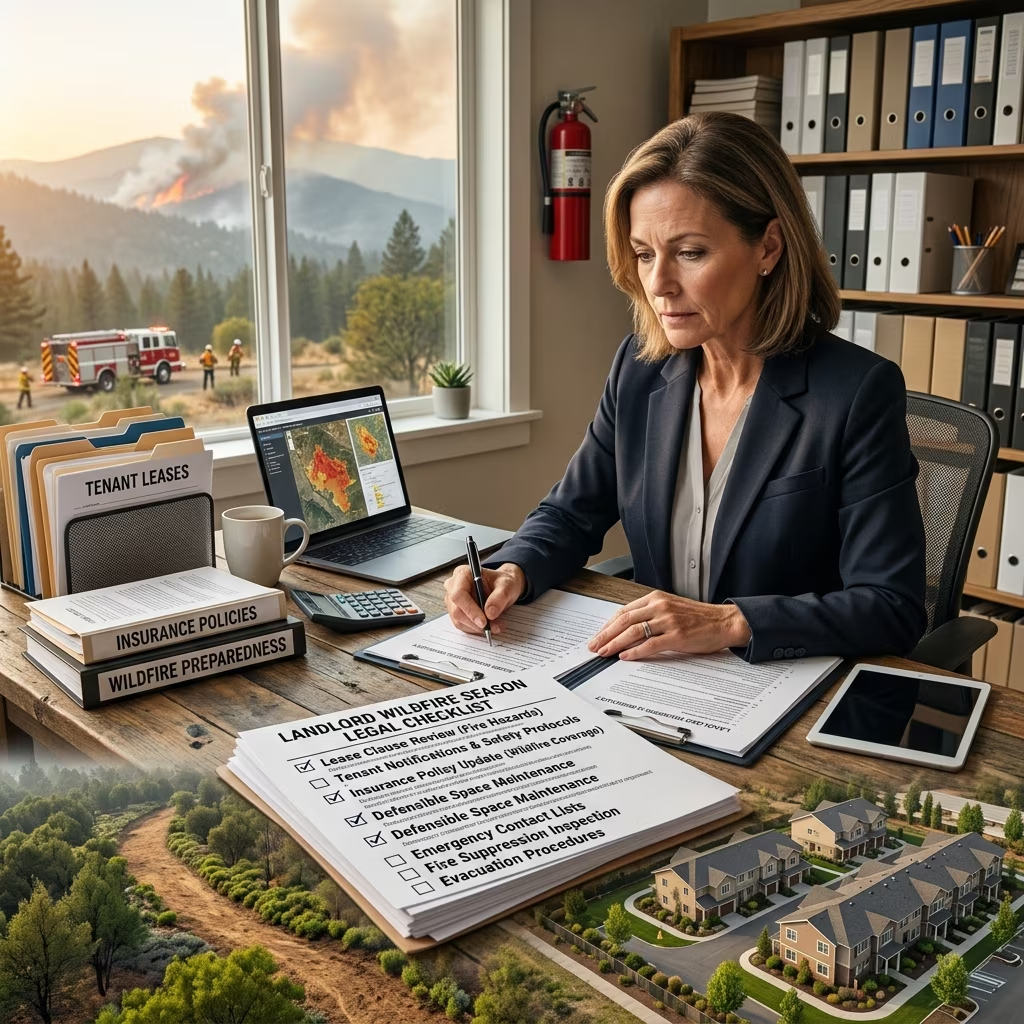
Increasing wildfire activity has turned fire season into a predictable annual risk for many rental properties. Landlords and property managers must now treat wildfire preparation as a core part of habitability, risk management, and legal compliance, rather than an occasional emergency. This guide explains how to prepare before fires start, protect tenants and property during an event, and manage leases, repairs, and liability issues after a wildfire.
Why Wildfire Season Matters for Rental Housing
Landlord-tenant laws in most states require landlords to provide safe and habitable housing, which includes taking reasonable steps to protect occupants from foreseeable hazards such as fire and smoke. When fire season reliably occurs every year, failure to plan may be seen as ignoring a known risk rather than an unavoidable accident.
Wildfires can affect rentals in several ways, even when flames never reach the building:
- Direct damage from fire, heat, or embers.
- Smoke infiltration causing health concerns and potential habitability issues.
- Loss of utilities (power, water, internet), limiting basic services.
- Evacuation orders that disrupt access to the property.
- Road closures that delay repairs and inspections.
Understanding these risks helps landlords design realistic policies, communication plans, and lease provisions that meet legal requirements and reduce conflict with tenants.
Pre-Season Planning: Legal and Practical Steps
Preparation before fire season starts is often the easiest way to reduce both physical damage and legal disputes. Many obligations overlap with general landlord duties under residential landlord-tenant acts, such as maintaining safe exits and working smoke detectors.
Update Tenant Contact and Emergency Information
Reliable communication is critical when wildfires approach. Landlords and property managers should maintain up-to-date records for each household and establish clear emergency communication procedures.
- Request current phone numbers and email addresses for all adult occupants.
- Ask tenants to identify a preferred emergency contact and alternative contact method.
- Establish how you will send urgent notices (text alerts, email, phone calls).
- Create internal procedures for documenting when notices are sent.
Keeping records of emergency communications can help demonstrate that you acted reasonably if questions later arise about warning, access, or evacuation.
Inspect and Maintain Fire Safety Systems
Many state laws require landlords to provide functioning smoke alarms and safe exits as part of habitability. Before fire season, landlords should go beyond minimum requirements and verify that all fire-related systems are in good working order.
- Test smoke and carbon monoxide detectors and replace batteries as needed.
- Ensure fire extinguishers, if provided, are serviced and properly labeled.
- Confirm that stairways, hallways, and exit routes are clear of clutter.
- Check emergency lighting in common areas where required by code.
- Review any building fire alarm systems with your service provider.
At the time a lease is signed, some states expect landlords to provide written fire protection information such as the location of fire exits and extinguishers. Re-sharing this information before fire season can serve both as a safety reminder and evidence of reasonable care.
Reduce Exterior Fire Fuel and Improve Defensible Space
Landscaping and exterior maintenance can significantly influence whether wind-blown embers ignite structures. While specific standards vary by jurisdiction, it is generally reasonable to remove obvious fire hazards around buildings.
- Trim back dry brush, weeds, and low branches near structures.
- Clear gutters and roofs of leaves and debris that can catch embers.
- Ensure stored materials (wood piles, outdoor furniture, equipment) are kept away from walls and under-eave areas.
- Maintain access driveways and walkways so emergency vehicles can reach the property.
Tenants can be encouraged to keep porches, balconies, and yards tidy, but landlords remain responsible for common areas and structural safety. Documenting regular exterior maintenance—such as photos and service invoices—may help if there is a dispute over whether you took reasonable precautions.
Clarify Tenant and Landlord Responsibilities in the Lease
Lease agreements are a critical tool for setting expectations regarding fire safety and disaster response, as long as they comply with state law. Residential landlord-tenant statutes usually require that landlords maintain structural, electrical, plumbing, and heating systems, while tenants must keep their units clean and avoid damaging the property.
| Landlord Duties | Tenant Duties |
|---|---|
| Provide safe and habitable housing, including working smoke detectors and safe exits. | Keep unit reasonably clean and free of hazards that may contribute to fire risk, such as piles of combustible trash. |
| Maintain electrical, heating, and gas systems in good repair. | Promptly report maintenance issues, especially those involving fire or safety risks. |
| Comply with building and fire codes for common areas and exterior maintenance. | Use appliances and heating equipment as intended and avoid tampering with alarms or detectors. |
| Respond to emergency repair requests within legally required timeframes. | Follow evacuation orders and building rules during emergencies. |
Clear lease language that assigns responsibilities consistently with state law can reduce disputes about who must remove hazards or pay for specific kinds of damage after a fire.
Tenant Communication and Education During Fire Season
When wildfires are active nearby, tenants need timely information and guidance. Although laws typically do not require landlords to force tenants to evacuate, communicating risks and recommended actions may help prevent injuries and disputes.
Seasonal Fire Safety Notices
A simple pre-season notice can remind tenants of safety information and explain how you will communicate during an emergency. Consider including:
- A brief explanation that fire season is approaching and what that means locally.
- Contact information for the property manager for urgent concerns.
- Instructions on reporting hazards (overgrown brush, blocked exits, faulty alarms).
- Information on how official evacuation orders are issued in your region.
- Encouragement to review personal emergency plans and important documents.
Tenants should know that they are expected to notify you promptly in writing about repair needs, especially those affecting health or safety. Providing a standard maintenance request process and documenting responses can help show compliance with repair obligations.
Health and Safety Issues: Smoke, Air Quality, and Access
Even if flames never reach the building, poor air quality can raise questions about habitability and tenant rights. Laws typically require landlords to address dangerous conditions within a reasonable time, which may vary based on severity.
Useful practices include:
- Monitoring official air quality alerts and sharing guidance with tenants.
- Checking HVAC filters and replacing them more frequently during heavy smoke periods.
- Explaining any options for temporary relocation or rent adjustments if units become difficult to occupy.
- Documenting when tenants report smoke or health concerns and how you respond.
Where conditions are severe, tenants may be entitled to request inspections or other remedies if they believe they are living in dangerous or substandard conditions. Consulting local housing codes and a legal professional can help determine when smoke-related issues rise to the level of habitability violations.
Insurance and Financial Risk Management
Wildfires create overlapping layers of insurance: one for the landlord’s structure and liability, and another for tenants’ personal property and temporary housing. Clear communication about coverage can reduce misunderstandings when disaster strikes.
Landlord Insurance: Structure and Liability
Landlord policies generally cover physical damage to the building and may include liability coverage if the landlord is found legally responsible for injuries or property loss. However, insurance does not remove the duty to maintain safe housing under landlord-tenant law.
- Review policy limits and exclusions for wildfire, smoke, and related events.
- Confirm whether the policy covers loss of rental income during repairs.
- Ask your insurer how they evaluate compliance with safety codes after a fire.
- Keep copies of inspection and maintenance records, which may support insurance claims.
Renters Insurance: Tenant Belongings and Temporary Housing
As a general rule, landlords are not responsible for damage to a tenant’s personal property from natural disasters unless negligence can be proven. Tenants usually must carry renters insurance if they want coverage for their belongings or temporary housing costs.
- Encourage tenants in writing to obtain renters insurance and explain that your policy typically does not cover their belongings.
- Consider requiring proof of renters insurance in the lease, where allowed by law.
- Clarify that tenants remain responsible for their own evacuation planning and personal items.
Transparent communication can help avoid claims that tenants assumed the landlord’s insurance would protect their furniture, electronics, or vehicles.
When Wildfire Strikes: Immediate Actions and Legal Considerations
When a wildfire approaches or impacts your rental property, you must balance safety, legal obligations, and practical limitations such as road closures and utility outages.
Emergency Notifications and Access
If a wildfire threatens the property, landlords should notify tenants as soon as reasonably possible, using the agreed methods, while avoiding actions that place anyone in danger.
- Inform tenants about known risks and any local evacuation orders.
- Explain whether and how staff will access the property during the event.
- Reiterate that official emergency services are the primary evacuation authority.
Most landlord-tenant laws do not make landlords legally responsible for ensuring that each tenant evacuates during a disaster. Instead, their duty focuses on maintaining safe premises and complying with law enforcement and emergency orders.
Documenting Damage and Dangerous Conditions
Once it is safe to return, thorough documentation will support both repairs and insurance claims, and may help resolve disputes about habitability or rent payments.
- Photograph damage to structures, common areas, and visible tenant property.
- Record dates when inspections occur and who conducted them.
- Note any conditions that may affect health, such as heavy soot or lingering smoke.
- Provide tenants with written summaries of findings and expected timelines for repairs.
Tenants should be encouraged to document their own losses and promptly notify you in writing of hazards or damage inside their units.
Habitability, Repairs, and Lease Options After a Wildfire
The legal responsibilities of landlords and rights of tenants after a fire depend heavily on the degree of damage. Landlord-tenant laws usually distinguish between minor problems that can be fixed quickly and serious issues that make the unit uninhabitable.
Minor Damage: Repair Obligations and Timeframes
For limited smoke damage or repairs that do not displace tenants, landlords typically must fix issues within a reasonable or statutorily defined timeframe once notified.
- Address emergency hazards—such as unsafe wiring or structural damage—within the shortest legally required timeframe.
- Handle non-emergency repairs (cosmetic damage, minor cleaning) within a longer but still reasonable period.
- Communicate expected schedules and any temporary inconveniences (noise, dust, partial closure of amenities).
If repairs are delayed beyond legally allowed periods, some states allow tenants to seek remedies such as rent reduction, repair-and-deduct, or early termination, particularly when conditions affect health or safety.
Major Damage: When a Property Becomes Uninhabitable
Extensive wildfire or smoke damage can leave units unsafe or unsuitable for living. When a rental becomes uninhabitable, tenant rights often expand while landlord income and use of the property are restricted.
- Consult building officials to determine when a unit is legally uninhabitable.
- Notify tenants in writing about habitability determinations and expected timelines.
- Review the lease for clauses addressing casualty damage and termination.
- Consider written agreements to cancel the lease or temporarily reduce rent.
Many jurisdictions allow tenants to break the lease without penalty or obtain rent abatement when habitability is lost through no fault of the tenant. Generally, landlords are not required to pay tenants’ moving costs or increased living expenses after a disaster, unless specific contracts or local laws create that obligation.
Adjusting Leases When Amenities or Features Change
Repairs after a wildfire may permanently alter the property—for example, removing amenities, rebuilding with different materials, or restricting certain areas. In such cases, amending the lease can help reflect the new reality.
- Use written lease amendments to clarify changes in parking, outdoor spaces, or shared facilities.
- Explain whether these changes affect rent or services included with the lease.
- Obtain tenant signatures acknowledging the amendment and effective date.
Transparent negotiation can prevent later claims that the tenant lost value they paid for, such as access to a yard or recreational area that remains closed after repairs.
Liability and Negligence Considerations
Wildfires are typically considered natural disasters, but landlords may still face liability if their own negligence worsens damage or endangers occupants. Courts often look at whether the landlord followed safety codes and responded reasonably to known hazards.
Potential negligence scenarios might include:
- Ignoring repeated reports of faulty wiring or malfunctioning detectors.
- Failing to comply with inspection notices or code violations related to fire safety.
- Allowing dangerous fuel build-up around structures despite known fire risks.
- Blocking exits or failing to maintain safe escape routes.
Maintaining strong documentation—inspection records, repair logs, communication with tenants, and compliance with code enforcement—helps show that you acted responsibly even when disaster struck.
Practical Best Practices for Fire-Season Property Management
Beyond legal minimums, proactive landlords can incorporate wildfire risk into overall property management plans.
- Emergency contact system: Maintain a 24/7 line or protocol for urgent tenant concerns.
- Vendor network: Build relationships with licensed contractors who can handle fire-related repairs quickly.
- Preventive maintenance calendar: Schedule annual checks for roofs, gutters, detectors, and HVAC filters before fire season.
- Reserve fund: Set aside a portion of monthly rent to cover emergency repairs without delay.
- Policy review: Examine leases, rules, and notices yearly to ensure they align with current law and local fire conditions.
Frequently Asked Questions (FAQs) About Wildfires and Rentals
1. Are landlords legally required to evacuate tenants during a wildfire?
Landlords are generally not legally responsible for physically evacuating tenants. Their primary duties relate to maintaining safe premises, complying with building and fire codes, and following official evacuation orders. Tenants remain responsible for their own evacuation decisions, although landlords should provide timely information about known risks and official guidance.
2. Who pays for a tenant’s damaged belongings after a wildfire?
In most cases, landlords are not liable for tenants’ personal property damaged by natural disasters unless the tenant proves landlord negligence directly contributed to the loss. Tenants typically must have renters insurance for coverage of furniture, electronics, and other belongings. Landlord insurance usually focuses on the building and the landlord’s liability, not tenant property.
3. Can tenants stop paying rent if smoke makes the unit hard to live in?
Possibly, but it depends on local laws and how severe the conditions are. Many states allow tenants to seek remedies such as rent reduction, repair-and-deduct, or lease termination when landlords fail to address significant health or safety problems within required timeframes. Tenants should document conditions, notify landlords in writing, and consult legal resources before withholding rent.
4. What happens to the lease if the rental is destroyed or declared uninhabitable?
If a property becomes uninhabitable due to wildfire, tenants are often entitled to terminate the lease without penalty or receive rent abatement until habitability is restored. Many leases include casualty clauses describing what happens when the premises are damaged or destroyed. Landlords and tenants may also sign written agreements to cancel or modify the lease after the event.
5. How quickly must landlords respond to fire-related repairs?
Response times vary by jurisdiction, but landlord-tenant laws often require faster action for emergency hazards than for routine issues. For example, some states require landlords to respond to dangerous or health-related conditions within a short, specified period after receiving written notice from tenants. Reviewing local statutes and acting promptly is crucial, particularly when fire or smoke has compromised safety systems.
References
- Wildfire Season Preparedness for Landlords — Rocket Lawyer. 2024-07-01. https://www.rocketlawyer.com/real-estate/landlords/property-management/legal-guide/fire-season-legal-guide-for-landlords-and-property-managers
- Your Right to a Safe and Healthy Rental Home — Oregon Law Help. 2023-05-15. https://oregonlawhelp.org/topics/housing/rental-housing/repairs-and-safety/your-right-safe-and-healthy-rental-home
- Washington Landlord-Tenant Laws: A Complete Guide — Nolo. 2024-03-10. https://www.nolo.com/landlord-tenant/landlord-tenant-laws-washington.html
- Washington State Landlord-Tenant Law Overview — Avail. 2025-01-05. https://www.avail.com/education/articles/washington-state-landlord-tenant-law-overview
- Your Rights as a Tenant in Washington State — Northwest Justice Project. 2021-01-01. https://housingsolutionsnetwork.org/wp-content/uploads/2021/01/7-Landlord-Tenant-Law-4-WA-Law-Help.pdf
- The First-Time Landlord Guide for New Washington Landlords — Property Management Seattle. 2023-09-20. https://propertymanagersseattle.com/first-time-landlord-guide/