
Smart Strategies for Last‑Minute Tax Filing
Practical, legal, and financial tactics to file your taxes at the last minute without needless stress, penalties, or missed savings.
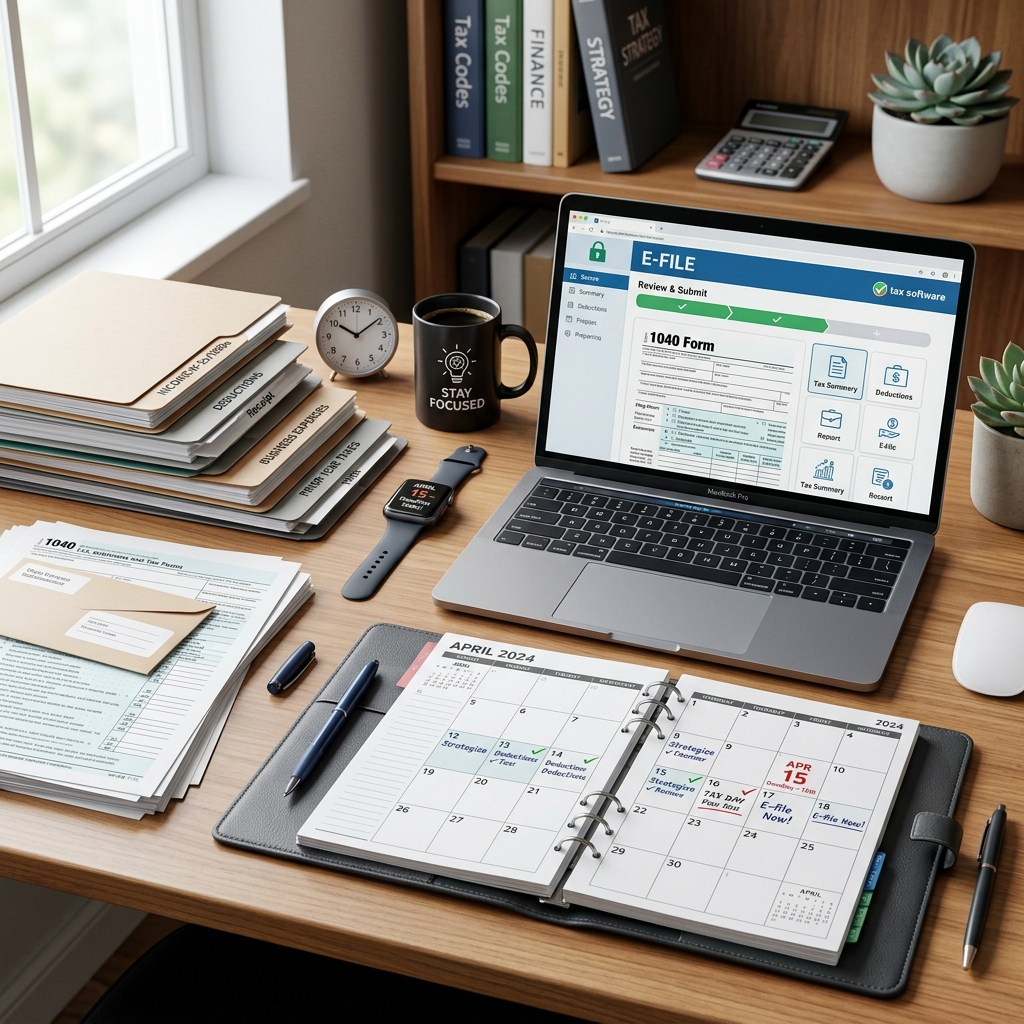
If you are staring down the tax deadline with an unfinished return, you are not alone. Many taxpayers file close to the due date, and the Internal Revenue Service (IRS) provides tools and rules that can help you finish correctly rather than rush into costly mistakes. The key is to move from panic to a step-by-step plan.
This guide explains how to file at the last minute while staying within the law, minimizing penalties, and still capturing valuable deductions and credits. It is inspired by practical tax-filing advice but presents original strategies, explanations, and examples tailored to procrastinating filers.
Understanding What “Last Minute” Really Means
Last-minute filing does not mean sloppy filing. The tax deadline is firm, and failing to act can trigger two separate IRS penalties: one for failing to file and another for failing to pay. Knowing this distinction shapes how you should prioritize your next steps.
| Issue | What Triggers It? | Typical Impact |
|---|---|---|
| Failure-to-file penalty | Not submitting a tax return (or extension) by the deadline. | Monthly penalty based on unpaid tax; can grow quickly. |
| Failure-to-pay penalty | Not paying owed tax by the deadline, even if you file or extend. | Additional interest and penalty charges on unpaid amounts. |
| No penalty for late filing with refund | You file late but are owed a refund and no tax is due. | No late-filing penalty, but your refund is delayed and may eventually expire. |
From a last-minute perspective, your first priority is to avoid or limit penalties, even if your return is not perfect yet. That often means filing something—either a completed return or an extension—with at least an estimated payment.
Step 1: Create a Quick Filing Game Plan
The worst last-minute decision is to freeze or ignore the deadline. Instead, pause and create a simple plan you can execute over the next few hours or days.
- Decide whether you can realistically finish your return on time. Consider your income sources, whether you itemize, and whether any complex issues (small business, rental property, investments) require more time.
- Determine if you are likely to owe or receive a refund. Use your last year’s return and paycheck withholding summaries as a rough guide.
- Choose your filing method: free IRS tools, commercial software, a tax professional, or paper forms.
If it becomes clear you cannot safely finish in time, an extension may be your best way to stay compliant while buying more preparation time.
Step 2: Gather Essential Documents Efficiently
Even when you are rushing, organization matters. Missing documents cause errors, rejected returns, or incorrect tax calculations.
Before you start entering data, gather the core items the IRS expects on an individual tax return.
- Identity information: Social Security numbers or taxpayer identification numbers for you, your spouse, and dependents.
- Income forms: W‑2s, 1099s (for freelance work, interest, dividends, unemployment, retirement distributions), and K‑1s if you have partnership or S‑corporation income.
- Documentation for adjustments and deductions: mortgage interest statements, property tax records, student loan interest, tuition forms, and retirement contribution confirmations.
- Proof of credits: child and dependent care expenses, education expenses, energy-efficient home improvements, or health coverage records.
- Prior-year return: helpful for carryovers (like capital losses) and for checking last year’s filing status and dependency claims.
The IRS makes many of its publications and forms available online, which can help you confirm whether you are missing something critical.
Step 3: Choose Fast and Secure Filing Tools
At the last minute, speed and accuracy matter. Electronic filing (e‑filing) is the quickest way to get your return to the IRS and receive any refund.[10] It also reduces some common errors compared with handwritten paper returns.
Benefits of E‑Filing for Procrastinators
- Immediate IRS receipt confirmation: You get electronic acknowledgment rather than waiting for postal delivery.
- Faster refunds: When paired with direct deposit, e‑filed returns usually produce refunds much more quickly than paper filing.[10]
- Built‑in error checks: Software often flags missing Social Security numbers, math errors, or incompatible entries before you submit.
Official IRS resources include online filing options and tools for many taxpayers, such as free filing programs and fillable forms. While commercial products can be convenient, make sure you understand the costs and avoid signing up for unnecessary add‑ons in the rush.
Step 4: Request an Extension When You Need More Time
If you cannot finish your return accurately by the deadline, requesting an extension is a legitimate and widely used strategy. The IRS explicitly advises taxpayers who cannot file on time to request an extension by the due date to avoid the failure‑to‑file penalty.
Key Facts About Tax Filing Extensions
- What an extension does: Generally gives you an extra six months to submit your completed return.
- What it does not do: It does not extend the time to pay the tax you owe. You should estimate your tax and pay as much as possible by the original deadline.
- How to request: You can usually request an automatic extension electronically or by submitting the appropriate IRS form.
From a last-minute standpoint, think of an extension as a way to trade a few hours of panic for several months of careful preparation, while still staying within the IRS rules.
Step 5: Make Smart Last‑Minute Payment Decisions
If you expect to owe tax, it is better to pay something rather than nothing by the deadline. The IRS allows various online payment methods, including direct transfer from bank accounts and electronic payment agreements.
- Estimate conservatively: Use your prior-year tax and current income to estimate your liability. Paying slightly more than you think you owe can reduce penalty exposure; any excess is typically refunded.
- Explore payment plans: If you cannot pay in full, the IRS offers short‑term and long‑term payment arrangements. These help you avoid being treated as if you are ignoring your tax obligations.
- Avoid ignoring the bill: Even limited payments demonstrate good faith and limit interest and penalties.
The goal is to show the IRS you are engaged with the process, not evading it, while you fine‑tune your return in the days or weeks ahead.
Step 6: Maximize Last‑Minute Deductions and Credits
Rushing increases the risk that you will overlook tax breaks. However, even as the deadline approaches, some opportunities remain, especially around retirement contributions and certain credits.
Retirement Contributions You May Still Be Able to Make
- Traditional IRA contributions: The IRS generally allows deductible contributions for the prior year up to the tax-filing deadline, subject to income limits and annual caps.
- SEP‑IRA contributions: Self‑employed individuals and small-business owners may have higher limits for SEP‑IRAs, constrained by a percentage of compensation and an annual maximum.
These contributions can both build retirement savings and lower your taxable income if you qualify for deductions.
Credits and Deductions Commonly Overlooked Under Time Pressure
- Child and dependent care credit: If you pay for qualifying care so you can work or look for work, you may be eligible for a credit.
- Education-related tax benefits: Qualified tuition and related expenses can produce credits or deductions depending on your circumstances.
- Energy-efficient home improvement credits: Recent legislation expanded credits for certain high-efficiency home upgrades, including qualifying windows, doors, heaters, and insulation.
Taking a few extra minutes to scan IRS resources for credits and deductions relevant to your situation can be worth hundreds or thousands of dollars.
Step 7: Avoid Common Last‑Minute Errors
Many rejected returns and delayed refunds have nothing to do with complex tax law. They come from simple mistakes that are especially likely when people are rushing.
- Incorrect Social Security numbers: Double‑check SSNs for you, your spouse, and dependents. A single digit error can cause processing problems.
- Wrong filing status: Confirm whether you should file as single, married filing jointly, married filing separately, head of household, or qualifying surviving spouse.
- Math mistakes: Electronic tools reduce these, but if you are using paper forms, check calculations carefully.
- Missing signatures or dates: Paper returns must be signed and dated; unsigned returns can be treated as not filed.
- Bank account errors for direct deposit: Verify routing and account numbers to prevent delays or misdirected refunds.
Slow down for one final review before you hit “submit” or seal the envelope. Those last few minutes can prevent weeks of frustration.
Step 8: Use Official IRS Tools to Reduce Stress
The IRS provides several online resources designed specifically to help taxpayers—including those filing at the last minute—navigate tax questions and manage their accounts.
- Interactive Tax Assistant: An online tool that answers common tax law questions, helping you determine eligibility for credits, whether income is taxable, and more.
- Online account access: Many taxpayers can view balances, payment history, and key notices through a secure IRS online portal.
- Free online filing options: Depending on income and filing complexity, you may qualify for free filing programs supported or hosted through IRS channels.
Relying on official sources helps you avoid misinformation and reduces the risk of falling for scams that often target stressed filers near tax season.
Step 9: Planning Ahead So Next Year Is Easier
Once you have filed this year’s return—even at the last minute—take advantage of your momentum to make next year smoother. The IRS allows taxpayers to adjust withholding and make estimated tax payments to avoid large surprises in the future.
- Review and adjust your paycheck withholding: Using IRS tools and employer forms, you can increase or decrease withholding so your tax bill is closer to zero next year.
- Set up quarterly estimated payments if you are self‑employed: Regular estimated payments help prevent large balances due and underpayment penalties.
- Create a tax file for the new year: Keep receipts, statements, and major financial documents sorted by category as the year goes on.
Procrastination once is understandable; turning last-minute filing into a yearly habit can be expensive. A few preventive steps now can save you stress later.
FAQs About Last‑Minute Tax Filing
1. If I file an extension, do I still have to pay by the deadline?
Yes. An extension gives you more time to file, but not more time to pay. You should estimate your tax and pay as much as you reasonably can by the original due date to limit penalties and interest.
2. What happens if I miss the deadline and do nothing?
If you owe tax and neither file a return nor request an extension, the IRS may charge a failure-to-file penalty and a failure-to-pay penalty, both calculated based on your unpaid tax. The longer you wait, the larger these amounts can grow.
3. Do I get penalized if I file late but am owed a refund?
Generally, if you are due a refund and no tax is owed, the IRS does not assess a late-filing penalty. However, your refund will be delayed, and in some cases, there is a limited time to claim it.
4. Is e‑filing always better than filing on paper?
For most last-minute filers, e‑filing is faster, more convenient, and less prone to certain errors than paper filing.[10] It also leads to quicker refunds when combined with direct deposit.
5. Can I still contribute to an IRA for last year near the deadline?
Yes, in many cases you can make deductible prior-year IRA contributions up to the tax-filing deadline, subject to IRS limits and income rules. Check current IRS guidance or consult a financial professional to confirm eligibility.
References
- Last-minute filing tips, resources to help taxpayers who still need to file — Internal Revenue Service. 2024-04-12. https://www.irs.gov/newsroom/last-minute-filing-tips-resources-to-help-taxpayers-who-still-need-to-file
- Tips and resources to help last minute tax filers — Internal Revenue Service. 2024-04-14. https://www.irs.gov/newsroom/tips-and-resources-to-help-last-minute-tax-filers
- 5 Important Tips for Last-Minute Tax Filing — Credit Human. 2024-03-20. https://www.credithuman.com/building-slack/5-important-tips-for-last-minute-tax-filing
- IRS De-stress: 5 Tips for Last Minute Taxpayers — First People’s Community Federal Credit Union. 2023-03-15. https://www.myfpcu.com/learn/resources/irs-de-stress-5-tips-for-last-minute-taxpayers
- 4 last-minute tax tips to consider before filing your return — MassMutual. 2024-03-28. https://blog.massmutual.com/planning/tax-tips-last-minute
- Five last-minute tax tips — TIAA. 2024-03-25. https://www.tiaa.org/public/invest/services/wealth-management/perspectives/last-minute-tax-tips-and-strategies
- How To File Your Taxes at the Last Minute in 2026 — CNBC. 2026-04-10. https://www.cnbc.com/select/how-to-file-your-taxes-at-the-last-minute/
Similar Articles








Read full bio of Sneha Tete




