
Should Congress Weaken the Miranda Rule?
Exploring whether changing the Miranda rule would enhance security or erode core constitutional protections.
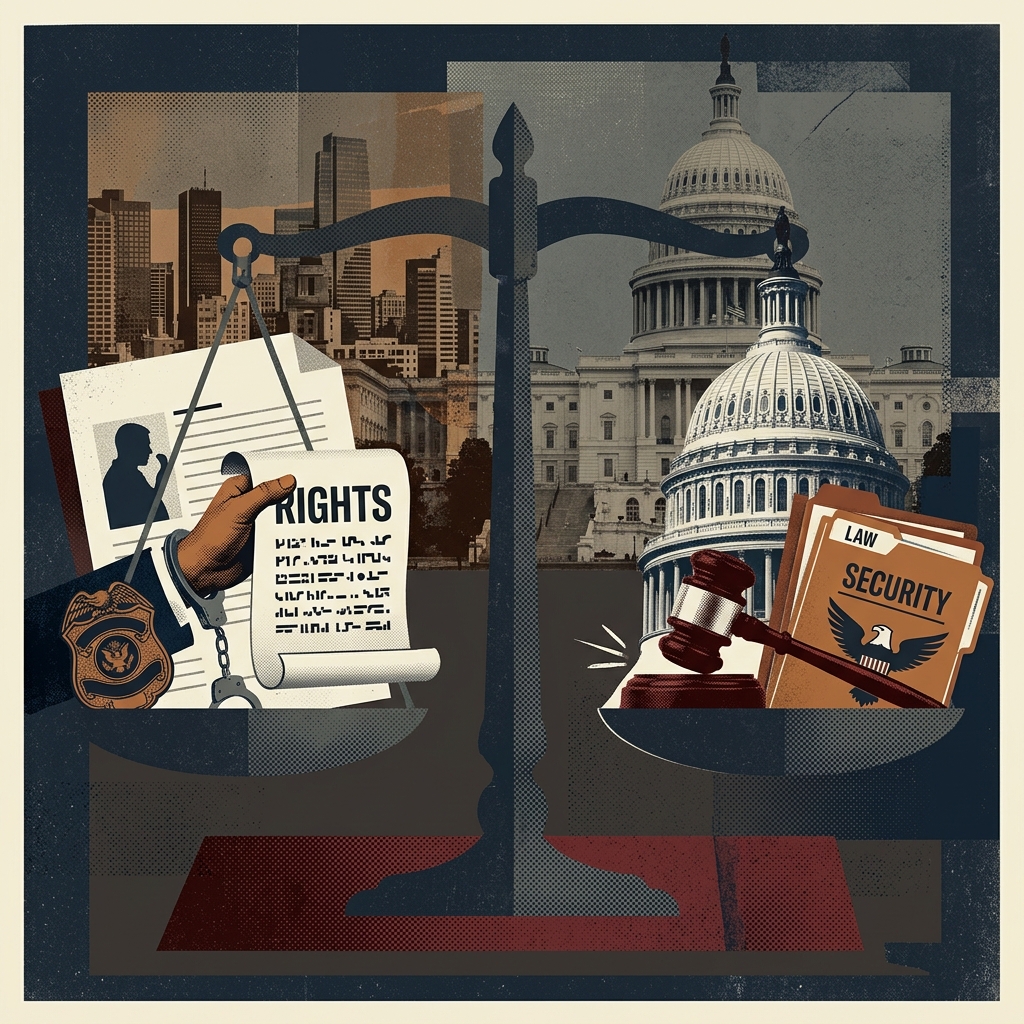
The Miranda rule has become one of the most familiar features of the American criminal justice system. For decades, television and films have dramatized police officers reciting the familiar lines: “You have the right to remain silent” and “You have the right to an attorney.” Behind this pop‑culture ritual is a serious constitutional safeguard that protects the privilege against self‑incrimination under the Fifth Amendment and the right to counsel under the Sixth Amendment.
Occasionally, especially in the context of terrorism investigations or high‑profile crimes, political leaders have asked whether Congress should loosen or “modernize” the Miranda rule in the name of public safety. That question raises complex issues about constitutional law, the separation of powers, and the practical impact on law enforcement and civil liberties.
This article examines what Miranda requires, what Congress can and cannot do about it, and whether weakening Miranda would realistically improve security—or simply erode rights without significant investigative benefit.
Foundations of the Miranda Rule
The Miranda rule originates from the United States Supreme Court decision Miranda v. Arizona, decided in 1966. The Court held that before police interrogate a suspect who is in custody, they must use procedural safeguards to inform the suspect of critical constitutional rights. If those safeguards are not provided, statements obtained in custodial interrogation are generally inadmissible against the suspect at trial.
Core Constitutional Principles
- Fifth Amendment: Protects individuals from being compelled to be witnesses against themselves in criminal cases.
- Sixth Amendment: Guarantees the right to assistance of counsel in criminal prosecutions, which becomes highly relevant once formal charges are filed.
Miranda operates at the intersection of these two protections: it aims to prevent coercive custodial interrogations from undermining the privilege against self‑incrimination and to ensure access to counsel when the stakes are highest.
What Must Police Tell Suspects?
According to the Constitution Annotated and subsequent case law, Miranda requires that suspects in custody receive explicit warnings before interrogation.
- The right to remain silent.
- A warning that anything said may be used as evidence in court.
- The right to an attorney.
- If the suspect cannot afford an attorney, the right to have one appointed at no cost.
The Supreme Court has clarified that these warnings do not need to be read verbatim from the Miranda opinion, but the language used must clearly convey these core rights. Once a suspect invokes the right to remain silent or requests counsel, questioning must stop, and police must respect the suspect’s decision.
| Warning | Underlying Right | Practical Effect |
|---|---|---|
| Right to remain silent | Fifth Amendment privilege against self‑incrimination | Suspect can decline to answer questions without penalties. |
| Anything said can be used in court | Due process and fair notice | Ensures suspect understands the consequences of speaking. |
| Right to an attorney | Sixth Amendment right to counsel | Allows legal advice before and during questioning. |
| Attorney will be appointed if indigent | Equal protection and fairness concerns | Protects poor suspects from being effectively forced to proceed alone. |
Congress and Miranda: Constitutional Limits
Proposals to weaken Miranda often assume that Congress can simply pass a statute redefining or reducing the warnings police must give. But Supreme Court precedent places significant constitutional limits on any such effort.
United States v. Dickerson: Miranda as Constitutional Law
In United States v. Dickerson (2000), the Supreme Court confronted a federal statute enacted in 1968 that was designed to replace Miranda with a more flexible “voluntariness” standard. The Court held that Miranda announced a constitutional rule, and therefore Congress could not override it by ordinary legislation.
The Court explicitly stated that Congress “may not supersede” Miranda, reaffirming that Miranda warnings remain required before custodial interrogation if statements are to be used in court. Any statute that attempts to dilute this core requirement would likely face serious constitutional challenge.
Can Congress Clarify or Supplement Miranda?
While Congress cannot eliminate Miranda, scholars have explored whether Congress can legislate around its edges—either by codifying Miranda protections or by addressing specific exceptions.
- Some legal analysts argue that Congress could formally codify Miranda in federal law, standardizing protections and reinforcing the Supreme Court’s framework.
- Others contend that Congress has some room to regulate the rules of evidence or define when statements are admissible, as long as such statutes do not contradict the constitutional core of Miranda.
Because Miranda rests on constitutional interpretation of the Fifth Amendment, any legislative attempt to weaken it would be evaluated by courts in light of Dickerson and related precedents. The safest path for Congress legally is not to loosen Miranda, but to strengthen and clarify it consistent with constitutional principles.
The Public Safety Exception and Calls for “Modernization”
Even strong defenders of Miranda recognize that there are situations in which rapid questioning may be necessary to protect the public. The Supreme Court acknowledged this in New York v. Quarles, creating the public safety exception.
What Is the Public Safety Exception?
Under Quarles, when there is an immediate threat to public safety—for example, a missing weapon in a crowded area—police may ask limited questions aimed at neutralizing the threat before giving Miranda warnings. Statements obtained in this narrow context can still be admissible, even though the suspect was not fully Mirandized.
Key features of this exception include:
- Immediacy: The threat must be urgent and concrete.
- Scope: Questions must relate directly to removing the danger (e.g., “Where is the gun?”).
- Limited use: It is not a blanket license to interrogate without warnings on all topics.
Recent Proposals to Expand the Exception
After notable terrorism incidents, officials have urged Congress to “modernize” or “clarify” the public safety exception for terrorism suspects. For example, former Attorney General Eric Holder suggested that Congress should adjust Miranda rules in terrorism cases to allow broader questioning before warnings.
Civil liberties organizations have opposed such proposals, arguing that there is no evidence that Miranda has prevented investigators from obtaining useful information from terrorism suspects. The ACLU notes that defendants in terrorism cases have continued to cooperate even after being informed of their rights, undermining claims that Miranda obstructs investigations.
Would Weakening Miranda Enhance Public Safety?
Supporters of loosening Miranda often frame the issue as a trade‑off: more flexibility for police in exchange for some reduction in suspects’ protections. The practical question is whether such a trade‑off would truly improve safety or convict more dangerous offenders.
Arguments for Loosening Miranda
- Speed in emergencies: In terrorism or mass‑casualty scenarios, investigators may want additional time to question suspects before delivering warnings, arguing that hesitation could cost lives.
- Complex investigations: Some argue that sophisticated suspects are well aware of their rights and may immediately invoke them, making it harder to gather intelligence.
- Flexibility for law enforcement: Proponents view Miranda as a rigid, judge‑made rule that can obstruct dynamic police work in real‑world situations.
Arguments Against Loosening Miranda
Critics raise constitutional, practical, and ethical objections to weakening the rule:
- Constitutional constraints: The Supreme Court has declared Miranda a constitutional requirement, limiting what Congress can change without violating the Fifth Amendment.
- Risk of coercion: Reducing protections may incentivize aggressive, coercive tactics that produce unreliable statements and false confessions.
- Evidence admissibility: Statements obtained without proper warnings may be excluded at trial, undermining prosecutions rather than strengthening them.
- No clear safety benefit: There is little empirical evidence that Miranda has significantly impeded terrorism investigations; suspects often cooperate post‑warning.
- Erosion of civil liberties: Weakening Miranda would disproportionately affect vulnerable populations who may not understand their rights without clear warnings.
How Miranda Shapes Everyday Police Practices
Although debates over Miranda often focus on extraordinary cases like terrorism, the rule applies daily in routine arrests. It shapes how officers approach questioning and how courts review confessions.
Custodial Interrogation and “Being in Custody”
Miranda only applies when a suspect is both in custody and subjected to interrogation. Courts have defined “custody” as a situation where a reasonable person would feel they are not free to leave, and interrogation as questioning or its equivalent likely to elicit an incriminating response.
If a person is stopped briefly on the street or voluntarily talks to police without being restrained, Miranda may not apply. But once a suspect is formally arrested or significantly deprived of freedom, officers must provide the warnings before interrogating.
Invocation and Waiver of Rights
After receiving Miranda warnings, a suspect can choose either to invoke or to waive those rights.
- Invocation: If the suspect indicates a desire to remain silent or asks for an attorney, questioning must cease. Further interrogation is only permissible if counsel is present or the suspect themselves reinitiates the conversation and validly waives their rights.
- Waiver: If the suspect knowingly and voluntarily waives Miranda rights, officers may continue questioning. Courts will later scrutinize whether the waiver was genuinely informed and voluntary.
These standards help ensure that any confession introduced at trial reflects the suspect’s free choice rather than pressure or ignorance of rights.
Policy Choices: Loosen, Preserve, or Codify?
When Congress considers Miranda, it confronts several options, each with distinct legal and policy implications.
Option 1: Loosen Miranda Through Statute
Attempts to statutorily weaken Miranda—such as by authorizing broader unwarned interrogation or redefining when warnings are required—would likely face constitutional challenges based on Dickerson and the Fifth Amendment.
Potential consequences include:
- Litigation over the statute’s validity and application.
- Increased risk that critical confessions will be suppressed.
- Public concern over erosion of long‑standing rights.
Option 2: Preserve Miranda While Clarifying Exceptions
Congress could focus on clarifying narrow exceptions like the public safety exception, but such efforts must remain consistent with constitutional standards.
- Statutes could define factors courts may consider in determining when a genuine public safety emergency exists.
- Legislation could require documentation or oversight when officers rely on the exception, balancing flexibility with accountability.
Option 3: Codify and Strengthen Miranda
Some scholars advocate for comprehensive federal legislation that codifies Miranda, ensuring uniform application and potentially providing additional safeguards.
- Clear national standards could reduce confusion across states.
- Enhanced protections (e.g., requiring audio or video recordings of custodial interrogations) could improve reliability and reduce disputes about what was said.
- Codification would signal strong congressional support for constitutional rights rather than efforts to weaken them.
Frequently Asked Questions (FAQs)
1. Can Congress completely eliminate Miranda warnings?
No. The Supreme Court has held that Miranda is a constitutional rule interpreting the Fifth Amendment. In United States v. Dickerson, the Court stated that Congress may not supersede Miranda by legislation. Congress can regulate related procedures but cannot abolish the core requirement that suspects in custodial interrogation be informed of their rights.
2. Do police always have to read Miranda rights when someone is arrested?
Not necessarily. Miranda applies when there is both custody and interrogation. If a person is arrested but officers do not question them, Miranda warnings are not required. However, if officers intend to interrogate a person after taking them into custody, they must provide the warnings if they want any statements to be admissible in court.
3. What happens if police question someone without giving Miranda warnings?
If a suspect in custody is interrogated without receiving proper warnings, the statements obtained are generally inadmissible against the suspect at trial. There are limited exceptions, such as certain public safety situations, but courts scrutinize these closely.
4. Does weakening Miranda make it easier to convict terrorism suspects?
Evidence from past terrorism cases does not clearly support this claim. Civil liberties advocates point out that terrorism suspects have often continued to provide information even after receiving Miranda warnings, and there is no clear demonstration that Miranda has obstructed effective investigations. Weakening Miranda could instead lead to more litigation over coerced or unwarned statements and risk excluding crucial evidence.
5. Are Miranda warnings the same in every state?
The exact wording can vary, but all versions must convey the core rights identified by the Supreme Court: the right to remain silent, the warning that statements may be used in court, the right to an attorney, and the right to an appointed attorney if indigent. States may provide additional protections, but they cannot offer less than the constitutional minimum.
References
- Attorney General Asks Congress To Dilute Miranda Warning — American Civil Liberties Union. 2010-05-13. https://www.aclu.org/press-releases/attorney-general-asks-congress-dilute-miranda-warning
- The Current Fragility of Miranda: Why Miranda Could Follow Dobbs Back to the States, and Why Congress Must Act — Indiana Law Review (McKinney School of Law). 2024. https://mckinneylaw.iu.edu/practice/law-reviews/ilr/pdf/vol59p523.pdf
- The Miranda Rule — American Civil Liberties Union. 2010. https://www.aclu.org/documents/miranda-rule
- Amdt5.4.7.5 Miranda Requirements — Constitution Annotated, U.S. Congress. 2023. https://constitution.congress.gov/browse/essay/amdt5-4-7-5/ALDE_00013690/
- Supreme Court Upholds Miranda Warnings — ACLU of Missouri. 2000-06-26. https://www.aclu-mo.org/news/supreme-court-upholds-miranda-warnings/
- Why the Miranda Decision Still Matters Years Later — Law for Seniors (State of Arizona). 2016. https://lawforseniors.org/lifelong-legal-learning/why-the-miranda-decision-still-matters-years-later
- Miranda Rights Supreme Court Cases — Justia. 2023. https://supreme.justia.com/cases-by-topic/miranda-rights/
Similar Articles








Read full bio of medha deb




