
Shipping Alcohol: Complete Compliance Guide For Businesses
Navigate federal and state regulations for legally shipping alcoholic beverages.
Understanding the Regulatory Framework for Alcohol Shipments
Shipping alcoholic beverages involves navigating a complex web of federal, state, and carrier-specific regulations that differ significantly from shipping standard consumer goods. The foundation of alcohol shipping compliance rests on licensing requirements established after the 21st Amendment, which granted individual states authority over alcohol distribution within their borders. This decentralized regulatory approach means that what is legal in one state may be entirely prohibited in another, making comprehensive research essential before attempting any shipment.
Federal law prohibits certain carriers from handling alcohol entirely, while others impose stringent requirements on shippers and recipients. Understanding these distinctions is critical for businesses and individuals seeking to move alcohol products legally. The penalty for non-compliance can include criminal charges, civil fines, and license revocation, making adherence to regulations non-negotiable.
Essential Licensing and Permitting Requirements
Before any alcohol shipment can occur, the shipper must obtain appropriate licenses and permits. Businesses engaged in alcohol distribution must secure federal approval and state-specific direct-to-consumer (DTC) licenses for each destination state where they intend to ship. This requirement applies differently depending on the business type: wineries, distilleries, breweries, and retailers each face distinct licensing pathways.
Federal licensing begins with registering as an alcohol shipper through the Alcohol and Tobacco Tax and Trade Bureau (TTB). This registration establishes your legitimacy as a commercial entity authorized to move alcohol products. Additionally, most states require businesses to register with their alcohol beverage regulatory agency and obtain state-specific permits before shipping begins.
For individuals without a business license or retail operations, legal options are severely limited. In most states, consumers cannot legally ship alcohol to others unless they operate a licensed winery or retailer. However, a significant legal pathway exists: consumers can purchase alcohol from licensed retailers or wineries and have it shipped directly to residential addresses within the same state, provided the shipping originates from an authorized business.
Tax collection and reporting obligations accompany alcohol shipping in virtually all jurisdictions. Businesses must track all shipments, report sales to relevant state agencies, and remit appropriate taxes. These administrative requirements demand meticulous record-keeping and regular compliance audits to maintain licensing status.
Carrier Selection and Approval Processes
Not all shipping carriers handle alcoholic beverages. The three major carriers—UPS, FedEx, and DHL—each maintain distinct policies and approval requirements. The United States Postal Service (USPS) explicitly prohibits shipping alcohol of any kind under federal law, making it unavailable as an option regardless of licensing or permits held by the shipper.
UPS Alcohol Shipping Program
UPS permits alcohol shipping exclusively for licensed retailers and producers who have executed a formal Alcohol Shipping Agreement. To qualify, shippers must maintain an active UPS account number and complete a contractual agreement specifying the terms of service. UPS requires proof of federal licensing and state-specific permits before approving shipments.
Once approved, UPS enforces strict operational protocols. Every package containing alcohol must be signed for by a person aged 21 or older at the point of delivery. The carrier verifies recipient age through identification inspection, creating an auditable record of compliance. Shipment documentation must clearly indicate that the package contains alcohol, and all labeling must conform to both UPS and state regulatory standards.
FedEx Alcohol Shipping Services
FedEx maintains more restrictive policies than UPS, varying by product type. Wine can be shipped under licensee-to-consumer agreements, meaning the business ships directly to individual consumers. Beer and spirits, however, require licensee-to-licensee arrangements, where both sender and recipient must be licensed commercial entities. This distinction significantly limits which products businesses can ship directly to residential consumers through FedEx.
Becoming FedEx-approved requires contacting a dedicated FedEx account executive or alcohol shipping specialist. After initial contact, applicants proceed through a formal authorization process culminating in signing a FedEx Alcohol Shipping Agreement. FedEx verifies licensing status and maintains the agreement documentation for compliance purposes.
FedEx enforces specific packaging requirements using polystyrene inner materials protected by cardboard outer boxing. This specification ensures alcohol shipments maintain structural integrity during transport. Like UPS, FedEx mandates adult signatures at delivery and requires comprehensive labeling indicating alcohol content.
DHL Regional Shipping Options
DHL offers limited alcohol shipping services for licensed producers and wholesalers in 37 states. The carrier evaluates applications case-by-case, requiring documentation demonstrating proper licensing and state approval. Regional variations mean availability and service scope differ by location, necessitating direct contact with local DHL representatives to determine feasibility.
Packaging and Labeling Standards
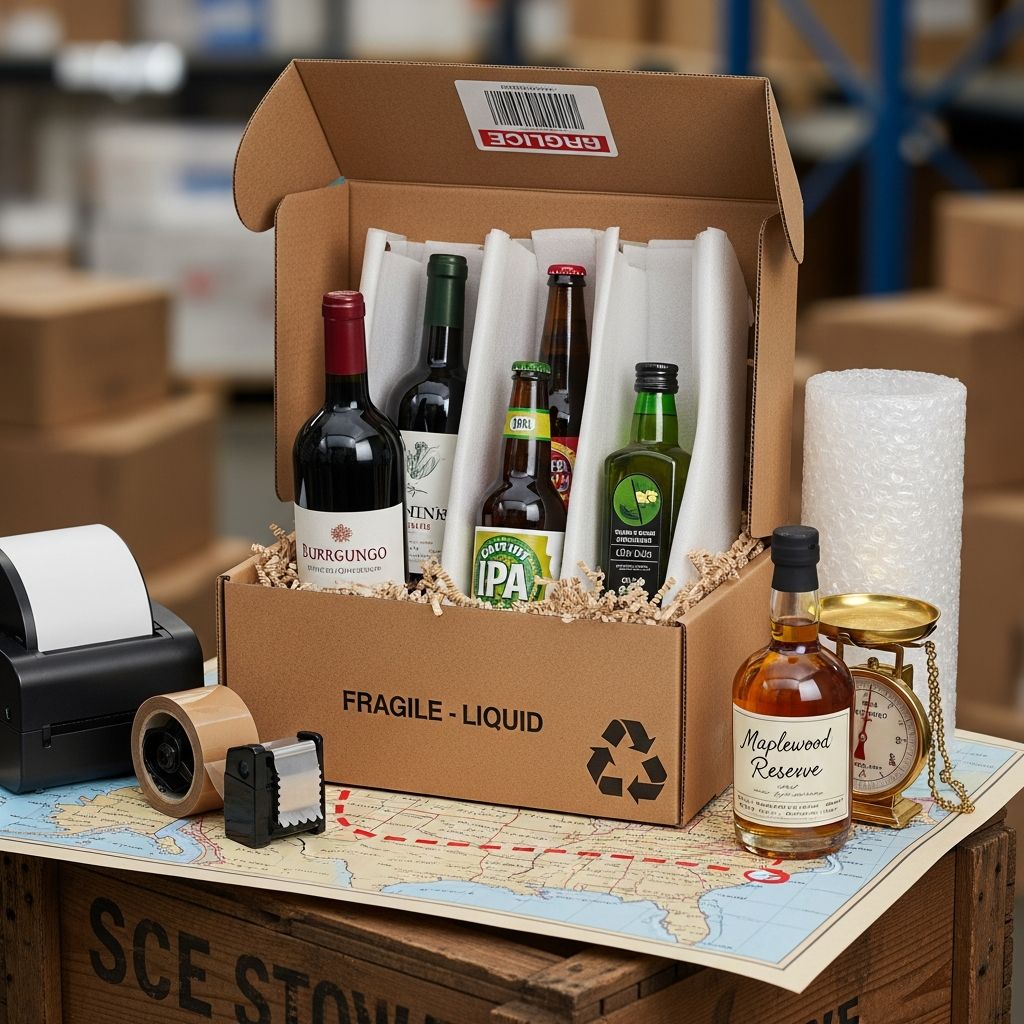
Proper packaging protects alcohol during transit while signaling content to handlers and recipients. Carriers establish specific material requirements designed to prevent breakage and leakage, which could damage the shipment or surrounding packages.
Material Specifications
UPS requires expanded polystyrene (EPS) foam or molded fiber trays as inner packaging materials. These materials absorb shock and prevent bottles from shifting during transport. The alcohol bottles must be positioned in the center of the outer box, away from all sides, creating buffer zones that protect against impact damage.
FedEx specifies polystyrene foam liners with cardboard external boxes. Both carriers prohibit materials such as packing peanuts, wrapping paper, and cardboard dividers, which fail to provide adequate cushioning. Reinforcing tape must be applied generously to seal boxes, creating packages that remain structurally sound throughout the delivery process.
Labeling and Recipient Requirements
Every alcohol shipment must display prominent labeling indicating the package contains alcohol. The standard label reads: “CONTAINS ALCOHOL: SIGNATURE OF PERSON AGE 21 YEARS OR OLDER REQUIRED FOR DELIVERY.” This clear marking alerts delivery personnel to age verification requirements and informs recipients of what they are receiving.
Recipients must sign for packages in person, providing government-issued identification verifying their age as 21 or older. Delivery cannot be completed if the recipient is unavailable or unable to provide age verification. This requirement creates accountability by ensuring only eligible individuals receive alcohol shipments.
State-by-State Regulation Variations
Individual states exercise significant authority over alcohol distribution, resulting in a patchwork of regulations that fundamentally affect shipping feasibility. Three states—Alabama, Mississippi, and Utah—completely prohibit direct-to-consumer alcohol shipments with no exceptions, making any alcohol shipment to these destinations illegal regardless of licensing or carrier.
Other states permit wine shipments but restrict spirits and beer to licensee-to-licensee transactions. Some jurisdictions impose quantity limits, such as Maine’s restriction of 12 cases of wine per year per household, while others like California establish no upper limits. State-specific regulations also vary regarding which types of businesses can ship alcohol, whether taxes must be collected at sale, and reporting requirements for tracking shipments.
The distinction between in-state and out-of-state shipments further complicates compliance. Some states allow shipments from in-state wineries to consumers but prohibit out-of-state winery shipments. Others reverse this approach. Still others differentiate based on alcohol type, permit shipping of wine but not spirits, or create tiered approval processes requiring separate licenses for different product categories.
Examples of State-Specific Policies
California permits unlimited wine shipments from licensed wineries to consumers. Maine restricts wine shipments to 12 cases annually per household. Some states require that wine shipped directly to consumers originate from in-state producers exclusively. Other jurisdictions impose no origin restrictions but maintain prohibitions on beer and spirits shipments to consumers.
Alabama, Mississippi, and Utah present unique challenges due to blanket prohibitions. No legitimate business can ship alcohol to these states under current law, making them effectively closed markets for DTC alcohol commerce. This regulatory status significantly impacts distribution strategies for national retailers and producers.
International Alcohol Shipments
Exporting alcohol internationally introduces additional complexity beyond domestic shipping requirements. All international shipments must use express delivery services to minimize transit time, protecting product quality and maintaining chain of custody documentation required by customs authorities.
Shippers engaging in international alcohol transactions must obtain approval for export shipments beyond their domestic alcohol shipping agreement. FedEx requires a separate international alcohol shipping agreement and mandates the FedEx International Alcohol Shipping Label (SEL-170) on all outbound shipments. Shippers bear complete responsibility for understanding and complying with destination country regulations, including import restrictions, tariffs, and packaging standards that may differ from U.S. requirements.
Documentation for international shipments must include a commercial invoice detailing product specifications, pricing, and quantity. A customs declaration statement specifies the shipment contents and declares its value for tariff calculation. Any permits required by destination countries must accompany the shipment, and shippers must independently verify these requirements by contacting relevant regulatory agencies in recipient nations.
Special Considerations for Business Models
Different alcohol business types face distinct regulatory pathways. Wineries can often ship directly to consumers under winery licenses, simplifying the process compared to retail liquor stores, which require separate DTC licenses. Distilleries and breweries may face different approval requirements and restrictions depending on state location and destination markets.
Wholesalers and distributors typically operate under different licensing frameworks that do not permit direct consumer shipments. Their business model involves shipping to licensed retailers who then sell to consumers, avoiding the regulatory scrutiny applied to DTC operations. Understanding whether your business model qualifies for DTC shipping is essential before investing in licensing and carrier agreements.
Consequences of Non-Compliance
Shipping alcohol without proper licenses and permits constitutes federal and state violations with serious consequences. Criminal charges can result from unlicensed alcohol distribution, potentially leading to imprisonment for repeat violations. Civil penalties include substantial fines that can exceed the value of products shipped. Any existing alcohol licenses held by violators face suspension or permanent revocation, effectively terminating legal alcohol distribution operations.
Carriers also implement enforcement mechanisms. Alcohol shipments discovered lacking proper documentation result in seizure and destruction. Shippers found making unauthorized shipments face account suspension or permanent deactivation with these carriers, eliminating future shipping access even for compliant shipments. These enforcement actions create both financial losses and operational disruptions that extend far beyond the immediate violation.
Frequently Asked Questions
Q: Can individuals ship alcohol to friends or family members?
A: Individuals without alcohol licenses generally cannot legally ship alcohol to others. However, they can purchase alcohol from licensed retailers or wineries and have it shipped to themselves or others within the same state, provided the business making the shipment holds appropriate licenses and permits.
Q: Why does USPS prohibit alcohol shipping?
A: Federal law explicitly prohibits USPS from transporting alcoholic beverages of any kind. This restriction applies universally regardless of licensing status and cannot be overcome through special permits or agreements.
Q: What happens if alcohol arrives damaged during shipping?
A: Proper packaging using carrier-specified materials minimizes damage risk. If damage occurs, file claims with the carrier through their standard claims process. Maintain documentation including photos, carrier tracking numbers, and carrier communications for claim support.
Q: Are there quantity limits for alcohol shipments?
A: Quantity limits vary significantly by state. Some states impose annual household limits (like Maine’s 12-case restriction), while others maintain no restrictions. Check specific state regulations for your destination to confirm applicable quantity rules.
Q: Which product types can be shipped to consumers?
A: Policies vary by carrier and state. FedEx permits wine shipments to consumers but requires licensee-to-licensee arrangements for beer and spirits. UPS permits all product types under appropriate agreements. Check both your destination state regulations and chosen carrier policies for specific product restrictions.
Q: Do I need separate agreements for each carrier?
A: Yes. UPS, FedEx, and DHL each maintain independent approval processes and agreements. Signing an agreement with one carrier does not confer authorization with others. Businesses must apply separately to each carrier they intend to use.
References
- How to Ship Alcohol | U.S. State Rules (UPS, FedEx & USPS) — Korona POS. 2024. https://koronapos.com/blog/how-to-ship-alcohol/
- How to Ship Alcohol: Legal Rules & Best Practices — Sovos. 2024. https://sovos.com/blog/ship/how-to-ship-alcohol/
- How to Ship Alcohol: Regulations, Licenses & Services — FedEx. 2025. https://www.fedex.com/en-us/shipping/alcohol.html
- How to Ship Alcohol in All 50 States (Law and Courier Regulations) — Epos Now. 2024. https://www.eposnow.com/us/resources/how-to-ship-alcohol/
- How to Ship Alcohol in the US: A Simple Guide — Spirited Shipper. 2024. https://spiritedshipper.com/blogs/news/how-to-ship-alcohol-in-the-us-a-simple-guide
- Alcohol Delivery Laws: Which States Allow Online Alcohol Purchase? — GetTips. 2024. https://www.gettips.com/blog/alcohol-delivery-laws
Similar Articles








Read full bio of medha deb


