
Sexual Harassment In Housing: Guide For Victims And Providers
A practical guide to understanding and preventing sexual harassment in housing under fair housing law.
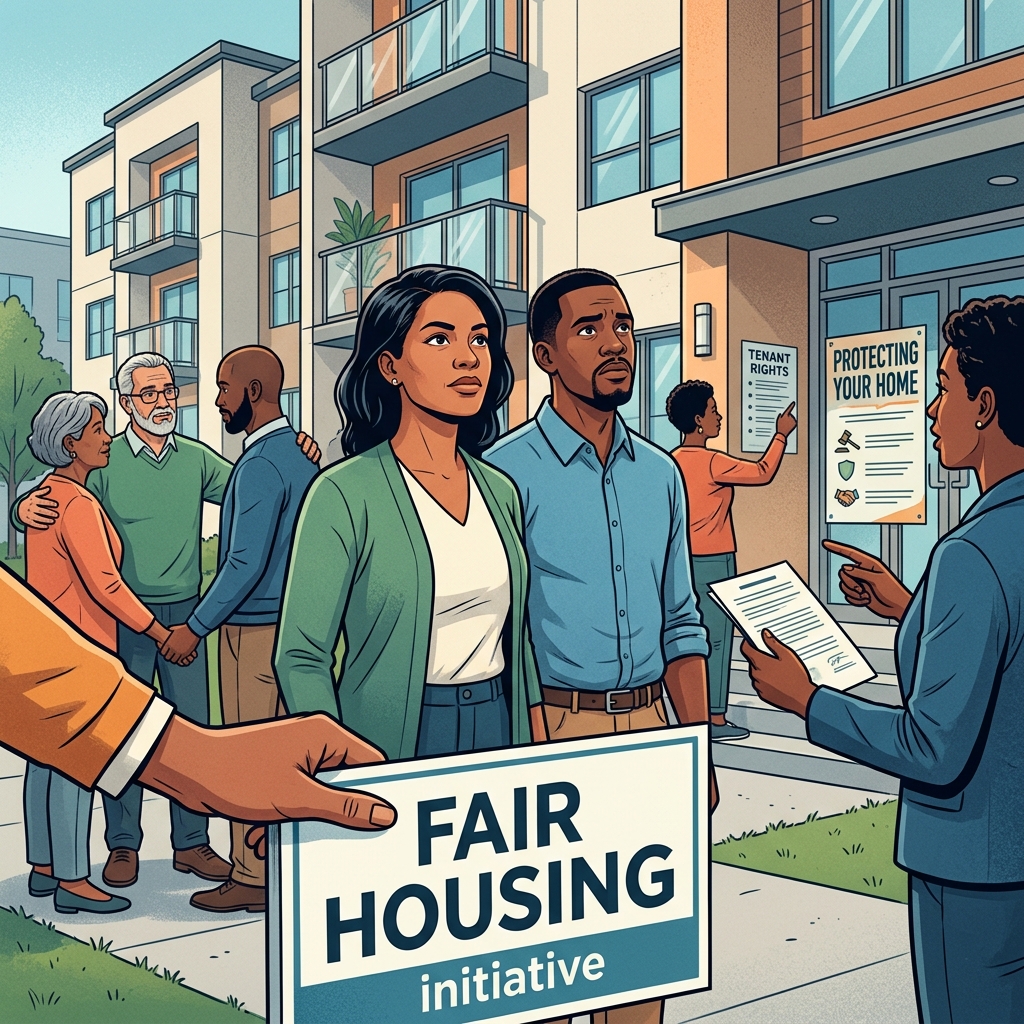
Sexual harassment in housing is a civil rights violation that can affect whether people are able to rent, keep, or safely use their homes. The U.S. Department of Justice created the Sexual Harassment in Housing Initiative to respond to this problem through enforcement, education, and coordination with other agencies. The initiative focuses on misconduct by landlords, property managers, maintenance staff, loan officers, and others who control access to housing or housing-related services.
This issue matters because housing is not just a commodity. It is a basic setting for safety, privacy, family life, and stability. When a person is pressured for sexual favors, threatened with eviction, denied repairs, or subjected to repeated unwelcome conduct, the harm goes far beyond embarrassment. It can lead to displacement, fear, financial loss, and long-term trauma. The initiative exists to make those violations easier to identify and more likely to be stopped.
What the federal initiative is designed to do
The Sexual Harassment in Housing Initiative is led by the Civil Rights Division of the Department of Justice. Its purpose is to combat illegal conduct that uses housing power as leverage for sexual coercion or harassment. In practical terms, the initiative aims to hold violators accountable, support victims, and encourage housing providers to prevent abuse before it occurs.
The Justice Department’s public materials describe the initiative as a response to harassment by people who have authority over a tenant’s housing situation. That includes individuals who can approve rentals, issue repairs, manage property access, or influence loan decisions tied to housing. The federal government treats these abuses as part of its broader fair housing enforcement mission.
| Focus area | What it means in practice |
|---|---|
| Enforcement | Investigating and bringing cases against people or companies that commit housing-related sexual harassment |
| Prevention | Encouraging policies, training, and complaint systems that reduce risk |
| Awareness | Explaining that sexual harassment in housing is illegal and reportable |
| Victim support | Helping people understand reporting options and legal protections |
Why housing harassment is especially harmful
Harassment in a housing setting is different from harassment in many other workplaces or public spaces because the victim may have limited ability to escape the person causing the harm. A tenant may depend on the same landlord for repairs, lease renewal, rent decisions, or continued access to the property. That dependency gives the harasser unusual leverage.
Recent case examples show how coercion can take many forms. According to the Justice Department, one investigation found that a landlord had engaged in a long-running pattern of sexually harassing female tenants, illustrating how abuse can persist over time when it is not challenged. Other reporting about the initiative has noted that many allegations involve offers of rent reductions, repairs, or continued tenancy in exchange for sexual conduct.
Because housing touches basic survival, victims may stay silent out of fear. They may worry about retaliation, eviction, loss of a subsidy, or becoming unable to find another affordable home. That pressure helps explain why strong enforcement and accessible complaint systems are central to the initiative.
Common patterns of illegal conduct
Federal fair housing enforcement recognizes that sexual harassment in housing does not always look the same. Some cases involve direct demands for sex. Others involve repeated comments, touching, stalking, retaliation, or the denial of services after a person rejects advances. The key issue is whether the conduct is unwelcome and tied to the person’s housing situation.
- Quid pro quo harassment, where a landlord or other housing provider offers housing benefits or threatens penalties in exchange for sexual conduct.
- Hostile environment harassment, where the conduct is severe or persistent enough to interfere with a person’s ability to live safely and comfortably in the home.
- Retaliation, where a provider punishes someone for rejecting advances or reporting misconduct.
- Service-related abuse, such as withholding repairs, access, or other housing services because of sex-based conduct or resistance to sexual demands.
These patterns matter because they help victims, advocates, and investigators recognize that harassment is not limited to one dramatic incident. It can also be a series of smaller but repeated acts that create fear or pressure over time.
Who may be covered by enforcement efforts
The initiative is aimed at people and entities with real control over housing access or living conditions. That often includes private landlords and owners, but it can also involve property managers, maintenance workers, security personnel, and others who interact with residents in positions of authority. The key question is whether the individual had power to affect the tenant’s housing experience.
National housing advocacy research has described many cases as involving private owners and operators, underscoring that the problem is not limited to a single type of housing arrangement. The Justice Department’s materials likewise frame the initiative broadly enough to reach a range of actors who control housing decisions or services.
| Potential actor | Possible source of power |
|---|---|
| Landlord or owner | Approval, lease renewal, rent, eviction, access to repairs |
| Property manager | Daily control over complaints, maintenance, and tenant communications |
| Maintenance worker | Access to the unit and influence over repair timing |
| Loan officer | Authority over housing-related financing decisions |
What victims can do if harassment occurs
Anyone who believes they are experiencing sexual harassment in housing should document what is happening and seek help quickly. Complaints may be made to federal agencies, and in some cases to local fair housing organizations or legal aid groups. Public guidance from housing enforcement agencies emphasizes that victims should not assume the conduct is too small, too personal, or too isolated to matter.
People facing harassment often benefit from recording dates, times, locations, witnesses, texts, emails, repair requests, lease notices, and any threats or promises connected to housing benefits. Those records can help show whether there was a pattern of abuse or retaliation. Early documentation can also help protect a tenant if the landlord later gives a false reason for eviction or denial of services.
- Write down each incident as soon as possible.
- Save messages, photos, and voicemails that show unwelcome conduct.
- Keep copies of rent notices, repair requests, and lease documents.
- Report the conduct to the appropriate enforcement agency or fair housing organization.
- Seek legal help if the landlord threatens eviction or other retaliation.
How housing providers can reduce risk
Prevention is not only a legal obligation but also a practical management issue. Public housing guidance developed for providers recommends clear anti-harassment policies, staff training, complaint procedures, and regular review of how complaints are handled. These steps help make harassment less likely and make it easier for victims to report it safely.
Good prevention programs usually start with a self-assessment. That means reviewing existing policies, asking whether staff know the rules, and determining whether tenants feel comfortable raising concerns. Providers should then create written rules that forbid harassment, explain discipline for misconduct, and tell residents how to make complaints.
- Adopt a clear policy that bans sexual harassment by staff, contractors, and anyone acting on behalf of the housing provider.
- Train employees to recognize prohibited conduct and respond appropriately to complaints.
- Create a reporting process that is easy to use and available to tenants in writing.
- Investigate promptly and keep records of how each complaint is handled.
- Prevent retaliation by making clear that no one may punish a tenant for reporting harassment.
Why complaint reporting is often difficult
Even when the law is clear, reporting can be hard. Victims may fear losing their home, being labeled a troublemaker, or encountering a landlord who controls every aspect of their housing life. Some may not know that what happened to them is a legal violation rather than a private dispute. Others may have previously complained and seen no meaningful response.
That is why agencies and advocates emphasize multiple reporting channels. A victim may choose to contact a federal agency, a local fair housing group, a legal aid office, or law enforcement depending on the circumstances. Housing providers, in turn, are encouraged to make complaint options visible so that tenants do not have to guess where to go.
How the initiative fits into fair housing law
Sexual harassment in housing is treated as a form of sex discrimination under federal fair housing law. That legal framing matters because it places the misconduct within established civil rights protections rather than treating it as an isolated personal dispute.
The initiative also reflects a broader enforcement trend: agencies are increasingly recognizing that discrimination can happen through behavior, pressure, and misuse of power, not only through written policies. In housing, those forms of abuse can be especially damaging because they may affect the most essential parts of daily life, including shelter, safety, and access to repairs.
FAQs
Is sexual harassment in housing illegal?
Yes. Federal fair housing guidance and enforcement materials describe sexual harassment in housing as illegal sex discrimination.
Does harassment have to include physical contact?
No. Unwelcome comments, repeated sexual requests, threats, or pressure tied to housing benefits can also violate the law.
Can a landlord be liable for harassment by employees or agents?
Yes. Enforcement can reach landlords, property managers, maintenance personnel, and others who act with housing-related authority.
What should a tenant do first?
Document the conduct, preserve evidence, and report it to the appropriate enforcement or fair housing resource as soon as possible.
Can retaliation also be illegal?
Yes. If a tenant is punished for refusing sexual advances or making a complaint, that can be part of the unlawful conduct.
References
- Sexual Harassment in Housing Initiative — U.S. Department of Justice, Civil Rights Division. 2026. https://www.justice.gov/crt/sexual-harassment-housing-initiative
- Sexual Harassment in Housing Initiative – Some Recent Cases — U.S. Department of Justice, Civil Rights Division. 2026. https://www.justice.gov/crt/sexual-harassment-housing-initiative-recent-cases
- Combatting Sexual Harassment In Housing — National Legal Aid & Defender Association. 2026. https://www.nlada.org/node/15836
- Journal of Affordable Housing Article Highlights Department of Justice Study and National Issue — National Low Income Housing Coalition. 2026. https://nlihc.org/resource/journal-affordable-housing-article-highlights-department-justice-study-and-national-issue
- Sexual Harassment in Housing: A Toolkit for Taking Action — Fair housing training toolkit. 2026. https://www.highplainsfhc.org/uploads/1/2/3/9/123997003/sexharassment_toolkitfinal_copy_-_full.pdf
- Sexual Harassment in Housing is ILLEGAL. Fair Housing is your right — HUD Office of Inspector General. 2026. https://www.hudoig.gov/newsroom/video-library/sexual-harassment-housing-illegal-fair-housing-your-right
- Should I Report Sexual Harassment in Housing? — Fair Housing Project at New Hampshire Legal Assistance. 2026. https://fairhousing-nh.org/fair-housing-nh-blog/should-i-report-sexual-harassment-in-housing
Similar Articles








Read full bio of medha deb


