
Sex Offender Housing Laws and Emerging Options
How residency restrictions, federal rules, and local policies shape where registered sex offenders can live and what reforms may improve access.
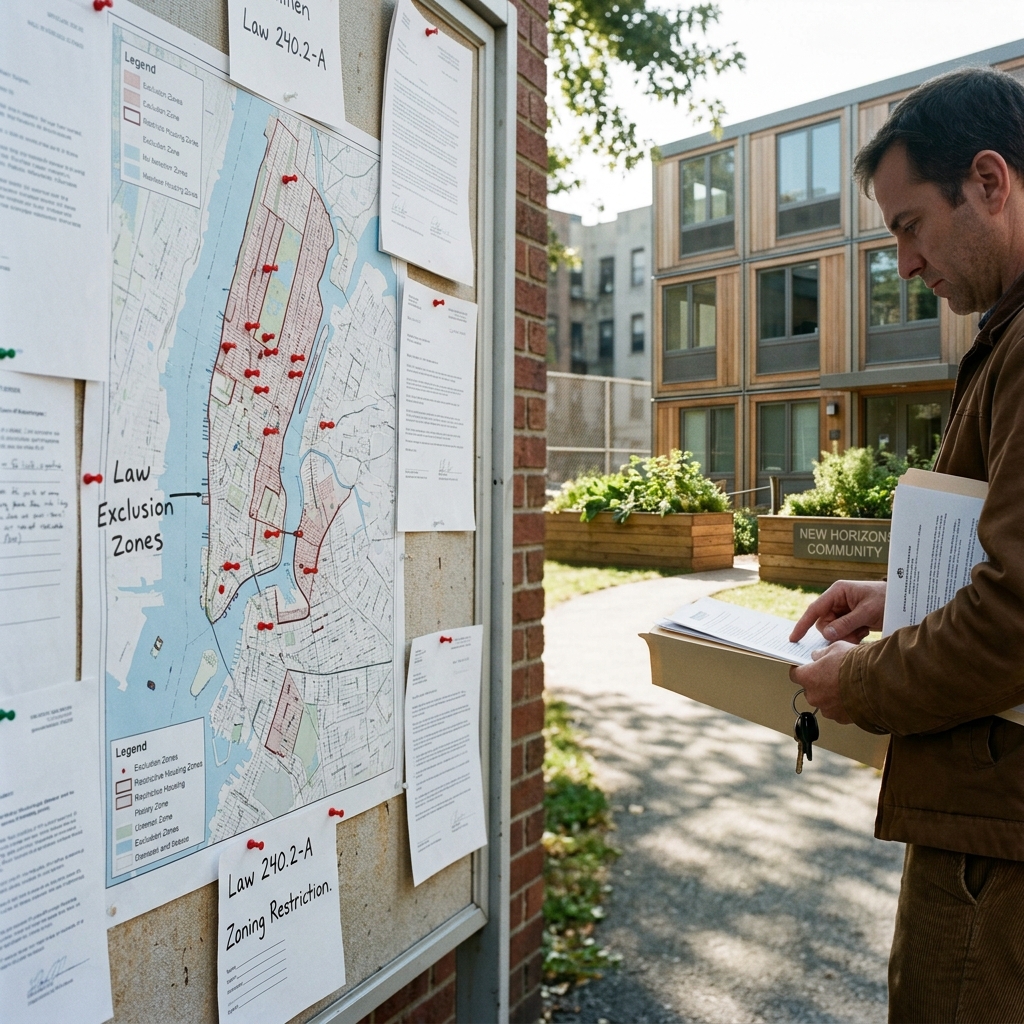
Housing is one of the most difficult challenges faced by people required to register as sex offenders. Complex layers of federal, state, and local law can sharply limit where they may live, affect their eligibility for public housing assistance, and influence how private landlords make rental decisions. At the same time, policymakers and courts are increasingly asking whether these rules strike the right balance between public safety and successful reentry.
This article explains the major legal frameworks that govern sex offender housing, highlights common barriers, and discusses emerging approaches that may expand safe, lawful housing options.
Understanding Sex Offender Registration and Housing Rules
Most jurisdictions require certain individuals convicted of qualifying sexual offenses to register their residence and other identifying information with law enforcement after release from custody. Registration itself does not always restrict where a person can live, but many states and localities add residency restrictions or zoning rules that apply specifically to registrants.
Key elements include:
- Registration duration – Depending on the offense and risk tier, registration may last for several years or for life.
- Public disclosure – Many registries are searchable online, which can influence landlord and community attitudes.
- Residency restrictions – Rules that prohibit registrants from living within a set distance of schools, child care centers, parks, or other places where children gather.
- Reporting requirements – Registrants must typically report moves, changes in household composition, and sometimes temporary stays.
These frameworks are often justified as tools to protect children and prevent new offenses. However, research and practice show that housing rules can also generate unintended consequences, including homelessness, transience, and difficulties living with supportive family members.
Common Types of Residency Restrictions
States and municipalities have adopted a wide range of residency restrictions for registered sex offenders, typically measured in feet from sensitive locations. While details vary, several patterns are common.
Typical Distance-Based Restrictions
Many laws bar registrants from residing within a fixed radius of places associated with children. Examples include:
- Buffers around schools – In some states, registrants may not live within 1,000 feet of public or private schools serving minors.
- Child care and playgrounds – Similar buffers often apply to licensed child care facilities, parks, playgrounds, or youth centers.
- Other child-focused facilities – Libraries, recreation centers, and certain churches with youth programs may be included in local ordinances.
Distances can range from 500 feet to 2,500 feet or more. In dense urban areas, overlapping buffers may effectively exclude registrants from large portions of the housing market.
Local Density Limits and Zoning Rules
Beyond distance-based restrictions, some local governments regulate how many registrants can live in a single dwelling or neighborhood.
- Household caps – Certain ordinances limit the number of sex offenders permitted in one residence, often citing safety and neighborhood concerns.
- Group home regulation – Residences that specifically serve registrants may be treated as group homes subject to special zoning, licensing, or spacing requirements.
- Exclusion zones – Some municipalities designate areas where registrants may not reside at all, effectively pushing them to the margins of the jurisdiction.
While these rules aim to prevent clustering and perceived risk, they can further shrink the pool of lawful housing and make it harder to develop structured, supervised residential programs for higher-risk individuals.
Federal Limits on Public and Subsidized Housing
Federal law adds another layer of restriction that affects access to public housing and Housing Choice Vouchers (Section 8). Under federal statute and accompanying regulations, individuals subject to lifetime sex offender registration under state law are barred from admission to federally assisted housing.
| Housing Program Aspect | Impact on Lifetime Registrants |
|---|---|
| Initial admission to public housing | Public housing agencies (PHAs) must deny admission if any household member is subject to lifetime registration under a state sex offender registry. |
| Admission to Housing Choice Voucher (Section 8) | PHAs may not approve vouchers for applicants who are subject to lifetime registration. |
| Ongoing tenancy | Federal regulations focus on admission; termination is not automatic solely due to lifetime registration but may occur for other criminal activity. |
| Discovery of ineligible status | If an ineligible registrant is mistakenly admitted, PHAs are expected to follow termination procedures once the error is discovered. |
This framework means that many registrants, particularly those with more serious offenses or higher-tier classifications, cannot access public housing or vouchers even when they meet income and other eligibility criteria. For people with low incomes or limited family support, the loss of these options can significantly increase the risk of homelessness and unstable living arrangements.
How State and Local Rules Restrict Housing Choices
State statutes and local ordinances play a central role in shaping the day‑to‑day housing options of registrants. These rules vary widely, but several themes recur across jurisdictions.
Broad Geographic Exclusions
When distances are calculated in straight lines between property lines rather than along streets, large areas may become off‑limits. In cities with many schools and child‑focused facilities, overlapping restricted zones can leave only small pockets where registrants may legally reside.
Consequences include:
- Scarcity of compliant units – A limited number of lawful addresses drives competition and can push rents higher.
- Difficulty living with family – Many registrants report being unable to live with supportive relatives whose homes fall within exclusion zones.
- Forced relocation – Changes in neighborhood land use, such as opening a new school or child care center, may trigger relocation requirements from previously lawful homes.
Homelessness and Instability
Empirical studies have documented that strict residency rules are associated with higher levels of homelessness, transience, and residential instability among registrants.
- In survey research, many registrants reported becoming homeless or staying temporarily with others because they were unable to find compliant housing.
- Others described being required to move multiple times due to new local facilities or landlord concerns.
- Respondents also noted increased emotional distress, reduced access to affordable housing, and longer distances from employment and treatment services.
These outcomes are important because stable housing and social supports are widely recognized as protective factors against reoffending. Housing instability may undermine public safety by making supervision and treatment more difficult.
Private Landlords, Fair Housing, and Criminal Records
Private landlords and property managers often confront difficult decisions when screening applicants with sex offense histories. Federal fair housing law protects against discrimination based on race, color, national origin, religion, sex, familial status, and disability, but it does not treat criminal history or sex offender status as a protected characteristic.
Disparate Impact and Screening Policies
Even though criminal history is not a protected class, housing policies that broadly exclude applicants with any criminal record can raise concerns under the disparate impact doctrine. This doctrine focuses on facially neutral policies that disproportionately affect protected groups, such as racial minorities.
Best practices recommended by housing and legal experts include:
- Narrow tailoring – Screening policies should be closely tied to legitimate safety and property management goals rather than blanket bans.
- Individualized assessment – Landlords should consider the nature of the offense, how long ago it occurred, whether it was an isolated event, and evidence of rehabilitation.
- Consistent application – Criteria must be applied equally to all applicants to avoid discriminatory treatment.
- Opportunity to explain – Prospective tenants should be able to provide context or mitigating information related to their record.
Some industry guidance wrongly suggests that landlords have no obligations when dealing with sex offenders because they are not a protected class. In reality, landlords must still avoid policies that are likely to produce unlawful disparate impacts on protected groups and should seek legal advice when crafting screening standards.
Practical Barriers Faced by Registrants Seeking Housing
Beyond legal rules, registrants encounter a range of practical obstacles when attempting to secure stable housing.
- Community stigma – Neighbors, landlords, and homeowners’ associations may resist having registrants live nearby, even when the law allows it.
- Limited affordable units – Exclusion zones and federal restrictions shrink the supply of lawful units, particularly at low rent levels.
- Transportation and access – Compliant housing may be far from employment, treatment providers, and social services.
- Complex compliance rules – Registrants must navigate overlapping registration, zoning, and lease requirements, and violations can lead to new criminal charges or eviction.
Service providers report that housing barriers can overshadow other aspects of reentry, such as employment and mental health care, because without a lawful address it is difficult to meet supervision conditions or participate consistently in treatment programs.
Emerging Strategies to Improve Housing Options
Recognizing the tension between public safety and reentry needs, some jurisdictions and organizations are experimenting with new approaches to housing for registrants. These strategies do not eliminate legal restrictions, but they aim to manage risk while expanding lawful, stable housing.
Reentry-Focused Housing Programs
Justice reform groups and community organizations have developed programs that help registrants locate and maintain compliant housing.
- Housing navigation services – Staff assist individuals in identifying lawful addresses, negotiating with landlords, and understanding local rules.
- Transitional housing – Structured residences provide supervision, treatment access, and case management during the early months after release.
- Family support planning – Programs work with families to evaluate whether relatives’ homes can legally and safely accommodate returning registrants.
Policy Reforms and Legal Challenges
Courts and legislatures have begun to scrutinize particularly broad or restrictive residency laws. Some reforms and debates include:
- Reconsidering buffer distances – Policymakers examine whether large, blanket exclusion zones meaningfully enhance safety or primarily cause displacement.
- Evidence-based policy – Researchers encourage laws that focus on individual risk assessment and supervision rather than simple geographic bans.
- Clarifying public housing rules – Guidance to PHAs emphasizes accurate assessment of lifetime registration status and fair termination procedures when ineligible tenants are discovered.
While reform efforts remain uneven across jurisdictions, they reflect growing awareness that housing instability can undermine the goals of both sentencing and community safety.
Frequently Asked Questions (FAQs)
Can a registered sex offender live in any neighborhood that will accept them?
Not always. State statutes and local ordinances often impose minimum distances from schools, child care centers, parks, or other child‑focused facilities, and federal law bars lifetime registrants from public housing and Housing Choice Voucher admission. Registrants must check the laws in their jurisdiction and may need legal advice to confirm that a specific address is compliant.
Does federal law require eviction of all sex offenders from public housing?
No. Federal rules prohibit the admission of applicants who are subject to lifetime sex offender registration, but they do not automatically require eviction of tenants solely on that basis once admitted. However, if a housing authority discovers that an ineligible registrant was admitted in error, it is expected to follow termination procedures consistent with federal regulations.
Are landlords allowed to refuse to rent to sex offenders?
Landlords are generally not required to rent to registrants, because sex offender status is not a protected class under federal fair housing law. At the same time, they must ensure that screening policies do not create unlawful disparate impacts on protected groups and should use individualized assessments rather than blanket bans on all applicants with criminal records.
Why do residency restrictions sometimes lead to homelessness?
Large exclusion zones around schools and child‑focused facilities can leave only small areas where registrants are allowed to live, especially in urban locations. When lawful units are scarce and public housing is unavailable to lifetime registrants, many people struggle to find affordable housing that complies with legal restrictions, which increases the risk of homelessness and transience.
What solutions are being explored to improve housing for registrants?
Solutions include specialized reentry housing programs, navigation assistance to find compliant units, family support planning, and policy reforms that focus more on individual risk and supervision rather than broad geographic bans. Some jurisdictions are also reexamining their laws in light of research on the relationship between housing stability and public safety.
References
- Where Can a Registered Sex Offender Live in North Carolina? — Fanney Law Office. 2024-01-10. https://www.fanneylaw.com/where-can-a-registered-sex-offender-live-in-north-carolina.html
- State Registered Lifetime Sex Offenders in the Housing Choice Voucher Program — U.S. Department of Housing and Urban Development, Office of Public and Indian Housing. 2012-08-17. https://www.hud.gov/sites/documents/12-28pihn-atch.pdf
- Navigating Fair Housing Law: When A Prospective Tenant is a Sex Offender — Virginia REALTORS. 2025-03-25. https://virginiarealtors.org/2025/03/25/navigating-fair-housing-law-when-a-prospective-tenant-is-a-sex-offender/
- Sex Offender Residence Restrictions: Sensible Crime Policy or Flawed Logic? — U.S. Courts / Federal Probation Journal. 2007-09-01. https://www.uscourts.gov/sites/default/files/71_3_1_0.pdf
- Reentry Housing Options for Sex Offenders — Council of State Governments Justice Center. 2013-04-11. https://csgjusticecenter.org/events/reentry-housing-options-for-sex-offenders/
- Being Registered as a Sex Offender Can Limit Your Housing Options — Personal Injury Help. 2016-03-10. https://www.personalinjuryhelp.com/blogs/7990/being-registered-as-a-sex-offender-can-limit-your-housing-options
- Do You Know Your Rights on Sex Offender Laws? — Real Property Management. 2019-06-15. https://www.realpropertymgt.com/expert-tips/do-you-know-your-rights-on-sex-offender-laws
Similar Articles








Read full bio of Sneha Tete




