
Service Animals in No‑Pet Rentals: Legal Rights and Practical Guidance
Understand when landlords must allow service and emotional support animals in no‑pet housing and how both sides can navigate the law.
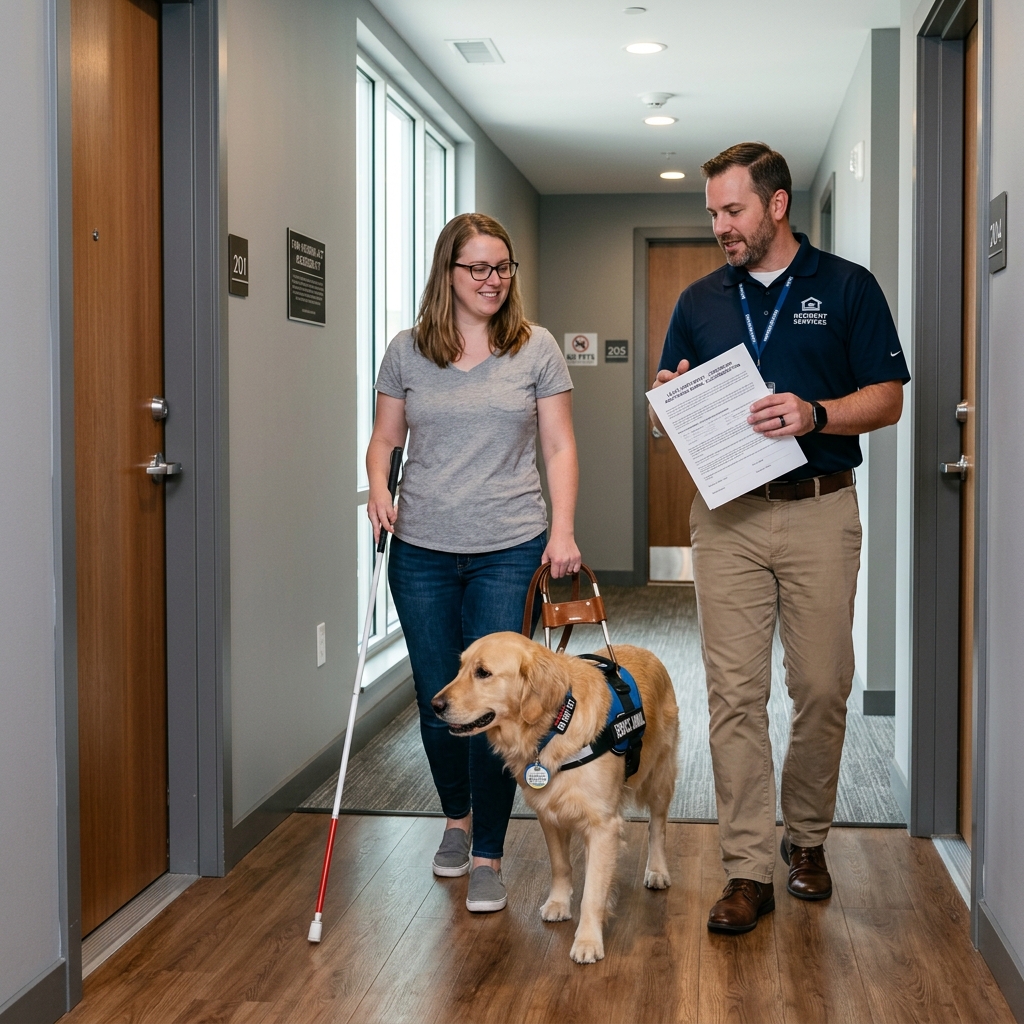
Many rental properties advertise strict no‑pet policies, but disability laws treat service animals and emotional support animals very differently from ordinary pets. Understanding those differences is critical for both landlords and tenants to avoid discrimination claims and costly disputes.
1. Why Service and Support Animals Are Not “Pets” Under Housing Law
In housing law, animals that assist people with disabilities occupy a separate legal category from companion animals. Even when a lease clearly prohibits pets, a landlord may be required to modify that rule as a reasonable accommodation for a tenant with a disability.
- Service animals are typically dogs trained to perform specific tasks for a person with a disability, such as guiding someone who is blind or alerting someone to an impending seizure.
- Emotional support animals (ESAs) provide comfort or emotional support that alleviates symptoms of a mental or emotional disability, but they do not need specialized task training.
Because they are connected to disability accommodation, laws treat service animals and ESAs as assistance devices rather than pets. A landlord cannot rely solely on a no‑pet policy to deny these animals.
2. Key Federal Laws That Shape Rental Rights
Two federal laws are central to how assistance animals are treated in housing: the Fair Housing Act (FHA) and, in limited housing contexts, the Americans with Disabilities Act (ADA).
2.1 Fair Housing Act and Assistance Animals
The FHA prohibits housing discrimination based on disability and requires landlords to provide reasonable accommodations so that tenants with disabilities can equally use and enjoy their homes. This includes modifying pet rules to allow service animals and emotional support animals.
- Landlords generally must allow service animals and ESAs even in buildings with no‑pet policies.
- They cannot charge standard pet fees, pet rent, or pet deposits for these animals, although tenants remain liable for actual damage caused.
- Breed, size, or weight restrictions applied to pets cannot be used to bar service animals or ESAs.
2.2 When the ADA Matters for Housing
The ADA primarily applies to public accommodations and certain government‑run or university housing, rather than typical private apartments. In those covered settings, the ADA ensures access for service animals but does not extend protections to emotional support animals in the same way.
| Feature | Service Animal | Emotional Support Animal |
|---|---|---|
| Primary law in rental housing | FHA (plus ADA in some public/university housing) | FHA only |
| Training requirement | Individually trained to perform specific tasks | No task training required; alleviates symptoms of disability |
| Pet fees allowed? | No pet fees or deposits permitted | No pet fees or deposits permitted |
| Covered by no‑pet policy? | Cannot be excluded solely by no‑pet rules | Cannot be excluded solely by no‑pet rules |
| Documentation | Limited verification; no demand for detailed medical records | Letter from licensed health or mental health professional |
3. What Tenants Need to Do to Request an Animal in a No‑Pet Building
Legal protections do not operate automatically. Tenants generally must ask for a reasonable accommodation and provide enough information to connect their disability to the animal.
3.1 Making the Accommodation Request
The FHA allows accommodation requests in writing or verbally, but many advocacy groups recommend putting the request in writing for clarity.
- Explain that you have a disability and need an assistance animal to use and enjoy your home.
- Identify whether the animal is a service animal or an emotional support animal.
- Reference the Fair Housing Act or “reasonable accommodation” to signal you are making a legal request.
Under federal guidance, landlords are expected to respond to ESA accommodation requests within a reasonable time, often cited as about 10 days after receiving supporting documentation.
3.2 Documentation for Emotional Support Animals
For ESAs, landlords usually may require a letter from a licensed health care professional or mental health provider that:
- States that the tenant has a mental or emotional impairment recognized as a disability.
- Explains that the animal helps alleviate symptoms or effects of that disability.
- Is signed and dated by the professional.
The letter does not need to disclose a detailed diagnosis or full medical history, and it does not need to confirm any specific training of the animal.
3.3 Information Related to Service Animals
For service animals, landlords can ask for limited verification when a disability or the need for an animal is not obvious.
- They may ask whether the animal is needed because of a disability and what tasks it is trained to perform.
- They cannot demand to see the animal perform its tasks or require formal training certificates.
- They may request a brief note from a qualified professional confirming that the tenant has a disability and needs the animal, but not detailed medical records.
4. What Landlords Can and Cannot Do
Landlords retain important rights, but they must exercise them within the boundaries of disability law. Missteps can lead to discrimination complaints with state agencies or the U.S. Department of Housing and Urban Development (HUD).
4.1 Limits on Denying Assistance Animals
In most cases, landlords must modify no‑pet policies to allow service animals or ESAs for tenants with documented disabilities. However, there are narrow situations where denial may be justified.
- Direct threat: If the animal poses a significant risk to the health or safety of others that cannot be reduced by reasonable measures.
- Major property damage: If the animal has caused substantial damage and no practical solution exists to prevent further harm.
- Unreasonable burden: If accommodating the animal would fundamentally alter the nature of the housing provider’s operations or impose undue financial or administrative burden (a high bar under FHA).
Landlords cannot deny an assistance animal simply because they prefer a pet‑free building, have personal allergies, or dislike certain breeds.
4.2 Rules on Fees, Deposits, and Damage
Housing law draws a sharp line between prohibited pet fees and allowable damage recovery for assistance animals.
- Landlords cannot charge extra pet deposits, monthly pet rent, or separate cleaning fees solely because a tenant has a service animal or ESA.
- They may still recover the cost of actual damage the animal causes, using standard security deposits or post‑tenancy claims.
- Routine wear and tear should be treated the same as for tenants without animals.
4.3 Reasonable Conduct Rules
Service animals and ESAs must comply with reasonable property rules, as long as those rules are applied neutrally.
- Animals can be required to be under control (leash or harness where appropriate) and not disturb other tenants excessively.
- Landlords may enforce noise, sanitation, and safety rules that apply to all residents, provided they do not effectively bar assistance animals.
- If an animal’s behavior becomes aggressive or dangerous, the landlord can explore solutions and, in serious cases, may seek removal of the animal.
5. Common Misunderstandings and How to Avoid Them
Disputes often stem from myths or misinformation about assistance animals in no‑pet housing. Addressing these misunderstandings upfront can prevent conflict.
5.1 Misconceptions Among Tenants
- “I don’t need documentation for my ESA.”
In housing, landlords usually may require a professional letter confirming the disability and need for an ESA. Refusing to provide any documentation can lead to a lawful denial. - “Any animal can be an ESA.”
The accommodation must be reasonable; guidance typically focuses on animals commonly kept in households, such as dogs, cats, or small mammals. - “Once I call my pet an ESA, it’s automatically protected.”
Legal protection depends on a genuine disability‑related need, supported by credible documentation, not just the label.
5.2 Misconceptions Among Landlords
- “No‑pet means no animals whatsoever.”
No‑pet rules do not apply to legitimate service and support animals; refusing them solely based on policy can violate the FHA. - “I can ask detailed questions about the tenant’s disability.”
Landlords cannot demand specific diagnoses or full medical records. Only limited, relevant information is allowed to determine if accommodation is required. - “Emotional support animals have fewer rights than service dogs in housing.”
Under the FHA, both service animals and ESAs are covered as reasonable accommodations, though the documentation requirements differ. - “I can charge extra because cleaning will be harder.”
Additional pet‑related fees are not allowed for assistance animals, though actual damage can still be charged.
6. Practical Tips for Landlords and Tenants
Beyond legal rules, clear communication and documentation help both sides navigate assistance animals in no‑pet rentals smoothly.
6.1 Tips for Tenants
- Prepare a concise, written accommodation request that explains your need for the animal.
- Ensure your documentation comes from a licensed health or mental health professional and is current.
- Train your animal in basic manners and ensure it does not pose a safety risk or cause ongoing property damage.
- Keep copies of correspondence with your landlord in case disputes arise.
6.2 Tips for Landlords
- Develop a consistent written policy for handling assistance animal requests under the FHA.
- Use standardized forms to request permissible documentation without asking for diagnoses or excessive medical details.
- Document your decision‑making process, including any reasons for denial, focusing on direct threat or undue burden if applicable.
- Consult legal counsel or fair housing agencies when cases are borderline or complex.
7. Frequently Asked Questions (FAQs)
Do landlords have to allow service animals in a no‑pet apartment?
In most rental housing covered by the Fair Housing Act, landlords must permit service animals as a reasonable accommodation for tenants with disabilities, even when the lease prohibits pets.
Are emotional support animals treated the same as service animals in housing?
In housing, both service animals and emotional support animals are protected under the FHA, but ESAs usually require a letter from a licensed health professional showing the animal is needed for a disability.
Can a landlord charge pet rent or a pet deposit for a service animal or ESA?
No. Pet fees, pet rent, and special deposits tied to pets cannot be applied to assistance animals, although tenants are responsible for any actual damage the animal causes.
What can a landlord ask about a tenant’s disability?
Landlords may request enough information to verify that the tenant has a disability and needs the animal, but they cannot demand specific diagnoses, detailed medical records, or proof of training for the animal.
Can a landlord ever deny an assistance animal?
Yes, but only in limited cases, such as when the animal poses a direct threat to health or safety or causes major property damage that cannot be reasonably prevented. Denial cannot be based on personal dislike of animals, breed bias, or a blanket no‑pet policy.
References
- Housing Laws for Service Animals and Emotional Support Animals — Justia. 2023-05-01. https://www.justia.com/animal-dog-law/housing-laws-for-service-animals-and-emotional-support-animals/
- Service and Emotional Support Animals in Housing — Minnesota Department of Human Rights (MN.gov). 2021-09-10. https://mn.gov/mdhr/yourrights/service-animals/housing.jsp
- Rental Housing and Service Animals: ADA and FHAA – When Does Each Apply? — 603 Legal Aid. 2022-03-15. https://www.603legalaid.org/rental-housing-and-service-animals-ada-and-fhaa-when-does-each-apply
- Landlord’s Guide to Service Animal Laws in Chicago — MTD Property Management. 2024-02-20. https://www.mtdpropertymanagement.com/renting-service-animals-tenants
- Everything You Need to Know About Renting with an Emotional Support or Service Animal — Apartments.com. 2023-08-01. https://www.apartments.com/blog/everything-you-need-to-know-about-renting-with-an-emotional-support-or-service-animal
- Housing: Understanding Your Right to a Support or Assistance Animal — Disability Rights Ohio. 2022-11-05. https://www.disabilityrightsohio.org/housing-understanding-your-right-to-a-support-animal
- When Do You Have To Allow An Emotional Support Animal Into Your No Pets Apartments? — McGrath North. 2021-06-30. https://www.mcgrathnorth.com/when-do-you-have-to-allow-an-emotional-support-animal-into-your-no-pets-apartments
Similar Articles








Read full bio of Sneha Tete


