
School Bus Accident Claims: Key Legal Considerations
Navigate school bus injury lawsuits with essential legal insights and procedural requirements.
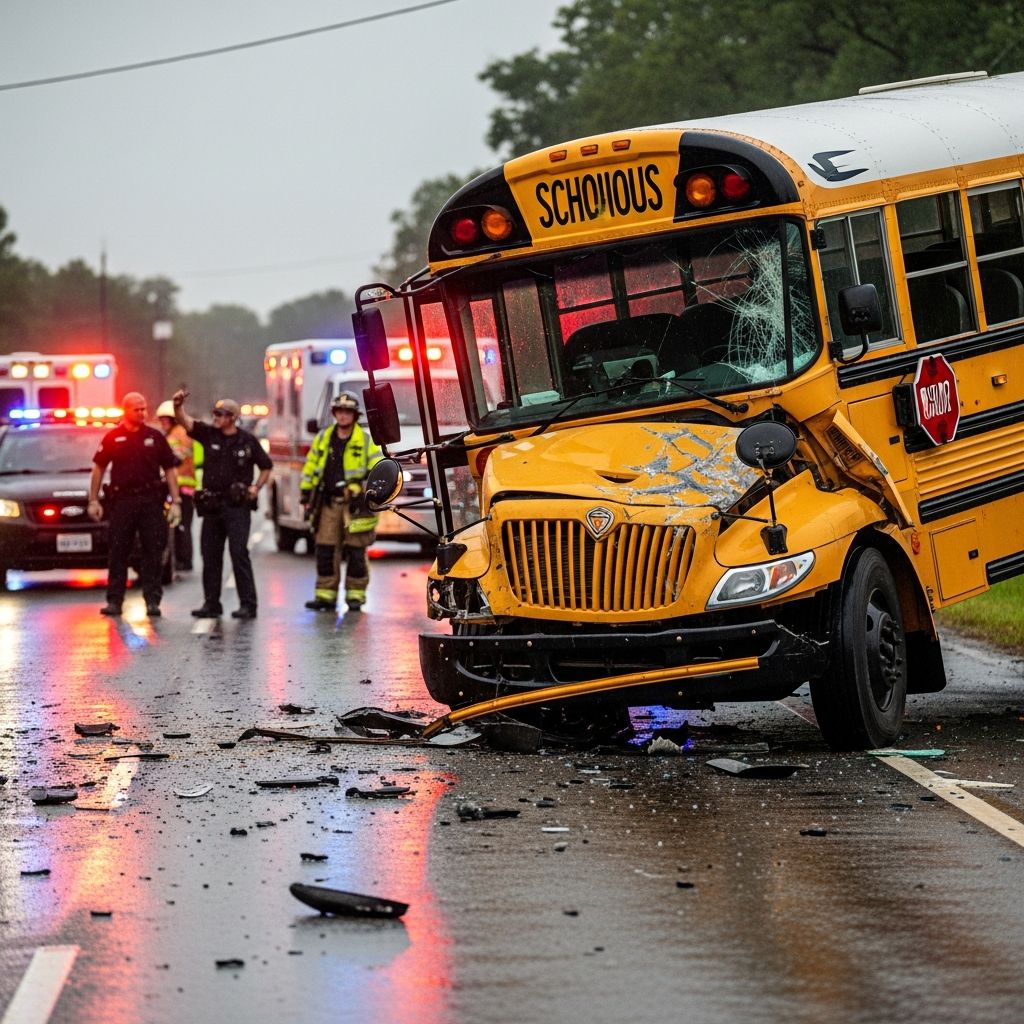
Understanding Your Legal Position After a School Bus Incident
When a child is injured in a school bus accident, parents naturally want answers and accountability. However, pursuing legal action requires careful consideration of several fundamental questions that will shape the entire claims process. Understanding these foundational legal issues can help families make informed decisions about whether and how to proceed with a lawsuit.
School bus accidents present unique legal challenges compared to standard motor vehicle incidents. The involvement of government entities, special statutory procedures, and protections afforded to public institutions create a complex landscape that demands careful navigation.
Establishing Fault and Identifying Liable Parties
The first critical question families must address is who bears responsibility for the accident. This determination directly affects whether a claim can proceed and against whom it should be filed.
Liability in school bus accidents can extend to multiple parties depending on the circumstances. Bus drivers may be held accountable if their actions directly caused the crash, such as operating the vehicle while distracted, drowsy, or under the influence of substances. Additionally, violations of traffic laws or reckless driving behaviors create clear grounds for driver negligence claims.
Beyond the driver, school districts and transportation companies can face liability under vicarious liability principles, meaning employers may be held responsible for employee misconduct. More significantly, school districts have an affirmative duty to maintain safe vehicles and hire qualified, properly trained operators. When these responsibilities are neglected, districts may face liability for negligent hiring, inadequate training, insufficient supervision, or failure to conduct proper vehicle maintenance.
For privately operated school bus services, the transportation company itself becomes a defendant alongside or instead of the school district. These companies bear direct responsibility for driver selection, staff training, vehicle upkeep, and operational safety standards.
Investigative Steps to Determine Causation
Establishing fault requires thorough investigation and evidence preservation. The following elements typically prove essential:
- Police accident reports documenting the circumstances, contributing factors, and initial fault assessment
- Driver history and training records revealing the operator’s qualifications, disciplinary history, and safety violations
- Vehicle maintenance logs indicating whether mechanical failures contributed to the crash
- Eyewitness statements from passengers, other drivers, and bystanders who observed the incident
- Scene photographs and video evidence showing road conditions, traffic signals, vehicle positions, and damage patterns
- Accident reconstruction analysis by qualified experts who can determine collision mechanics and speed factors
The Government Entity Complication: Understanding Immunity and Procedural Requirements
The second essential question concerns whether the school bus is operated by a public school district or a private transportation company, as this determines applicable legal procedures and protections.
Most school buses in California are owned and operated by public school districts, which are classified as government entities. This classification triggers fundamentally different legal requirements than claims against private parties.
Government Immunity Protections
Public entities enjoy certain legal protections that private defendants do not. Governmental immunity shields school districts from liability in specific circumstances, though these protections are not absolute. California law recognizes that public agencies require some protection from excessive litigation to function effectively. However, this does not mean injured parties have no recourse.
The critical distinction lies in following proper procedures. Families cannot immediately file a lawsuit against a school district. Instead, specific statutory requirements must be satisfied first.
The California Tort Claims Act Requirements
Claims against public school districts must comply with the California Tort Claims Act (CTCA). This law imposes strict procedural requirements and unforgiving deadlines.
The most critical requirement is the six-month filing deadline for government claims. This is substantially shorter than the standard two-year personal injury statute of limitations applicable to private parties. Missing this deadline can permanently eliminate the right to pursue compensation.
Before filing a lawsuit, families must file a formal notice of claim with the school district or appropriate government agency. This claim must include:
- A clear explanation of how the school district or its employees caused the accident
- Detailed descriptions of the child’s injuries and resulting medical conditions
- Documentation of economic losses, including medical expenses and ongoing treatment costs
- An itemization of compensation being sought
After submitting the claim, families must wait for the agency’s response. The school district cannot be sued in court until it either formally rejects the claim or fails to respond within the statutory timeframe. This administrative requirement, while sometimes frustrating, is mandatory and cannot be bypassed.
Obtaining Records from Government Entities
Accessing relevant documents from school districts presents another procedural challenge. Parents do not automatically have the right to view school district records regarding bus maintenance and services. While the Family Educational Rights and Privacy Act (FERPA) permits access to student-specific educational documents, it generally does not extend to transportation-related information.
To obtain such records, experienced attorneys may explore alternative avenues, including seeking a formal subpoena to compel document production. This typically occurs after the administrative claim has been rejected and litigation is underway.
Calculating Recoverable Damages and Long-Term Financial Impact
The third fundamental question addresses what compensation might realistically be obtained if the claim succeeds.
Economic Damages
Economic damages represent quantifiable financial losses resulting from the accident. These include:
- Current and future medical expenses for emergency care, hospitalization, surgery, and ongoing treatment
- Physical therapy and rehabilitation costs necessary for recovery
- Mental health treatment and counseling to address trauma or psychological injury
- Lost wages for parents who missed work to care for injured children
- Assistive devices and home modifications if the injury results in permanent disability
Non-Economic Damages
Beyond direct financial losses, California law recognizes compensation for non-monetary harm:
- Pain and suffering encompassing physical discomfort and emotional distress
- Loss of quality of life reflecting how injuries diminish daily activities and enjoyment
- Permanent disfigurement or scarring affecting appearance and self-image
- Loss of consortium affecting family relationships and normal family functioning
Long-Term and Future-Focused Compensation
For serious injuries, courts consider the lasting impact on a child’s future prospects. If injuries affect a child’s future education or ability to work, these long-term effects can be incorporated into compensation calculations. Expert testimony from vocational specialists, economists, and medical professionals helps project lifetime care costs and lost earning capacity.
| Damage Category | Examples | Typical Evidence |
|---|---|---|
| Economic | Medical bills, therapy costs, lost wages, transportation | Invoices, receipts, pay stubs, treatment records |
| Non-Economic | Pain and suffering, emotional trauma, reduced quality of life | Medical testimony, psychological evaluations, expert statements |
| Future-Oriented | Ongoing care needs, educational impact, reduced earning potential | Vocational expert analysis, life care planning, medical prognosis |
Special Protections for Minor Claimants
Because injured children cannot independently pursue legal claims, California law imposes additional requirements to ensure their interests are fully protected.
Any settlement involving an injured child must receive judicial approval, regardless of the settlement amount. A judge reviews the proposed settlement terms to verify they adequately compensate for injuries and protect the child’s long-term interests.
The court typically requires a formal petition for compromise of the claim that includes medical records, detailed settlement terms, and an explanation of how funds will be managed and invested. This judicial scrutiny prevents inadequate settlements and protects minors from being exploited by defendants seeking quick resolutions.
Structured Settlements for Serious Injuries
In cases involving serious or long-term injuries, courts may order or approve structured settlements that distribute compensation over time through annuities rather than lump-sum payments. These arrangements ensure funds remain available as children mature and their needs evolve, covering:
- Ongoing medical treatment and specialized care
- Education and vocational training expenses
- Living expenses and future independent living costs
- Enhanced quality-of-life resources as the child develops
This approach guarantees that compensation is available when the child needs it most rather than being rapidly depleted by current expenses.
The Role of Expert Evidence in School Bus Claims
Successfully establishing liability and quantifying damages typically requires expert testimony. School bus accident cases are more complex than typical motor vehicle collisions because multiple specialized areas of analysis are needed.
Accident reconstruction specialists analyze collision physics, vehicle positions, and speed factors to demonstrate how the crash occurred and identify contributing causes. Medical experts provide testimony regarding injury severity, treatment necessity, and long-term prognosis. Economic and vocational experts project future earnings impact and lifetime care requirements.
These expert analyses prove especially critical in government entity cases, where agencies often resist liability claims and scrutinize causation evidence carefully.
Settlement Versus Litigation: Weighing Your Options
Families pursuing school bus accident claims face a strategic choice between accepting a settlement offer or proceeding to litigation.
Insurance companies representing school districts frequently offer settlements to avoid courtroom exposure. While accepting a settlement provides certain recovery and avoids litigation uncertainty, settlement amounts are often significantly less than what could be recovered through a successful lawsuit.
Proceeding to litigation requires substantially more time and expense but allows a jury or judge to determine fair compensation without being constrained by insurance company calculations. The decision should reflect the strength of evidence, injury severity, and family resources.
Frequently Asked Questions About School Bus Accident Claims
Q: What is the deadline for filing a claim against a California school district?
A: The California Tort Claims Act requires claims to be filed within six months of the accident. This is a strict deadline that cannot be extended, and missing it permanently eliminates the right to pursue compensation.
Q: Can we sue a school district immediately after the accident?
A: No. Claims against government entities must first be filed administratively with the agency itself. A lawsuit can only be filed after the claim is rejected or after the agency fails to respond within the statutory timeframe.
Q: What if the school bus is operated by a private company rather than the school district?
A: Claims against private transportation companies follow standard personal injury procedures and do not have the same strict deadlines as government claims. You have two years to file a lawsuit against private defendants, providing more time to investigate and prepare your case.
Q: Can we access the school district’s bus maintenance records?
A: Parents do not automatically have access to these records. However, an attorney can seek these documents through discovery procedures in litigation or petition the court for a subpoena to compel production.
Q: Does my child need a guardian ad litem for the lawsuit?
A: Yes, minors require legal representation through a guardian or attorney throughout the claims process. The court ensures that settlements are approved and structured to protect the child’s long-term interests.
Q: What types of damages can we recover for a serious school bus injury?
A: You may recover economic damages (medical bills, therapy costs, lost wages), non-economic damages (pain and suffering, reduced quality of life), and damages for future impacts on education or earning potential.
Q: Why do school bus cases often require expert testimony?
A: Complex evidence about accident causation, injury severity, and long-term impacts requires specialized expert analysis in reconstruction, medicine, and economics. These experts help establish liability and accurately quantify damages.
References
- School Bus Accidents in California: Legal Options for Injured Children — Tim Wright Law. Accessed April 2026. https://www.timwrightlaw.com/post/school-bus-accidents-in-california-legal-options-for-injured-children
- School Bus Accidents: What Parents Need to Know About Legal Options — Hilliard Law. September 2025. https://www.hilliard-law.com/blog/2025/september/school-bus-accidents-what-parents-need-to-know-a/
- What You Should Know About School Bus Accidents — Habbaspilaw. Accessed April 2026. https://www.habbaspilaw.com/what-you-should-know-about-school-bus-accidents/
- What To Do After a School Bus Accident in California — Vaziri Law LLP. Accessed April 2026. https://www.vazirilaw.com/faqs/what-to-do-after-a-school-bus-accident-in-california/
- School Bus Accidents & Potential Legal Claims — Justia. Accessed April 2026. https://www.justia.com/child-safety/school-safety/school-bus-accidents/
- California School Bus Accidents: Special Rules and Enhanced Liability — JD Supra. Accessed April 2026. https://www.jdsupra.com/legalnews/california-school-bus-accidents-special-9159255/
- Understanding the Implications of Bus Accidents in California — The Paris Firm. Accessed April 2026. https://www.theparisfirm.com/blog/understanding-the-implications-of-bus-accidents-in-california-causes-and-legal-recourse/
Similar Articles








Read full bio of medha deb




