
Rights & Mental Health of Unaccompanied Migrant Minors
Examining legal rights and mental health needs of unaccompanied immigrant youth.
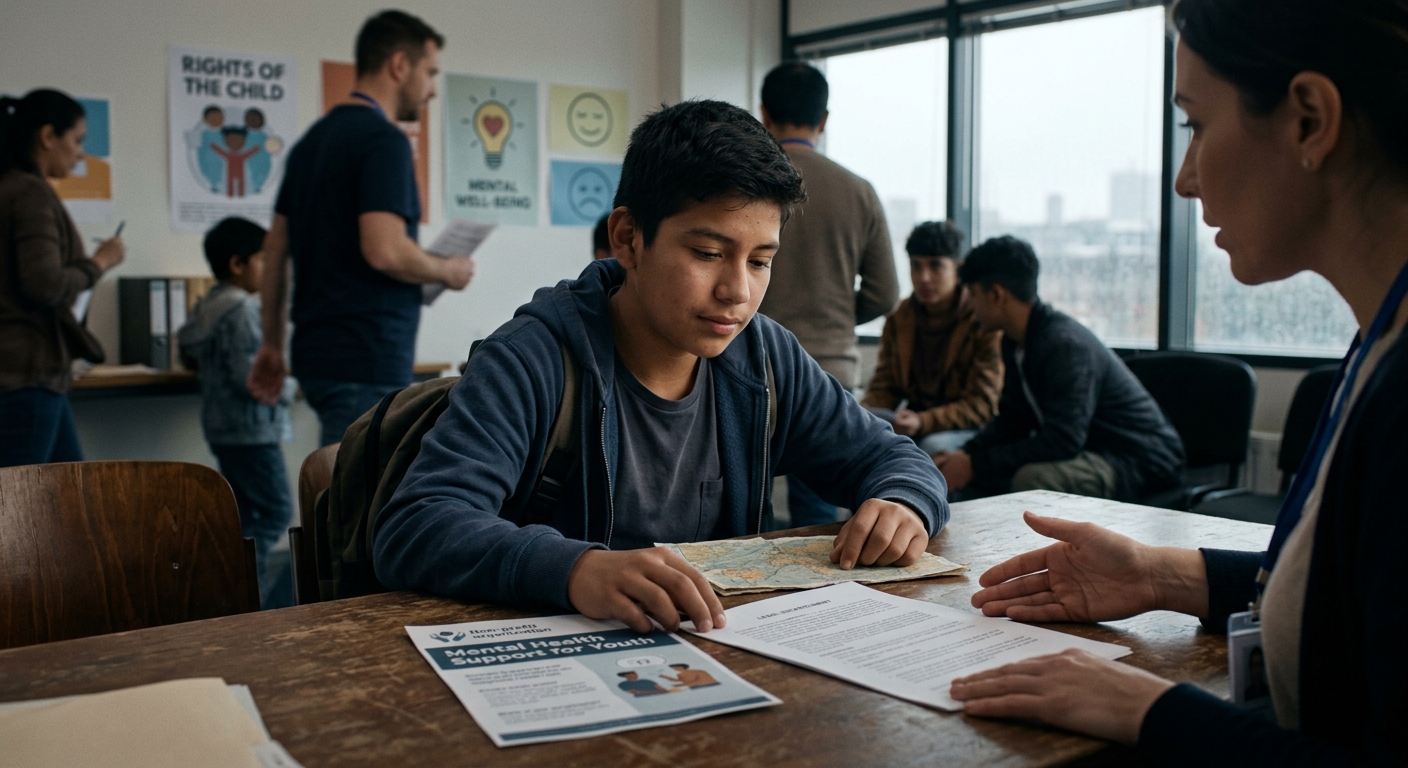
Introduction: The Invisible Population at Our Borders
Every year, tens of thousands of children arrive at the borders of the United States without a parent or legal guardian. Classified under federal law as “Unaccompanied Alien Children” (UAC)—though increasingly referred to by child advocates as unaccompanied migrant or immigrant youth—this highly vulnerable demographic finds itself positioned at the complicated intersection of stringent immigration enforcement, overwhelmed child welfare systems, and urgent humanitarian necessity. The phenomenon of children migrating entirely alone is not a new occurrence, but the sheer volume and the intensely dangerous circumstances from which they are fleeing have pushed the U.S. processing and care apparatus to its absolute limits. When a child successfully crosses the border, they immediately step into a vast labyrinth of legal and bureaucratic processes that will permanently determine not only their physical location but the trajectory of their entire life.
As these minors forcibly transition from the custody of armed border enforcement officials into the care of health and human services, their most immediate developmental and psychological needs often clash violently with the rigid, carceral structures of government detention. Genuinely understanding the plight of unaccompanied immigrant children requires a comprehensive deep dive into two distinct yet deeply intertwined realities: the precarious legal frameworks that supposedly guarantee their rights, and the profound mental health challenges they carry across borders. This comprehensive analysis explores the multifaceted issues surrounding unaccompanied migrant youth, critically examining the federal policies that dictate their custody, the immense psychological toll of their experiences, and the urgent systemic reforms completely necessary to protect their fundamental human rights and dignity.
The Roots of Migration: Trauma Before the Border
The tragic narrative of an unaccompanied child does not originate at the United States border; it begins thousands of miles away in their home countries. To accurately comprehend the current psychological state and legal standing of these children, one must deeply examine the specific “push” and “pull” factors driving their desperate migration. For a vast majority of these youths, leaving home is absolutely not a choice but a mandatory, desperate bid for basic survival.
Rampant, unchecked gang violence, systemic extortion, and deep-rooted extreme poverty in regions such as the Northern Triangle of Central America (El Salvador, Guatemala, and Honduras) serve as primary catalysts. In these specific areas, young boys are frequently targeted for forced, violent gang recruitment, facing explicit threats of death or torture to their families if they dare to refuse. Girls are particularly and horrifically vulnerable to gender-based violence, sexual exploitation, and international human trafficking. Furthermore, the steadily exacerbating effects of global climate change have decimated regional agricultural livelihoods, leaving entire communities in a state of extreme economic distress and famine.
The lengthy transit itself is fraught with unspeakable, life-threatening perils. Children traveling without the physical protection of a trusted, capable adult are highly susceptible to brutal predation by ruthless smugglers, drug cartels, and opportunistic criminals scattered along the migratory route. They frequently endure weeks of starvation, severe dehydration, brutal exposure to extreme weather conditions, and severe physical or sexual abuse. Consequently, by the exact moment these minors finally reach the U.S. border to request asylum, they have already sustained multiple, compounding layers of acute and complex trauma. Treating them merely as traditional subjects of immigration enforcement entirely misses the critical child-welfare imperative that their unique situation demands.
Entering Federal Custody: Processes and Protections
Upon initial apprehension by U.S. Customs and Border Protection (CBP), unaccompanied minors are subjected to initial processing in border holding facilities. These austere facilities, explicitly designed for adult, short-term, punitive detention, are notoriously cold and unforgiving—frequently referred to by migrants as “hieleras” or iceboxes. Explicitly recognizing the fundamental unsuitability of these harsh environments for developing children, federal law strictly mandates a swift, required transition to a more appropriate setting.
Under the trafficking laws enacted in 2008, CBP authorities must securely transfer all unaccompanied children to the physical custody of the Office of Refugee Resettlement (ORR), a specialized division of the Department of Health and Human Services (HHS), within 72 hours, barring highly exceptional and unprecedented circumstances. ORR is officially tasked with caring for these children in a safe, healthy environment until they can be safely released to a fully vetted sponsor, typically a biological parent or close family relative already residing in the United States.
However, the stark reality of government custody frequently falls tremendously short of these lofty statutory ideals. Sudden fluctuations in hemispheric migration patterns often lead to severe overcrowding, routinely causing children to remain stranded in inadequate CBP facilities well past the 72-hour legal limit. Once finally transferred to ORR, minors are placed in a sprawling network of state-licensed shelters, specialized foster care, or, during emergency influx periods, massive large-scale temporary holding facilities. While ORR is fundamentally designed to be a child-welfare agency, the restrictive institutional nature of its largest shelters still operates largely on an institutionalized detention model.
To fully understand the civil rights of these children, one must closely look at the foundational legal agreements and congressional statutes that legally govern their care:
| Key Legal Framework | Year Established | Primary Mandates and Protections |
|---|---|---|
| Flores Settlement Agreement | 1997 | Requires the federal government to place children in the absolute least restrictive setting appropriate to their age and special needs. It explicitly mandates safe, sanitary living conditions and prioritizes the prompt, safe release to relatives or sponsors. |
| Homeland Security Act | 2002 | Dismantled the legacy INS and officially transferred the care and physical custody of unaccompanied children directly to HHS/ORR, attempting to formally separate child welfare duties from immigration enforcement operations. |
| Trafficking Victims Protection Reauthorization Act (TVPRA) | 2008 | Provides significantly enhanced legal protections against international human trafficking, strictly mandates the 72-hour transfer rule from CBP to ORR, and requires specialized, child-friendly screening for all migrating minors. |
Despite these clear protections, international advocacy groups frequently document severe systemic failures, including excessively prolonged detention periods, deeply inadequate medical and psychiatric care, and insufficient vetting of potential sponsors, consistently highlighting the dangerous tension between rapid processing and actual child safety.
The Psychological Toll: Mental Health Realities in Custody
The dark intersection of severe preexisting trauma and rigid institutional detention creates a terrifying mental health crisis for unaccompanied minors. Major medical and psychiatric organizations, including the renowned American Academy of Pediatrics (AAP), have unequivocally and repeatedly stated that detention—even for incredibly short periods—is profoundly harmful to both the physical and mental well-being of all children.
When traumatized children are placed in government custody, the very environment itself can easily trigger past horrors. Institutional settings characterized by immensely strict schedules, a total lack of personal privacy, armed or uniformed security personnel, and sudden, terrifying separation from known caregivers rapidly induce high levels of toxic stress. This prolonged, unnatural activation of the body’s stress response system can permanently disrupt healthy brain development, leading directly to long-term cognitive and emotional detriments that persist into adulthood.
Common, severe psychological diagnoses among this vulnerable population heavily include chronic Post-Traumatic Stress Disorder (PTSD), severe clinical depression, generalized anxiety disorder, and complex somatic symptom disorders. Children trapped in custody often exhibit terrifying behavioral regressions, prolonged sleep disturbances, violent night terrors, and tragic suicidal ideation. The lingering uncertainty of their legal status and the constant, suffocating fear of deportation back to the violence they barely escaped only compound their daily anxiety.
Furthermore, the mental health services provided within standard ORR facilities are frequently insufficient. While basic behavioral counseling is legally mandated, the licensed clinicians are often overwhelmed by impossibly large caseloads and heavily hampered by complex language and cultural barriers. Crucially, vital therapeutic relationships are sometimes undermined by a shocking lack of total confidentiality; clinical notes taken by trusted counselors during therapy sessions have, in some controversial instances, been weaponized directly against the child in immigration court by federal enforcement agencies. Providing genuinely trauma-informed, culturally competent psychological care requires an immediate shift away from detention models toward community-based support systems.
The Legal Labyrinth: The Fight for Due Process and Representation
Perhaps the most glaring, systemic inequity in the entire treatment of unaccompanied immigrant children is their terrifyingly solitary position within the complex U.S. immigration court system. Because immigration proceedings are legally classified as civil hearings rather than criminal trials, the crucial Sixth Amendment constitutional right to government-appointed counsel simply does not apply. Consequently, children—sometimes as incredibly young as toddlers—are frequently and tragically forced to appear before immigration judges to argue their complex legal cases entirely alone against highly trained federal prosecutors.
Navigating the immense intricacies of modern asylum law, Special Immigrant Juvenile Status (SIJS), or specialized visas for victims of trafficking (T or U visas) is a deeply daunting task for even the most seasoned, educated attorneys, let alone deeply traumatized, non-English-speaking children. Without competent legal representation, these children are statistically far more likely to be ordered deported back to the danger they fled.
Legal advocates consistently stress that providing independent legal counsel is absolutely not merely a procedural benefit; it is a fundamental, non-negotiable due process necessity. Comprehensive data consistently shows that unaccompanied minors armed with legal representation are exponentially more likely to successfully secure lawful relief and remain safely in the United States. Beyond the courtroom, these attorneys serve as crucial, life-saving advocates for the child’s broader well-being, ensuring they are not languishing unnecessarily in ORR custody, actively facilitating safe communication with sponsors, and identifying subtle indicators of human trafficking that rushed border agents may have completely missed.
Life After Custody: Reintegration and Ongoing Support
The eventual, hopeful release from ORR custody to a vetted sponsor is a moment of profound, emotional relief, but it also officially marks the beginning of an incredibly challenging, multi-year reintegration phase. Once safely discharged into the local community, these youths instantly enter a prolonged state of legal limbo as they anxiously await their immigration hearings, a tedious process that can easily take years due to massive, unprecedented court backlogs.
Local community integration constantly presents substantial, systemic hurdles. Many unaccompanied minors fiercely struggle to enroll in local public education systems due to a severe lack of official documentation, contested age-dispute issues, or direct pushback from underfunded school districts totally unprepared for English Language Learners with heavily interrupted formal education. Furthermore, daily access to essential, life-saving services such as pediatric healthcare and ongoing psychiatric support is severely and legally limited for undocumented minors.
The relationship dynamic heavily relies on sponsors, which can also be highly complex. In many common cases, a child is finally reuniting with a biological parent they have not actually seen for a decade, or moving in with an extended relative they have literally never met. The immense financial strain of suddenly integrating a new household member, coupled closely with the intense pressure the youth may feel to work illegally and send remittances back to their struggling home country, creates a dangerously high-stress environment. Without robust, community-based post-release services, which currently remain tragically underfunded and sparsely distributed, these children are at exceptionally high risk for labor exploitation, human trafficking, and targeted gang recruitment right within U.S. borders.
Pathways to Reform: Prioritizing Child Well-being
To fundamentally and permanently align the overall treatment of unaccompanied migrant children with established, modern child welfare standards, comprehensive, bold systemic reforms are absolutely imperative. First and foremost, the federal government must move aggressively and decisively away from large-scale institutional detention facilities. Experts universally advocate for the immediate expansion of community-based, family-like care models, such as specialized transitional foster care, which provide a significantly more nurturing, trauma-informed, and healing environment while sponsors are safely vetted.
Secondly, Congress must act to pass binding legislation guaranteeing universal, fully funded legal representation for all children trapped in immigration proceedings. Ensuring that no child ever has to face a trained prosecutor and a judge completely alone is the absolute baseline of any fair, functioning justice system.
Finally, federal and state investments must be heavily redirected toward robust, comprehensive post-release services. Providing long-term, dedicated case management, seamless school enrollment assistance, and fully funded access to licensed mental health professionals will rapidly stabilize these vulnerable youths. Implementing these changes guarantees they can finally begin to heal from their extensive trauma and integrate successfully into their new communities. Only by viewing unaccompanied minors strictly through a compassionate humanitarian lens rather than a punitive enforcement one can the U.S. truly uphold its legal and moral obligations.
Frequently Asked Questions (FAQs)
- What is the legal definition of an unaccompanied alien child (UAC)?
Under U.S. federal law, a UAC is strictly defined as an individual who is under 18 years of age, has no lawful immigration status within the United States, and currently has no parent or legal guardian in the country available to provide continuous care and physical custody.
- What specifically is the Flores Settlement Agreement?
The Flores Settlement Agreement is a historic, legally binding 1997 federal court settlement that strictly outlines the absolute minimum standards for the detention, release, and overall treatment of immigrant minors held in federal custody. It mandates that children must be held in the least restrictive setting possible and generally aims to limit their time spent in any form of detention.
- Why don’t unaccompanied immigrant children get free, court-appointed lawyers?
Unlike the American criminal justice system, immigration court falls exclusively under civil administrative law. Therefore, the strict constitutional guarantee of a free public defender (the Sixth Amendment) does not apply here, unacceptably leaving small children to desperately find pro bono legal assistance or face the complex court alone.
- Where exactly do these children go after they leave government custody?
The vast majority of these youths are eventually released to verified, vetted sponsors living across the U.S., who are most often biological parents, close extended relatives, or trusted family friends. They live within local communities, attending public school while simultaneously navigating their ongoing, complex immigration court cases.
- How does federal detention actually affect a child’s mental health?
Leading medical authorities uniformly note that detention actively exposes children to prolonged toxic stress. This severe stress can physically alter brain development and directly cause severe anxiety, clinical depression, complex PTSD, and long-term disruptions to their cognitive and emotional stability.
References
- Detention of Immigrant Children — American Academy of Pediatrics. 2017-05-01. https://publications.aap.org/pediatrics/article/139/5/e20170483/38727/Detention-of-Immigrant-Children
- Unaccompanied Children Information — U.S. Department of Health and Human Services (HHS). 2025-04-24. https://www.hhs.gov/programs/social-services/unaccompanied-children/index.html
- Refugee and migrant health — World Health Organization (WHO). 2022-04-11. https://www.who.int/news-room/fact-sheets/detail/refugee-and-migrant-health
- Unaccompanied Alien Children Program Oversight — Office of Inspector General, Department of Health and Human Services. 2026-01-10. https://oig.hhs.gov/reports-and-publications/workplan/summary/wp-summary-0000305.asp
Similar Articles








Read full bio of Sneha Tete


