
Retaliatory Arrest Claims After Probable Cause
How First Amendment retaliation claims survive, or fail, when police say probable cause existed.
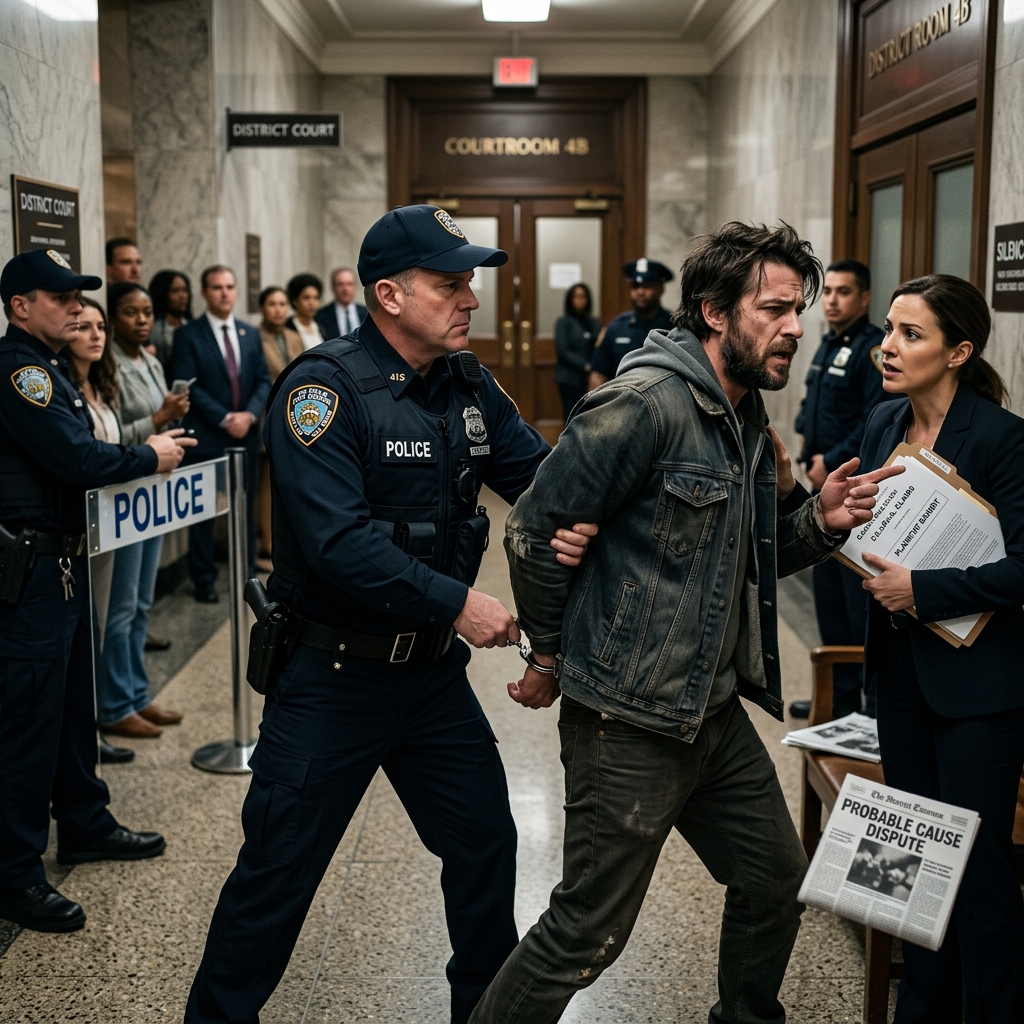
When an Arrest May Still Be Retaliatory
Police officers sometimes have a lawful reason to make an arrest and, at the same time, an unlawful motive for doing it. That tension sits at the center of retaliatory arrest claims under the First Amendment. The basic question is whether a person can sue when they were arrested after speaking out, even if officers can point to probable cause for the arrest.
The modern answer is usually difficult for plaintiffs. In Nieves v. Bartlett, the Supreme Court held that probable cause generally defeats a retaliatory arrest claim, but the Court also recognized a narrow exception for unusual cases where similarly situated people who did not engage in protected speech would not have been arrested.
The Legal Problem Behind the Rule
Retaliation cases are hard because motive is often hidden. An officer can claim to have acted on an objective violation of law, while the arrestee believes the real reason was criticism, protest, recording police activity, or another protected form of expression. The Supreme Court has long required plaintiffs in retaliation cases to show a causal connection between the government’s action and the protected speech.
In the arrest context, that causation inquiry becomes especially complicated. A valid arrest reason can make it harder to prove that speech, rather than conduct, caused the deprivation. The Court in Nieves responded by making probable cause a major barrier, reasoning that probable cause usually supplies a strong nonretaliatory explanation for the arrest.
Why Probable Cause Matters So Much
Probable cause means officers have a reasonable basis to believe a crime was committed. In practical terms, it gives police a lawful ground to arrest, even when they may also dislike what a person said. The Supreme Court’s approach treats that lawful ground as decisive in most retaliatory arrest suits.
That rule is important because courts want to avoid turning ordinary arrest disputes into broad constitutional trials over an officer’s thoughts. If probable cause were not a major shield, nearly any arrest following a heated exchange could become a First Amendment claim. The Court was concerned that such litigation would be hard to manage and would expose officers to after-the-fact accusations based largely on subjective intent.
The Narrow Exception That Keeps Some Claims Alive
Even so, the Supreme Court did not create an absolute defense for police. It left room for plaintiffs who can show objective evidence that they were singled out for arrest when other people who committed the same minor offense usually were not.
The Court’s example involved offenses like jaywalking, where officers often choose not to make arrests. If an officer suddenly arrests someone for that kind of low-level conduct right after the person engages in protected speech, the arrest may still support a retaliation claim. The theory is that the speech, not the offense, may have triggered unusual enforcement.
This exception is intentionally narrow. It does not mean every person who was arrested for a minor violation can sue. It means a plaintiff must present objective evidence showing that the arrest was atypical compared with how officers ordinarily treat the same conduct.
How Courts Analyze These Claims
Courts generally ask two questions. First, did officers have probable cause? If the answer is yes, the claim usually fails. Second, if probable cause existed, is there objective evidence that the plaintiff was treated differently from others who committed the same offense but did not engage in protected speech? If the answer is yes, the claim may proceed under the Nieves exception.
That framework is consistent with broader retaliation doctrine. In retaliation cases, the plaintiff must show that protected activity was a motivating force and that the government action would not have happened but for retaliatory animus. When probable cause exists, that showing becomes much harder, because the arrest has a legitimate explanation independent of speech.
What This Means for Civil Rights Litigation
The effect of the Supreme Court’s rule is practical and significant. It reduces the number of retaliatory arrest cases that can survive early dismissal, especially where the underlying offense is straightforward and the arrest is easy to justify on paper. Legal commentary after Nieves noted that the decision made these claims substantially harder to prove in federal court.
At the same time, the exception preserves a path for plaintiffs in situations where police discretion is being used in a selective or abusive way. This matters because some offenses are enforced inconsistently, and selective enforcement can become a vehicle for silencing criticism or protest. The exception is designed to capture those rare cases without opening the door too wide.
Common Real-World Scenarios
Retaliatory arrest claims often arise in situations involving public protests, confrontations during traffic stops, recording police activity, or verbal criticism of officers. In those settings, the person arrested may argue that the arrest happened only after they spoke up or challenged authority. But speech alone is not enough; the plaintiff still must overcome the probable-cause hurdle or fit within the narrow exception.
By contrast, a claim may be stronger where police arrest someone for a low-level offense that is normally ignored, and the arrest follows immediately after protected speech. In that setting, objective proof of inconsistent enforcement can matter more than the officer’s stated reason.
Comparing the Main Legal Paths
| Issue | General Rule | Possible Exception |
|---|---|---|
| Probable cause exists | Retaliatory arrest claim usually fails | Claim may survive if there is objective evidence of selective treatment |
| Protected speech occurred before arrest | Helpful to the plaintiff, but not enough by itself | Supports the motive theory if combined with inconsistent enforcement |
| Minor offense is rarely enforced | Often still barred by probable cause | May fit the Nieves exception if similarly situated non-speakers were not arrested |
Why the Exception Is So Hard to Use
In theory, the exception protects against abuse. In practice, it is difficult to satisfy because plaintiffs need objective evidence, not just suspicion. They must show how officers normally treat the same offense and compare that treatment to their own arrest. That can require records, witness testimony, body-camera footage, or other proof of ordinary police practice.
The requirement for objective evidence matters because courts do not want retaliation claims built only on hindsight. A plaintiff must connect the arrest to a pattern of unequal enforcement, not merely to a tense encounter. That is why the exception is described as narrow and why many cases still end at the probable cause stage.
How the Ninth Circuit Fits Into the Picture
The Ninth Circuit has been closely involved in the development of this issue. Before the Supreme Court’s decision in Nieves, the Ninth Circuit had allowed retaliatory arrest claims to go forward even when probable cause existed. After the Supreme Court clarified the rule, later Ninth Circuit opinions applied the probable-cause requirement and the but-for causation framework more strictly.
That shift shows how the doctrine evolved from a more plaintiff-friendly approach to one that gives stronger protection to officers acting with an objective basis for arrest. It also shows that courts continue to recognize the possibility of retaliation, but only in carefully defined circumstances.
Practical Takeaways for Potential Plaintiffs
- Probable cause is usually the first and most important obstacle in a retaliatory arrest case.
- Protected speech helps establish motive, but it does not automatically defeat an arrest supported by probable cause.
- Objective proof of unusual enforcement can sometimes keep a claim alive.
- Evidence about how officers treat similar conduct in ordinary cases can be critical.
- Documentation such as video, witness statements, and arrest records may matter more than personal belief about an officer’s motive.
Questions People Often Ask
Does probable cause always defeat a retaliatory arrest claim?
Usually yes, but not always. The Supreme Court recognized a narrow exception where a plaintiff can show objective evidence that similarly situated people who did not engage in protected speech would not have been arrested.
Is an officer’s bad motive irrelevant if probable cause exists?
For most claims, the existence of probable cause means the lawsuit fails even if the plaintiff believes the officer was angry or retaliatory. Motive becomes legally significant only in the rare cases that fit the exception or in claims where probable cause is absent.
What kind of evidence helps under the exception?
Evidence showing ordinary police practice is especially helpful. That may include examples of other people not being arrested for the same conduct, official enforcement patterns, or other objective proof that the arrest was atypical.
Why did the Supreme Court create such a strict rule?
The Court wanted to prevent ordinary arrests from turning into broad constitutional lawsuits based on subjective disputes about motive. It viewed probable cause as a workable, objective limit on retaliatory arrest claims.
Final Perspective
Retaliatory arrest law now rests on a careful balance. The First Amendment still protects people from being arrested because they spoke or protested, but the presence of probable cause makes those claims hard to win. Only when a plaintiff can point to objective evidence of selective enforcement, especially in a setting where arrests are usually uncommon, does the claim have a real chance of surviving.
For lawyers, advocates, and individuals facing an arrest after speaking out, the message is clear: the facts surrounding probable cause, enforcement patterns, and comparable conduct will usually decide the case. In this area of law, the details are not just important; they are everything.
References
- Nieves v. Bartlett — Supreme Court of the United States. 2019-05-28. https://www.supremecourt.gov/opinions/18pdf/17-1174_4829.pdf
- Nieves v. Bartlett — Harvard Law Review. 2020-01-01. https://harvardlawreview.org/print/vol-133/nieves-v-bartlett/
- Supreme Court makes it harder to prove First Amendment-retaliatory arrest claims — Chandra Law. 2019-06-12. https://www.chandralaw.com/blog/supreme-court-makes-it-harder-to-prove-first-amendment-retaliatory-arrest-claims-nieves-v-bartlett
- Ballentine v. Tucker — U.S. Court of Appeals for the Ninth Circuit. 2022-03-08. https://cdn.ca9.uscourts.gov/datastore/opinions/2022/03/08/20-16805.pdf
- Opinion by Judge Lee — U.S. Court of Appeals for the Ninth Circuit. 2023-06-01. https://cdn.ca9.uscourts.gov/datastore/opinions/2023/06/01/21-55867.pdf
- Supreme Court Decides First Amendment Retaliatory Arrest Case — Institute of Municipal and Local Government Attorneys. 2024-06-01. https://imla.org/2024/06/supreme-court-decides-first-amendment-retaliatory-arrest-case/
Similar Articles








Read full bio of medha deb




