
Rental Pest Control Responsibilities Explained
Understand who pays for extermination, how laws divide pest-control duties, and what both landlords and tenants must do in rental housing.
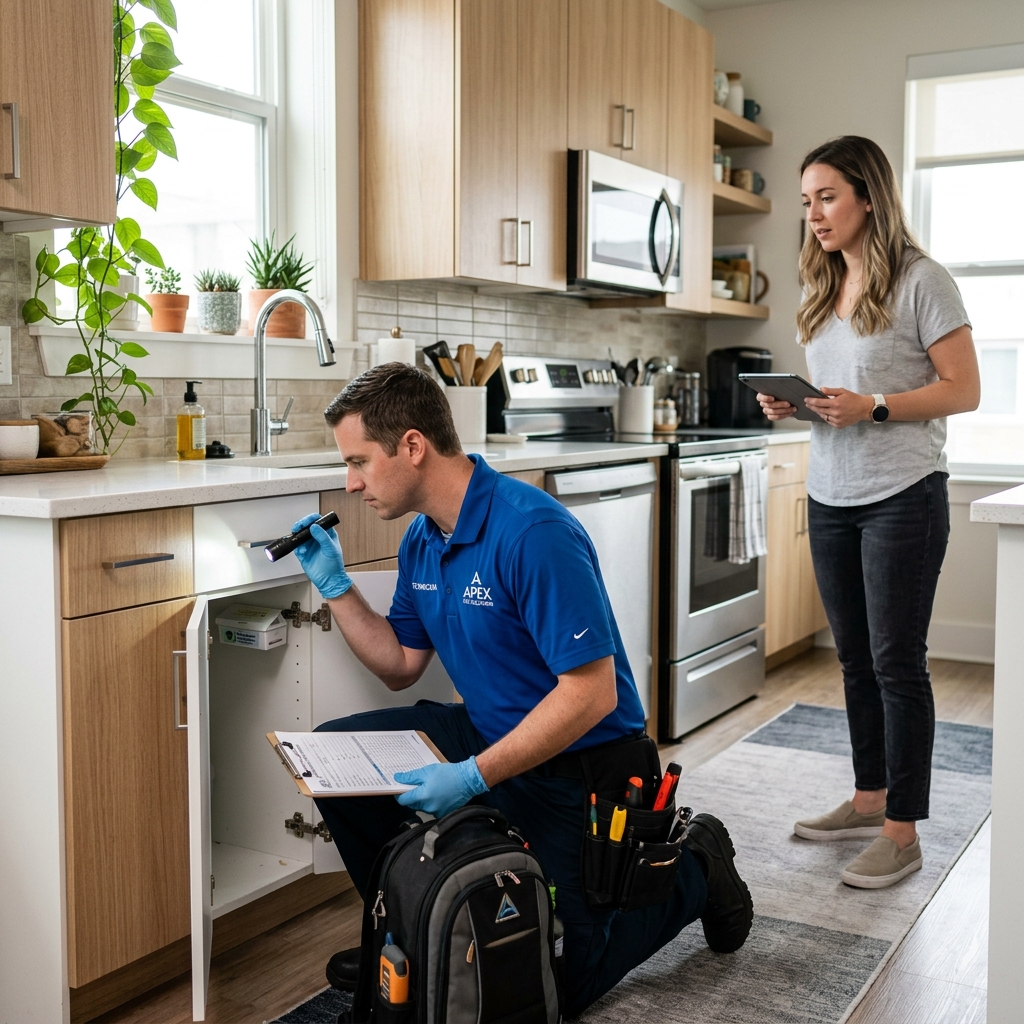
Pest problems in rental housing raise an immediate and practical question: who is responsible for dealing with infestations and paying for extermination? Laws, leases, and health codes all play a role, and both landlords and tenants have important duties. This guide explains how responsibility is typically divided, what the law means by habitability, and how renters and property owners can handle pest issues effectively.
Why Pest Control Matters in Rental Housing
Pests such as rodents, cockroaches, bed bugs, fleas, and termites are more than a nuisance. They can transmit disease, trigger allergies and asthma, damage structures, and make a home effectively unlivable. In most jurisdictions, rental housing must meet basic health and safety standards, which include controlling infestations and preventing conditions that attract pests.[10]
- Health risks: Rodents and cockroaches can spread pathogens and aggravate asthma, especially in children.
- Structural damage: Termites and some rodents can compromise wood and insulation.
- Legal consequences: A serious infestation may violate local housing or sanitary codes and can lead to enforcement actions against a landlord.[10]
- Quality of life: Persistent pests undermine the basic promise of safe, decent housing.
Because of these impacts, most landlord-tenant laws treat pest control as part of the broader obligation to keep premises habitable.
The Implied Warranty of Habitability and Pests
In many U.S. states, residential leases include an implied warranty of habitability—a legal principle requiring landlords to provide and maintain housing that is safe and fit to live in. Serious pest infestations often fall squarely within this warranty.
Under this concept, landlords generally must:
- Deliver the unit at the start of tenancy in a condition that is safe, clean, sanitary, and free from rodents and vermin.
- Maintain common areas and building systems so pests do not take hold or spread between units.
- Address infestations that arise from structural problems, building-wide conditions, or code violations.[10]
Courts and housing agencies frequently treat severe infestations as making a unit uninhabitable, meaning a landlord who fails to respond can be found in violation of their legal duties. While details differ by state, the core idea is consistent: landlords cannot disclaim responsibility for basic living conditions in the lease.
General Rule: Who Usually Pays for Extermination?
While statutes and cases vary, a common pattern appears across many jurisdictions:
- Landlords usually pay for pest control when the infestation is linked to the building structure, present at move-in, or spread through common areas.
- Tenants may be responsible when their own conduct—such as chronic clutter, poor housekeeping, or failure to report problems—directly causes or worsens an infestation.
- Local codes can override leases: Even if a lease tries to assign broad pest costs to tenants, housing or sanitary codes may still require landlords to manage and fund extermination in many situations.[10]
Because of these differences, it is important for both parties to look at three things in sequence:
- State and local landlord-tenant laws.
- Public health and sanitary codes.
- The written lease agreement, including any pest or maintenance clauses.
Landlord Duties: Prevention, Response, and Compliance
Landlords hold broad responsibility for the overall condition of the property. That includes both preventing infestations and responding promptly when pests appear.
Preventive Duties
In many states, landlords must make reasonable efforts to reduce pest risks and comply with health codes.[10] Typical preventive duties include:
- Ensuring the building is weather-tight and rodent-proof by sealing holes, gaps, and cracks.
- Maintaining garbage storage and removal systems so they do not attract pests.
- Repairing leaks and moisture problems that foster insects or mold.
- Regularly inspecting units and common areas for signs of infestation.
Response Duties to Infestations
When an infestation is reported or discovered, landlords typically must:
- Investigate promptly: Confirm the type of pest and extent of the problem.
- Hire qualified professionals: Many states and cities require licensed pest control operators to handle significant infestations.[10]
- Coordinate building-wide treatment if needed: For multi-unit properties, effective control often requires treating neighboring units and common spaces together.
- Make repairs to prevent recurrence: For example, sealing entry points and improving sanitation in shared areas.
In some jurisdictions, landlords must also document inspections and remedial actions in case regulators or courts later review their handling of the problem.[10]
Tenant Duties: Cleanliness, Reporting, and Cooperation
Tenants are not passive in pest control. Most laws and leases impose several obligations on renters to help prevent and manage infestations.
Maintaining a Reasonably Clean Home
Tenants are generally expected to:
- Dispose of trash regularly, using containers with tight-fitting lids.
- Avoid excessive clutter that can provide harborage for rodents and insects.
- Store food in sealed containers and clean up spills promptly.
- Follow basic housekeeping practices like sweeping, vacuuming, and wiping surfaces.
When a tenant significantly fails in these areas, and that failure directly leads to infestations, some laws and leases allow landlords to assign responsibility for treatment costs to the tenant or seek other remedies.
Prompt Reporting of Pest Problems
Early reporting helps limit the spread and cost of infestations. Many jurisdictions explicitly require tenants to notify landlords quickly when they notice signs of pests, and some impose deadlines for particular species such as bed bugs.
- Tenants should report unusual bites, droppings, nests, or sightings as soon as they occur.
- Written communication (email, letter, or portal message) helps create a clear record.
- Delay in reporting can allow pests to spread to other units and raise questions about fault.
Access and Cooperation During Treatment
Most leases require tenants to provide reasonable access to the unit for inspections and exterminator visits. Some housing rules allow landlords to proceed with entry for essential pest control even if a tenant is not present, provided proper notice is given.
Tenants may also be required to:
- Follow preparation instructions from the pest control company, such as laundering bedding or moving furniture.
- Vacate temporarily if treatment methods or health rules require it.
- Refrain from using unapproved pesticides or home remedies that could interfere with professional treatment or pose safety risks.
Common Scenarios: Who Is Likely Responsible?
The following table illustrates how responsibility is often allocated in typical situations. Actual outcomes depend on local law and the specific lease, but these patterns are common.
| Scenario | Likely Responsible Party | Key Factors |
|---|---|---|
| Roach infestation discovered immediately after move-in | Landlord | Unit not delivered pest-free at start of tenancy; habitability obligations apply. |
| Rodents entering through gaps in foundation affecting multiple units | Landlord | Structural defect and building-wide issue; landlord must repair and treat. |
| Bed bug infestation spreading across floors in an apartment building | Landlord (in most states) | Multi-unit infestation; many states explicitly assign bed bug eradication to landlords. |
| Mild ant problem in a single-family rental caused by overflowing trash and food left out | Tenant or shared, depending on lease | Tenant housekeeping conditions; lease may allocate minor pest costs to tenant. |
| Termites discovered in structural beams years into tenancy | Landlord | Structural and safety issue; falls under habitability and building maintenance duties. |
Understanding Your Lease and Local Law
The written lease is the first place to look for pest-control responsibilities. Many rental agreements contain clauses specifying who pays for routine pest treatments and how serious infestations will be handled.
Important lease elements to review include:
- Maintenance and cleanliness clauses: Outline tenant duties for everyday housekeeping.
- Pest or extermination clauses: Indicate whether the landlord conducts regular pest control and who pays for extra visits.
- Access provisions: Explain how landlords or contractors may enter the unit for inspections and treatments.
- Remedies and default clauses: Describe consequences if either party fails to meet their obligations.
However, leases cannot legally override certain minimum standards. Housing codes, sanitary regulations, and landlord-tenant statutes often set non-waivable rules about habitability and pest control.[10] If a lease conflicts with these rules, local law generally prevails.
Safe Pest Management in Rentals
Beyond assigning responsibility, both landlords and tenants must ensure that pest control is carried out safely and lawfully. Many health departments and environmental agencies recommend integrated pest management (IPM), which prioritizes non-chemical methods before resorting to pesticides.
Core principles of safer pest management include:
- Inspection: Identify the species, entry points, and conditions that support the infestation.
- Sanitation and exclusion: Reduce attractants (food, water, clutter) and block access points with sealant or mesh.
- Targeted treatment: Use traps, baits, or pesticides specifically labeled for the pest problem and apply them according to directions.
- Professional application: When needed, hire certified applicators who follow safety rules and IPM practices.
- Monitoring and follow-up: Confirm that pests have been eliminated and that conditions do not allow them to return.
Improper use of pesticides—such as buying unregistered products, misapplying chemicals, or placing toxic bait where children can access it—is typically prohibited and can lead to enforcement actions.
Practical Steps When You Discover an Infestation
Both landlords and tenants can follow a structured approach when a pest problem emerges:
For Tenants
- Document the issue with photos, dates, and notes about where and when pests are seen.
- Notify the landlord promptly in writing and keep a copy of the communication.
- Follow any reasonable preparation instructions issued by the landlord or exterminator.
- Continue to maintain good housekeeping to avoid making the problem worse.
- Seek legal help or housing agency guidance if the landlord fails to respond and the unit becomes unlivable.[10]
For Landlords
- Respond quickly to reports and schedule professional inspection if warranted.
- Determine whether the infestation involves multiple units or common areas.
- Hire licensed pest control where required by law and ensure appropriate treatment.
- Address underlying causes such as building defects or sanitation problems.
- Keep records of all inspections, treatments, and communications, in case regulators or courts review the case.[10]
Frequently Asked Questions About Rental Pest Control
Can a landlord make the tenant pay for all pest control in the lease?
Leases can allocate some costs, especially for minor issues or situations tied to tenant conduct. However, many states do not allow landlords to waive or transfer core habitability obligations, including serious infestations that affect safety and basic living conditions. If a lease conflicts with landlord-tenant statutes or health codes, local law usually prevails.
Is pest control always the landlord’s responsibility?
No. While landlords are often responsible for providing a pest-free home at move-in and addressing building-wide or structural infestations, tenants can be responsible for problems directly caused by poor housekeeping or failure to report issues. The outcome depends on the facts, the lease, and local law.
Do special rules apply to bed bugs?
Many jurisdictions treat bed bugs as a distinct problem and impose specific requirements. Some states explicitly require landlords to exterminate bed bugs and provide information to tenants, and certain cities require prompt reporting and coordinated treatment. Check your state and local regulations for bed bug-specific rules.
Can tenants use over-the-counter pesticides themselves?
In some places, tenants may use general-use pesticides in their own units, but cannot apply professional-grade or restricted products, especially in common areas or other units. Labels and local law govern what is permitted, and unsafe or improper use can violate health and environmental rules.
What if an infestation makes the home uninhabitable and the landlord does nothing?
Tenants in many states have legal options when a landlord fails to address serious habitability issues, which can include pest infestations. These may involve complaints to housing or health departments, rent withholding, repair-and-deduct remedies, or court actions, depending on local law.[10] Because procedures and risks vary, tenants should seek legal advice before taking self-help measures.
References
- The Landlord and Tenant Guide to Pest Management — New York State Department of Health. 2015-08-01. https://www.health.ny.gov/publications/3204/
- Renter’s Handbook on Infestations — Oregon Law Center. 2017-01-01. https://oregonlawhelp.org/media/176/download
- Massachusetts law about landlord and tenant — Massachusetts Trial Court Law Libraries. 2024-01-05. https://www.mass.gov/info-details/massachusetts-law-about-landlord-and-tenant
- The Landlord and Tenant: Dealing with Pests in Rental Housing (FAQ) — Illinois Legal Aid Online. 2022-09-14. https://www.illinoislegalaid.org/legal-information/dealing-pests-rental-housing
- Pest Inspection Checklist — MassLandlords. 2020-03-01. https://masslandlords.net/forms/pest-inspection-checklist/
- Sanitary Code Notice for Landlords — Volunteer Lawyers Project (Massachusetts). 2023-06-29. https://vlpnet.org/wp-content/uploads/2023/06/Sanitary-Code-Notice-for-Landlords-Updated-6.29.23.pdf
- Is Pest Control the Landlord’s or the Tenant’s Responsibility? — Honeycomb Insurance. 2023-08-10. https://honeycombinsurance.com/insurance-learning-center/pest-control-in-rental-properties
Similar Articles








Read full bio of medha deb


