
Rainwater Rules in Oregon: What the Famous Case Really Means
A clear look at Oregon rainwater collection law, water rights, and why one case sparked a lasting myth.
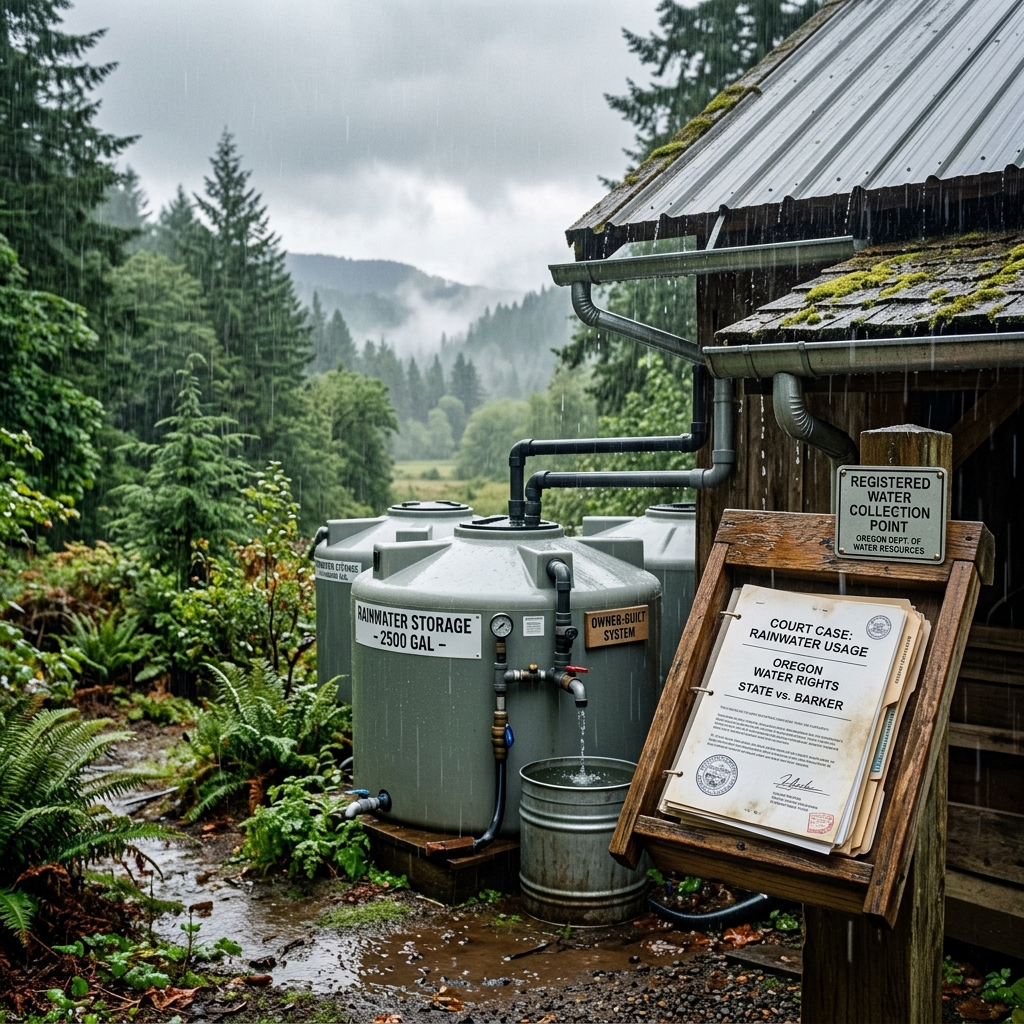
Why Oregon’s Rainwater Story Became So Famous
The phrase “a man got jail time for collecting rainwater” has circulated for years because it sounds absurd on its face. In reality, the story is not about a homeowner putting a bucket under a gutter. It is about the difference between ordinary rooftop rainwater collection and the unauthorized capture of water that is part of a regulated public water system.
That distinction matters because Oregon law treats rainwater harvesting, surface water, and water rights very differently. A small residential setup used to catch rainfall from a roof is generally allowed, while capturing or storing water from streams, canals, or other public sources can trigger enforcement action if no water right exists.
Understanding the legal boundary is useful for anyone who wants to conserve water, install a barrel system, or avoid a costly mistake. It also explains why the viral version of the story left out the most important part of the law: the source of the water.
The Core Legal Difference: Rain Falling on a Roof vs. Water from Public Sources
Oregon’s guidance makes a practical distinction. Rainwater collected from an artificial, impervious surface such as a roof can be harvested without a water right if it does not come into contact with soil before storage.
By contrast, water taken from streams, creeks, or other natural channels is part of the state’s broader water-rights system. Those waters are regulated because they may already be legally allocated to other users or protected for environmental and public purposes.
That is why the everyday image of a rain barrel is misleading when used to describe Oregon law. A barrel attached to a home’s gutters is not the same thing as building dams or reservoirs to capture moving water that would otherwise flow through a stream system.
What Oregon Residents Can Usually Do Without a Water Right
For many homeowners, rainwater harvesting is allowed and even encouraged as a conservation measure. Oregon State University Extension explains that precipitation collected from a roof and routed into a tank or cistern does not require a water right when it is captured under the stated conditions.
Common small-scale uses include:
- watering gardens and landscapes
- supplementing outdoor irrigation
- washing outdoor surfaces or vehicles
- storing water for non-potable household uses, subject to permit rules
Local conservation districts also note that collecting rainwater from a roof is legal across the state, with some communities actively promoting the practice as part of water conservation efforts.
Where Permits Start to Matter
Legality does not end the analysis. Once a system becomes larger or is connected to indoor plumbing, additional rules may apply. Oregon guidance states that larger tanks, especially those above 5,000 gallons, are more likely to require a building permit from the local building official.
If the collected water will be used inside a home for purposes such as flushing toilets or washing clothes, a plumbing permit is required because the system connects to plumbing or drainage inside a structure.
Electrical permits may also be needed if permanent facilities are installed to power pumps or other system components.
In short, the question is not simply “Can I collect rainwater?” but also “How large is the system, where is it installed, and what will the water be used for?”
Why the Public Confused the Case With a Ban on Rain Barrels
The public story persisted because it was easy to simplify. A person was said to have been jailed for collecting rainwater, so the assumption followed that the state had banned rain collection altogether.
But the reported conduct involved much more than a backyard barrel. News coverage and commentary described dams, reservoirs, and the capture of water from channels tied to public waterways. That matters because water that moves through natural systems is governed by water law, not by the casual logic of “it fell from the sky, so anyone can store it.”
The lesson is that legal disputes often turn on technical facts. The same word, “rainwater,” can describe either a harmless rooftop collection system or an unlawful attempt to intercept water that is part of a regulated resource.
How Rainwater Harvesting Works in Practice
For many households, the basic system is straightforward. Rain falls on a roof, gutters direct it into downspouts, and a tank, barrel, or cistern stores the water for later use.
Oregon’s educational materials note that only roof surfaces may be used for harvesting under the state’s smart-guide approach, and that capture efficiency is limited by losses such as evaporation and debris. The guide also explains that the amount of water available depends on roof size, rainfall, and how much of the runoff can actually be captured.
That is important because a harvesting system is not just a legal choice; it is also a design choice. A property owner needs enough roof area, a suitable storage tank, and a realistic plan for using the stored water during both wet and dry periods.
Practical Steps Before Installing a System
Oregon State University Extension recommends starting with local officials before building a rainwater harvesting system. Homeowners should contact the district watermaster and the local building and planning offices to understand which rules apply to their property.
Useful planning steps include:
- confirming whether the system will be outdoors only or connected indoors
- checking tank size and permit thresholds
- determining whether plumbing or electrical work is involved
- reviewing local zoning and building requirements
- designing the system around the intended use of the water
This approach helps avoid the common mistake of assuming that a conservation project is automatically exempt from all regulation.
Why Water Rights Law Exists in the First Place
Water rights law is built around allocation and priority. In states like Oregon, water is not treated like ordinary personal property simply because it passes over someone’s land. Instead, the state manages how water is diverted, stored, and used so that competing claims can be reconciled.
That regulatory framework helps explain why one person may freely collect roof runoff while another may be prohibited from blocking a stream or storing water that is already part of the public supply system.
This also means that a legal violation does not always look like theft in the ordinary sense. It can involve taking or storing water without authorization, ignoring permit requirements, or altering natural water flow in a way that harms other rights holders.
What Homeowners Should Remember
For most Oregon residents, the safest general rule is simple: collecting rain that falls on a roof is usually legal, but bigger systems and indoor uses may require permits.
It is also wise to remember that not every water-related project is treated the same way. A rain barrel, a cistern, a pond, and a stream diversion are four very different legal situations. The law’s treatment depends on the water source, the storage method, and the intended use.
Before installing any system, homeowners should verify local requirements rather than rely on internet myths. That is especially true when the project involves plumbing, pumps, or large storage volumes.
Frequently Asked Questions
Is it illegal to collect rainwater in Oregon?
No. Oregon guidance states that collecting precipitation from an artificial impervious surface such as a roof into a tank or cistern generally does not require a water right, provided the water does not contact soil before storage.
Why did someone go to jail in the rainwater story?
The jail story was tied to unauthorized water use involving public water sources, not ordinary household rain barrels. Reports described dams and reservoirs capturing water associated with public waterways.
Do I need a permit for a rain barrel?
Small outdoor systems used for irrigation often do not need a plumbing permit if they remain entirely outside the building and are used only for non-potable purposes. Larger or indoor-connected systems may require permits.
Can collected rainwater be used indoors?
Yes, but indoor use usually changes the permit analysis. If the system connects to plumbing or drainage inside a building, a plumbing permit is required.
Can Oregon homeowners use rainwater for drinking?
Some systems can be treated and used for potable purposes, but that typically involves more complex design, treatment, and local regulatory review. Homeowners should verify all applicable requirements before using harvested water for drinking.
How do I know whether my project needs approval?
Check with your local building official, city or county planning office, and district watermaster before construction. Oregon’s guidance specifically recommends contacting those offices early in the process.
| Scenario | Likely Legal Treatment | Why It Matters |
|---|---|---|
| Roof runoff into a backyard barrel | Usually allowed | Ordinary rain capture from an impervious surface is generally exempt from water-right concerns. |
| Large cistern for household use | May need permits | Size, plumbing, and building issues can trigger review. |
| Water diverted from a stream or creek | Usually regulated | Public waters are subject to water-right laws. |
| System with pumps and interior plumbing | Permit likely required | Indoor connections commonly require plumbing and possibly electrical approval. |
The Bigger Takeaway for Property Owners
Oregon’s rainwater rules are more nuanced than the viral myth suggests. The state does not prohibit ordinary rain barrels, but it does regulate the capture and use of water when larger systems, indoor plumbing, or public water sources are involved.
Anyone considering a harvesting setup should think about source, storage, use, and permitting as a single legal package. That is the safest way to conserve water without creating a compliance problem.
References
- Rainwater harvesting in tanks or cisterns: Oregon regulations — Oregon State University Extension. 2024-01-01. https://extension.oregonstate.edu/catalog/em-9448-rainwater-harvesting-tanks-or-cisterns-oregon-regulations
- Is It Really Illegal To Collect Rain Water In Oregon? — CBS News. 2019-04-15. https://www.cbsnews.com/sanfrancisco/news/is-it-illegal-to-collect-rain-water-in-oregon/
- Collecting Rainwater — Upper Willamette Soil & Water Conservation District. 2024-01-01. https://uwswcd.org/rainwater/
- Rainwater Harvesting: Catching Raindrops to Conserve Water — Tualatin Soil & Water Conservation District. 2024-01-01. https://tualatinswcd.org/rainwater-harvesting-catching-raindrops-to-conserve-water/
- Oregon Smart Guide: Rainwater Harvesting — Oregon Building Codes Division. 2024-01-01. https://www.oregon.gov/bcd/documents/brochures/3660.pdf
Similar Articles








Read full bio of medha deb


