
Public Defenders in DUI Cases: What You Need to Know
Understand when you qualify for a public defender in a DUI case, what they can and cannot do for you, and how they compare to private DUI attorneys.
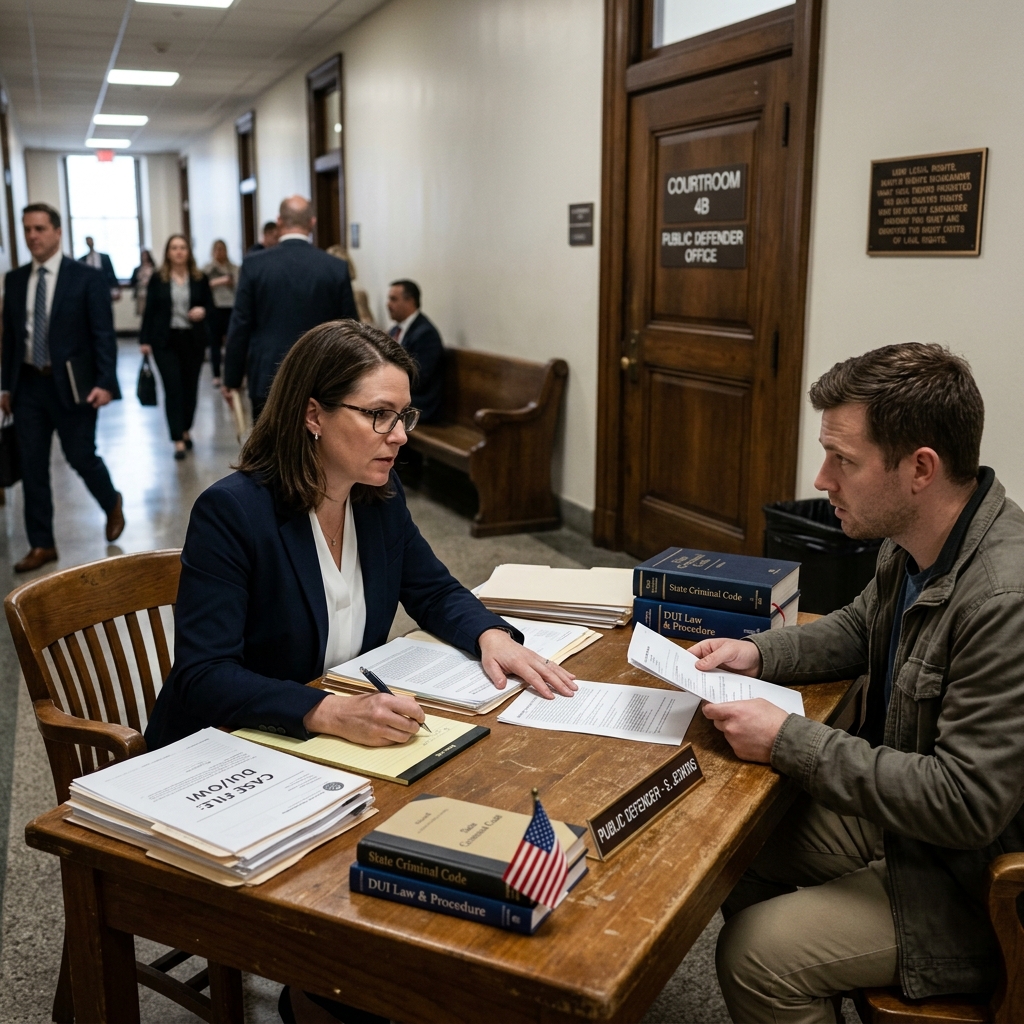
Facing a DUI charge is stressful, expensive, and potentially life-changing. One of the first questions many people ask is whether they can get a public defender instead of paying for a private lawyer. This guide explains when you can receive a court-appointed attorney, what public defenders do in DUI cases, and how they compare to private DUI counsel.
Understanding DUI Charges and Your Right to Counsel
Driving under the influence (DUI) is typically treated as a criminal offense. In most jurisdictions, that means the government can seek fines, probation, license suspension, and even jail time for a conviction. Because jail is a potential penalty, the Sixth Amendment right to counsel applies in U.S. criminal prosecutions.
In practical terms, this usually means:
- You have the right to be represented by an attorney in criminal court.
- If you cannot afford to hire a lawyer, you may qualify for a public defender or other court-appointed counsel.
- The court decides whether you are eligible based on your financial situation, not based on the seriousness of the charge alone.
Public defenders handle the criminal court case. Separate administrative hearings, such as license suspension proceedings before a motor vehicle department, are often outside their scope and may require separate representation.
Who Qualifies for a Public Defender in a DUI Case?
Courts do not automatically assign a public defender to every defendant. You have to show that you cannot afford a private attorney. Local rules vary, but eligibility is usually determined through a financial screening process.
Common factors used to decide eligibility include:
- Income level relative to federal or state poverty guidelines.
- Number of dependents you support.
- Basic living expenses, such as rent, utilities, food, and medical costs.
- Existing debts and obligations, such as child support or loans.
- Whether you have liquid assets that could reasonably be used to hire counsel.
Typically, you will be asked to complete a financial declaration or affidavit and may need to provide documentation like pay stubs or benefit statements. Giving false information can lead to criminal penalties, so it is important to be accurate and honest.
Some jurisdictions require defendants to pay a small administrative fee or reimburse part of the cost of representation if they are able, even when a public defender is appointed. The representation itself, however, is often provided at no or very low cost compared to private counsel.
What Public Defenders Do in DUI Cases
Public defenders are licensed attorneys who work for government-funded offices dedicated to representing people charged with crimes who cannot afford private counsel. They must meet the same professional and ethical standards as private lawyers.
In a typical DUI case, a public defender may:
- Review police reports, witness statements, and other discovery from the prosecutor.
- Assess whether the traffic stop, arrest, and chemical testing complied with constitutional and statutory requirements.
- Identify potential defenses, such as improper stop, faulty breathalyzer equipment, or violations of testing protocols.
- File motions to suppress evidence or dismiss charges where legal grounds exist.
- Negotiate with the prosecutor for reduced charges, alternative sentencing, or diversion programs.
- Advise you of the consequences of a plea, including jail time, fines, probation conditions, and collateral effects like immigration or employment issues.
- Represent you at trial if you choose to contest the charges.
Public defenders are often highly experienced in criminal law and spend a substantial part of their caseload on DUI and DWI matters. Because they appear in the same courts every day, they tend to be familiar with local judges, prosecutors, and typical outcomes for similar cases.
Limitations of Public Defenders in DUI Matters
Even though public defenders are qualified and dedicated, there are practical limits on what they can do, especially in DUI cases.
Heavy Caseloads and Limited Time
Many public defender offices operate with high caseloads and limited staffing. Studies and legal commentaries frequently note that public defenders may carry far more files than recommended for effective representation. This can mean less time for extended client meetings, detailed investigation, or specialized motion practice in some cases.
Potential implications for a DUI defendant include:
- Shorter consultations and less frequent communication.
- Less opportunity to explore complex scientific or technical defenses.
- Limited ability to attend DMV or licensing hearings, which are often treated as separate civil or administrative matters.
No Choice of Attorney
When you receive a public defender, you typically cannot choose which lawyer will be assigned to your case. The office allocates cases based on internal policies. Even if you are unhappy with the assigned attorney, courts are usually reluctant to replace them without strong reasons such as an actual conflict of interest or demonstrable breakdown in communication.
Scope of Representation
Public defenders generally handle the criminal prosecution, not related civil or administrative matters. For example, if you have a separate hearing before the department of motor vehicles regarding license suspension, the public defender might not appear in that proceeding unless local rules provide otherwise. If you want coordinated representation in both forums, you may need to retain a private attorney.
Attendance at Court
With a public defender, defendants are often expected to attend all court hearings. Private lawyers in many jurisdictions can appear on behalf of their clients for routine hearings, allowing the client to skip some dates when legally permissible. This can be an important practical consideration if attending court affects your job or childcare responsibilities.
How Public Defenders Compare to Private DUI Attorneys
Choosing between a public defender and a private DUI attorney involves weighing cost, availability, and personal priorities.
| Aspect | Public Defender | Private DUI Attorney |
|---|---|---|
| Cost | Usually free or low cost; may require partial reimbursement. | Fees often range from several thousand dollars and upward. |
| Eligibility | Must meet financial criteria to qualify. | Available to anyone who can pay. |
| Experience | Extensive experience in criminal defense, including DUIs. | May offer specialized DUI expertise and focused practice. |
| Time and Attention | Caseload can limit individual case time. | Often able to provide more individualized attention. |
| Choice of Lawyer | No personal choice; attorney assigned by office. | You choose the lawyer you prefer. |
| DMV / License Hearings | Frequently not covered. | Many private attorneys include administrative hearings in representation. |
| Court Attendance | You usually must attend all hearings. | Attorney may appear for you at some routine hearings. |
Deciding Whether to Use a Public Defender for Your DUI Case
If you qualify financially, a public defender can be a strong option in many DUI cases. Legal commentators note that public defenders often do a good job and that defendants are generally in “good hands” with them in typical DUI prosecutions. However, the decision is personal and depends on your circumstances.
Consider these questions when deciding:
- Can you realistically afford a private DUI lawyer without jeopardizing essential living expenses?
- Is your case relatively straightforward, or does it involve complex issues (e.g., seriously contested blood test results, injury accidents, or multiple prior convictions)?
- How important is having one lawyer handle both criminal court and DMV hearings?
- Do you value the ability to choose your attorney based on reviews, referrals, and consultation meetings?
- Are you comfortable attending every court date, or is minimizing court appearances a priority?
Public defenders are often an excellent choice when:
- You clearly qualify based on income and assets.
- Your case does not involve serious injuries or highly technical scientific disputes.
- You want reliable representation but cannot afford private counsel.
- Local public defenders have a strong reputation for quality work in DUI cases.
Private DUI attorneys may be preferable if:
- You have the financial means to pay fees without severe hardship.
- Your case carries substantial penalties or complex evidentiary issues.
- You want a lawyer who focuses primarily or exclusively on DUI defense.
- You need help with license suspension and other collateral proceedings as part of a coordinated strategy.
How to Request a Public Defender in Your DUI Case
The process of obtaining a public defender begins early in the criminal case, often at or before your first formal court appearance (such as an arraignment).
Typical steps include:
- Appear at your first court date and inform the judge that you cannot afford a lawyer.
- Complete a financial eligibility form provided by the court or public defender office.
- Submit any supporting documents requested, such as proof of income or government benefits.
- Await the court’s decision. If you qualify, the judge will formally appoint a public defender, and you will receive contact information.
- Schedule a meeting or phone call with your assigned attorney as soon as possible.
If the court initially denies your request, you may be able to reapply if your financial situation changes (for example, if you lose your job). It can also help to ask court staff or a local legal aid organization for guidance on the specific rules in your jurisdiction.
Working Effectively with Your Public Defender
Your relationship with your public defender is crucial. Even with high caseloads, you can often improve communication and outcomes by being proactive.
Best practices include:
- Be honest about what happened, even if it is embarrassing. Your lawyer cannot effectively defend you without accurate information.
- Respond promptly to calls, letters, or emails from the public defender’s office.
- Provide requested documents (such as medical records or employment details) quickly.
- Keep a written timeline of events before, during, and after the arrest to help your attorney identify issues.
- Prepare a list of questions and concerns before meetings to make efficient use of limited time.
- Follow your lawyer’s advice about not discussing the case on social media or with potential witnesses.
Remember that attorney-client communications are confidential. Public defenders are ethically obligated to represent your interests, not those of the police or prosecutor.
Frequently Asked Questions About Public Defenders and DUI Cases
Do I automatically get a public defender for a first-time DUI?
No. Eligibility depends on your financial situation, not whether the DUI is a first offense. You must show that you cannot afford a private lawyer.
Are public defenders as good as private DUI lawyers?
Many public defenders have extensive experience and can provide high-quality representation in standard DUI cases. Private lawyers may offer more time, specialized expertise, and broader services (such as DMV hearings), but that comes at a cost.
Can I switch from a public defender to a private attorney later?
Yes. You generally may hire a private lawyer at any point, and the private attorney can file a notice of appearance to take over representation, subject to court approval and scheduling constraints.
Will my public defender handle my license suspension hearing?
Often not. Public defenders typically focus on criminal court proceedings, and administrative license hearings may require separate representation or self-representation, depending on local practice.
What if I do not qualify for a public defender but still cannot afford a lawyer?
Options may include limited-scope representation, payment plans with private attorneys, legal aid organizations, or self-help resources provided by courts or bar associations. Availability varies by location, so contacting local legal aid or the bar association can help identify resources.
References
- Will a Public Defender Do a Good Job in a DUI Case? — AllLaw/Nolo. 2023-03-01. https://www.alllaw.com/articles/nolo/dui-dwi/will-a-public-defender-do-a-good-job-in-a-dui-case.html
- Is A Public Defender Good For A DUI Charge? — Hirsch Law Group. 2022-06-15. https://hirschlawgroup.com/is-a-public-defender-good-for-a-dui-charge/
- Hiring a DUI Attorney vs. A Public Defender — Luftman, Heck & Associates. 2021-09-10. https://www.cincinnaticriminalattorney.com/hiring-a-dui-attorney-vs-a-public-defender/
- Should I Hire a DUI Lawyer or Go with a Public Defender? — Simms Showers LLP. 2020-11-20. https://www.simmsshowerslaw.com/should-i-hire-a-dui-lawyer-or-go-with-a-public-defender-2/
- Salt Lake Legal Defender Association – Attorneys — Salt Lake Legal Defender Association. 2024-01-01. https://www.sllda.com/attorneys/
Similar Articles








Read full bio of medha deb




