
When Police Selfies Go Viral: Social Media, Discipline and Public Trust
Exploring how seemingly harmless police selfies can trigger discipline, lawsuits, safety risks and long‑term damage to public trust.
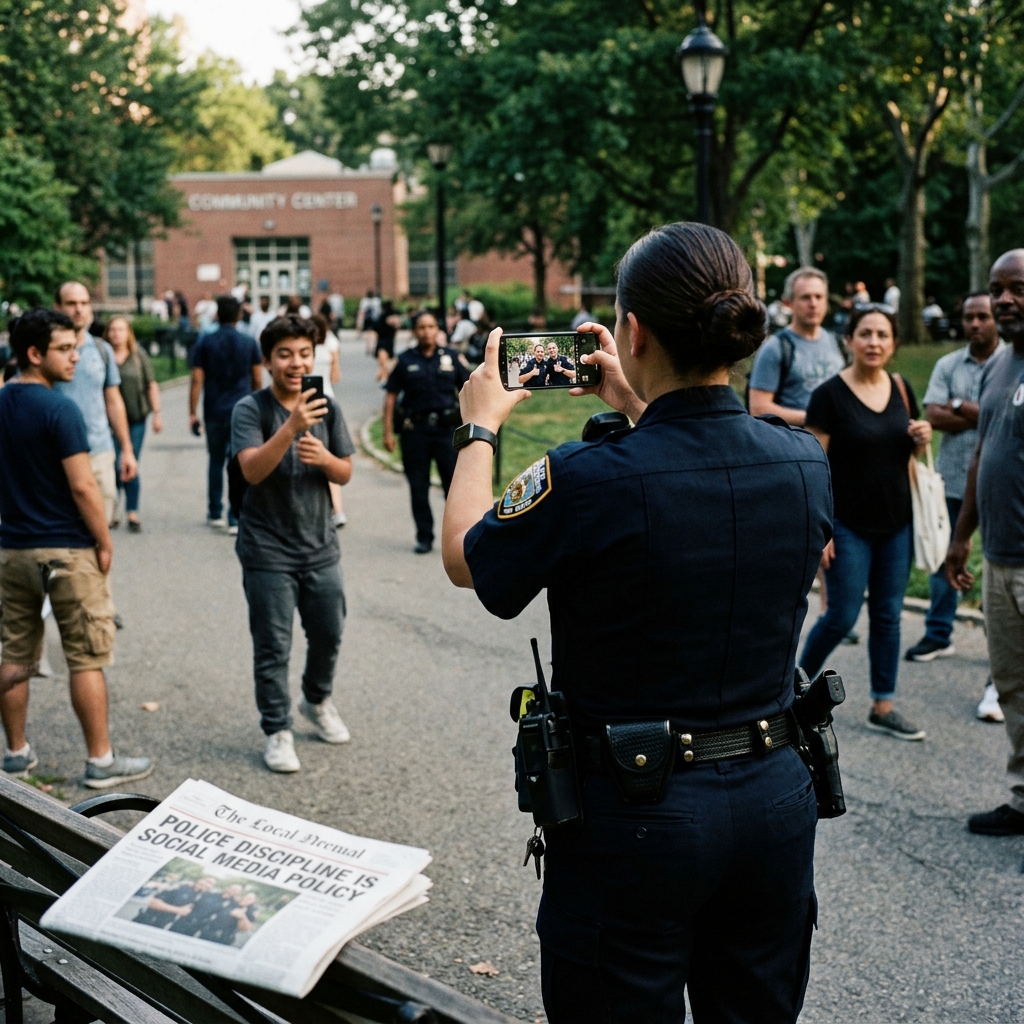
Smartphones and social media have made it effortless for police officers to capture moments from their daily lives, including photos of themselves in uniform. A single selfie, however, can travel far beyond the intended audience and trigger serious consequences—ranging from internal discipline to job loss and damaged community trust. This article explores how law enforcement selfies and other online posts create legal, ethical and safety challenges in the modern policing environment.
Why Police Selfies Are More Than Just Photos
For most people, a selfie is a casual form of self-expression. For law enforcement officers, the same action carries additional weight because they hold positions of public authority and are subject to strict professional standards. A photo that might be harmless for a private citizen can be problematic when the person in the frame wears a badge and uniform that symbolize the power of the state.
Several factors make police selfies uniquely sensitive:
- Symbol of authority: The uniform and badge convey official power, even when the officer is off duty.
- Public visibility: Viral sharing means millions may see an image that was originally intended for a small network.
- Evidence in court: Defense attorneys can use controversial photos to challenge an officer’s credibility in criminal cases.
- Security and privacy risks: Images can unintentionally reveal locations, equipment or operational tactics.
These realities have prompted police leaders and oversight bodies to treat social media activity as part of an officer’s professional conduct, not merely personal behavior.
Common Ways Cop Selfies Lead to Discipline
Officers seldom intend to cause harm when they post selfies or photos online, yet disciplinary cases routinely arise from seemingly minor actions. Patterns have emerged in how these incidents unfold.
1. Inappropriate content or messaging
Many departments maintain rules barring content that appears discriminatory, harassing or disrespectful to the public. When a selfie is paired with offensive captions, symbols or gestures, it can be viewed as violating these standards.
- Images showing alcohol or drug use alongside police gear.
- Selfies with comments mocking suspects, victims or communities.
- Posts that appear to condone excessive force or illegal behavior.
Such posts can lead to internal investigations, suspension or termination, particularly when they go viral and draw media attention.
2. Violating department social media policies
Most agencies now publish formal policies governing online conduct, including rules about using the uniform in personal posts, referencing the department, and sharing official information. A selfie taken on duty, in a police vehicle, or in front of sensitive locations may violate these rules.
Examples of policy breaches include:
- Posting while on duty when it distracts from official responsibilities.
- Using official logos or insignia in a way that suggests endorsement of a private cause.
- Sharing photos from restricted areas such as crime scenes or command centers.
3. Disclosing operational details or locations
Images can inadvertently reveal information that endangers officers or compromises investigations. Official guidance in the United Kingdom and elsewhere warns police personnel not to reveal operational material, tactics or covert locations online.
Risks include:
- Visible computer screens showing case information in the background.
- Landmarks that identify covert locations or surveillance posts.
- Metadata from photos that exposes precise GPS coordinates, especially for undercover or specialized units.
In serious cases, such disclosures can lead to disciplinary proceedings or reassignment away from sensitive work.
4. Undermining credibility in court
Prosecutors and defense attorneys increasingly review officers’ social media for content that could be used in litigation. In the United States, some departments have explicitly noted that they cannot risk hiring officers whose online histories would undermine them as witnesses.
If a selfie portrays the officer engaging in questionable behavior or expressing biased views, lawyers may use it to challenge the officer’s integrity or impartiality. That damage can extend beyond the individual case and affect the officer’s long-term career prospects.
Job Loss: When Online Missteps End Careers
Discipline is only one consequence of social media misuse; some officers lose their jobs entirely. Professional training platforms have documented numerous instances of officers being fired for photos and posts that, at first glance, appeared harmless.
| Stage | Description | Potential Impact |
|---|---|---|
| Sharing | Officer posts a selfie or photo on a personal account. | Initially limited audience, little oversight. |
| Amplification | Followers share or screenshot the image; it spreads across platforms. | Local media or advocacy groups notice the content. |
| Public reaction | Outrage, complaints or political pressure emerge. | Department reputation is at stake; officials must respond. |
| Internal investigation | Supervisors review whether policies or ethical standards were violated. | Findings may include misconduct or safety concerns. |
| Disciplinary decision | Leadership imposes sanctions ranging from reprimand to termination. | In serious or high-profile cases, firing is more likely. |
This process illustrates how personal online behavior can quickly become a matter of public concern and institutional risk, prompting strong responses from departments seeking to maintain legitimacy.
Safety and Security Risks Hidden in Selfies
Beyond reputation and discipline, police selfies can pose concrete safety hazards for officers, colleagues and communities. Official guidance emphasizes that even well-intentioned use of social media may expose locations, identities and tactics to hostile actors.
Location tracking and metadata
Modern smartphones embed location data in photos, and social platforms may display or store this information. Police guidelines warn covert officers to disable GPS and location-based services on personal devices to avoid unintentionally revealing operational positions.
- Undercover officers photographed near sensitive sites could be identified later.
- Patterns of posts may reveal an officer’s home, workplace or routine.
- Criminal organizations may monitor social media to track law enforcement movements.
Exposing equipment and tactics
Photos taken in vehicles, stations or on operations can reveal technology and methods that adversaries may exploit. Training materials highlight the risks of showing specialized weapons, communication systems or tactical formations online.
Images can:
- Reveal the type and placement of body armor or weapons.
- Show unique equipment used by SWAT or specialized units.
- Capture computer screens, case files or planning documents in the background.
Because of these issues, many departments require officers to obtain authorization before sharing any photos taken in official settings.
Public Trust, Community Relations and Social Media
Law enforcement agencies increasingly use social media to communicate with the public, share success stories and provide safety information. These official accounts can improve transparency, but individual posts by officers may have the opposite effect when they appear dismissive, biased or insensitive.
How problematic selfies harm trust
- Perception of bias: Selfies with offensive or political messaging can fuel beliefs that the department treats certain communities unfairly.
- Questioning professionalism: Photos showing officers ignoring duties or mocking citizens may erode confidence in the agency’s integrity.
- Impact on cooperation: Witnesses and victims may be less willing to engage with officers they perceive as disrespectful or untrustworthy.
Media coverage of such incidents can magnify these effects, portraying them as emblematic of deeper cultural problems within policing.
Positive uses of social media by officers
It is important to recognize that not all social media activity by officers is harmful. When done responsibly and in accordance with policy, online presence can support community policing.
- Sharing accurate information about emergencies and public safety alerts.
- Highlighting community outreach, youth engagement and local events.
- Humanizing officers by showing appropriate, respectful images of daily work.
In many regions, official social media pages have become key channels for real-time information, demonstrating that the issue is not technology itself but how it is used.
Department Policies and Training: Managing Digital Risk
To address the complexities of online behavior, law enforcement organizations have developed detailed guidelines for the safe use of the internet and social media. These policies aim to balance officers’ rights as private citizens with their responsibilities as public officials.
Core elements of effective social media policies
- Clear rules on content: Defining prohibited behavior, such as discriminatory posts, operational disclosures, or unauthorized use of logos.
- Distinction between official and personal accounts: Clarifying when an officer speaks for the department and when they act privately.
- Guidance on uniform and symbols: Explaining when photos in uniform are acceptable and when they are not.
- Discipline framework: Outlining how breaches will be investigated and sanctioned to ensure consistency.
Policies are often accompanied by training sessions that emphasize the “viral effect” of online posts and encourage officers to think carefully before sharing.
Case-by-case decisions and grey areas
Despite formal rules, many departments still evaluate social media incidents individually. Investigative reports note that guidelines for breaches in conduct can be vague, leading to case-by-case decisions. This approach reflects the difficulty of predicting all possible scenarios in a rapidly changing digital environment.
The challenge for agencies is to maintain fair and consistent discipline while respecting freedom of expression and acknowledging that cultural norms around online sharing continue to evolve.
Practical Tips for Officers: Staying Out of Trouble Online
Given the potential consequences, officers benefit from practical strategies for responsible social media use. While specific rules vary by department, several general principles emerge from professional guidance and policy documents.
- Know your department’s policy: Read and understand official rules before posting anything related to your work or uniform.
- Separate personal and professional identities: Avoid mixing private opinions with content that clearly associates you with your department.
- Disable location services when necessary: Particularly for covert or sensitive assignments, turn off GPS and avoid revealing locations.
- Think about how a post would look in court: Ask whether a prosecutor, judge or defense attorney could use the image to challenge your credibility.
- Consult supervisors before sharing questionable content: If you have doubts, seek guidance rather than posting impulsively.
- Assume anything posted can become public: Even in private groups or chats, screenshots and leaks can expose content widely.
These practices help officers preserve their careers and protect colleagues and communities from unintended harm.
Frequently Asked Questions About Police Selfies and Social Media
Are officers allowed to take selfies in uniform?
Whether officers may take and share selfies in uniform depends on their department’s policy. Many agencies permit images that are respectful, non-political and do not reveal sensitive information, while prohibiting photos that could undermine professionalism or security.
Can a social media post really cost an officer their job?
Yes. Training organizations and news outlets have documented multiple cases where online posts led to termination, particularly when the content was discriminatory, violent, dishonest or revealed operational details.
What kinds of posts are considered most dangerous for officer safety?
Posts that reveal precise locations, patterns of movement, identities of covert officers, or detailed views of equipment and tactics are considered high risk. Official guidance urges officers to avoid sharing operational material and to disable location services when necessary.
Do these rules apply off duty?
In many departments, expectations of professional conduct extend beyond duty hours. Off-duty posts that feature the uniform, badge or association with the agency can still be subject to review and discipline if they damage public trust or violate policy.
How can departments use social media positively?
Departments can use official accounts to provide timely information, highlight community partnerships, correct misinformation and show transparency. When carefully managed, these channels support public safety and trust rather than undermining it.
References
- Guidelines on the Safe use of the Internet and Social Media by Police Officers and Police Staff — Association of Chief Police Officers (ACPO). 2013-02-01. https://library.college.police.uk/docs/ACPO/safe-use-of-the-Internet-Feb-2013.pdf
- That’s a Bad Use of Your Cell Phone — Sandulli Grace. 2015-01-07. https://sandulligrace.com/thats-a-bad-use-of-your-cell-phone/
- One Post, Lasting Consequences: Social Media Risks for Police — Calibre Press. 2026-06-01. https://calibrepress.com/2026/06/one-post-lasting-consequences-social-media-risks-for-police/
- Posting pictures online: An officer safety risk — Police1. 2013-06-18. https://www.police1.com/off-duty/articles/posting-pictures-online-an-officer-safety-risk-sFUhU3cXzRWJAAQt/
- The dangers of social media for law enforcement take center stage amid new scrutiny — ABC News. 2020-07-15. https://abcnews.com/US/dangers-social-media-law-enforcement-center-stage-amid/story?id=64252037
- When cops misuse social media — Investigative Post. 2026-06-23. https://investigativepost.org/2026/06/23/when-cops-misuse-social-media/
Similar Articles








Read full bio of medha deb




