
Can Your Employer Tell You to Stop Pumping and Go Home?
Understanding your legal rights to pump breast milk at work and how to respond when those rights are challenged by an employer.
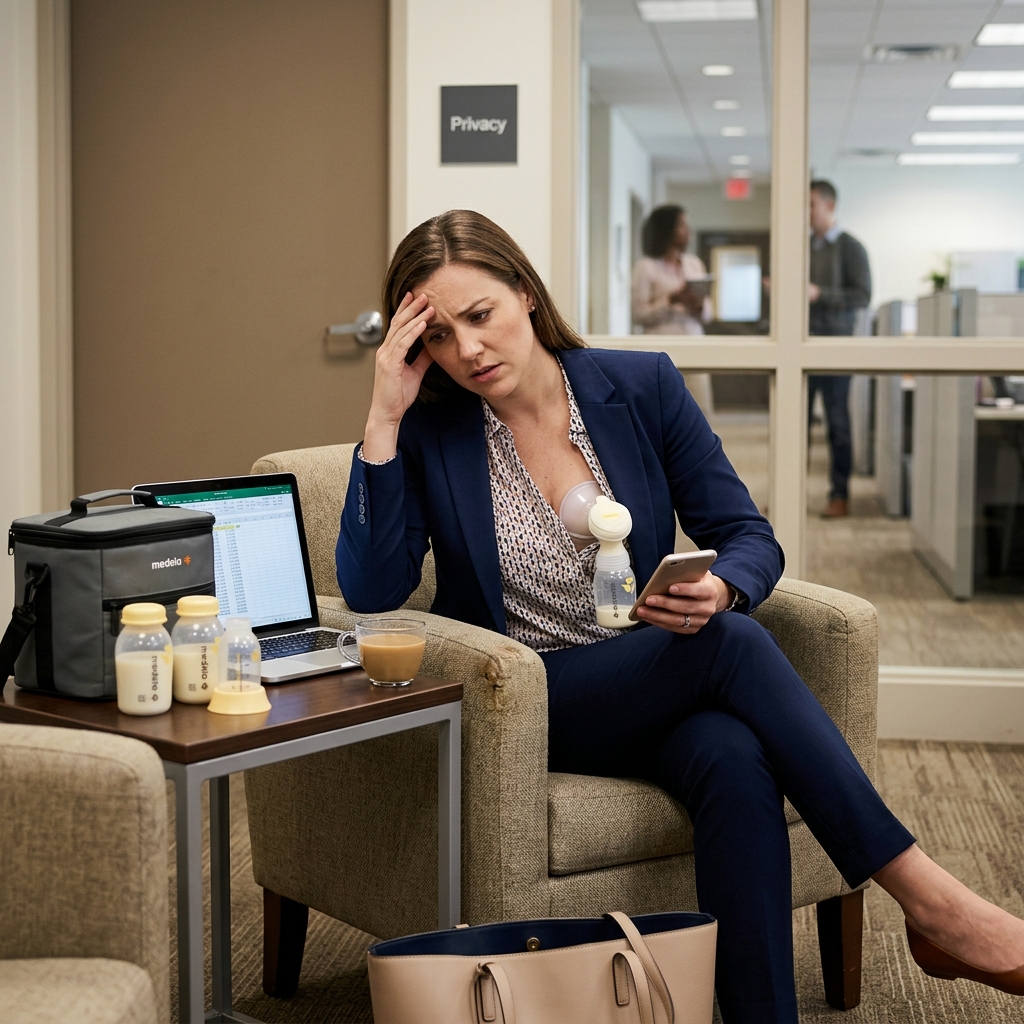
Many new parents are surprised to discover that the most challenging part of breastfeeding is not the newborn phase, but returning to work. When an employer says something like, “Just go home to your baby if you need to breastfeed,” it raises hard questions about your job, your income, and your rights. This article explains what U.S. law requires, what your employer can and cannot do, and how to respond if your ability to pump at work is questioned.
1. The Core Legal Principle: Breastfeeding is Protected at Work
In the United States, federal law gives most nursing employees a clear right to express breast milk at work. Under the PUMP for Nursing Mothers Act, which amended the Fair Labor Standards Act (FLSA), covered employers must provide reasonable break time and a private, non-bathroom space for pumping for up to one year after the child’s birth.
- Most FLSA-covered workers are protected, including hourly and many salaried employees.
- Employers must offer breaks as often as the nursing worker needs to express milk, not just once per day.
- The pumping space must be clean, functional, shielded from view, and free from intrusion.
States can and often do go further. For example, New York law now provides paid pumping breaks for up to three years after birth, and California law requires additional facility features such as seating, a surface for the pump, electricity, and nearby access to a sink and refrigerator. These broader protections apply alongside federal law, not instead of it.
2. What “Reasonable Break Time” Actually Means
Federal law does not specify an exact number of minutes or breaks per day. Instead, it uses the standard of reasonableness based on the needs of the nursing worker and the realities of pumping.
| Aspect | Legal Requirement (Federal) |
|---|---|
| Duration of protections | Up to one year after the child’s birth. |
| Break length | As much time as reasonably needed to express milk; law does not set a fixed number of minutes. |
| Number of breaks per day | Each time the employee has a need to express milk. |
| Location | Private space, not a bathroom, shielded from view and free from intrusion. |
In practice, many workers need 15–30 minutes per pumping session and may need to pump two to four times during a typical workday, depending on the length of their shift and their personal physiology. Reasonableness is judged on a case-by-case basis, but an employer cannot simply decide that a short, infrequent break is enough if it is not medically realistic for a nursing parent.
3. Is It Legal for Your Employer to Tell You to “Go Home to Your Baby”?
The short answer is: Usually not, if the intention is to avoid providing pumping breaks or space. An employer may offer flexibility, such as reduced hours or temporary remote work, but they cannot lawfully use “go home” as a way to bypass their legal responsibility to accommodate breastfeeding.
Under federal law:
- If your employer is covered by the FLSA, they must provide reasonable pumping breaks and a suitable space at work.
- They cannot require you to use your own vacation time or unpaid leave instead of providing those accommodations.
- They cannot retaliate against you—such as cutting your hours, demoting you, or firing you—for asserting your right to pump.
Several states further prohibit discrimination based on breastfeeding status, which means that adverse actions linked to your need to lactate can potentially violate state anti-discrimination laws as well. In those jurisdictions, telling a nursing worker to leave rather than accommodating pumping may not only conflict with federal break-time requirements but also amount to unlawful discrimination.
4. Employer Obligations: What Your Boss Must Provide
Employers covered by the FLSA have specific, non-optional responsibilities toward nursing workers.
4.1 Break Time
- Breaks must be available each time you need to express milk, for up to one year after birth.
- Duration must be reasonable, recognizing the time needed to pump, store milk, and clean parts.
- Breaks may be unpaid under federal law for non-exempt workers, unless they coincide with otherwise paid rest periods or you continue to perform work duties during the break.
State laws can change this. For instance, New York explicitly requires paid pumping breaks and allows them for a longer period. California allows an employee denied proper lactation breaks to seek premium pay for each violation.
4.2 Physical Space
- The space cannot be a bathroom, even if the bathroom is private or recently renovated.
- It must be shielded from view and free from intrusion by coworkers or the public, which usually means a door that can close or lock.
- It should be functional as a pumping space: clean, with a seat, a flat surface for the pump, and access to electricity for electric or battery-operated pumps.
- Some state laws further require access to running water and a refrigerator near the workplace to store milk safely.
“Reasonable effort” does not mean perfection, but it does require more than vague gestures. A busy conference room with glass walls and no way to block visibility, or a car in the parking lot with no privacy, will rarely meet the legal standard.
5. How to Assert Your Rights Without Escalating Conflict
Although the law supports nursing workers, many people understandably worry about how to raise the issue without damaging their relationship with their employer. A calm, documented approach generally works best.
5.1 Plan Ahead Before Returning to Work
Public health guidance encourages breastfeeding parents to talk to their employer before they return from parental leave to discuss pumping needs and logistics. Consider:
- What times during your shift you will likely need to pump.
- How long each session typically takes.
- Where in the workplace a private, non-bathroom space might be arranged.
- Where you can safely store expressed milk.
Sending this information in writing—such as email or another durable messaging platform—creates a helpful record. Some states, like New York, specifically advise that workers submit written requests in advance of returning to work.
5.2 Responding When Your Employer Resists
If your employer says you should go home instead of pumping at work, you can respond by:
- Restating the legal framework: Explain that federal law requires reasonable break time and private space for pumping for one year after birth and, where relevant, mention applicable state protections.
- Offering practical options: Suggest specific locations and break times that balance your medical needs with workflow.
- Clarifying your intent: Make it clear you wish to keep working while breastfeeding, not leave or reduce your hours unless you choose to.
- Documenting communications: Follow any verbal discussion with a short email summarizing what was said and what accommodations were agreed—or refused.
Keeping the tone professional and collaborative can often resolve misunderstandings; many employers are simply unfamiliar with their obligations until they are clearly explained.
6. Enforcement: What Happens if Your Employer Still Says No?
The PUMP Act strengthened not only substantive rights but also enforcement. Nursing workers now have clearer ways to hold employers accountable when accommodations are denied.
6.1 Federal Remedies
Under the PUMP Act’s amendments to the FLSA:
- Employees can bring a lawsuit against a non-compliant employer after giving notice and a short opportunity to correct violations related to space and break time.
- Potential remedies include reinstatement, promotion, recovery of lost wages, damages for emotional distress, attorney’s fees, and costs.
- For certain violations, employees may not have to give advance notice before suing, particularly where there is harassment or retaliation.
Workers can also contact the U.S. Department of Labor’s Wage and Hour Division to seek guidance or file a complaint.
6.2 State-Level Enforcement
Some state laws add administrative penalties and wage remedies. For example:
- California may issue citations and monetary penalties for each day an employee is denied adequate break time or space to express milk.
- California workers can file wage claims seeking premium pay for each violation of lactation accommodation requirements.
- New York and other states offer hotlines or labor agency contacts for reporting non-compliance.
Because state frameworks differ, it is often helpful to review your own state’s labor department materials or consult a local attorney for advice tailored to your jurisdiction.
7. Why Workplace Support for Breastfeeding Matters
Legal protections are grounded in evidence showing that breastfeeding has significant health and economic benefits. The U.S. Centers for Disease Control and Prevention (CDC) notes that federal workplace protections under the PUMP Act and FLSA exist to support breastfeeding continuity when parents return to work.
- Breastfeeding supports infant immunity and reduces risks of certain infections and chronic conditions.
- Parents who can maintain lactation often report better bonding and lower stress.
- Employers benefit from reduced absenteeism, higher retention, and positive workplace culture when they support breastfeeding.
Legal structures, including the 2010 “Break Time for Nursing Mothers” provision of the Affordable Care Act and the subsequent PUMP Act, evolved in recognition of the fact that many working mothers were leaving jobs or cutting hours due to lack of accommodation. By requiring workplaces to adapt, lawmakers aim to reduce those barriers.
8. Practical Tips for Pumping at Work
Beyond the legal details, day-to-day logistics matter. These practical strategies can make pumping at work smoother:
- Create a predictable schedule that roughly aligns with your baby’s feeding times to maintain milk supply.
- Use a checklist for pump parts, storage containers, cleaning supplies, and a cooler or insulated bag.
- Label stored milk with date and time to manage freshness.
- Coordinate with colleagues so they know when you will be unavailable and can plan around your breaks.
- Identify backup locations in case your primary space is unexpectedly unavailable.
If your workplace has never accommodated pumping before, you may be the first to raise the issue. Approaching it with both knowledge of the law and constructive suggestions can set a positive precedent for others.
9. Frequently Asked Questions
Q1. Do I have to tell my employer that I plan to pump at work?
Federal law does not require a formal notice procedure, but informing your employer in advance generally helps them comply and allows you to plan logistics. Some states, such as New York, recommend or expect written notice before you return from leave so the employer can prepare a suitable space.
Q2. Can my employer make me clock out or take unpaid time to pump?
Under federal law, pumping breaks for non-exempt employees can be unpaid, unless they coincide with otherwise paid breaks or you continue working during the pumping period. However, state laws may provide more generous rights. For example, New York requires paid breaks for expressing milk at work.
Q3. What if I need to pump for more than one year after birth?
The federal PUMP Act and FLSA protections apply for one year postpartum. After that, your legal rights may depend on state law or employer policy. New York, for instance, extends paid pumping rights for up to three years after birth. It is important to check the rules that apply in your state.
Q4. My workplace only offers a bathroom to pump. Is that allowed?
No. The PUMP Act and FLSA explicitly require that the pumping space must not be a bathroom. A restroom does not meet the legal requirement, even if it is private. Employers must identify another location that is shielded from view and free from intrusion.
Q5. I’m afraid of retaliation if I insist on my rights. What protections do I have?
Federal law prohibits employers from retaliating against workers for asserting their rights under the FLSA, including the right to pump at work. Retaliation can include firing, demoting, cutting hours, or creating a hostile environment because of your request. If you suspect retaliation, you can contact the U.S. Department of Labor or consider seeking legal advice.
10. Key Takeaways for Nursing Workers and Employers
- Most U.S. workers covered by the FLSA have a legal right to reasonable break time and a private, non-bathroom space to express milk for one year after birth.
- Several states go further, offering paid breaks, longer protection periods, and specific layout requirements for lactation spaces.
- Employers cannot use “go home to your baby” as a substitute for providing legally required accommodations and may not retaliate against workers who assert their rights.
- Clear communication, early planning, and written documentation help prevent misunderstandings and support compliance.
- When employers and workers collaborate around breastfeeding needs, both health outcomes and workplace stability improve.
References
- Breast Milk Expression in the Workplace — New York State Department of Labor. 2024-06-19. https://dol.ny.gov/expressing-breast-milk-workplace
- Frequently Asked Questions – Pumping Breast Milk at Work — U.S. Department of Labor, Wage and Hour Division. 2023-05-17. https://www.dol.gov/agencies/whd/nursing-mothers/faq
- FLSA Protections to Pump at Work — U.S. Department of Labor. 2023-04-28. https://www.dol.gov/agencies/whd/pump-at-work
- Breastfeeding and Returning to Your Workplace — Centers for Disease Control and Prevention. 2023-02-10. https://www.cdc.gov/infant-toddler-nutrition/breastfeeding/returning-to-your-workplace.html
- Working Mothers, Breastfeeding, and the Law — Wolf JH. American Journal of Public Health. 2011-02-01. https://pmc.ncbi.nlm.nih.gov/articles/PMC3020209/
- Lactation Accommodation — California Department of Industrial Relations. 2023-01-01. https://www.dir.ca.gov/dlse/Lactation_Accommodation.htm
- Breast Pumping at Work Laws + Lactation Accommodations in the US — Mamava. 2023-08-15. https://www.mamava.com/breastfeeding-laws/at-work
Similar Articles








Read full bio of Sneha Tete




