
The Transparency Paradox: The Complex Reality of Police Body Cameras
Body-worn cameras promised ultimate accountability, but selective release policies have transformed them into controversial public relations tools.
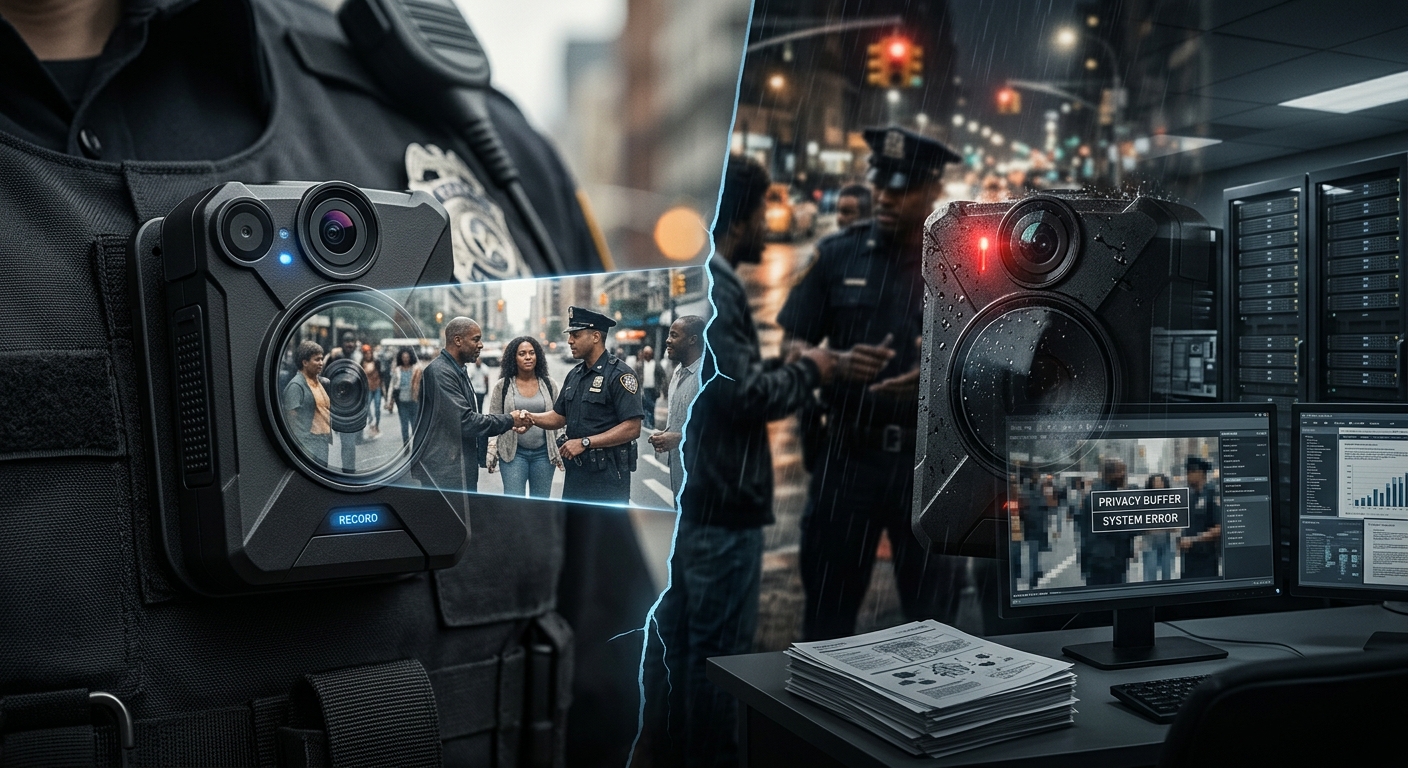
The advent of digital recording technology has profoundly reshaped the landscape of the criminal justice system, bringing previously unseen interactions between law enforcement and citizens directly into the public eye. Among the most significant technological shifts over the past decade has been the widespread adoption of police body-worn cameras (BWCs). Originally championed by civil rights advocates, community organizers, and reform-minded police executives alike, these small devices, typically clipped to an officer’s uniform, were heralded as the ultimate impartial observer.
They promised an era of unvarnished truth, aiming to protect citizens from excessive force while simultaneously shielding officers from baseless accusations and frivolous lawsuits. However, a deeper, critical examination of how these digital eyes operate in real-world practice reveals a far more complex and troubling reality. The mere presence of a lens does not automatically equate to institutional accountability. Instead, the true power of body cameras lies not in the act of recording the footage, but in determining who controls the release of that footage to the public. When a law enforcement agency wields total discretion over what the public sees and when they see it, the line between genuine transparency and curated public relations becomes dangerously blurred, fundamentally undermining the democratic promise of the technology.
The Promise vs. The Reality of Body-Worn Cameras
The national push for body-worn cameras gained unprecedented momentum following a series of highly publicized and tragic encounters between police officers and civilians. Communities nationwide demanded a clear, unbiased digital record of these fatal interactions, arguing that written police reports alone were often insufficient, biased, or, in some documented cases, entirely inaccurate. The federal government responded to this outcry with substantial financial and administrative backing. The Bureau of Justice Assistance (BJA), for instance, has continuously supported law enforcement agencies through its Body-Worn Camera Policy and Implementation Program, distributing millions of dollars to help municipal and state departments purchase equipment and establish robust digital evidence management systems.
Yet, despite this massive influx of funding and the rapid, widespread deployment of the technology, the data regarding the actual effectiveness of BWCs remains surprisingly mixed. According to comprehensive evaluations by the National Institute of Justice (NIJ), while some localized studies indicate that body cameras can offer benefits such as reducing citizen complaints or lowering use-of-force incidents, other large-scale evaluations show no statistically significant impact on officer behavior or departmental culture. This glaring discrepancy often points directly back to the underlying administrative policies governing the cameras.
A camera is merely a tool; its efficacy as a mechanism for reform is entirely dependent on the rules dictating its use. If an agency lacks stringent, enforceable protocols requiring officers to activate their cameras during all civilian encounters, or if there are no meaningful disciplinary consequences for “accidentally” failing to record a critical incident, the deterrent effect of the device is effectively neutralized. The unfortunate reality is that the procurement of hardware has vastly outpaced the implementation of the strict administrative frameworks required to make BWCs a true mechanism for public accountability.
The Double-Edged Sword: Who Controls the Digital Evidence?
Perhaps the most contentious issue surrounding body-worn cameras is the custody, management, and dissemination of the digital evidence they produce. In the vast majority of jurisdictions across the United States, the police department itself acts as the sole custodian of the recordings. This arrangement presents an inherent and glaring conflict of interest: the very agency under investigation for potential misconduct is also in charge of securing, redacting, and releasing the primary evidence of that alleged misconduct.
This conflict of interest frequently manifests in the form of highly selective transparency. To understand the disparity in how footage is handled, one must examine the opposing models of video release:
| Operational Factor | Ideal Accountability Model | Selective Public Relations Model |
|---|---|---|
| Release Timeline | Mandated by law within a strict timeframe (e.g., 48 to 72 hours) following a critical incident. | Entirely at the discretion of the police chief, sheriff, or internal affairs division. |
| Video Redactions | Minimal, handled by an independent civilian oversight board to protect victim privacy. | Heavy redactions controlled internally by the investigated agency to obscure questionable actions. |
| Narrative Control | Unedited, raw, and continuous footage is released to allow the public to judge the context. | Highly edited, episodic compilations released alongside extensive departmental commentary. |
Consider a scenario where an officer engages in a heroic or universally commendable act, such as pulling a civilian from a burning vehicle or patiently disarming a dangerous suspect without resorting to lethal force. In these instances, departments are often remarkably swift in releasing the body camera footage, sometimes distributing high-definition clips to local news outlets and social media platforms within mere hours of the event. The footage is effectively utilized as an unassailable public relations asset to bolster the department’s image.
Conversely, when an incident involves a controversial use of force, a severe injury, or a civilian fatality at the hands of law enforcement, the bureaucratic wheels often grind to a sudden and opaque halt. Departments routinely invoke a myriad of exemptions to public records laws to justify withholding the video for months or even years. They may cite “ongoing active investigations,” argue that releasing the footage would “taint a potential jury pool,” or suddenly express deep concern for the privacy of the individuals depicted in the recording—individuals whose families are often the ones actively begging for the footage to be released.
The Power of Selective Release and the Erosion of Public Trust
The selective release of body camera footage does more than just temporarily shield potential misconduct from public view; it actively and deeply damages the foundational trust between law enforcement agencies and the communities they are sworn to protect. When citizens observe that a department is perfectly capable of rendering and releasing video evidence overnight when it serves their professional interests, but claims insurmountable logistical, technical, or legal hurdles when the public demands footage of a questionable shooting, deep cynicism naturally takes root. The public begins to view body cameras not as a transparent window into the truth, but as a carefully curated theater of modern policing.
High-profile cases have repeatedly demonstrated the critical importance of timely and unedited footage release. In numerous instances where initial written police reports describe a suspect as aggressively resisting arrest or presenting a deadly threat, the eventual, often legally forced release of body camera video has told a drastically different story. For example, in the tragic death of Tyre Nichols in Memphis, the initial claims of severe resistance documented by the officers involved were starkly and violently contradicted by the grueling body camera and municipal surveillance footage that was later released to the public. If that footage had been indefinitely suppressed by the department, the official—and entirely inaccurate—narrative would have remained the permanent historical record. When departments withhold damning videos, they deny the public their fundamental democratic right to oversee the institutions operating under the color of law, effectively replacing civic accountability with authoritarian discretion.
Legislative Labyrinth: Navigating State Laws and Policies
The intense battle over body camera transparency is not just fought in local police precincts and city council chambers; it is heavily contested in state legislatures across the country. The legal framework governing public access to this digital evidence is currently a chaotic, fragmented patchwork that varies wildly from one state line to the next. According to data tracked by the National Conference of State Legislatures (NCSL), there is absolutely no national consensus on how BWC footage should be legally classified.
In some progressive jurisdictions, lawmakers have explicitly mandated that body camera footage is a public record, heavily leaning toward transparency and requiring prompt release, particularly in high-stakes cases involving the use of deadly force or in-custody deaths. These laws are designed to ensure that the public has a right to know how state-sanctioned violence is being deployed.
In stark contrast, other states have passed restrictive legislation explicitly exempting body camera recordings from standard state Freedom of Information Act (FOIA) or sunshine laws. In these states, BWC footage is categorized strictly as confidential “personnel records” or “investigatory materials.” Consequently, citizens, investigative journalists, and even the grieving families of victims must often navigate incredibly complex and expensive legal hurdles, sometimes requiring a formal, protracted court order just to view the final moments of a loved one’s life.
This glaring legislative disparity highlights a critical and ongoing tension: the delicate balance between genuine privacy concerns and the urgent, overriding need for government transparency. While there are certainly legitimate reasons to blur the faces of innocent bystanders, vulnerable minors, or victims of highly sensitive crimes within a video, these necessary privacy exemptions are far too frequently weaponized by agencies as a blanket excuse to deny public access to the entirety of the recording.
Toward True Accountability: Frameworks for Systemic Reform
To bridge the massive gap between the original, democratic promise of body cameras and their current, flawed reality, systemic policy reforms are absolutely essential. Transparency cannot be left entirely to the subjective discretion of those who hold the power and are the subjects of the video. Moving forward, a robust accountability framework must include several non-negotiable elements:
- Mandatory Release Timelines: State legislatures and city councils must establish strict, non-negotiable deadlines (such as 48 to 72 hours) for releasing footage of critical incidents, regardless of the status of internal investigations.
- Independent Civilian Oversight: The decision to redact or withhold footage should not rest with the police chief. Independent civilian review boards or external special prosecutors should dictate release protocols to eliminate conflicts of interest.
- Strict Activation Policies and Penalties: Departments must enforce zero-tolerance policies for officers who fail to activate their cameras prior to civilian engagements, with clear, escalating disciplinary actions up to and including termination.
- Unedited Public Access: While departments may release summarized or narrated videos for context, they must be legally compelled to simultaneously release the raw, unedited, continuous footage so the public can independently assess the encounter.
Body cameras still possess the immense potential to transform law enforcement and build a more just society. However, until the policies governing these devices prioritize public transparency over institutional protection, the cameras will remain tools of surveillance rather than instruments of true accountability.
Frequently Asked Questions (FAQs)
Why do police departments frequently withhold body camera footage?
Police departments often cite “ongoing active investigations” or “privacy concerns” as reasons for withholding footage. While sometimes legitimate, critics argue these exemptions are frequently used as loopholes to delay the release of footage that may show officer misconduct or contradict initial police reports.
Are police officers legally required to keep their cameras on all the time?
No, not constantly. Policies vary significantly by department. Generally, officers are trained to activate their cameras when responding to a call for service or initiating an encounter with a civilian. However, continuous recording of an entire shift is rare due to battery limitations, data storage costs, and the privacy rights of officers during non-enforcement activities (e.g., meal breaks or private conversations).
How can a private citizen access police body camera videos?
Access depends entirely on state and local laws. In states where footage is considered a public record, citizens can file a Freedom of Information Act (FOIA) or public records request with the specific law enforcement agency. In more restrictive states, a formal court order may be required to force the agency to release the digital evidence.
Do body cameras actually reduce police violence and misconduct?
The research is mixed. Some studies show decreases in use-of-force incidents and citizen complaints following the implementation of BWCs, while others show little to no behavioral change. Experts widely agree that cameras are only effective when paired with strict departmental policies that mandate activation and ensure consistent, independent review of the footage.
References
- Research on Body-Worn Cameras and Law Enforcement — National Institute of Justice. 2023-01-22. https://nij.ojp.gov/topics/articles/research-body-worn-cameras-and-law-enforcement
- Body-Worn Camera Laws Database — National Conference of State Legislatures. 2026-05-27. https://www.ncsl.org/civil-and-criminal-justice/body-worn-camera-laws-database
- How officers’ claims in Tyre Nichols’ death compare to body cam footage — The Associated Press. 2024-09-09. https://apnews.com/article/tyre-nichols-police-beating-memphis-video-trial-5527a20c905b76611f7c00e6205830b8
- FY25 Body-Worn Camera Policy and Implementation Program to Support Law Enforcement Agencies — Bureau of Justice Assistance. 2025-09-17. https://bja.ojp.gov/funding/opportunities/o-bja-2025-172461
Similar Articles








Read full bio of medha deb




