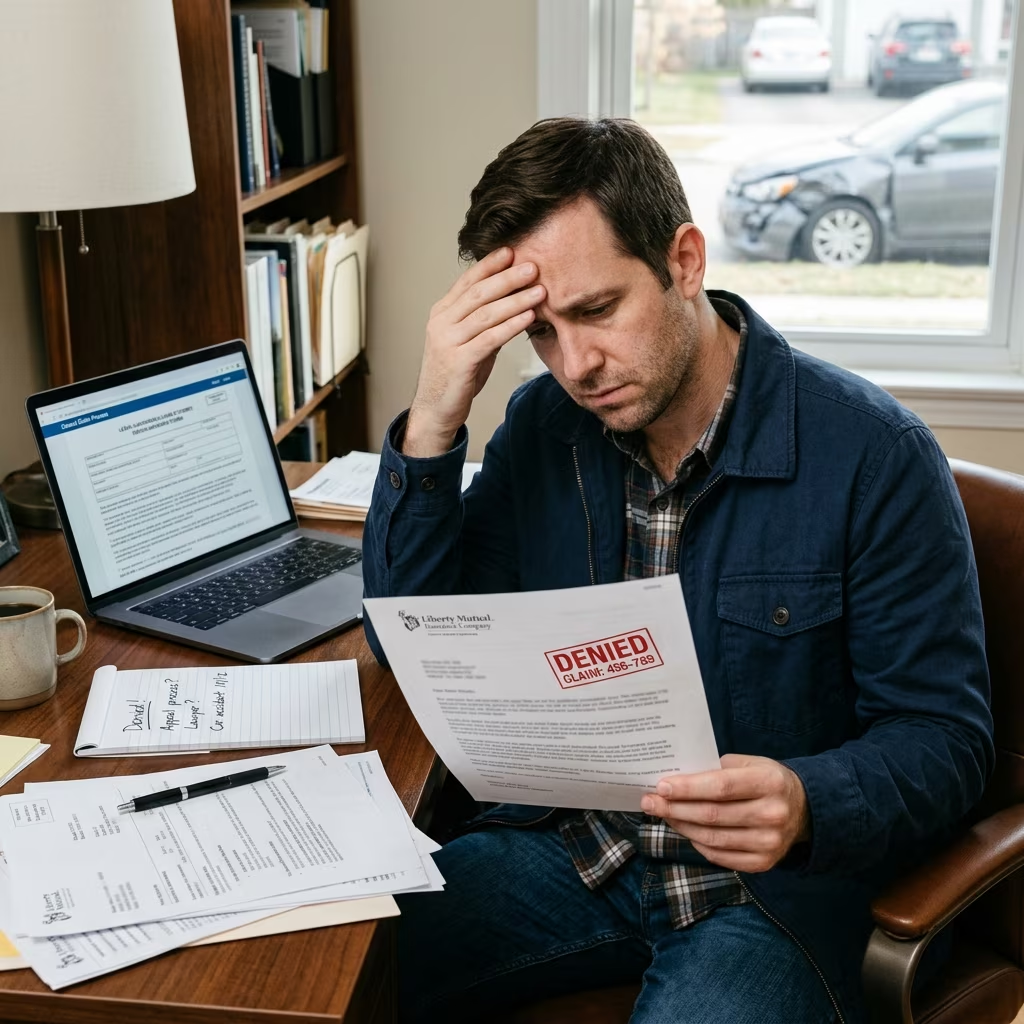
Finding out that the other driver’s insurance company has denied your claim can be frustrating and confusing, especially when you believe the crash clearly was not your fault. A denial does not necessarily mean the end of the road. In many cases, you can challenge the decision, provide additional documentation, use your own coverage, and even pursue legal remedies if the insurer acted improperly.
This guide explains what a denial really means, the practical steps to take after you receive one, and how to protect your financial and legal interests throughout the process.
Understanding Insurance Claim Denials
Before you decide what to do next, it helps to understand why auto insurers deny claims and what legal rules shape their decision-making process.
Common Reasons the Other Driver’s Insurer Says “No”
Insurance companies are required to investigate claims and pay valid ones, but they also have an incentive to limit payouts. According to consumer protection guidance from state insurance departments, insurers must provide a specific reason when they deny a claim and communicate that reason in writing.[10]
Typical grounds for denial include:
- Disputes about fault: The adjuster believes you caused or contributed to the crash, or sees conflicting evidence about who is responsible.[10]
- Coverage issues: The policy may have lapsed, the at‑fault driver was excluded, or the type of loss (for example, certain custom parts) is not covered under the policy terms.
- Insufficient evidence: There is not enough documentation—such as photos, repair estimates, medical records, or witness statements—to support what you are claiming.
- Policy limits reached: The damages exceed the liability limits available under the other driver’s policy, so there is no remaining coverage to pay additional amounts.
- Late reporting or procedural issues: The claim was reported or submitted outside of required time frames or without necessary forms.
What a Denial Letter Should Tell You
Most insurers communicate a denial through a written letter or summary. Under many state regulations, this letter must explain the reason for denial in enough detail that you can respond.[10] Key elements to look for include:
- The specific policy provisions the insurer is relying on (for example, exclusions, definitions, or limits).
- Factual basis for the decision, such as their conclusion about fault or lack of documentation.
- Information about your rights, including any internal appeal or review process and relevant deadlines.
- Contact details for the claims adjuster or department handling your file.
Carefully reading the denial letter—and comparing it to the policy language and your evidence—is the foundation for any next steps.
Immediate Actions After a Denial
Your response should be organized and timely. Acting quickly gives you the best chance of correcting errors and preserving your legal options.
Step 1: Request and Review the Denial in Writing
If you were told about the denial over the phone, ask the insurer to send you a detailed explanation in writing.[10] Once you receive it:
- Read it slowly and highlight or note any policy clauses, dates, and reasons mentioned.
- Compare the insurer’s description of the crash to the police report and your own recollection.
- Note any inconsistencies or missing facts that may be important for your case.
Step 2: Notify Your Own Insurance Company
Even if you initially tried to handle everything through the other driver’s insurer, you should inform your own auto insurance company about the denial. State regulators advise letting your insurer know about accidents and claims, because your own policy may offer protections such as collision coverage or uninsured/underinsured motorist benefits.[10]
- Provide your insurer with the claim number, denial letter, and any correspondence so far.
- Ask what coverage may apply to your situation and whether they can assist with recovery.
Step 3: Consider Consulting an Attorney
Insurance law is technical, and disputes about fault or policy interpretation can be complex. Many consumer and legal organizations recommend speaking with an experienced auto accident or personal injury attorney if your claim is denied, especially when injuries or significant damages are involved.
An attorney can:
- Review the denial and policy language to spot legal errors.
- Advise whether the insurer may be acting in bad faith by unreasonably denying a valid claim.
- Communicate with the insurer on your behalf to reduce the risk of damaging statements.
- Evaluate whether a lawsuit or settlement negotiations are appropriate.
Building a Strong Evidence File
Insurers base their decisions on evidence. Strengthening your documentation can make a critical difference if you challenge the denial, appeal, or pursue legal action.
Key Documents to Gather
Legal guidance on denied auto claims consistently highlights the importance of thorough documentation, tailored to the reasons the insurer gave for rejecting your claim. Useful items include:
- Police crash report: This provides an official record of the incident, including location, involved vehicles, and sometimes an officer’s observations.
- Photos and videos: Images of vehicle damage, skid marks, road conditions, and visible injuries can help reconstruct what happened.
- Medical records and bills: Treatment notes, diagnostic reports, and invoices show the nature and cost of your injuries.
- Repair estimates and damage reports: Written assessments from auto body shops or mechanics quantify property damage.
- Witness statements and contact information: Independent accounts of the crash can support your version of events.
- Insurance correspondence: Keep copies of all letters, emails, and notes from phone conversations with both insurers.
Organizing Evidence Around the Reason for Denial
To be effective, your documentation should directly address the insurer’s stated reason for denying the claim. For example:
- If the denial is based on fault, emphasize police findings, traffic laws, photos, and witness statements that show the other driver caused the crash.[10]
- If it’s about medical necessity or causation, compile medical opinions linking your injuries to the accident and describing why treatment was required.
- If the insurer claims insufficient proof of damage, provide detailed repair estimates, invoices, and photos of before-and-after conditions.
| Denial Reason | Useful Evidence |
|---|---|
| Disputed liability (fault) | Police report, witness statements, traffic camera footage, crash scene photos |
| Inadequate medical proof | Medical records, doctor’s narrative reports, diagnostic tests, treatment bills |
| Property damage questioned | Repair estimates, mechanic reports, damage photos, towing receipts |
| Policy exclusion cited | Copy of policy, comparison of language to facts, legal interpretation by attorney |
Challenging the Denial: Appeals and Negotiation
Many insurers offer an internal review or appeal process for denied claims. Following the correct steps—and deadlines—is essential.
Internal Appeals with the Other Driver’s Insurer
While procedures differ by company and state, consumer and legal resources recommend a structured approach:
- Check appeal deadlines: Appeal windows can be short; missing them may limit your options.
- Prepare a written appeal or demand letter: This document should identify each reason for denial and explain, with evidence, why it is incorrect.
- Attach supporting documentation: Include copies of new or previously overlooked evidence, such as updated medical records or repaired vehicle invoices.
- Maintain a professional tone: Clearly request reconsideration and specify the amount or types of damages you are seeking.
- Submit according to instructions: Use certified mail or other trackable methods, and keep copies of everything.
Using Your Own Insurance Coverage
If the other driver’s insurer will not pay, you may be able to turn to your own policy for help. Many state insurance agencies specifically advise consumers to consider using their own coverage when the at‑fault driver’s insurer refuses to pay.[10]
- Collision coverage can pay for repairs to your vehicle regardless of fault, subject to your deductible.
- Medical payments or personal injury protection (PIP) may cover medical costs up to the limits of your policy.
- Uninsured/underinsured motorist coverage can help when the other driver has no insurance or not enough to cover your losses.
Filing a claim under your own policy does not necessarily prevent you or your insurer from later seeking reimbursement from the at‑fault party or their insurer.
When Insurers Cross the Line: Complaints and Bad Faith
While insurers can legitimately deny claims that are not covered or lack evidence, they are not allowed to act in an unfair or deceptive manner. In some situations, their conduct can be challenged through regulatory complaints or lawsuits.
Regulatory Complaints to State Insurance Departments
Every U.S. state has a department or division that regulates insurance companies and handles consumer complaints. For example, guidance from the Texas Department of Insurance explains that consumers can file complaints if they believe an insurer is mishandling a claim; the department can then require the insurer to respond and may investigate whether state insurance laws have been followed.[10]
In general, a complaint can be appropriate when:
- The insurer does not provide a clear, written reason for denial.[10]
- There are unreasonable delays in investigating or responding to the claim.[10]
- The insurer appears to be ignoring key evidence or misapplying policy language.
Filing a complaint does not guarantee payment, but it can add regulatory oversight and sometimes prompts the insurer to re‑examine the claim.
Bad Faith and Legal Remedies
Most states recognize a legal concept known as insurance bad faith, which occurs when an insurer unreasonably denies or delays benefits that are owed under the policy. Legal resources explain that policyholders may sue an insurer for breach of contract or bad faith if a valid claim is denied without a reasonable basis.
Potential indicators of bad faith can include:
- Dismissing clear evidence of liability or damage.
- Failing to properly investigate the claim.
- Misrepresenting policy terms or limits.
- Using unnecessary delays to pressure lower settlements.
If you suspect bad faith, consult an attorney. In some jurisdictions, successful bad-faith lawsuits can lead to additional damages beyond the original claim value.
Considering Lawsuits Against the At‑Fault Driver
A denial by the other driver’s insurer does not determine what a court will decide. You may have the right to file a civil lawsuit directly against the driver who caused your injuries.
Legal guidance on auto accidents notes that injured people can bring personal injury claims within time limits set by state statutes of limitations, which often range from one to several years. Filing within this period is crucial; missing the deadline usually means losing the right to sue.
In a lawsuit, you and your lawyer would present evidence and legal arguments to show that:
- The other driver owed you a duty to drive safely.
- They breached that duty (for example, by speeding, distracted driving, or violating traffic laws).
- The breach caused the crash and your injuries.
- You suffered measurable damages, such as medical bills, lost wages, and pain and suffering.
A court judgment against the at‑fault driver can be enforced against insurance policy limits or, in some cases, against the driver personally, depending on available assets and coverage.
Practical Tips to Protect Yourself Going Forward
Whether you ultimately succeed in overturning the denial or not, there are practical steps you can take to protect your interests after any car accident.
Best Practices After a Crash
- Report the accident promptly to law enforcement when appropriate and to your own insurer.[10]
- Document the scene by taking photos, collecting witness information, and noting road conditions.[10]
- Seek timely medical care, even for seemingly minor injuries, so problems are documented and treated.
- Avoid admitting fault when speaking with any insurance adjuster, and consider having an attorney present for important conversations.
- Keep detailed records of expenses, missed work, and all communications related to the accident.
Communicating Effectively with Insurers
- Be factual and concise; avoid speculation about fault or injuries.
- Confirm important points in writing, and store emails and letters in one place.
- Ask for clarification whenever policy terms or reasons are unclear.
- Stay aware of all deadlines, including those for appeals, supplemental claims, and lawsuits.
Frequently Asked Questions
Does a denial mean I have no chance of recovery?
No. A denial is the insurer’s position at one point in time, based on the information it has. You may still obtain compensation by appealing internally, using your own coverage, filing a regulatory complaint, or suing the at‑fault driver in court.[10]
Should I talk directly to the other driver’s insurance adjuster?
You often must communicate with the adjuster to pursue the claim, but legal and consumer resources warn to be cautious: what you say can be used to dispute fault or damages. Consider limiting discussions to factual information and involving an attorney for complex or contentious issues.
Can my own insurance rates go up if I use my coverage?
Your rates can be affected by many factors, including whether you were at fault, your claims history, and state regulations. Using collision or medical coverage after a crash may have premium consequences, but it can also provide crucial financial protection while fault is disputed.[10] An attorney or agent can help you weigh the trade‑offs.
What if the other driver was uninsured or underinsured?
If the at‑fault driver lacks adequate insurance, you may turn to your uninsured/underinsured motorist coverage for help, if you have it. This coverage is specifically designed to step in when the liable driver cannot fully compensate you.
When should I file a complaint with a state insurance department?
Complaints are most appropriate when you believe an insurer is mishandling a claim—for example, by failing to provide reasons in writing, ignoring evidence, or causing unreasonable delays.[10] Filing does not replace legal action, but it adds oversight and can sometimes prompt more serious review of the insurer’s conduct.
References
- Accident not your fault? Here’s how to deal with the other driver’s insurance — Texas Department of Insurance. 2023-05-02. https://www.tdi.texas.gov/tips/how-to-deal-with-the-other-drivers-insurance.html
- How To Appeal a Denied Car Insurance Claim in Texas — Cal Mundell Law. 2023-10-11. https://www.calmundelllaw.com/blog/how-to-appeal-a-denied-car-insurance-claim-in-texas/
- The Insurance Company Denied My Car Accident Claim in California — Krasney Law. 2023-09-15. https://krasneylaw.net/blog/denied-car-accident-claim-california/
- What To Do if Your Car Accident Insurance Claim Is Denied — Farah & Farah. 2024-01-08. https://farahandfarah.com/blog/car-accident-insurance-claim-denied/
- The Insurance Company Denied My Car Accident Claim. What Now? — Park Chenaur & Associates. 2023-06-21. https://www.parkchenaur.com/blog/insurance-company-denied-my-car-accident-claim/
- What Can I Do If an Insurance Company Denies My Car Accident Claim? — Cindy Goldstein Law. 2022-11-30. https://www.cindygoldsteinlaw.com/insurance-company-denies-my-car-accident-claim/