
Probate In Ohio: Complete Guide To Wills, Intestacy, Timelines
A practical guide to how Ohio probate works, what it covers, and when estates may qualify for simpler procedures.
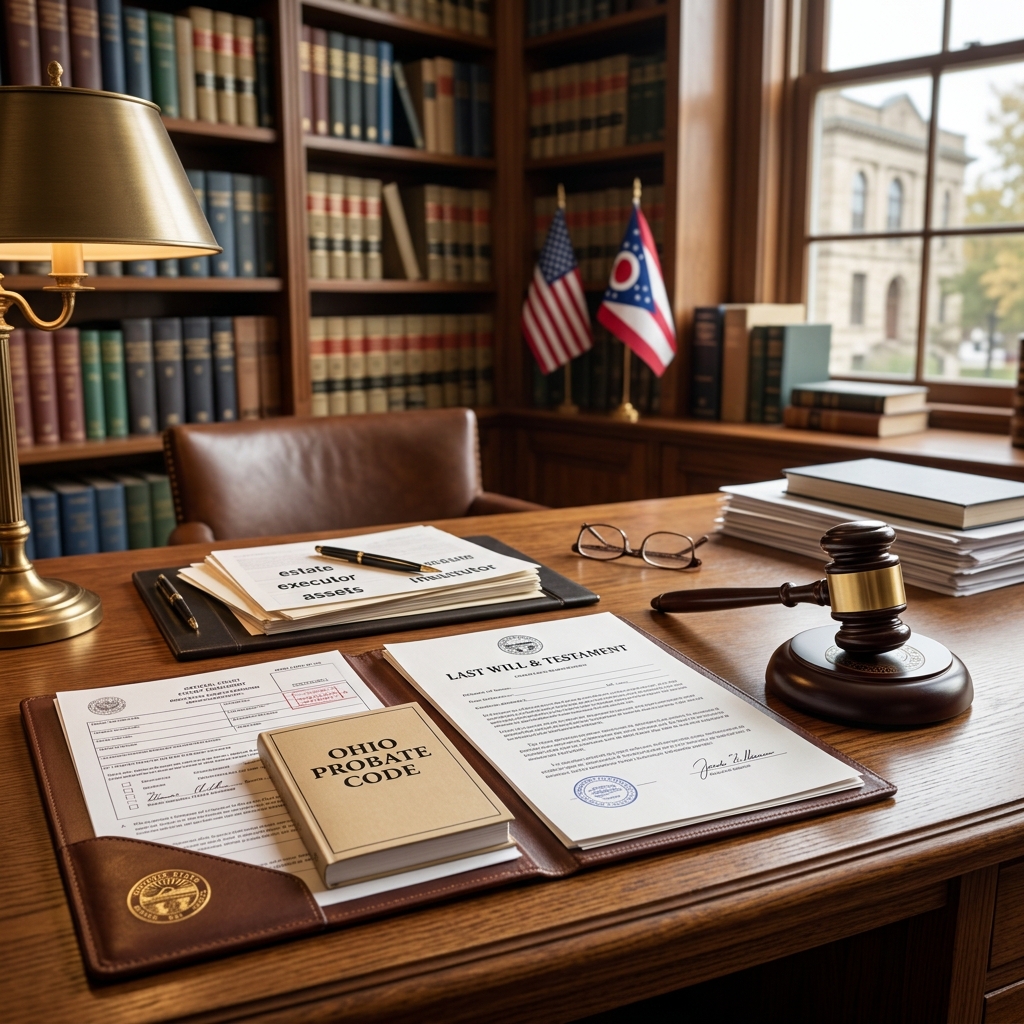
Probate is the court process used to settle a person’s estate after death. In Ohio, that process can involve validating a will, identifying heirs, paying debts and taxes, and transferring property to the people entitled to receive it.
Not every asset must go through probate, and not every estate follows the same path. Some estates qualify for simplified procedures, while others require a full administration in probate court.
What probate is meant to accomplish
Ohio probate law serves a few core purposes. It gives the court a way to confirm who died, determine what property belongs to the estate, identify the lawful recipients, and make sure creditors and taxing authorities are paid before assets are distributed.
In practical terms, probate provides an orderly framework for moving property from a deceased person to the proper beneficiaries or heirs. When a will exists, the court checks whether it is valid and administers the estate according to its terms. When there is no will, Ohio’s intestacy rules determine who inherits.
Which property usually goes through probate
Property titled only in the deceased person’s name commonly passes through probate. Examples often include individually owned bank accounts, solely owned real estate, and other assets without a beneficiary designation or joint owner.
By contrast, some assets transfer automatically outside probate. These are commonly called nonprobate assets and may include jointly owned property, payable-on-death accounts, transfer-on-death designations, life insurance with named beneficiaries, and assets held in trust.
| Asset type | Typical probate treatment |
|---|---|
| Solely owned house or land | Usually part of probate estate |
| Joint account with survivorship rights | Usually transfers outside probate |
| Life insurance with named beneficiary | Usually nonprobate |
| Trust-owned property | Usually nonprobate |
| Payable-on-death bank account | Usually nonprobate |
What happens when there is a will
When a person dies with a valid will, the document is submitted to probate court. The court reviews the will and, if appropriate, admits it to probate. The person named in the will to manage the estate typically serves as executor or personal representative.
The executor’s job is fiduciary in nature, which means the person must act in the estate’s best interest rather than their own. Common responsibilities include collecting property, notifying interested parties, handling claims, paying debts, and distributing what remains under the will.
What happens when there is no will
If someone dies without a will, the estate is treated as intestate. In that situation, Ohio law controls who inherits and who may be appointed to administer the estate.
Under Ohio’s intestacy framework, the court usually appoints an administrator. Surviving spouses often have priority, but the court may appoint another suitable person if necessary. Once appointed, the administrator performs many of the same tasks an executor would handle under a will.
Who inherits under Ohio intestacy rules
Ohio’s inheritance rules follow a family-based order of succession. The estate is distributed first to the surviving spouse and children, then to parents, and then to more distant relatives if no closer relatives survive.
One important point is that the surviving spouse’s share can vary depending on which descendants survive. If there are children or their descendants, the spouse may receive a different portion of the net estate than if the decedent left no descendants.
- The surviving spouse and minor children may be entitled to a family allowance from the probate estate.
- If there is no surviving spouse, children generally inherit the estate.
- If there is no spouse or children, the estate may pass to parents.
- If parents are not living, siblings, nieces, and nephews may inherit.
The main steps in a full probate administration
A full administration usually follows a predictable sequence. The process begins in the probate court of the county where the decedent lived at the time of death.
- An application is filed with the probate court, along with the will if one exists.
- The court admits the will, if applicable, and appoints an executor or administrator.
- Notice is sent to heirs, beneficiaries, and other required parties.
- The estate assets are inventoried and valued.
- Valid debts, taxes, and administration expenses are paid.
- The remaining assets are distributed to the rightful recipients.
Each step is meant to reduce disputes and create a formal record of how the estate was handled. If questions arise, the probate judge has authority to resolve them.
How long probate usually takes
The timeline depends on the size and complexity of the estate. A straightforward case often takes about nine months after the personal representative is appointed, largely because creditors generally have six months to file claims.
More complicated estates can take longer. Disputes over a will, tax issues, missing property, or litigation among family members can extend the process to a year or more.
Small-estate and simplified procedures
Ohio law provides faster paths for estates that meet certain value thresholds. These procedures can reduce cost and delay when the estate is modest or when the assets qualify for a summary process.
One simplified option is a release from administration for very small estates. Another streamlined route may apply when the estate value is under the statutory limit and the property passes to a surviving spouse or qualifies under another short-form procedure.
These alternatives can be especially useful when the estate mainly contains limited bank funds, personal property, or property with little dispute. Even then, the court must still confirm that the statutory requirements are satisfied.
Estate debts, claims, and expenses
Probate is not just about transferring property. It also ensures that valid debts and expenses are addressed before heirs receive their shares.
Common estate obligations include funeral costs, creditor claims, administrative expenses, and possible tax liabilities. The personal representative must use estate assets to pay lawful obligations in the proper order before final distribution.
This is one reason probate can matter even when family members agree about who should inherit. The court process helps ensure that money is not distributed prematurely and that creditors are not ignored.
The role of the probate court and judge
Ohio probate courts have broad authority over estate matters. They oversee the filing of applications, appointment of fiduciaries, approval of accountings, and resolution of disputes involving wills, heirs, and administration issues.
The probate judge acts as the decision-maker on questions that arise during the case. If a controversy develops, the judge may issue orders to protect the estate and guide the administration process.
Planning ideas that can reduce probate burdens
Although probate is sometimes unavoidable, some planning tools can reduce the amount of property that passes through court. People often use joint ownership, beneficiary designations, transfer-on-death arrangements, and trusts to move assets outside probate administration.
These tools are not one-size-fits-all solutions. The best choice depends on family structure, asset mix, creditor exposure, and long-term planning goals. Still, they can make the transfer process faster and more private than a court-supervised estate administration.
Frequently asked questions
Does every Ohio estate need probate?
No. Some assets pass outside probate, and some estates qualify for simplified procedures. Whether probate is needed depends on how the property is titled, whether beneficiaries are named, and the overall value of the estate.
Who handles the estate if there is a will?
The person named in the will usually serves as executor, assuming the court approves the appointment. That person acts as the estate’s fiduciary and carries out the will’s instructions under court supervision.
What if the deceased person had no will?
The estate is intestate, meaning Ohio’s inheritance rules decide who receives the property. The court appoints an administrator to manage the estate and complete the probate process.
Can probate be avoided for small estates?
Sometimes. Ohio law allows certain small estates or very small estates to use streamlined procedures when statutory requirements are met.
Why does probate take so long?
Probate takes time because the estate must be identified, debts must be reviewed, and creditors are given a claim period. Contests, tax issues, and complicated assets can also extend the process.
What families should keep in mind
Ohio probate law is designed to create an orderly transfer of property, but it can still be time-consuming and formal. Knowing whether an asset is probate or nonprobate, whether a valid will exists, and whether a simplified procedure is available can make the process more manageable.
For many families, the biggest questions are practical ones: who is in charge, what property is included, how long the process will last, and what debts must be paid before inheritance occurs. Ohio’s probate system answers those questions through a court-supervised framework that balances creditor rights, family rights, and property transfer rules.
References
- Chapter 2113 – Ohio Revised Code — Ohio Laws. 2012-01-13. https://codes.ohio.gov/ohio-revised-code/chapter-2113
- Overview of probate administration in Ohio — Ohio Legal Help. 2025-01-01. https://www.ohiolegalhelp.org/topic/overview-probate-administration-ohio
- Law Facts: Probate — Ohio State Bar Association. 2025-01-01. https://www.ohiobar.org/public-resources/commonly-asked-law-questions-results/law-facts/law-facts-probate/
- Ohio Probate Laws — Gudorf Law Group, LLC. 2025-01-01. https://www.daytonestateplanninglaw.com/free-estate-planning-resources/ohio-probate-laws/
- Ohio Probate & Wills: Ohio Laws — Franklin County Law Library. 2025-01-01. https://fclawlib.libguides.com/ohioprobate/ohiolaws
- Ohio Probate: An Overview — Nolo. 2025-01-01. https://www.nolo.com/legal-encyclopedia/ohio-probate-an-overview.html
Similar Articles








Read full bio of Sneha Tete


