
OBBBA Tax Changes: What Happens After 2028?
A clear guide to how key OBBBA tax breaks work today, when they expire, and what individuals and businesses should consider before 2028.
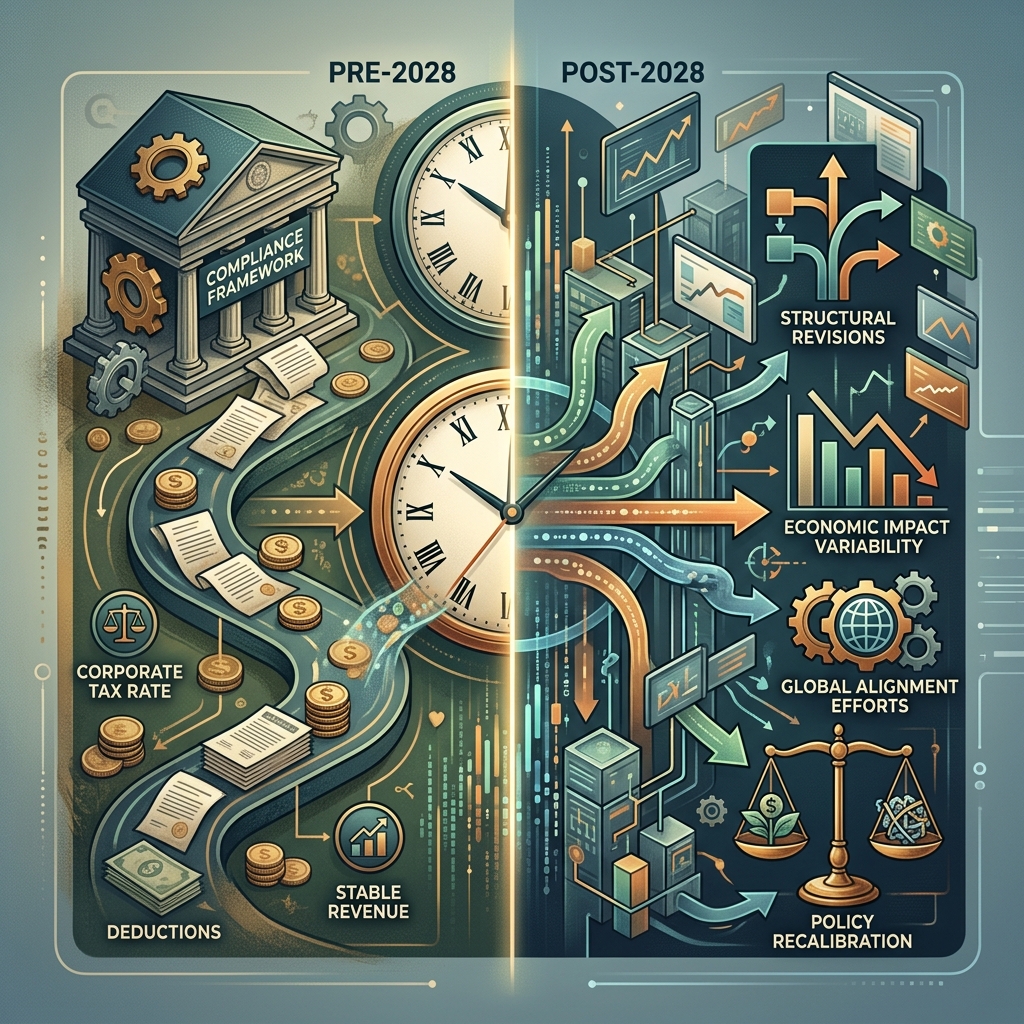
The Omnibus Budget and Bipartisan Budget Act (OBBBA) includes several widely used federal tax provisions, many of which are scheduled to expire or change significantly by the end of 2028. While OBBBA operates alongside major tax laws like the Tax Cuts and Jobs Act (TCJA) and the Inflation Reduction Act of 2022 (IRA), its timelines and phaseouts can be confusing for households, businesses, and investors. Understanding how these dates interact is essential for effective tax planning.
This article provides an original, practical overview of OBBBA-related tax rules, with a special focus on provisions that are popular today but time-limited. It also explains how these rules connect to IRA clean energy incentives and other expiring tax benefits that shape the landscape between now and 2028.
OBBBA in Context: How It Fits Into Modern Federal Tax Policy
OBBBA is part of a larger pattern of federal tax legislation where Congress uses temporary provisions to manage budget scores and policy priorities. Since 2017, three laws in particular have defined the current framework:
- Tax Cuts and Jobs Act (TCJA, 2017) – Overhauled individual and corporate income tax rules, with many individual provisions sunsetting after 2025.[10]
- Inflation Reduction Act (IRA, 2022) – Introduced extensive energy-related tax credits, reinstated a corporate minimum tax, and extended certain loss limitations and health insurance credits.
- OBBBA packages – Budget and appropriations measures that tweak or extend selected tax rules and credits, often aligning their expiration dates with either 2025 or 2028 to coordinate with TCJA and IRA.
The result is a layered system where OBBBA provisions do not exist in isolation. Instead, they frequently modify or extend tax rules that originated in TCJA or IRA. For example, the IRA extended limits on excess business losses through 2028, and OBBBA-related negotiations have used similar timelines for other provisions so that Congress can revisit multiple items in a single future tax package.
Key OBBBA-Linked Tax Provisions Popular With Taxpayers
OBBBA measures tend to focus on provisions with broad economic or political impact. The most popular categories among taxpayers and practitioners include:
- Business cost recovery and deductions – Higher expensing thresholds and accelerated write-offs for equipment and certain investments.
- Limits on business and pass-through losses – Caps on how much loss owners of noncorporate businesses may claim in a single year.
- Clean energy and advanced technology incentives – Credits and deductions linked to the IRA’s suite of clean energy provisions.
- Health insurance and household relief provisions – Extended premium tax credits and related benefits tied to Affordable Care Act subsidies.
Many of these rules are scheduled to change or expire by the end of 2028. Even where OBBBA is not the main author of a provision, it often sets the timeframe for when Congress must revisit the policy, creating an effective deadline for planning.
Why 2028 Matters: Coordinated Expiration Timelines
The year 2028 stands out because multiple major tax rules converge on this date. While TCJA’s individual rate cuts and certain credits largely expire in 2025,[10] several other provisions, expanded or reinforced through IRA and budget acts, extend a few years further. For individuals and businesses, that creates two key planning horizons: 2025 and 2028.
| Provision Category | Main Law | Approximate Expiration/Change Year | Relevance to OBBBA |
|---|---|---|---|
| Individual rate cuts & higher standard deduction | TCJA | 2025 | OBBBA discussions often coordinate with TCJA expirations.[10] |
| Excess business loss limitations | IRA (extension) | 2028 | Timeline aligned with broader budget and deficit targets. |
| Selected business expensing provisions | TCJA + later legislation | Extended through 2028 | OBBBA-style measures helped prolong favorable expensing. |
| Tech-neutral clean energy credits | IRA | Phaseouts by 2028 and beyond | House budget proposals tie eligibility to construction and service dates. |
| Premium Tax Credits expansions | ARPA + IRA | 2025 (current law) | Budget acts influence future extension debates. |
OBBBA’s popular tax provisions are therefore best understood not as standalone benefits but as parts of a broader, time-limited architecture designed to manage fiscal impact while advancing policy goals like investment, clean energy, and healthcare access.
Business-Focused Provisions: Expensing and Loss Limits Through 2028
Enhanced Expensing and Depreciation Rules
One area where OBBBA-related legislation has been especially important is business cost recovery. Accelerated expensing rules allow businesses to deduct the cost of certain equipment and property more quickly, improving cash flow and encouraging investment. In earlier law, some of these favorable rules were set to expire sooner, but later measures extended them through the end of 2028.
Key themes in this area include:
- Higher deduction thresholds – Increased caps on the amount of qualifying property that can be expensed annually.
- Expanded property eligibility – Broader definitions of what assets qualify, such as certain improvements and specialized equipment.
- Indexed limits – Some thresholds are adjusted for inflation, preserving their real value over time.
From a planning perspective, businesses considering significant capital investments have a window through 2028 to benefit from these rules. After that, absent new legislation, depreciation schedules could become less generous, spreading deductions over longer periods.
Limitations on Excess Business Losses
The limitation on excess business losses for noncorporate taxpayers—such as owners of sole proprietorships, partnerships, and S corporations—was first introduced in TCJA and later extended by the IRA. Under this rule, taxpayers generally cannot deduct business losses beyond certain thresholds in a single year; excess amounts are carried forward as net operating losses.
Important aspects include:
- Annual caps on deductible losses – Designed to prevent large, one-year write-offs that sharply reduce income tax liability.
- Carryforward treatment – Disallowed losses are not lost but shifted to future years under net operating loss rules.
- Extension through 2028 – The IRA explicitly extended these limitations for two additional years beyond prior law, effectively aligning them with many OBBBA budget windows.
Owners of pass-through businesses should be aware that current favorable expensing rules interact with excess loss limitations. A large investment that generates substantial losses might not yield immediate deductions if the taxpayer exceeds the annual loss cap. Understanding both sets of rules is critical when modeling cash flow and tax outcomes through 2028.
Clean Energy and Tech-Neutral Credits: Deadlines Driven by 2028
Transition From Traditional PTC/ITC to Clean Electricity Credits
The IRA reshaped energy tax policy by extending and then transforming the familiar Production Tax Credit (PTC) and Investment Tax Credit (ITC). Under current rules:
- Through at least 2025, the IRA continues the 30% ITC and per-kilowatt-hour PTC for qualifying projects that meet labor requirements.
- Starting in 2025, traditional credits give way to new clean electricity production and investment credits, designed to be technology-neutral and focused on zero greenhouse gas emissions.
OBBBA-related budget proposals have focused heavily on how long these tech-neutral credits should remain available and under what conditions. For instance, House budget amendments have discussed terminating certain clean electricity credits for projects that begin construction after a fixed period or that are placed in service after December 31, 2028.
Construction and In-Service Deadlines
Recent House proposals, though not yet final law, illustrate how 2028 is used as a cutoff in policy design:
- Construction start deadline – Projects may need to begin construction within a defined window (for example, within 60 days of enactment for some proposals) to qualify for IRA-era clean electricity credits.
- Placed-in-service deadline – To claim certain credits, projects would have to be operational on or before December 31, 2028.
- Exceptions for advanced nuclear – In some policy drafts, advanced nuclear facilities enjoy more flexible in-service dates, provided construction begins by the end of 2028.
While these House provisions are not automatically law, they exemplify the way OBBBA-style budget negotiations use 2028 as an anchor. For developers, utilities, and financiers, the message is clear: project timelines must be aligned with statutory deadlines if clean energy credits are a core part of the financial model.
Direct Pay and Transferability Interacting With Budget Rules
The IRA introduced two major innovations in how tax credits are monetized: direct paytransferability. Direct pay allows certain tax-exempt or governmental entities to receive cash payments from the IRS for eligible credits, while transferability allows taxable entities to sell credits to unrelated buyers.
Budget negotiations around OBBBA and related measures have considered whether, and for how long, these mechanisms should remain available for specific credits. Some proposals would repeal transferability for selected credits after a limited period or apply new restrictions linked to foreign entities of concern.
Entities considering clean energy projects should pay attention not only to the existence of a credit but also to the evolving rules around direct pay and transferability, which can materially change project economics.
Health and Household Provisions: Premium Tax Credits and Beyond
Although OBBBA is not primarily a health care law, its budgetary role intersects with tax provisions that support coverage and out-of-pocket cost relief. The IRA extended expanded Affordable Care Act Premium Tax Credits, which make health insurance more affordable for lower- and middle-income households.
Under current law:
- Enhanced premium subsidies and higher income eligibility thresholds are scheduled to run through the end of 2025.
- These extensions build upon earlier relief in the American Rescue Plan Act, creating a multi-year period of more generous credits.
Because these subsidies have significant budget implications, future decisions on whether to extend them further will likely be made in the context of major budget acts like OBBBA. For households, the main takeaway is that current premium support is not permanent and could change after 2025 unless Congress acts.
Planning Considerations Before 2028
For Businesses and Investors
- Evaluate capital investments in light of expensing rules – Businesses expecting to purchase equipment or construct facilities might benefit from timing these investments to maximize expensing before any potential post-2028 changes.
- Model the impact of excess loss limitations – Pass-through owners should project how loss caps interact with planned investments and operations through 2028.
- Align clean energy project timelines with credit deadlines – Developers should ensure construction and in-service dates meet statutory requirements for IRA-related credits, particularly if 2028 cutoffs are enacted.
- Monitor direct pay and transferability changes – Public entities and taxable project sponsors need to follow evolving guidance and potential legislative changes to credit monetization rules.
For Individuals and Households
- Be aware of 2025 and 2028 horizons – Many individual tax rules, including rates and credits, are scheduled to change in 2025, with additional business-related and energy provisions shifting in 2028.[10]
- Consider health coverage decisions – Households relying on expanded Premium Tax Credits should understand that current subsidy levels may not be permanent beyond 2025.
- Plan around business income and losses – Individuals with ownership interests in pass-through entities should coordinate personal tax planning with business-level decisions about losses, deductions, and investments.
Frequently Asked Questions (FAQs)
1. Why do so many OBBBA-related tax provisions expire in 2028?
Many OBBBA-linked provisions trace back to earlier legislation, especially TCJA and IRA, which use temporary rules to manage budget impact.[10] Budget acts often choose dates like 2025 or 2028 to cluster multiple expirations so that Congress can revisit several tax issues simultaneously in future negotiations.
2. Are clean energy tax credits permanent?
No. Traditional ITC and PTC rules are extended only through at least 2025 and then replaced by clean electricity credits with their own timelines. Some House budget proposals would further limit eligibility by requiring projects to begin construction and be placed in service by the end of 2028.
3. How does the excess business loss limitation affect me as a pass-through owner?
If you own a noncorporate business (such as a partnership or S corporation), you may be unable to deduct business losses beyond specific thresholds in a given year. Disallowed losses are carried forward as net operating losses, which can reduce future taxable income. The limitation is currently extended through 2028.
4. What happens to Premium Tax Credits after 2025?
Expanded Premium Tax Credits that increase subsidy amounts and allow higher-income households to qualify are scheduled to expire at the end of 2025 under current law. Any extension or modification would likely be addressed in future budget or tax legislation.
5. Should I change my long-term investment strategy because of the 2028 dates?
The 2028 expirations mainly affect specific deductions and credits rather than the existence of the income tax itself. However, if your business or investment plan relies heavily on accelerated expensing, excess loss treatment, or clean energy credits, you should factor these dates into your modeling and consult a qualified tax professional for personalized advice.
References
- Amendments to IRA tax credits in the House budget bill — White & Case LLP. 2024-05-10. https://www.whitecase.com/insight-alert/amendments-ira-tax-credits-house-budget-bill
- Expiring Tax Provisions Big Issue for 2025 — Center for Agricultural Law and Taxation, Iowa State University. 2023-09-29. https://www.calt.iastate.edu/post/expiring-tax-provisions-big-issue-2025
- Inflation Reduction Act of 2022: Key Income Tax Provisions — Cherry Bekaert LLP. 2022-08-19. https://www.cbh.com/insights/articles/inflation-reduction-act-of-2022-key-income-tax-provisions/
- House’s 60-day deadline for IRA eligibility would trigger ‘scramble’ — Utility Dive. 2024-04-26. https://www.utilitydive.com/news/inflation-reduction-act-ira-deadline-sixty-days-construction-project-trump/748892/
- Details & Analysis of the Inflation Reduction Act Tax Provisions — Tax Foundation. 2022-08-11. https://taxfoundation.org/research/all/federal/inflation-reduction-act/
- Inflation Reduction Act (IRA) Implementation Resources — Government Finance Officers Association (GFOA). 2023-07-17. https://www.gfoa.org/ira-implementation-resources
- Summary of Inflation Reduction Act provisions related to renewable energy — U.S. Environmental Protection Agency. 2023-10-02. https://www.epa.gov/green-power-markets/summary-inflation-reduction-act-provisions-related-renewable-energy
Similar Articles








Read full bio of medha deb




