
North Carolina Tenant Rights and Responsibilities Guide
Understand the key protections, duties, and legal remedies available to tenants renting homes and apartments in North Carolina.
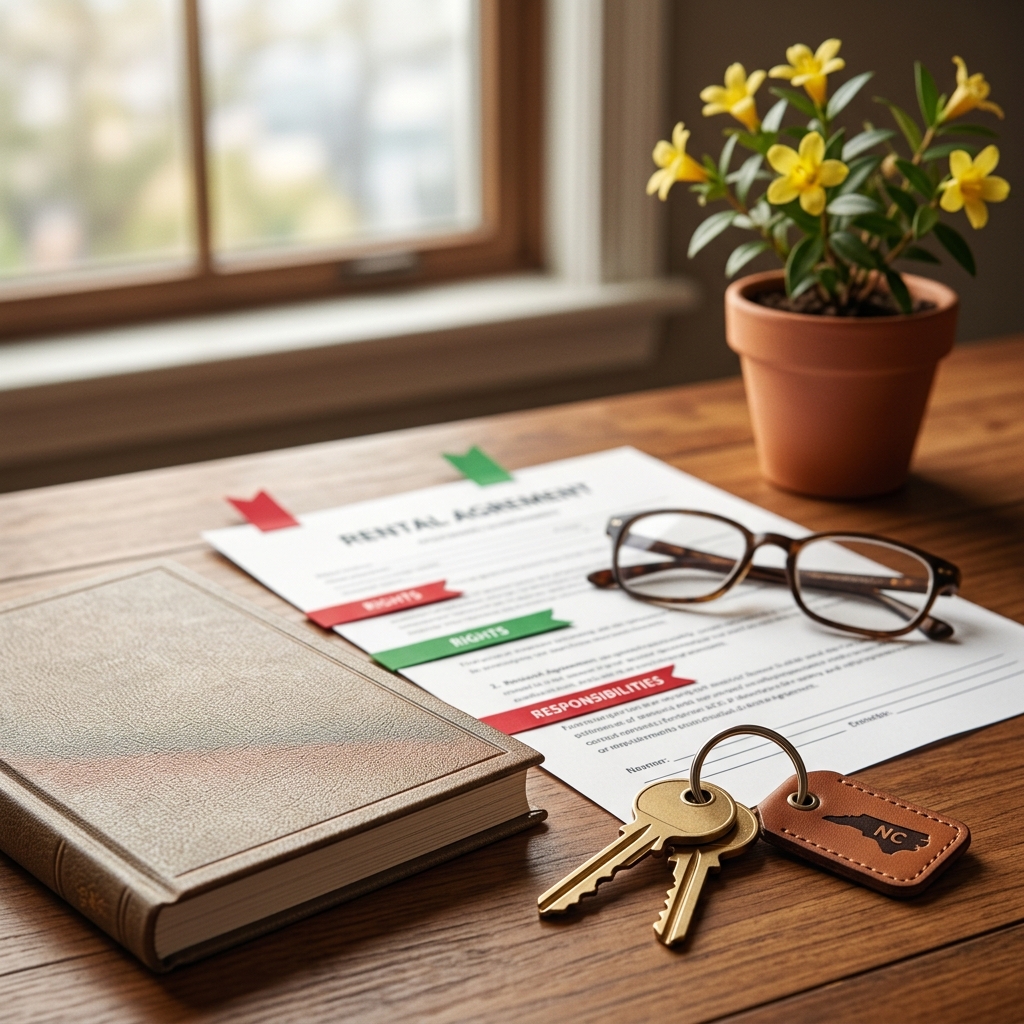
Tenants in North Carolina have a mix of important legal rights and practical responsibilities that shape every stage of a rental relationship, from signing a lease to moving out. Understanding these rules helps renters protect themselves, avoid disputes, and recognize when a landlord’s actions may violate state law.
This guide explains the major protections for tenants under North Carolina’s landlord-tenant statutes, including habitability standards, security deposit limits, eviction procedures, and protections against discrimination and retaliation. It also outlines key tenant duties such as paying rent, keeping the rental clean and safe, and following lease terms.
1. Legal Framework for Rentals in North Carolina
Most residential rental relationships in North Carolina are governed by state statutes in Chapter 42 of the North Carolina General Statutes, sometimes referred to as the Landlord-Tenant Act. These laws apply to typical apartment leases, rental homes, and many other residential arrangements.
- Core statutes: North Carolina’s landlord-tenant rules are primarily found in Chapter 42, sections 42-1 through 42-76.
- Public policy: State policy focuses on keeping tenants in their homes unless they are removed through lawful court procedures and on prohibiting certain abusive landlord practices such as unlawful lockouts and seizure of tenant property.
- Local rules: Some cities and counties may offer additional resources or guidance for renters, but they cannot override state statutes on core issues like eviction procedure or rent control.
Because these rules are set by statute, both tenants and landlords can enforce many rights and obligations through civil actions in court, including small claims court for lower-dollar disputes such as security deposits.
2. Starting a Tenancy: Leases, Disclosures, and Security Deposits
2.1 Written vs. Oral Rental Agreements
A rental agreement may be written or oral, but a written lease is strongly recommended because it clearly records the terms both parties agreed to. The lease typically covers the rent amount, payment date, length of tenancy, rules for termination or renewal, and responsibilities for utilities and repairs.
- Written leases provide a clear record of each party’s rights and obligations and help resolve disputes more easily.
- Oral agreements are legally enforceable, but disagreements about what was promised can be harder to prove in court.
- Key clauses often address late fees, pet policies, parking, and who is responsible for lawn care or minor maintenance.
2.2 Required Disclosures and Information
Landlords must disclose certain information to tenants, usually in the rental agreement or through an attached notice. This may include the name and address of the person or company responsible for managing the property and the person who can accept legal notices. Federal law also requires disclosure of known lead-based paint hazards in many older buildings.
2.3 Security Deposits
North Carolina law permits landlords to collect security deposits but limits both their amount and the way they may be used.
- Purpose: Deposits are intended to cover unpaid rent, damage beyond normal wear and tear, and certain other costs allowed by law.
- Return deadline: Landlords generally must account for and return any remaining deposit within a specified period, often 30 days after the tenancy ends, with an itemized list of charges if any amount is withheld.
- Disputes: Tenants who believe their deposit has been wrongfully kept can sue in small claims court for up to a statutory dollar limit (commonly several thousand dollars).
| Issue | What the Law Generally Allows | Tenant Options |
|---|---|---|
| Normal wear and tear | Cannot be charged against the security deposit. | Challenge any deduction for ordinary aging or minor use. |
| Excessive damage | Landlord may deduct reasonable repair costs. | Request receipts or itemized list; dispute unreasonable amounts. |
| Deposit not returned on time | Landlord must meet statutory deadlines. | Send written demand; file a claim in small claims court if needed. |
3. Habitability: Landlord Duties to Provide Safe, Decent Housing
North Carolina law requires landlords to keep rental housing in a condition that is safe, sanitary, and fit for human habitation. This is sometimes called the duty to maintain habitability or the warranty of habitability.
- Landlords must maintain essential systems like plumbing, heating, and electrical service.
- Structural elements such as roofs, floors, and walls must be safe and reasonably free from hazards.
- Common areas must be kept in a safe and sanitary condition.
- Repairs generally must be completed within a reasonable time after the tenant provides notice, taking into account the severity of the problem.
A tenant who continues to live in a unit that has been damaged or is in poor condition still has the right to expect the landlord to make necessary repairs so the home is safe, decent, and sanitary. If the unit becomes completely uninhabitable—for example, due to severe storm damage—the tenant may have the right to end the lease by giving proper written notice and paying rent only through the termination date.
4. Tenant Responsibilities During the Tenancy
Tenants also have legally defined obligations under North Carolina law. These duties are designed to keep the rental safe and sanitary and to ensure that landlords receive the rent needed to maintain the property.
- Paying rent: Rent must be paid as agreed in the lease. Nonpayment is a common basis for eviction, and tenants generally may not stop paying rent on their own without a court order, even if repairs are needed.
- Keeping the unit clean and safe: Tenants must keep the areas they occupy as clean and safe as possible and avoid creating unsanitary or unsafe conditions in common areas they use.
- Disposing of waste properly: Ashes, rubbish, garbage, and other waste must be disposed of in a clean and safe manner.
- Maintaining plumbing fixtures: Tenants must keep plumbing fixtures they use as clean as their condition reasonably permits.
- Complying with lease terms: Tenants must follow lawful lease provisions, including rules about pets, smoking, noise, and use of the premises.
Failing to meet these obligations can lead to lease violations and may become grounds for non-renewal or eviction, depending on the circumstances and the lease terms.
5. Evictions and Legal Removal: How Tenants Can Be Lawfully Put Out
5.1 Court-Based Eviction Procedures Only
North Carolina has a strong public policy that residential tenants may be removed from their homes only through court-approved procedures. A landlord cannot simply lock a tenant out, shut off utilities, or seize belongings to force a move-out.
- Lawful removal generally requires filing a summary ejectment action in court, obtaining a judgment, and using the sheriff to carry out any eviction.
- Unlawful self-help methods—such as removing doors, changing locks, or removing tenant property without following legal procedures—can expose the landlord to liability and damages.
5.2 Grounds for Eviction
Common reasons landlords file for eviction include nonpayment of rent, material lease violations (such as unauthorized occupants or serious property damage), and holding over after the lease term ends without permission.
Before filing in court, landlords usually must provide any notice required by the lease or by statute. The exact notice period may depend on the type of tenancy and the reason for termination.
5.3 Tenant Remedies Against Illegal Evictions
When landlords bypass lawful procedures, tenants can seek legal remedies. Under North Carolina statutes, tenants may be entitled to recover possession of the dwelling or compensation for actual damages if a landlord unlawfully removes them or interferes with access to their personal property.
- Tenants can sue for actual financial losses caused by an illegal eviction or unlawful seizure of property, such as the cost of temporary housing or the value of destroyed belongings.
- Courts may order the landlord to restore possession if the tenant was wrongfully removed.
- Legal aid organizations and tenant-rights clinics can help renters respond quickly to unlawful lockouts or utility shutoffs.
6. Discrimination and Fair Housing Protections
Tenants are protected from housing discrimination by both federal law and North Carolina law. The federal Fair Housing Act prohibits discrimination in most housing transactions based on characteristics such as race, color, religion, sex, national origin, disability, and familial status. North Carolina agencies and nonprofits provide additional support and enforcement.
- Prohibited conduct: Landlords may not refuse to rent, impose different terms, or harass tenants because of a protected characteristic.
- Examples: Charging higher rent to families with children or refusing reasonable accommodations for a tenant’s disability can violate fair housing rules.
- Enforcement: Tenants can file complaints with federal or state enforcement agencies and may seek private legal remedies.
The North Carolina Housing Finance Agency and legal organizations such as Legal Aid of North Carolina and the North Carolina Justice Center offer resources to help renters understand and assert these protections.
7. Protection Against Retaliation and Special Situations
7.1 Retaliatory Conduct by Landlords
North Carolina law restricts landlords from retaliating against tenants for exercising certain legal rights, such as complaining about unsafe conditions, requesting repairs, or reporting code violations. Retaliation can include actions like raising rent solely in response to a complaint, refusing to renew a lease, or attempting eviction for reasons tied to the tenant’s protected activity.
In addition, landlords may not base adverse rental decisions substantially on a tenant or household member’s status as a victim of domestic violence, sexual assault, or similar crimes. These protections are intended to ensure that tenants can seek safety and repairs without fear of losing their housing.
7.2 Natural Disasters and Major Damage
When a rental home is heavily damaged by events such as storms or fire, both landlord and tenant obligations become more complex. If the unit is damaged to the point that it is no longer habitable, tenants generally have the right to end the lease by giving written notice within a set period and paying rent through the date of termination, unless a different arrangement is spelled out in the lease.
- Tenants who remain in the unit after damage are still entitled to repairs that restore safe and sanitary conditions.
- Landlords typically are not responsible for damage to the tenant’s personal belongings from a natural disaster; renters should rely on insurance or appropriate federal programs like FEMA.
- If a landlord insists on full rent despite serious damage or required temporary relocation, tenants may have legal claims and should seek advice from legal aid providers.
8. Practical Tips for North Carolina Tenants
Beyond knowing the law, tenants can take practical steps to prevent problems and strengthen their position if disputes arise.
- Keep copies of documents: Save the lease, any addenda, and all written notices or letters exchanged with the landlord.
- Document conditions: Take dated photos when you move in and when you move out, and when serious issues like leaks or mold arise.
- Communicate in writing: Submit repair requests and important complaints in writing (email or letter) so you have a clear record.
- Seek help early: If you receive an eviction notice or face serious repair problems, contact legal aid or local tenant resources as soon as possible.
9. Frequently Asked Questions (FAQs)
FAQ 1: Can my landlord evict me without going to court?
No. North Carolina public policy requires that residential tenants be removed only through the court process prescribed in Chapter 42, such as a summary ejectment action followed by lawful execution of the judgment. Lockouts, utility shutoffs, or removal of belongings as a way to force a move-out are generally unlawful.
FAQ 2: Do I have to keep paying rent if my rental home is damaged?
In general, tenants must continue paying rent unless there is a court order or a specific agreement with the landlord changing the amount. However, if the property is damaged to the point that it is not habitable, tenants may have the right to terminate the lease with proper written notice and pay rent only through the termination date. Tenants may also have claims if a landlord demands full rent for a seriously damaged unit or during periods when tenants must vacate for repairs.
FAQ 3: What can my landlord deduct from my security deposit?
Landlords may deduct amounts for unpaid rent and for damage that goes beyond normal wear and tear, as well as certain other costs allowed by statute. They must provide an itemized list of deductions and return any remaining balance within the required time frame. Tenants who disagree with deductions may file a claim in small claims court.
FAQ 4: What are my basic responsibilities as a tenant?
Tenants must pay rent on time, keep their portion of the premises clean and safe, dispose of waste properly, maintain plumbing fixtures they use in a reasonably clean condition, and comply with lawful lease terms. Failing to meet these obligations can lead to lease violations and potential eviction.
FAQ 5: Where can I get help if my landlord refuses to make needed repairs?
Tenants can contact organizations such as Legal Aid of North Carolina, the North Carolina Justice Center, or local tenant-rights clinics for advice and assistance. These groups offer educational materials, clinics, and sometimes direct legal representation for qualifying renters.
References
- Fair Housing Act — U.S. Department of Housing and Urban Development. 2023-06-01. https://www.hud.gov/program_offices/fair_housing_equal_opp/fair_housing_act_overview
- North Carolina General Statutes Chapter 42 — North Carolina General Assembly. 2023-01-01. https://www.ncleg.gov/EnactedLegislation/Statutes/HTML/ByChapter/Chapter_42.html
- Overview of Landlord-Tenant Laws in North Carolina — Iredell County Government / Nolo. 2020-01-15. https://www.iredellcountync.gov/DocumentCenter/View/16819/Landlord-Tenant-Law-an-Overview-and-Guide
- Tenants Rights: Evictions and Repairs — Legal Aid of North Carolina. 2024-10-01. https://legalaidnc.org/wp-content/uploads/2024/10/tenants-rights-evictions-and-repairs-v9.pdf
- Tenant Resource Toolkit — City of Raleigh. 2022-05-10. https://raleighnc.gov/housing/services/tenant-resource-toolkit
- Resources for Renters — North Carolina Housing Finance Agency. 2023-03-20. https://www.nchfa.com/renters/resources-renters
- Tenants’ Rights — North Carolina Justice Center. 2021-09-01. https://www.ncjustice.org/projects/consumer-housing/housing/tenants-rights/
Similar Articles








Read full bio of medha deb


