
Resisting Arrest In North Carolina: Key Defenses And Penalties
Learn how North Carolina defines resisting arrest, what prosecutors must prove, and the penalties that may follow.
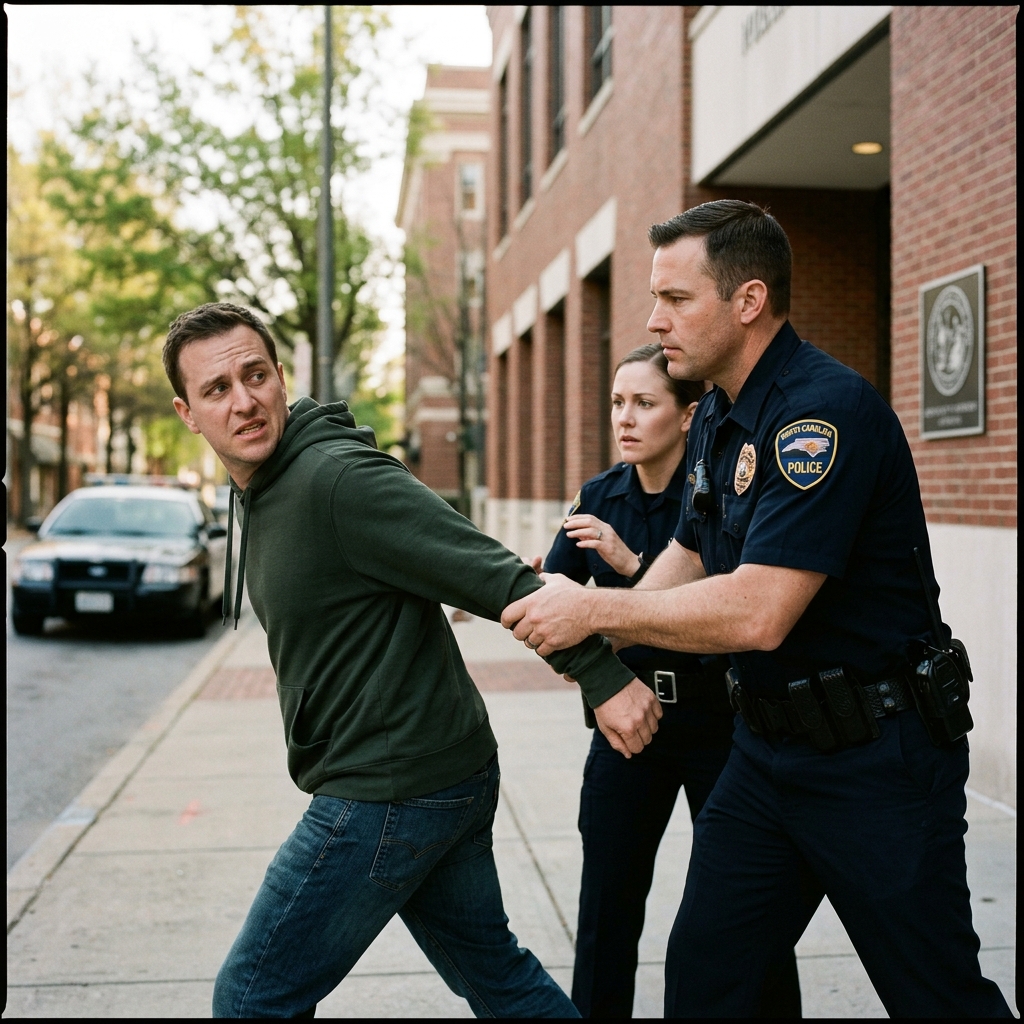
In North Carolina, resisting arrest is treated as a criminal offense even when the conduct does not involve a physical struggle. The law is broad enough to cover actions that delay, hinder, or interfere with a public officer who is carrying out an official duty. Because the charge can arise from a wide range of behavior, people are often surprised to learn that nonviolent conduct may still support a prosecution.
This article explains how North Carolina defines resisting arrest, what the state must prove, the most common conduct that leads to charges, the likely penalties, and the issues that may matter in a defense. It also addresses the relationship between resisting arrest and unlawful police conduct, because the legality of the underlying arrest can be important in some cases.
How North Carolina Defines Resisting Arrest
North Carolina’s resisting arrest statute makes it unlawful to willfully and unlawfully resist, delay, or obstruct a public officer while the officer is performing, or attempting to perform, an official duty. The wording is important because it shows that the offense is not limited to someone physically fighting with police during handcuffing.
The statute reaches conduct that slows an officer down, interferes with an investigation, or prevents an officer from completing a lawful task. In practical terms, the charge can arise in many situations, including traffic stops, street encounters, and attempted arrests. The officer involved must be acting in an official capacity, and the person accused must act intentionally rather than by accident.
Conduct That Can Lead to a Charge
Many people assume resisting arrest means punching, kicking, or running away from an officer. Those actions can qualify, but the law reaches further. Any intentional behavior that delays or obstructs an officer may be enough for a charge if the circumstances show the person was interfering with lawful duties.
- Running from an officer after being told to stop
- Refusing to follow commands during an arrest or detention
- Struggling physically with officers during handcuffing
- Giving false identifying information such as a fake name or address
- Refusing to accept a citation or ticket when an officer is trying to issue one
- Using words or conduct to obstruct an officer’s work in a meaningful way
Not every argument with police becomes resisting arrest. A person may be rude, upset, or confused without necessarily committing the offense. The key question is whether the conduct was willful and whether it actually interfered with a public officer’s duties.
What Prosecutors Must Prove
To convict someone of resisting arrest in North Carolina, prosecutors generally must prove several core elements. While the exact wording may vary by court presentation, the state’s burden focuses on intent, knowledge, and interference with an officer carrying out official duties.
| Element | What It Means |
|---|---|
| Public officer | The person involved was a law enforcement officer or another officer covered by the statute. |
| Performance of duty | The officer was carrying out, or attempting to carry out, an official legal duty. |
| Knowledge | The accused knew, or reasonably should have known, the person was an officer. |
| Willful conduct | The accused intentionally resisted, delayed, or obstructed the officer. |
| Unlawfulness | The conduct lacked legal justification or excuse. |
The mental state requirement matters. A person who accidentally moves during a chaotic encounter is different from someone who intentionally pulls away or lies to avoid arrest. Because the offense requires willful conduct, the defense may focus on whether the accused acted deliberately or simply reacted in confusion, fear, or misunderstanding.
Class 2 Misdemeanor Penalties
Resisting arrest is usually charged as a Class 2 misdemeanor in North Carolina. Although that classification is less serious than a felony, it can still create meaningful consequences. The court looks at the defendant’s prior record and other sentencing factors when deciding the punishment.
Possible penalties may include jail time, probation, community service, fines, and other court-ordered conditions. In some cases, a first-time offender may face a relatively short sentence, while a person with prior convictions may face more serious consequences. The offense also creates a criminal record, which can affect employment, housing, and future court proceedings.
- Jail time, depending on prior record level and sentencing factors
- Financial penalties, including fines and court costs
- Probation with supervision and conditions
- Community service ordered by the court
- Permanent criminal record unless later sealed or otherwise addressed through available relief
Even when the sentence is not lengthy, the practical impact of a conviction can be substantial. For that reason, people accused of the offense often seek to challenge the charge early, especially if the facts are disputed.
How the Charge Differs From More Serious Offenses
Resisting arrest is not the same as assaulting an officer, and it is not automatically treated as a violent crime. The difference often turns on whether the accused merely obstructed or whether the conduct included force that injured, threatened, or assaulted the officer. When an encounter becomes physical, prosecutors may consider additional or more serious charges.
That distinction is important because a person may begin with a resisting arrest allegation and later face broader accusations if the officer claims there was violence, threats, or injury. A defense strategy should therefore examine every stage of the interaction, from the first command to the final arrest.
Lawful Arrests, Unlawful Arrests, and Resistance
North Carolina law has a long history of discussing the relationship between arrest legality and resistance. Court decisions have recognized that the lawfulness of the arrest can matter. At the same time, modern arrest statutes and force rules strongly limit what a person may do in response to law enforcement action.
North Carolina law also states that a person is not justified in using deadly force or a deadly weapon to resist an arrest by a law-enforcement officer who is using reasonable force, when the person knows or has reason to know the other person is an officer. That rule shows how seriously the state treats resistance during an arrest, even when the person believes the arrest is improper.
As a practical matter, this means the safest course during an arrest is usually to comply and later challenge the legality of the stop, detention, or arrest through the courts. Questions about whether the officer had authority, whether probable cause existed, or whether constitutional rights were violated are often better raised through legal motions or at trial rather than through on-the-spot resistance.
Common Defense Themes
Every case depends on its facts, but several defense themes appear often in resisting arrest cases. A lawyer may look for proof that the client did not act willfully, did not know the person was an officer, or did not actually obstruct any lawful duty.
- No intent: the accused did not deliberately resist or obstruct
- Misidentification: the person did not realize the other party was an officer
- Lack of lawful duty: the officer was not engaged in a legal duty at the time
- No meaningful interference: the conduct did not actually delay or obstruct the officer
- Excessive force or confusion: the accused reacted to a chaotic situation rather than intentionally resisting
Defense arguments do not always eliminate the charge, but they can shape plea negotiations, motions practice, and trial strategy. Body camera footage, witness statements, radio traffic, and the officer’s report may all be important in evaluating what happened.
Why These Charges Often Appear With Other Allegations
Resisting arrest is often not a stand-alone event. It can arise alongside traffic offenses, drug charges, public intoxication, disorderly conduct, trespassing, or assault allegations. Once officers decide to detain someone, any noncompliance may quickly become part of the criminal case narrative.
That is one reason these cases can be hard to evaluate from a short police report alone. The same movement or statement may be described by the officer as obstruction and by the accused as fear, confusion, or self-protection. A careful review of the full encounter is often necessary before deciding how to respond.
What To Do After a Charge
If someone is charged with resisting arrest, the most important step is to avoid making statements that could be used to strengthen the state’s case. Even casual comments to police or third parties can later be introduced as evidence of intent or awareness.
It is also wise to preserve any evidence that may help reconstruct the incident. That can include text messages, medical records, photographs, witness names, and notes about the sequence of events. If body camera footage or dash camera video exists, counsel may later seek access to it through the discovery process.
- Do not argue the facts at the scene once the arrest is underway
- Write down details while the memory is fresh
- Identify witnesses who saw the encounter
- Preserve injuries or video evidence if available
- Speak with a defense lawyer before entering a plea
Frequently Asked Questions
Is resisting arrest always a physical act?
No. North Carolina’s law can apply to physical resistance, but it can also cover nonphysical conduct such as refusing commands, giving false information, or otherwise obstructing an officer’s duties.
Can I be charged if I was confused or scared?
Possibly, but the state still has to show willful conduct. If the facts show confusion, panic, or misunderstanding rather than deliberate resistance, that may support a defense.
Is refusing a traffic ticket resisting arrest?
It can be, depending on the circumstances. Refusing to accept a ticket or otherwise interfering with the issuance of a citation may contribute to a resisting arrest charge.
Will a first offense send me to jail?
Not always. Sentencing depends on the person’s prior record, the facts of the case, and the judge’s sentencing decisions. However, jail is possible, and the conviction still creates a criminal record.
Can I fight the charge if the stop was illegal?
Possibly. Issues involving an unlawful stop, detention, or arrest can matter, but they are usually resolved through legal motions and court proceedings rather than through physical resistance at the scene.
When Legal Help Matters Most
Resisting arrest charges are often built from a brief and stressful encounter, which means the small details can matter a great deal. Whether the person was warned, whether the officer gave clear commands, whether the accused knew the person was an officer, and whether the conduct actually delayed the officer can all affect the outcome.
Because the offense is broad and the consequences can extend beyond any short jail term, legal representation may be especially helpful when the charge is paired with another offense, when the facts are disputed, or when the person has a prior record. A defense lawyer can evaluate the evidence, identify weaknesses in the state’s case, and advise on possible resolutions.
For anyone facing this charge, the most important point is that resisting arrest in North Carolina is not limited to a dramatic physical fight. The law reaches a wide range of conduct, and that breadth is what makes careful legal review so important.
References
- G.S. 15A-401 – Arrest — North Carolina General Assembly. 2026-07-10. https://www.ncleg.net/enactedlegislation/statutes/html/bysection/chapter_15a/gs_15a-401.html
- State v. Mobley — North Carolina Supreme Court. 1954-01-01. https://law.justia.com/cases/north-carolina/supreme-court/1954/506-1-3.html
- Charlotte Resisting Arrest Lawyer — Olsinski Law Firm. 2026-07-10. https://www.jcolaw.com/charlotte-resisting-arrest-lawyer/
- North Carolina Resisting Arrest Laws: General Statute § 14-223 — King Law Offices. 2026-07-10. https://kinglawoffices.com/practice-areas/resisting-arrest-laws
- Resisting Arrest in North Carolina — Stowe Law Firm. 2026-07-10. https://www.stowelawfirmnc.com/resisting-arrest-in-north-carolina/
Similar Articles








Read full bio of medha deb




