
North Carolina Credit Card Fraud: Laws, Penalties, and Protection
Understand how North Carolina treats credit and debit card fraud, what penalties apply, and how to protect yourself as a consumer.
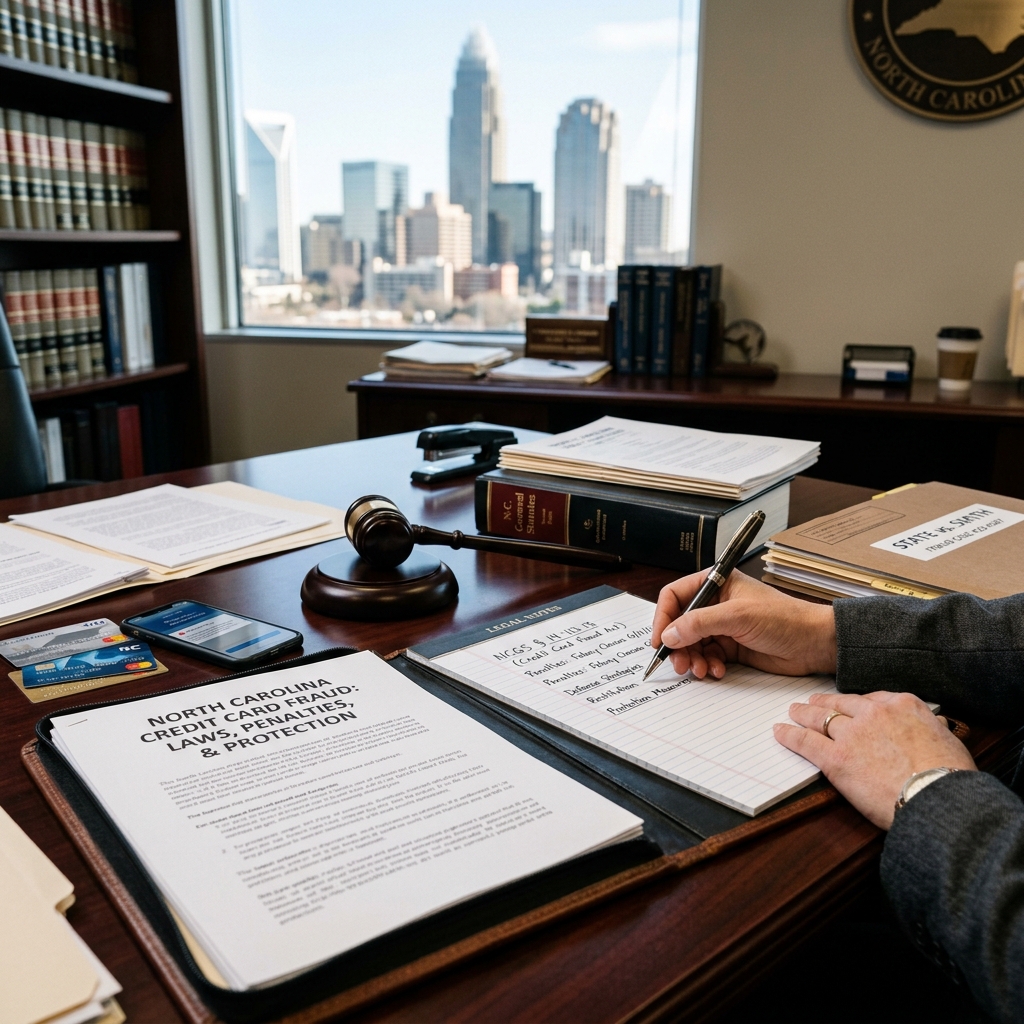
Credit and debit cards are central to everyday financial life in North Carolina, but their convenience also creates opportunities for fraud and abuse. To address these risks, the state has enacted detailed rules governing the misuse of cards and card information, collectively known as financial transaction card crimes. Understanding these laws is important for consumers, businesses, and anyone facing a potential investigation or charge.
How North Carolina Defines Credit Card Fraud
In North Carolina law, the term financial transaction card broadly covers credit cards, debit cards, ATM cards, and similar devices used to access money, credit, or goods and services. Fraud involving these cards is addressed primarily in the state’s Financial Transaction Card Fraud statute. The law makes it a crime to use a card or card information with intent to defraud an issuer, merchant, or other person, whether the card belongs to you or someone else.
Key elements typically involved in a financial transaction card fraud case include:
- Intent to defraud – acting with a purpose to obtain money, goods, services, or anything of value through dishonest means.
- Use of a card or card data – physically swiping a card, entering card numbers online, or presenting card details in another way to complete a transaction.
- Lack of authorization or misuse – using someone else’s card without consent, exceeding authorized limits, or lying to the card issuer.
Importantly, the law does not limit fraud to strangers stealing cards. A cardholder can also commit fraud by misrepresenting information to obtain a card, exceeding permitted account limits with intent to defraud, or filing false reports claiming a card was stolen or charges were unauthorized.
Common Types of Financial Transaction Card Crimes
North Carolina’s statutes and enforcement practices recognize multiple ways credit and debit cards can be misused. While terminology may vary between statutes and court decisions, several patterns appear frequently in investigations and prosecutions.
Unauthorized Use of Another Person’s Card
Using someone else’s credit or debit card without that person’s permission is one of the most common forms of financial transaction card fraud. This can occur when a card is physically stolen, borrowed and not returned, or when card numbers are copied and used online.
- Making purchases with a card taken from a wallet or mailbox.
- Using card details obtained from a discarded receipt or data breach.
- Presenting a card at a store while falsely claiming it is yours.
Even a single unauthorized transaction can support criminal charges; repeated use over time may increase the severity of the offense based on total value.
Improper Use of Your Own Card
A cardholder can also be charged when they misuse their own card with intent to defraud. Examples include knowingly exceeding account limits or credit lines without intending to repay, or depositing funds that do not legitimately belong to them and then spending against those funds.
- Using a card to deliberately exceed an authorized credit limit.
- Depositing counterfeit checks or money orders into an account, then drawing on that balance with a card.
Because these behaviors involve deception aimed at the issuer or merchant, they are treated as financial transaction card fraud under state law.
False Statements in Card Applications and Reports
Fraud is not limited to transactions. North Carolina law also covers lies or misrepresentations made to obtain a card or to influence how an issuer treats a cardholder.
- False application information – knowingly misrepresenting income, assets, employment, or liabilities on a card application, or substantially overstating assets or understating debts in order to convince an issuer to grant credit.
- False loss or theft reports – submitting a false notice, verbally or in writing, claiming a card was lost, stolen, or never received when that is not true, with the intent to avoid responsibility for charges.
These actions can be prosecuted even if no unauthorized purchases were made on a physical card, because the deceit itself is considered a fraudulent use of the card system.
Merchant and Third-Party Credit Card Fraud
Businesses and employees who accept cards can also be liable if they participate in fraudulent activity. For example, a merchant may commit a crime by knowingly processing transactions on stolen or counterfeit cards, or by reporting goods or services to an issuer that were never actually provided.
- Accepting payment with a card known to be stolen, forged, expired, or revoked.
- Charging a card and telling the issuer that goods or services were delivered, when they were not.
North Carolina’s consumer protection authorities also regulate how card information appears on receipts and encourage reporting of improper handling of card data.
Felony vs. Misdemeanor: How Serious Is Credit Card Fraud?
In North Carolina, financial transaction card fraud may be prosecuted as either a misdemeanor or a felony, depending largely on the value of money, goods, or services obtained and the period over which the conduct occurred.
Value Threshold and Time Period
State law commonly uses a six-month window and a dollar threshold to distinguish misdemeanor from felony conduct. When the total value of items or money illegally obtained through card fraud is under a certain amount during any six-month period, the offense is typically treated as a misdemeanor. When the total exceeds that threshold, it may be charged as a more serious felony.
| Measure | Impact on Charge |
|---|---|
| Total value of fraud in any six-month period | Below statutory threshold: generally misdemeanor; at or above threshold: felony. |
| Defendant’s prior criminal record | May affect sentencing range and whether active jail time is imposed. |
| Nature of conduct | Application fraud, false reporting, and certain misuse may be classified separately but still use value and intent as key factors. |
Typical Classifications and Penalties
While exact charges and potential sentences depend on the facts of each case, common classifications include:
- Class 2 misdemeanor – often used when the total value of the fraudulent transactions within a six-month period remains under the statutory threshold. Penalties may include fines and up to several weeks of incarceration, particularly if there is a prior record.
- Class I felony – frequently applied when the value obtained through card fraud exceeds the threshold in the six-month period. A conviction can result in months of potential imprisonment, especially for defendants without prior criminal records.
North Carolina’s structured sentencing system also considers the defendant’s prior record level when determining the exact sentence range, so two people convicted of similar conduct may receive different sanctions.
Related Offenses: Card Theft and Multiple Counts
Financial transaction card fraud is often linked with other crimes, particularly theft of the cards themselves. North Carolina law recognizes financial transaction card theft as a separate offense, focusing on taking or possessing cards without consent with the intent to use, sell, or transfer them.
One important feature of North Carolina law is how multiple cards are treated for charging purposes. Courts have held that certain consolidation rules applied in other theft cases do not apply in the same way to financial transaction card theft. As a result:
- Each card taken, obtained, or withheld without consent may lead to a separate theft count.
- Using the stolen cards for purchases can generate additional fraud counts based on the transactions.
This structure can significantly increase the number of charges faced in a case involving several cards, even when taken from a single victim.
Consumer Protections and Victim Responsibilities
While financial transaction card fraud laws focus on criminal behavior, North Carolina also emphasizes consumer protection and practical steps for victims. The North Carolina Department of Justice (NCDOJ) provides guidance for preventing fraud and responding quickly when it occurs.
Limits on Consumer Liability
Federal law limits how much a cardholder can be held responsible for unauthorized credit card charges, and these protections apply to North Carolina consumers. In many cases, once a loss or theft is reported to the card issuer:
- The cardholder is not responsible for charges made after the report.
- Maximum liability for earlier unauthorized charges is typically capped at $50 per card, assuming timely reporting.
These limits do not apply to intentional misuse by the cardholder; they are designed to protect consumers who are victims of theft or unauthorized use.
Receipt and Data Handling Requirements
North Carolina law restricts how much card information can appear on electronically printed receipts. A copy given to the consumer is not supposed to show more than a limited portion of the card number, helping reduce the risk of data misuse. If a receipt displays a full number, consumers are encouraged to report the issue to the Attorney General’s office.
Practical Steps If You Suspect Credit Card Fraud
Fast action is critical when fraud is suspected. North Carolina authorities and consumer protection agencies recommend several immediate steps to limit damage and preserve rights.
- Contact your card issuer immediately. Report suspected unauthorized charges, loss, or theft as soon as possible. Document the date, time, and the representative you spoke with.
- Review recent transactions. Check account balances and statements online through secure channels, and note any unfamiliar charges.
- Notify credit bureaus if necessary. Consider placing fraud alerts or security freezes with major credit reporting agencies to reduce the risk of additional accounts being opened in your name.
- Report to state consumer protection authorities. North Carolina encourages victims to report fraud-related issues, including improper handling of card data or unauthorized account activity, to the Attorney General’s Consumer Protection Division.
Depending on the nature and scale of the fraud, local law enforcement may also be involved. Serious cases can lead to criminal investigations under the financial transaction card statutes.
Prevention Tips for North Carolina Cardholders
Preventing credit and debit card fraud is a shared responsibility between cardholders, issuers, and merchants. The NCDOJ offers practical recommendations to limit risk.
- Secure your cards and PINs. Sign new cards promptly, memorize PINs, and avoid carrying written PIN information with the card.
- Guard card numbers. Do not provide card numbers to unknown callers or via unsecured email, and use only secure websites when shopping online.
- Monitor accounts regularly. Log in through secure apps or websites to review balances and transaction history, watching for errors or unfamiliar charges.
- Manage mail and paper records. Shred pre-approved card applications and other documents containing sensitive data, and consider opting out of unsolicited card offers to reduce exposure.
- Handle cards carefully in public. Retrieve cards quickly after use in stores or restaurants, and destroy unused cards rather than leaving them in drawers where they might be taken.
Frequently Asked Questions
Is using a friend’s card with verbal permission still risky in North Carolina?
Using a card with genuine permission from the cardholder is not, by itself, a crime. However, problems arise when transactions exceed what the cardholder agreed to, or when the issuer’s rules prohibit such use. Disputes may lead to questions about whether the use was truly authorized, and in serious cases can trigger investigations into possible fraud.
Can financial transaction card fraud be charged even if no money was successfully obtained?
Yes. The law focuses on the intent to defraud and the steps taken to use card information, not only on successful outcomes. Attempting to complete a transaction with a stolen or forged card, or submitting a false report to an issuer, can be prosecuted even if the issuer blocks the transaction or does not suffer a financial loss.
What is the difference between card theft and card fraud?
Financial transaction card theft primarily addresses taking or possessing a card without consent, with intent to use or transfer it. Financial transaction card fraud focuses on the use of a card or card data, and related misrepresentations, to obtain value or deceive issuers or merchants. A single case may involve both offenses: one for stealing the card and another for using it.
Do businesses face different risks than individual cardholders?
Yes. Merchants who accept cards must ensure they do not knowingly process transactions using stolen, forged, revoked, or expired cards, and they must accurately report provided goods and services to issuers. Businesses also have obligations related to protecting customer card data and complying with receipt requirements, and violations can lead to regulatory action or reputational harm.
Why should victims contact state consumer protection authorities?
North Carolina’s consumer protection officials help coordinate responses to fraud, educate the public, and enforce laws related to card data security and unfair practices. Reporting problems can assist in identifying patterns, disciplining violators, and improving overall protection for cardholders across the state.
References
- North Carolina Credit Card Fraud Laws — FindLaw Editorial Team. 2023-07-12. https://www.findlaw.com/state/north-carolina-law/north-carolina-credit-card-fraud-laws.html
- 14-113.13. Financial transaction card fraud — North Carolina General Assembly. 2013-10-01. https://www.ncleg.gov/EnactedLegislation/Statutes/PDF/BySection/Chapter_14/GS_14-113.13.pdf
- Credit Card Fraud — North Carolina Department of Justice. 2022-08-10. https://ncdoj.gov/protecting-consumers/credit-and-debt/credit-card-fraud/
- Credit Card Fraud — Clifford & Harris Trial Lawyers. 2021-05-05. https://ccolawyers.com/what-we-do/credit-card-fraud/
- The “Single Taking” Rule — North Carolina Criminal Law Blog, UNC School of Government. 2021-03-02. https://nccriminallaw.sog.unc.edu/the-single-taking-rule/
Similar Articles








Read full bio of Sneha Tete




