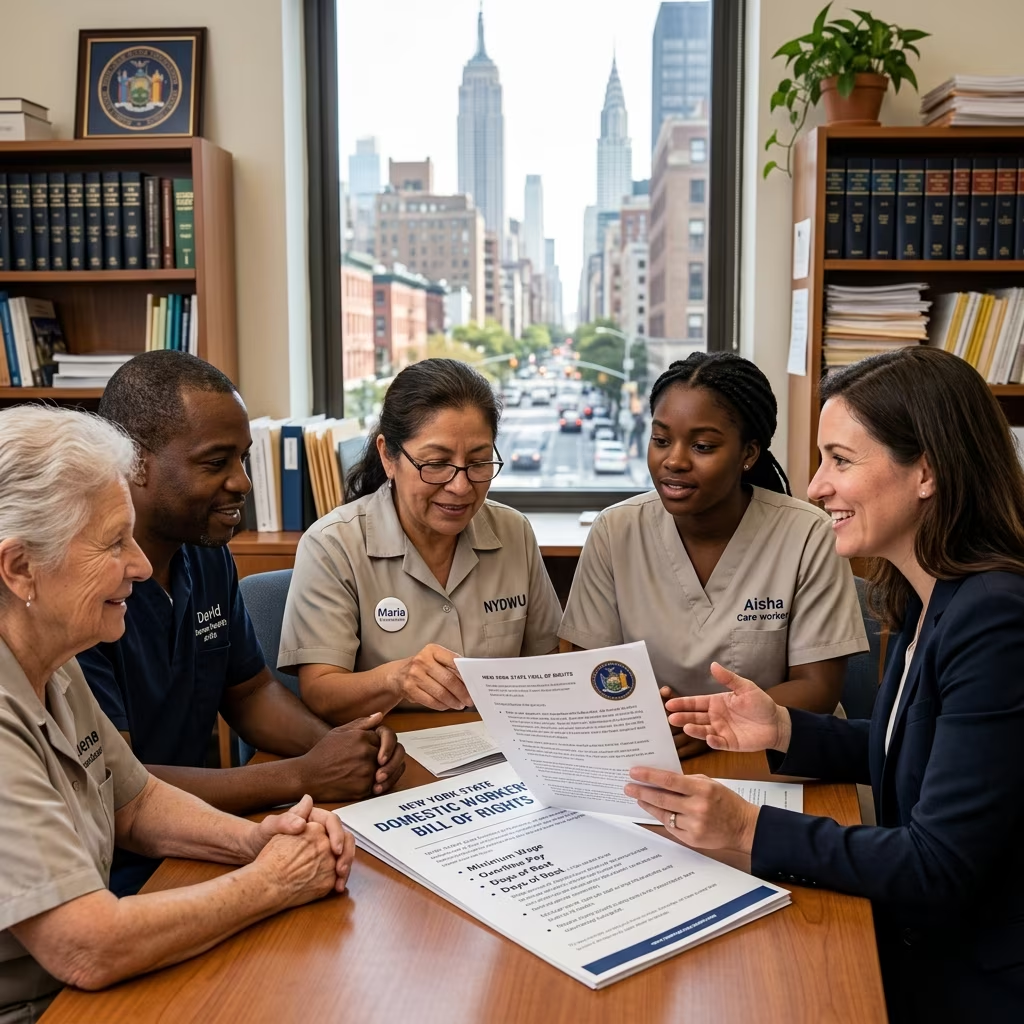
New York was the first state in the United States to adopt a comprehensive Domestic Workers’ Bill of Rights, recognizing that people working inside private homes deserve the same fundamental labor protections as other workers. This law reshaped the legal landscape for nannies, housekeepers, and home caregivers, and imposed clear obligations on household employers.
This guide explains what the law covers, who it protects, and how both workers and employers can comply in everyday situations. It is an informational overview, not legal advice.
1. Who Is Protected as a Domestic Worker?
The law covers a broad group of people who perform work in private homes on a regular basis. Understanding whether a worker is covered is the first step in applying the rules correctly.
1.1 Typical jobs that qualify
In general, a domestic worker under New York law is an individual employed in a private household to do work such as:
- Nannies and childcare providers (live-in or live-out)
- Housekeepers, cleaners, or maids
- Home companions and personal caregivers who are not employed by an agency
- Cook or household assistants performing domestic chores
These workers may live in the home or commute, and they may work part-time or full-time. Immigration status does not change their rights to basic labor standards under state law.
1.2 Workers who may not be covered
The statute and related regulations carve out some exclusions. While the precise language is technical, common examples of workers who may not fall under the Domestic Workers’ Bill of Rights include:
- Individuals who only provide casual babysitting (such as an occasional evening sitter)
- Family members performing household work for relatives living in the same home
- Employees of agencies, where the agency—not the household—acts as the employer under other labor laws
Even when the Domestic Workers’ Bill of Rights does not apply, other state and federal laws (like minimum wage or general human rights protections) may still cover the worker.
2. Core Wage and Hour Rights
One of the central purposes of the Domestic Workers’ Bill of Rights is to extend minimum wage and overtime protections to workers who were historically excluded from these standards.
2.1 Minimum wage protection
Domestic workers in New York must be paid at least the applicable state minimum wage for every hour worked, regardless of whether they are live-in or live-out employees. Minimum wage rates may vary by region and may be updated periodically by the New York State Department of Labor.
Key points for employers include:
- Pay must be in legal tender or by check or direct deposit.
- Any credit for meals and lodging must comply with strict state rules and cannot drop total pay below the lawful minimum.
- Workers must receive a regular payday, typically weekly, with a clear wage statement detailing hours and wages.
2.2 Overtime for domestic workers
New York law requires time-and-a-half overtime pay for domestic workers once they work beyond a specified number of hours in a week.
| Worker Type | When Overtime Begins | Overtime Rate |
|---|---|---|
| Live-out domestic worker | After 40 hours in a workweek | 1.5 × regular hourly rate |
| Live-in domestic worker | After 44 hours in a workweek | 1.5 × regular hourly rate |
Overtime must be calculated based on the worker’s regular hourly rate, which may need to be derived from a weekly or salary amount by dividing by the total hours the pay is intended to cover.
3. Required Rest Days and Paid Time Off
Another major feature of the Domestic Workers’ Bill of Rights is the guarantee of rest and some paid leave for workers whose jobs often demand long and irregular hours.
3.1 Weekly day of rest
Domestic workers are entitled to at least one 24-hour period of rest every week. This is a consecutive block of 24 hours, not simply a shorter break each day. Many employers align the weekly rest day with the worker’s religious observance, if applicable.
If a worker agrees to work on their day of rest, the employer must pay them at the overtime rate for those hours, regardless of how many hours they worked during the rest of the week.
3.2 Annual paid days of rest
After one year of working for the same employer, a domestic worker is entitled to at least three paid days of rest per year. These days are in addition to the weekly day of rest.
Important details include:
- The worker must have completed one full year of employment with the same household.
- Pay for these days should be based on the worker’s regular rate and typical schedule.
- Employers may choose to offer more generous vacation or sick time policies, but they cannot provide less than the legal minimum.
4. Human Rights and Anti-Harassment Protections
New York’s Domestic Workers’ Bill of Rights also extends coverage under the New York State Human Rights Law to domestic workers, granting them protections against discrimination and harassment that were previously unavailable or limited.
4.1 Protection against discrimination
Domestic workers are protected from discrimination on the basis of characteristics such as:
- Race or color
- National origin
- Religion or creed
- Sex, sexual orientation, gender identity or expression
- Age, disability, and other categories protected by state law
This means a household employer cannot hire, fire, pay, or provide working conditions in a way that treats a domestic worker worse because of a protected characteristic.
4.2 Protection from harassment and retaliation
The law recognizes that a private home can be an especially vulnerable workplace, so it specifically prohibits certain forms of harassment and retaliation.
- Sexual harassment, including unwelcome sexual advances, comments, or physical contact tied to employment conditions or creating a hostile environment
- Harassment based on race, religion, or national origin that interferes with a worker’s ability to do their job
- Retaliation against a worker for complaining to the employer, the New York State Department of Labor, or a human rights agency about violations of labor or anti-discrimination laws
Domestic workers who experience harassment or retaliation may have the right to file complaints with the New York State Division of Human Rights or pursue legal action in court.
5. Additional Safety Net: Workers’ Compensation and Disability
In addition to wage and hour protections, domestic workers who work sufficient hours for an employer may also be covered by workers’ compensation and disability benefits under New York law.
5.1 Workers’ compensation coverage
Workers’ compensation is insurance that provides medical care and wage replacement if an employee is injured on the job. In New York, household employers are generally required to obtain workers’ compensation coverage for domestic workers who meet certain hourly thresholds.
For covered domestic workers, the insurance can pay for:
- Medical treatment related to the work injury
- Portions of lost wages during recovery
- Disability benefits in serious cases
5.2 Disability benefits
New York’s disability benefits program can provide partial wage replacement when an employee is injured or becomes ill off the job and cannot work for a period of time. The Domestic Workers’ Bill of Rights extended these benefits to many domestic workers who were not previously eligible, including those working fewer than 40 hours a week in some circumstances.
6. Household Employers’ Legal Responsibilities
When a family hires a domestic worker, it becomes an employer with specific legal duties. The Domestic Workers’ Bill of Rights operates alongside existing New York labor and tax laws, meaning employers must comply with multiple sets of rules.
6.1 Pay practices and recordkeeping
Household employers in New York are expected to maintain professional payroll standards. Among other things, employers must:
- Pay at least the minimum wage and overtime when required.
- Pay weekly and provide a written wage statement showing hours worked, rate of pay, and any deductions.
- Keep accurate records of hours, wages, and deductions for a legally specified period.
- Refrain from unauthorized deductions from pay, such as for breakage or routine supplies, unless specifically allowed by law and with written consent.
6.2 Written notice of terms
New York law encourages clear communication between domestic workers and employers. Employers are expected to provide written information about key terms of employment, which often includes:
- Regular and overtime rates of pay
- Payday and method of payment
- Expected work schedule and duties
- Policies on sick leave, vacation, holidays, and personal days
Having a written agreement—while not always mandatory in a specific form—helps prevent misunderstandings and demonstrates good-faith compliance.
6.3 Insurance and taxes
Depending on the number of hours a domestic worker is employed, a household employer may also be required to:
- Obtain workers’ compensation insurance for on-the-job injuries.
- Provide disability benefits coverage for off-the-job illness or injury for eligible workers.
- Register and pay applicable unemployment insurance contributions if the worker earns above a set threshold.
Failure to comply can result in penalties, back payments, or liability for unpaid benefits.
7. Common Compliance Questions for Employers
Domestic employment is often informal, and many families become employers for the first time when they hire a nanny or caregiver. The following questions highlight common compliance issues.
7.1 Can we just pay a salary instead of tracking hours?
Household employers can agree to a weekly salary, but that does not remove the obligation to track hours and pay overtime when applicable. To comply with the law, the employer should:
- Determine the implied hourly rate by dividing the salary by the number of hours it is meant to cover.
- Record actual hours worked each week.
- Pay additional overtime at 1.5 times the regular rate for hours beyond the 40 or 44-hour threshold.
7.2 What if the worker sleeps in the home?
For live-in workers, hours when the worker is on duty or required to remain on the premises and respond to needs generally count as work time, even if the worker is not constantly active. New York and federal law have special rules about sleep time and on-call time that can be complex, and employers often benefit from legal or professional payroll guidance in these arrangements.
7.3 Can we charge the worker for room and board?
Employers may in some cases take limited credits toward minimum wage for meals and lodging provided, but strict conditions apply and these credits cannot be used to undercut an employee’s core wage rights. Charges must be reasonable, documented, and consistent with Department of Labor guidance.
8. How Domestic Workers Can Assert Their Rights
Knowing the law is only part of the equation; workers also need to understand the practical steps for raising concerns and seeking help, especially given the power imbalance that can exist in household employment.
8.1 Talking to the employer
Many disputes can be resolved informally through direct, respectful conversation. Domestic workers may wish to:
- Keep their own records of hours worked and wages received.
- Ask for a written summary of employment terms if one has not been provided.
- Discuss any discrepancies in pay or scheduling calmly and clearly.
Under New York law, employers are prohibited from retaliating against workers for raising good-faith concerns about potential violations.
8.2 Filing a complaint
If informal efforts do not resolve an issue, a domestic worker may consider:
- Filing a wage complaint with the New York State Department of Labor for unpaid minimum wage, overtime, or other labor violations.
- Contacting the New York State Division of Human Rights for discrimination or harassment claims.
- Consulting with a legal aid organization or private attorney experienced in employment or workers’ rights law.
Time limits (statutes of limitations) apply to most claims, so workers are generally encouraged to seek advice promptly when they believe their rights have been violated.
9. Frequently Asked Questions
Do immigration status and work authorization affect these rights?
No. New York’s labor standards, including the Domestic Workers’ Bill of Rights, apply to domestic workers regardless of immigration status. However, immigration issues can complicate individual situations, so workers may wish to consult both labor and immigration advocates.
Are part-time domestic workers covered?
Many protections—such as minimum wage, anti-discrimination rules, and the weekly day of rest—apply to part-time domestic workers as well. Some benefits, like workers’ compensation or disability coverage, may depend on the number of hours worked for a given employer.
Does the law apply if I hire a cleaner once a month?
Occasional or one-time arrangements may not trigger all provisions of the Domestic Workers’ Bill of Rights, especially if the work is considered casual rather than regular employment. However, minimum wage and other general labor rules may still apply, particularly if the worker is employed through a cleaning service that is the actual employer.
Can a domestic worker be an independent contractor?
Most domestic workers who regularly clean, care for children, or provide in-home assistance for a particular household are treated as employees, not independent contractors, under New York labor standards. Misclassifying an employee can lead to liability for unpaid wages, taxes, and penalties.
What should be included in a written agreement?
While the law focuses on minimum standards, a well-drafted written agreement can help clarify expectations. Many families and workers choose to document:
- Job title and detailed duties
- Work schedule and location
- Rate of pay, overtime rate, and method of payment
- Policies on time off, holidays, and schedule changes
- Rules about visitors, privacy, and use of the home (especially for live-in workers)
References
- Domestic Workers’ Bill of Rights — New York State Department of Labor. 2021-06-01. https://dol.ny.gov/domestic-workers-bill-rights
- Labor Rights and Protections for Domestic Workers in New York State — New York State Department of Labor (P712). 2020-02-01. https://dol.ny.gov/system/files/documents/2021/06/p712-2-20.pdf
- New York Enacts Bill of Rights for Domestic Workers — Littler Mendelson P.C. 2010-09-01. https://www.littler.com/sites/default/files/press/pdf/2010_09_East_NY_EnactsBillOfRights_DomesticWorkers.pdf
- New York Domestic Workers’ Bill of Rights — ProGov21. 2010-11-29. https://progov21.org/Home/Document/P10N57
- Domestic Employer’s Legal Responsibilities in New York State — Hand in Hand: The Domestic Employers Network & NYC Department of Consumer and Worker Protection. 2022-09-01. https://domesticemployers.org/wp-content/uploads/2022/09/NYC-and-NYS-Laws-.pdf