
Miranda’s Public Safety Exception Explained
How the public safety exception shapes Miranda rights when officers face immediate threats and urgent questions.
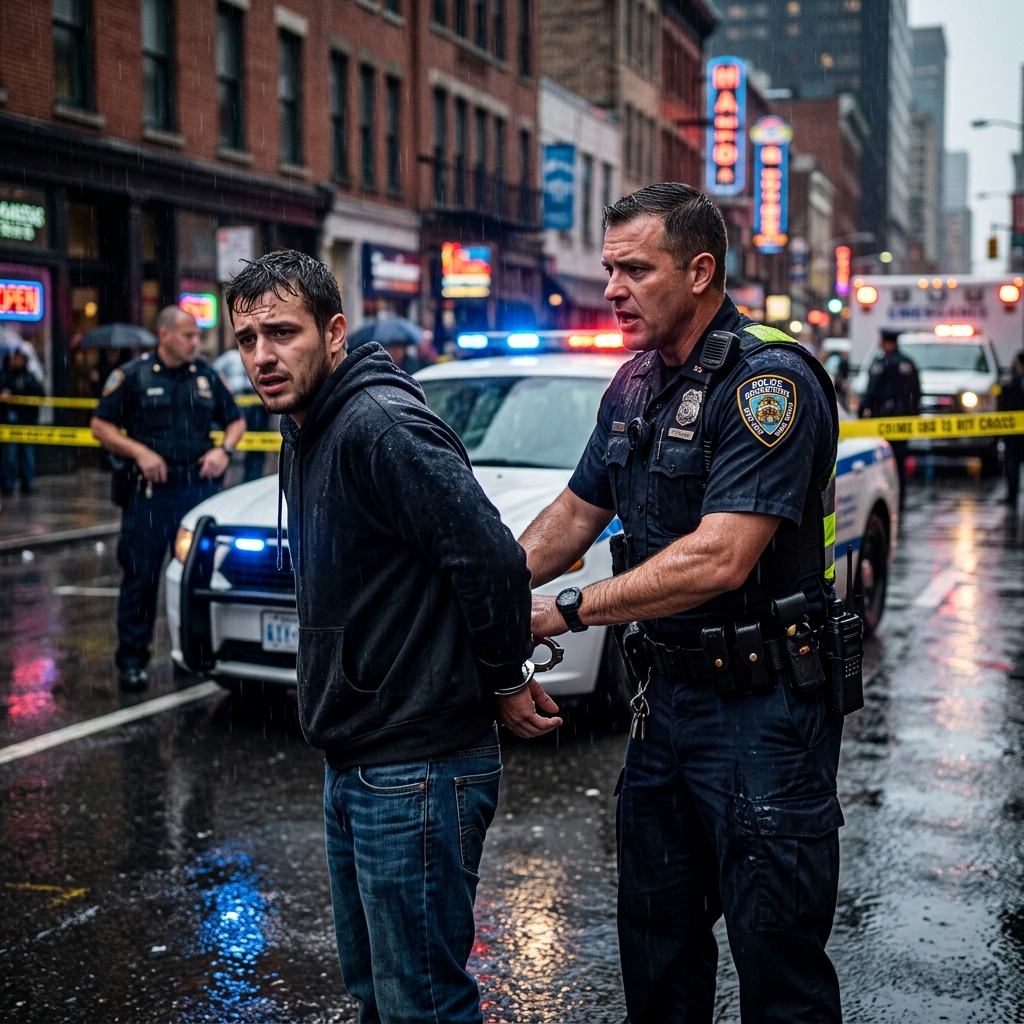
The public safety exception to Miranda is a narrow but powerful doctrine that allows police to ask certain questions without first giving Miranda warnings when there is an urgent threat to safety. It exists at the intersection of the Fifth Amendment privilege against self-incrimination and the government’s obligation to protect the public from immediate harm.
This article offers a detailed, original overview of the public safety exception: where it comes from, how courts define its limits, why it generates controversy, and what practical challenges it creates for investigators and defendants.
Miranda Basics: Custody, Interrogation, and Warnings
To understand any exception, it is essential to understand the rule. The Supreme Court’s decision in Miranda v. Arizona held that statements made during custodial interrogation are inadmissible unless police first provide specific warnings and the suspect waives those rights.
- Custody means a situation where a reasonable person would feel they are formally arrested or significantly deprived of freedom.
- Interrogation includes express questioning and words or actions a police officer should know are reasonably likely to elicit an incriminating response.
- When both custody and interrogation are present, officers must advise the suspect of their rights before questioning: the right to remain silent, the right to an attorney, and the warning that statements can be used against them in court.
If these conditions are met and no applicable exception exists, statements obtained without warnings can be suppressed at trial. Over time, courts have recognized limited exceptions to this requirement, including the public safety exception.
Origins of the Public Safety Exception
The modern public safety exception stems from the Supreme Court’s 1984 decision in New York v. Quarles. In Quarles, police chased a suspect into a supermarket, apprehended him, and noticed his firearm holster was empty. Without giving Miranda warnings, an officer asked where the gun was. The suspect disclosed the location, and the weapon was recovered.
The Court held that the suspect’s unwarned response about the gun’s location could be admitted at trial under a public safety exception to Miranda. The rationale was that officers faced an immediate danger: a loaded gun hidden in a public place where someone could be injured. Under those circumstances, safeguarding the public justified temporary departure from the usual Miranda protocol.
| Element | Details |
|---|---|
| Context | Armed suspect arrested in a public supermarket; gun believed to be hidden nearby. |
| Officer’s Question | “Where is the gun?” asked before Miranda warnings. |
| Risk | Loaded weapon in a public area posed an immediate danger to bystanders and officers. |
| Holding | Unwarned statement admissible due to a limited public safety exception. |
Importantly, the Court emphasized that this exception should be limited and driven by objective public safety concerns, not by a general interest in gathering evidence.
Core Requirements of the Public Safety Exception
Although the Supreme Court did not list a rigid test, later commentary and case law identify common elements that must be present for the public safety exception to apply.
1. Objectively Reasonable Safety Concern
Police must have an objectively reasonable belief that there is a genuine, immediate risk to safety. This standard focuses on what a reasonable officer would perceive under the circumstances, rather than the officer’s subjective motives.
- There must be more than a speculative or hypothetical risk.
- Indicators may include visible weapons, reports of explosives, or concrete information suggesting an imminent threat.
2. Immediate Danger, Often Involving Weapons
The danger usually involves a weapon or other tool capable of causing serious injury, such as firearms, knives, or explosives. Courts commonly reference scenarios where an unsecured weapon could be accessed by bystanders or accomplices.
- Examples include guns hidden in public places, bombs believed to be planted, or active threats during arrest operations.
- The closer and more concrete the danger, the more likely the exception is to apply.
3. Questions Narrowly Tailored to Neutralizing the Threat
Questions must be limited in scope and directly connected to neutralizing the danger.
- Permissible questions might include: “Where is the gun?” or “Is anyone else in danger?”
- Questions aimed at proving guilt for past conduct, such as “Why did you shoot?” or “Where did you buy the gun?” generally fall outside the exception.
4. Brief Window of Opportunity
The public safety exception operates within a short time frame. Once the immediate hazard is addressed, officers must revert to standard Miranda procedures if they continue questioning.
- Courts review whether the questioning ended once the threat was contained.
- Extended interrogation on broader topics after the danger has passed is unlikely to be protected.
How Courts Distinguish Genuine Safety Questions from Evidence Gathering
One recurring concern is distinguishing between questions that genuinely focus on safety and those primarily designed to collect evidence. The Supreme Court in Quarles insisted that the exception must not become a blanket license to bypass Miranda whenever a weapon is involved.
To make this distinction, courts often look at:
- Timing: How soon after arrest the questions were asked and how long they continued.
- Content: Whether the questions directly addressed the location or existence of a danger.
- Context: Whether public places, bystanders, or officers were clearly at risk.
When officers stay tightly focused on neutralizing a hazard and quickly transition to warnings once safety is restored, the exception is more likely to be upheld. Broad, open-ended questions about past crimes, motives, or accomplices are more likely to be viewed as standard interrogation requiring Miranda.
Practical Use by Law Enforcement
Law enforcement agencies often train officers on how to use the public safety exception without undermining constitutional protections. Official guidance stresses that the doctrine is narrow and fact-dependent, not a general shortcut.
Best Practices for Officers
- Assess the threat first: Determine whether an immediate danger exists and document the basis for that conclusion.
- Limit questions: Ask only what is necessary to locate weapons, protect victims, or determine if other immediate threats exist.
- Stop once the threat is contained: Transition promptly to Miranda warnings before broader questioning.
- Record circumstances: Where possible, preserve audio or video of the interaction and note why the exception was invoked.
Some national security and counterterrorism contexts have prompted discussion about expanding or adapting the public safety exception. For example, guidance to federal agents has emphasized a broad reading when confronting suspected terrorist plots, though courts still evaluate each case individually.
Legal Concerns and Criticisms
While the public safety exception is widely accepted, it raises several legal concerns and policy questions.
Risk of Gradual Expansion
Scholars and courts have worried that a doctrine born from a supermarket gun scenario could grow into a more general exception whenever officers claim a safety interest. Academic commentary notes the danger that courts might accept increasingly speculative threats and allow unwarned questioning in situations far removed from Quarles.
- Expansive use could weaken Miranda’s “simplicity and clarity,” which the Court has previously emphasized.
- Defendants may find it harder to challenge unwarned statements if courts routinely accept government claims of safety concerns.
Balancing Public Protection with Constitutional Rights
The public safety exception embodies a tension: protecting people from harm versus preserving robust protections against compelled self-incrimination. The Constitution Annotated points out that the Court declined to create broad exceptions for minor offenses in order to preserve Miranda’s clarity; the safety exception was accepted only because of its compelling and narrow justification.
Critics argue that if the exception is applied too liberally, the Fifth Amendment protections that Miranda was designed to enforce may be eroded in practice.
Evidentiary Complications
Another concern involves how unwarned safety-related statements are used at trial. Generally, if the exception applies, those statements may be admitted in the government’s case-in-chief. If the exception does not apply, unwarned statements might still be used for limited purposes such as impeachment, provided they are voluntary under pre-Miranda standards.
This layered framework can be complex:
- Courts must decide whether the exception fits.
- If it does not, they must determine whether the statements were nevertheless voluntary.
- Even voluntary, unwarned statements usually cannot be used to prove guilt directly, but may be used to challenge a defendant’s credibility.
Frequently Asked Questions About the Public Safety Exception
What is the public safety exception in simple terms?
It is a narrow rule that allows police to ask limited, safety-focused questions without first giving Miranda warnings when there is an immediate, objectively reasonable threat to officers or the public, typically involving a weapon or similar danger.
Does it mean Miranda rights don’t apply during emergencies?
No. Miranda still applies to custodial interrogation. The public safety exception only allows a brief set of unwarned questions strictly aimed at neutralizing an urgent hazard. Once the danger is addressed, normal warnings and procedures must resume.
Are all questions about weapons covered by the exception?
Not necessarily. Courts ask whether the weapon poses an immediate risk and whether the questions are narrowly tailored to removing that risk. Questions about past use of the weapon or ownership are usually treated as ordinary interrogation that requires Miranda warnings.
Can the exception be used in terrorism or bomb-threat cases?
Yes, the underlying principle—urgent danger—applies to bomb threats and terrorism investigations as well. Agencies and scholars have discussed using the exception in such contexts, but courts still evaluate each case individually for immediacy, reasonableness, and narrow tailoring.
What happens if a court finds the exception was misused?
If a judge concludes that the public safety exception did not apply, unwarned statements elicited during custodial interrogation are generally suppressed from the prosecution’s main case. They may still be evaluated under traditional voluntariness standards for limited uses such as impeachment, but they cannot be used directly as proof of guilt.
Key Takeaways for Defendants and Practitioners
For defendants, defense lawyers, and law students, several practical lessons emerge from the case law and commentary on the public safety exception:
- Scrutinize the timeline: Pay close attention to exactly when questioning began, what was asked, and when (if at all) Miranda warnings were given.
- Analyze the nature of the alleged danger: Was there truly an immediate, concrete threat, or was safety invoked as a generalized concern?
- Compare questions to the claimed threat: The closer the fit, the more likely courts are to uphold the exception; broader questions are easier to challenge.
- Consider how statements were used: The evidentiary role of unwarned statements (case-in-chief versus impeachment) affects both strategy and constitutional analysis.
Miranda’s public safety exception reflects an attempt to accommodate rare but serious emergencies without dismantling the core protections of custodial interrogation. Its future will depend on how consistently courts insist on genuine, immediate danger and strictly limited questioning.
References
- Miranda warning — Wikipedia (summary of doctrine, citing primary cases). Last updated 2024-05-24. https://en.wikipedia.org/wiki/Miranda_warning
- Public-Safety Exception to Miranda — MirandaWarning.org (educational site quoting law enforcement guidance). Accessed 2024-10-01. http://www.mirandawarning.org/publicsafetyexceptiontomiranda.html
- Miranda (Public Safety Exception): State v. Brown — Ohio Attorney General Law Enforcement Bulletin. 2014-10. https://www.ohioattorneygeneral.gov/Media/Newsletters/Law-Enforcement-Bulletin/October-2014/Miranda-Public-Safety-Exception-State-v-Brown
- Exceptions to Miranda — U.S. Constitution Annotated, Legal Information Institute (Cornell Law School). Accessed 2024-10-01. https://www.law.cornell.edu/constitution-conan/amendment-5/exceptions-to-miranda
- Miranda Exceptions (Public Safety) — Constitution Annotated, Library of Congress. Accessed 2024-10-01. https://constitution.congress.gov/browse/essay/amdt5-4-7-6/ALDE_00013691
- New York v. Quarles: The “Public Safety” Exception to Miranda — University of Richmond Law Review. 1985. https://scholarship.richmond.edu/cgi/viewcontent.cgi?article=1685&context=lawreview
- Public Safety Exception (Miranda) — Alameda County District Attorney, Point of View Training Material. Approx. 2013. https://le.alcoda.org/publications/point_of_view/files/miranda_exceptions.pdf
Similar Articles








Read full bio of medha deb




