
Military Child Custody: Essential Legal Guidance
Understand how deployment, relocation and unique military laws shape child custody rights and responsibilities for service member parents.
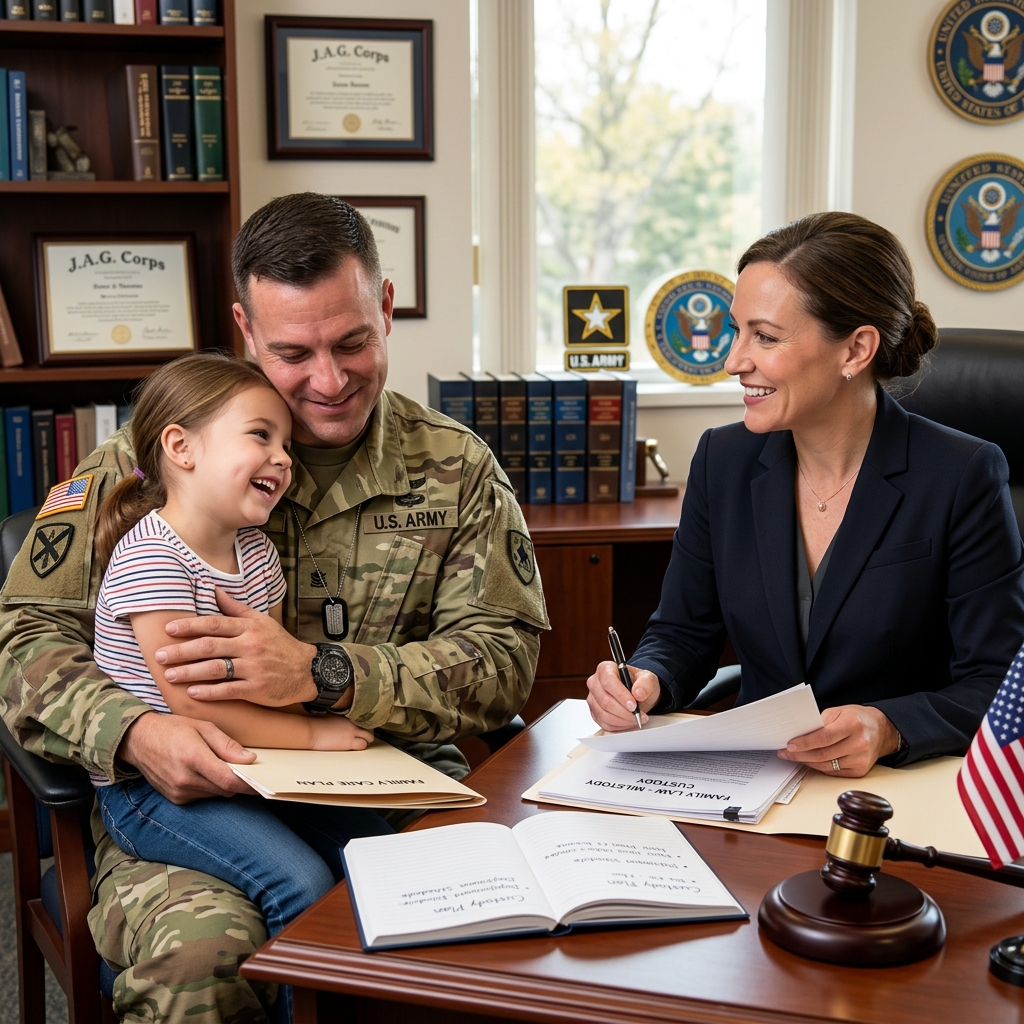
Military parents face unique challenges when it comes to child custody, because deployments, frequent moves and unpredictable schedules can complicate parenting arrangements and court orders. Understanding how civilian family law interacts with military-specific protections is critical to safeguarding your relationship with your child and planning for future changes in duty status.
How Military Service Interacts with Civilian Custody Law
In most respects, custody cases involving a service member follow the same basic rules that apply to civilian parents: courts focus on the best interests of the child, consider each parent’s relationship with the child, and look at practical factors such as stability and safety. However, active duty service adds extra layers of complexity that civilian families rarely encounter.
Key ways in which military service intersects with custody law include:
- Mandatory deployments and temporary assignments that disrupt regular parenting schedules.
- Permanent change of station (PCS) orders requiring relocation across states or overseas.
- Periods when the service member cannot participate in court hearings without special accommodations.
- State statutes and federal protections designed specifically to address these disruptions.
All 50 states now include at least one meaningful protection for service members in their custody laws, designed to ensure that military duty alone does not determine custody outcomes.
Core Legal Protections for Military Parents
Over time, legislatures and courts have recognized that a parent should not lose custody or visitation simply because they serve in the armed forces. Several legal frameworks help protect military parents’ rights in custody proceedings.
State-Level Military Custody Protections
States differ in the specific language of their laws, but the underlying goals are similar: to shield parents from losing custody or visitation because of unavoidable duty requirements. Common statutory protections include:
- Deployment cannot be the sole reason to change custody. Past, current or anticipated military absences may not be used as the only basis to modify an existing custody order.
- No permanent changes while a custodial parent is deployed. Many states bar courts from entering permanent custody modifications when a parent is unavailable due to military service.
- Return to pre-deployment custody after duty ends. Some laws require reinstating the prior order within a set period after the service member returns, unless the non‑deployed parent proves that doing so would harm the child’s best interests.
- Delegation of visitation rights. Dozens of states let a deployed parent temporarily assign their visitation time to another trusted adult, such as a grandparent, helping the child maintain extended family connections.
Servicemembers Civil Relief Act (SCRA)
The federal Servicemembers Civil Relief Act (SCRA)
- It allows a service member to request a temporary stay (delay) of court proceedings, typically for at least 90 days, when military duties prevent them from appearing or actively participating.
- Courts must follow specific notice procedures before taking legal action against a service member, giving them an opportunity to respond or request relief.
- Orders entered without proper notice or opportunity to participate may be subject to challenge or being vacated (set aside) after the service member returns.
To request a stay under SCRA, the service member usually must demonstrate that current military obligations materially affect their ability to appear and provide documentation from a commanding officer indicating that leave is not authorized during the relevant period.
Uniform Deployed Parents Custody and Visitation Act (UDPCVA)
Some states have adopted the Uniform Deployed Parents Custody and Visitation Act (UDPCVA), a model law that standardizes how courts handle custody and visitation when a parent is deployed. Its goals include:
- Promoting temporary orders rather than permanent changes during deployment.
- Allowing delegation of both visitation and certain decision‑making powers to another adult during the service member’s absence.
- Facilitating quick re‑evaluation of custody once the deployed parent returns.
Deployment and Its Impact on Parenting Arrangements
Deployment is one of the most significant factors in military custody cases. Although deployment does not automatically count against a parent, courts still consider its practical effect on the child’s day‑to‑day life and the stability of the parenting arrangement.
Temporary vs. Permanent Changes During Deployment
When a custodial parent deploys, courts often use temporary orders to address who will care for the child, how contact will be maintained, and what happens upon the parent’s return.
Typical approaches include:
- Designating the non‑deployed parent to handle primary physical care while the service member is away.
- Allowing a relative—often a grandparent—to act as a temporary caregiver for the child if the other parent is unavailable or unsuitable.
- Setting specific requirements for electronic communication (video calls, emails) to preserve the relationship between the child and the deployed parent.
Upon the service member’s return, many jurisdictions treat the end of deployment as a significant change in circumstances and permit revisiting custody arrangements to reflect the parent’s renewed availability.
Family Care Plans
Each branch of the armed forces expects certain members—particularly single parents and dual‑military couples—to maintain a family care plan that describes who will care for their children during deployments or other extended absences. While these plans do not replace court orders, they can strongly influence custody discussions.
A thorough family care plan should:
- Identify the primary and alternate caregivers who will handle physical care, medical decisions and schooling when the parent is unavailable.
- Explain how the child will be financially supported during absences, including access to military benefits.
- Address logistics such as housing, transportation, and how the child will communicate with the deployed parent.
Courts may view a well‑constructed care plan as evidence of responsible parenting and advance planning, which can favorably influence custody determinations.
Relocation, PCS Orders and Jurisdiction Questions
Permanent change of station (PCS) orders frequently require military families to move between states or abroad. These moves raise complex questions about which court should hear custody disputes and how existing orders can be modified.
Which Court Has Authority?
Custody jurisdiction is typically governed by state law, often based on where the child has lived for the previous six months. When a parent in the military seeks custody or modification, they usually must file in the child’s home state. This may mean returning to a prior jurisdiction even after a PCS to a new duty station.
| Situation | Likely Jurisdiction | Practical Implications |
|---|---|---|
| Child has lived in one state for 6+ months | Court in that state usually has primary authority | Military parent may need to travel back or appear remotely |
| Recent relocation due to PCS | Prior state may retain jurisdiction until new residence qualifies | Complex overlap of orders; legal advice recommended |
| International PCS | Home state in the U.S. often continues to control custody orders | Travel costs and logistics must be carefully addressed in the order |
Crafting Orders that Account for Distance
When parents live far apart—especially if one is stationed overseas—courts and attorneys frequently design custody orders with multiple schedules that depend on geographic distance.
Common strategies include:
- Creating one parenting schedule for situations where both parents live within a short radius (for example, 50 miles).
- Adding a second schedule that applies when parents live farther apart, possibly involving longer but less frequent visitation periods.
- Including provisions on who pays travel costs, how transportation will be arranged, and expectations for notice before travel.
Types of Custody and How They Work for Military Families
Military parents can hold the same forms of custody as civilian parents, but deployments and relocations may affect how these arrangements function day to day.
Legal vs. Physical Custody
- Legal custody refers to the right to make major decisions for the child, such as education, healthcare and religious upbringing.
- Physical custody describes where the child lives and who handles routine daily care.
Military parents may share joint legal custody while one parent has primary physical custody, or they may have joint physical custody as long as the arrangement is practical given duty assignments.
Sole and Joint Arrangements
Courts consider the same factors for military parents as for civilians when determining whether sole or joint custody is appropriate.
- Sole physical custody may be ordered if one parent is better able to provide stable day‑to‑day care or if the other parent is unavailable or unsuitable. A service member with sole physical custody should identify trusted relatives who can step in during deployments.
- Joint physical custody is possible when both parents can coordinate schedules and maintain a stable routine, even with military duties. The civilian parent often assumes physical care during deployments, while the service member maintains legal custody rights and post‑deployment parenting time.
Planning Ahead: Practical Steps for Military Parents
Proactive planning can significantly reduce conflict and protect a child’s stability during military‑related transitions. Courts generally appreciate parents who plan carefully and collaborate when possible.
Key Planning Actions
- Develop a detailed parenting plan. Address regular schedules, holidays, school breaks and contingency arrangements for deployment or PCS moves. Include methods of communication and decision‑making when one parent is overseas or otherwise unavailable.
- Document involvement with your child. Keep records of school events, medical appointments, and day‑to‑day care to demonstrate your ongoing commitment, especially if frequent absences are unavoidable due to duty.
- Use mediation or negotiation when feasible. Many states encourage parents to mediate custody disputes. Courts often view cooperative problem‑solving more favorably than drawn‑out litigation.
- Avoid undermining the other parent. Judges disapprove of attempts to interfere with a child’s relationship with the co‑parent. Supporting the other parent’s role usually strengthens your own position.
Leveraging Military Resources
Service members do not need to navigate custody issues alone. Several military resources provide free or low‑cost guidance and support.
- Installation legal assistance offices. These offices can explain relevant state laws, SCRA protections and options for drafting family care plans or parenting agreements.
- Family support programs. Military family centers often offer counseling, deployment preparation workshops and referrals to community services that can ease custody‑related stress.
- Official online tools. Military‑sponsored websites help locate legal offices and provide educational materials about divorce, custody and family care planning.
Frequently Asked Questions About Military Child Custody
Does deployment automatically cause me to lose custody?
No. Under modern state laws, deployment or other military absences cannot be the sole reason for changing a custody order. Courts may consider the practical impact of deployment on the child’s needs, but they must weigh many other factors as well.
Can I delay a custody hearing if I am on active duty?
Often yes. The Servicemembers Civil Relief Act allows you to request a temporary stay of proceedings when duty prevents you from appearing or participating. You will generally need documentation showing that your obligations interfere with court attendance and that your commanding officer does not authorize leave at the relevant time.
May I assign my visitation rights to a relative while deployed?
In many states, you can temporarily delegate visitation rights to a trusted adult, frequently a grandparent or other close family member. The specifics depend on state law and the language of your custody order, so legal advice is important.
What happens to our custody order when I return from deployment?
Jurisdictions vary, but some treat the end of deployment as a significant change in circumstances, allowing you to ask the court to restore or adjust prior arrangements. In states with strong military protections, the pre‑deployment order may be reinstated unless evidence shows this would not serve the child’s best interests.
Do I need a lawyer if my co‑parent files for custody while I am deployed?
While not legally required, representation is strongly recommended. A lawyer familiar with both family law and military protections can help ensure proper use of SCRA, timely requests for stays, and appropriate challenges to any orders entered in your absence.
References
- Child Custody Considerations for Military Families — Military OneSource. 2023-05-01. https://www.militaryonesource.mil/relationships/separation-divorce/child-custody-considerations-for-military-families/
- Child Custody Considerations for Military Members — U.S. Air Force, Goodfellow AFB. 2015-07-06. https://www.goodfellow.af.mil/Newsroom/Commentaries/Display/Article/794205/child-custody-considerations-for-military-members/
- Military Parents & Custody Cases — Family Legal Care (New York). 2022-04-15. https://familylegalcare.org/guide/military-parents-custody-cases/
- Custody Cases Involving Military Parents — Smith Strong, PLC. 2021-09-10. https://www.smithstrong.com/library/custody-cases-involving-military-parents.cfm
- Overview of How to Approach a Child Custody Case for Military Parents — Patriots Law Group. 2023-02-20. https://www.patriotslaw.com/family-law/overview-of-how-to-approach-a-child-custody-case-for-military-parents/
- San Antonio Military Custody Lawyer — Amsberry Law Firm. 2022-08-01. https://amsberrylaw.com/military-law/child-custody/
- Support for Military Family Legal Issues — Military OneSource. 2023-06-12. https://www.militaryonesource.mil/resources/millife-guides/family-legal-issues/
Similar Articles








Read full bio of Sneha Tete


