
Marijuana, Parenting, and Custody Risks in New York
How New York’s cannabis laws intersect with child welfare investigations, custody disputes, and your rights as a parent.
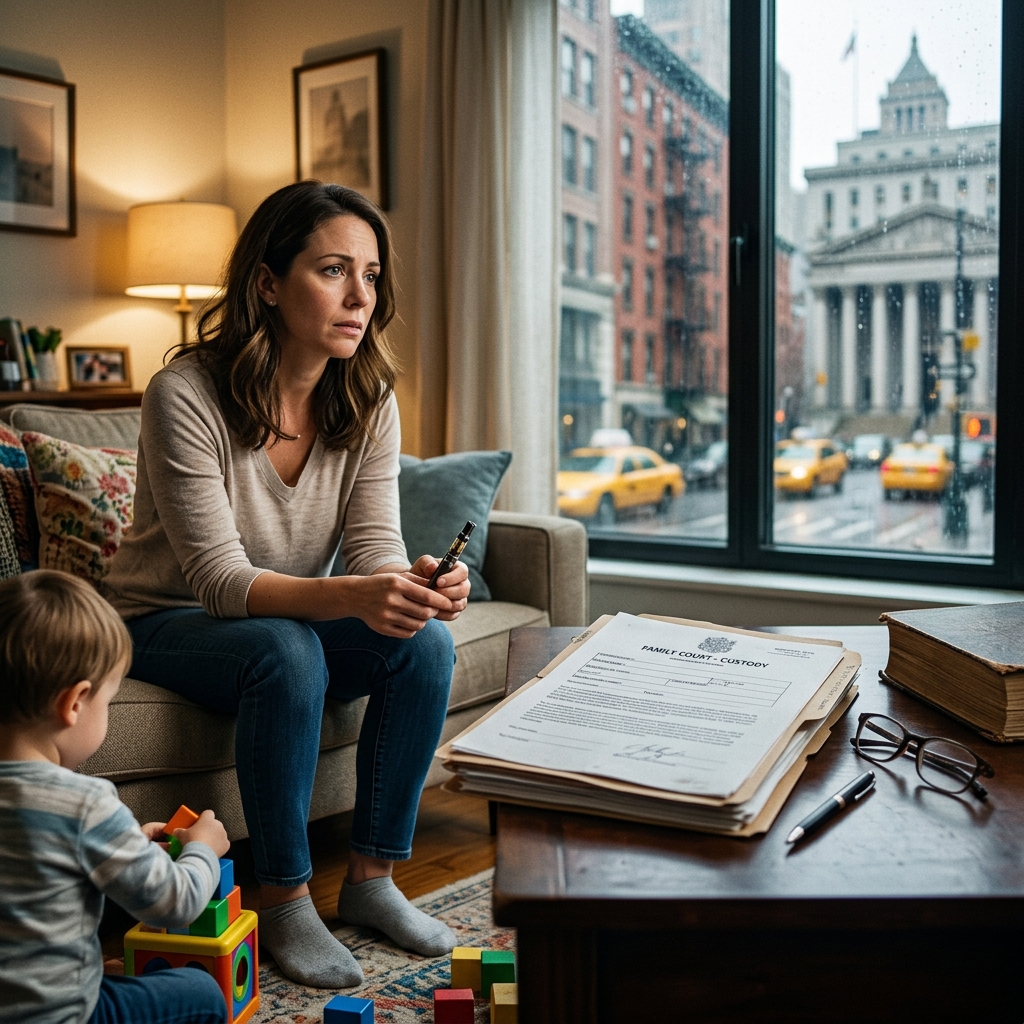
New York has legalized recreational marijuana for adults, but that does not mean cannabis use is irrelevant in child welfare investigations or custody disputes. Parents can still face serious legal consequences if marijuana use is tied to concerns about a child’s safety or well-being, even though state law now clearly states that cannabis use alone is not grounds for a neglect finding.
This article explains how New York’s legalization of marijuana interacts with child protection laws, what courts look for in custody cases involving cannabis, and practical steps parents can take to reduce legal risk while exercising their rights.
The Legal Landscape: Cannabis Is Legal, Neglect Is Not
New York’s Marijuana Regulation and Taxation Act (MRTA), enacted in 2021, legalized adult-use cannabis for people 21 and older and added specific protections for parents. Under the law and related child welfare policies, authorities are not supposed to treat marijuana use—as opposed to abuse or harmful conduct—as automatic evidence of bad parenting.
Key legal basics for parents
- Adult possession and use are legal: Adults 21+ may legally possess limited amounts of cannabis and use it in most places where tobacco smoking is allowed, subject to certain restrictions.
- Child neglect requires harm or risk: New York child welfare law focuses on whether a child’s physical, mental, or emotional condition has been impaired or is in imminent danger of impairment due to a parent’s failure to exercise a minimum degree of care, including because of substance misuse.
- Marijuana use alone is not neglect: New York policy and statute now specify that the fact that a parent uses cannabis, by itself and without evidence of harm or risk of harm, is not sufficient to support a neglect determination or child removal.
- Legal use cannot be used to deny custody or visitation: Official city guidance clarifies that legal possession or use of cannabis cannot be used as a reason to deny child custody or visits.
Despite these protections, parents may still find cannabis mentioned in reports to Child Protective Services (CPS), family court petitions, or custody motions. The central issue is not the drug itself, but whether its use is linked to unsafe parenting behavior.
How Marijuana Use Enters Child Welfare Cases
In practice, marijuana may become part of a child welfare or custody case in several ways: a neighbor reports smelling smoke, a school or medical provider expresses concern, a co-parent raises the issue in court, or law enforcement encounters a parent using cannabis while supervising children.
Common triggers for CPS involvement
- Reports alleging that a parent is frequently intoxicated while caring for a young child.
- Claims that cannabis is stored where children can easily access it, including edibles that look like candy.
- Incidents where a child is injured or left unsupervised while a parent is allegedly high.
- Custody disputes in which one parent accuses the other of drug use to gain an advantage in court.
New York child welfare policy now emphasizes that agencies cannot rely on cannabis use alone; they must identify specific facts showing harm or risk, such as unsafe supervision, impaired driving with children in the car, or repeated failure to meet basic needs. However, advocates and public defenders have reported that some agencies still cite marijuana in neglect petitions, even after legalization, which can lead to family separation if courts are persuaded that use is connected to risk.
Family Court’s Focus: Best Interests of the Child
In custody and visitation disputes, New York courts apply the “best interests of the child” standard. Cannabis use is one factor among many, such as parenting history, stability, mental and physical health, and the child’s relationship with each parent.
How judges typically look at marijuana use
- Occasional, responsible use that does not interfere with parenting and is kept away from children is less likely to affect custody outcomes, especially when it is legal and comparable to moderate alcohol use.
- Heavy or daily use that appears to impair judgment, cause neglect of routines (meals, hygiene, school), or create safety risks can be used against a parent.
- Use around the children, especially if smoke exposure or intoxication is obvious to them, is more likely to be viewed negatively.
- Prior CPS involvement or criminal charges related to neglect, impaired driving, or substance abuse will magnify judicial concern.
Other states that have legalized cannabis, such as New Jersey, have adopted similar principles: statutes and court decisions stress that cannabis use by itself is not enough to terminate parental rights or deny custody, but use that harms or endangers children may lead to supervised visitation, temporary removal, or in extreme cases, loss of parental rights.
When Legal Use Can Still Create Legal Risk
Even careful, legal use of marijuana can be misinterpreted or weaponized in a contested custody case. The line between lawful adult behavior and actionable neglect is highly fact-specific.
Risk scenarios for New York parents
| Scenario | Why it may be problematic |
|---|---|
| Smoking in a closed apartment while supervising a toddler | Opposing parties may argue secondhand smoke exposure and impaired supervision pose a risk of harm. |
| Leaving edibles in an accessible kitchen cabinet | Child could accidentally ingest cannabis; even a single incident can prompt CPS involvement. |
| Driving children after consuming cannabis | Intoxicated driving can be viewed as serious endangerment and a strong basis for a neglect finding. |
| Posting photos or videos online while high with your kids nearby | Digital evidence can be used in court to challenge your judgment and reliability as a caregiver. |
| Daily heavy use with signs of missed appointments, poor school attendance, or disorganized home life | Court may find cannabis is impairing your ability to meet minimum parental responsibilities. |
Because judges have broad discretion in custody matters, perception matters. Two parents with similar cannabis habits may face very different outcomes depending on how well they handle other parenting responsibilities, the presence of documented incidents, and the attitudes of the judge and professionals involved.
New Protections in New York’s Cannabis and Child Welfare Policy
To address long-standing concerns that families of color and low-income parents were disproportionately targeted for minor marijuana-related allegations, New York’s legalization framework introduced explicit protections in the child welfare context.
Key parent-focused protections
- No neglect finding based solely on cannabis use: Statutory language states that the fact that a parent consumes cannabis, without a separate finding that the child has been harmed or is at imminent risk of harm, is not enough to establish neglect.
- Restriction on use of cannabis-only reports: Parents who were reported to child welfare authorities solely because of marijuana use or possession can request relief limiting how those reports are used, including sealing in certain circumstances.
- Clarified city guidance: New York City health guidance explicitly notes that legal possession or use of cannabis cannot, by itself, be grounds to deny custody or visitation, although parents are still expected to store cannabis safely and keep it out of the sight and reach of children.
These protections do not give parents a free pass to use marijuana without regard to safety. Rather, they are meant to prevent automatic or reflexive punishment based solely on the presence of cannabis, without evidence that a child has been harmed or placed at risk.
Practical Safety and Legal Tips for Parents Who Use Cannabis
Parents in New York who choose to use cannabis can reduce their exposure to child welfare and custody problems by focusing on safety, discretion, and documentation of responsible parenting.
1. Separate cannabis use from childcare responsibilities
- Avoid using cannabis when you are the sole caregiver for young children, especially infants and toddlers who require constant supervision.
- If you plan to use marijuana, do so when another responsible adult is present and able to supervise, or when children are not in your care.
- Never drive with children in the car after consuming cannabis; impaired driving can be considered serious neglect or endangerment.
2. Store cannabis securely and out of reach
- Keep cannabis flower, concentrates, vapes, and edibles in locked containers or cabinets that children cannot access.
- Be especially cautious with edibles that resemble candy, baked goods, or snacks; child ingestion can result in emergency medical treatment and CPS reports.
- Do not leave paraphernalia—such as grinders, lighters, or vape cartridges—lying around where kids can interact with them.
3. Avoid obvious use around children
- Even if technically lawful, visible intoxication or heavy smoke around children can be interpreted as poor judgment in court.
- Use in private spaces away from children’s view and avoid posting any images or videos on social media of you using cannabis with children present.
4. Maintain strong evidence of responsible parenting
- Keep records of medical appointments, school attendance, and involvement in your child’s education and activities to demonstrate consistent care.
- Address any underlying issues that might be linked to substance use, such as untreated mental health conditions, through professional support where appropriate.
- If you ever struggle with overuse or dependency, participation in a treatment or counseling program can show the court you are proactively addressing the concern.
5. Get legal advice early in a dispute
- If an ex-partner or another person threatens to report you for cannabis use, consult a family law or child welfare attorney to understand your rights and risks.
- In New York City, official guidance lists organizations that offer free or low-cost legal assistance for people facing cannabis-related legal problems, including matters touching on child welfare.
- Before agreeing to drug testing or signing safety plans, talk to a lawyer whenever possible so you do not unintentionally waive rights.
Difference Between Legal Use and Substance Misuse
For courts and child welfare agencies, the central question is not whether a parent uses marijuana, but whether their use amounts to misuse that contributes to neglect, abuse, or serious risk of harm.
| Responsible Legal Use | Problematic Misuse |
|---|---|
| Occasional consumption in private, away from children, without affecting caregiving duties. | Frequent intoxication while supervising children, leading to missed meals, poor hygiene, or unsafe home conditions. |
| Secure storage of products in locked containers out of sight and reach. | Cannabis and paraphernalia left where children can easily access them, or past incidents of accidental ingestion. |
| No impact on employment, housing stability, or ability to attend school events and appointments. | Use contributing to missed work, unstable housing, or repeated failure to meet children’s medical or educational needs. |
| Compliance with all state laws regarding quantity, location of use, and age restrictions. | Using in prohibited places (such as a car with children present) or engaging in illegal distribution. |
Courts may also consider whether a parent acknowledges potential risks and takes steps to minimize them, or instead dismisses all concerns as irrelevant because cannabis is legal. Demonstrating insight and willingness to follow safety guidelines can significantly reduce how concerning a judge perceives your use to be.
Frequently Asked Questions (FAQs)
Does legal cannabis use automatically put my custody at risk in New York?
No. State law and policy specify that legal cannabis use or possession alone cannot be the basis for denying custody, visitation, or making a finding of neglect. Authorities must show actual harm or a concrete risk of harm to the child.
Can CPS still investigate me if someone reports my marijuana use?
Yes. Child protective agencies can screen and investigate reports that mention cannabis, particularly if the report alleges impaired supervision, unsafe storage, or other risk factors. However, they must focus on safety concerns rather than the mere fact of use.
What if I only use marijuana after my kids are asleep?
Using cannabis after children are asleep is less likely to raise concerns than using while directly supervising them, especially if products are securely stored. Still, if a child wakes unexpectedly or if other issues arise, authorities may question whether you are able to respond quickly and safely. Courts will look at the overall pattern of care, not isolated moments.
Can my ex use my cannabis use against me in a custody dispute?
It is common for one parent to raise the other’s substance use in custody litigation. The judge will evaluate whether your cannabis use affects your parenting, safety, and reliability. Responsible, lawful use with no history of child harm or neglect is less likely to carry weight than evidence of unsafe behavior linked to cannabis.
Should I stop using cannabis entirely during a custody case?
Many attorneys advise parents to limit or suspend cannabis use—especially visible use—while a custody case or CPS investigation is ongoing, because judges have broad discretion and may react negatively even to legal conduct. You should consult with your own lawyer about the best approach given your circumstances.
Are medical cannabis patients treated differently?
Parents who use medical cannabis still must ensure that their use does not impair parenting or endanger their children. A medical authorization may help explain use, but it does not excuse neglectful conduct. Courts examine whether treatment is well managed, whether there are safer alternatives, and whether protective measures are in place for children.
Key Takeaways for New York Parents
- Adult-use cannabis is legal in New York, and state law explicitly states that marijuana use alone is not grounds for a neglect finding or denial of custody.
- Authorities and courts focus on whether cannabis use contributes to child harm or real risk: unsafe supervision, impaired driving, or failure to meet basic needs can all trigger serious consequences.
- Safe storage, avoiding visible intoxication around children, and maintaining strong parenting records are essential safeguards for parents who choose to use marijuana.
- If you face a CPS investigation or custody dispute involving cannabis, seek legal advice early and avoid making assumptions about what the law does or does not allow.
References
- Cannabis in NYC: Know Your Rights — NYC Department of Health and Mental Hygiene. 2023-06-01. https://www.nyc.gov/assets/doh/downloads/pdf/basas/cannabis-in-nyc-know-your-rights.pdf
- Cannabis Conversations — New York State Office of Cannabis Management. 2023-05-01. https://cannabis.ny.gov/cannabis-conversations-0
- As New York Legalizes Marijuana, Parent Advocates Push Child Welfare Agencies to Adapt — The Imprint. 2021-04-19. https://imprintnews.org/child-welfare-2/as-new-york-legalizes-marijuana-parent-advocates-push-child-welfare-agencies-to-adapt/54235
- NYC Child Welfare Agency Still Citing Marijuana in Family Separations Despite Legalization, State Policy Change — Brooklyn Defender Services. 2022-02-10. https://bds.org/latest/nyc-child-welfare-agency-still-citing-marijuana-in-family-separations-despite-legalization-state-policy-change
- Marijuana Use & Child Neglect — Dr. Vetrano Law. 2021-04-01. https://www.drvetranolaw.com/blog/2021/april/marijuana-use-child-neglect/
- Can Using Legal Marijuana Affect a Parent’s Custodial Rights? — Bousquet Holstein PLLC. 2022-03-15. https://www.bhlawpllc.com/marijuana-in-child-custody-cases/
- Can Cannabis Use Affect Your Parenting and Custody Rights? — Weinberger Law Group. 2021-09-01. https://www.weinbergerlawgroup.com/blog/newjersey-child-parenting-issues/can-cannabis-use-affect-your-parenting-and-custody-rights/
Similar Articles








Read full bio of Sneha Tete


