
The Legal Triumph of the Indian Child Welfare Act
Validating Tribal Sovereignty and Indigenous Child Protection Frameworks.
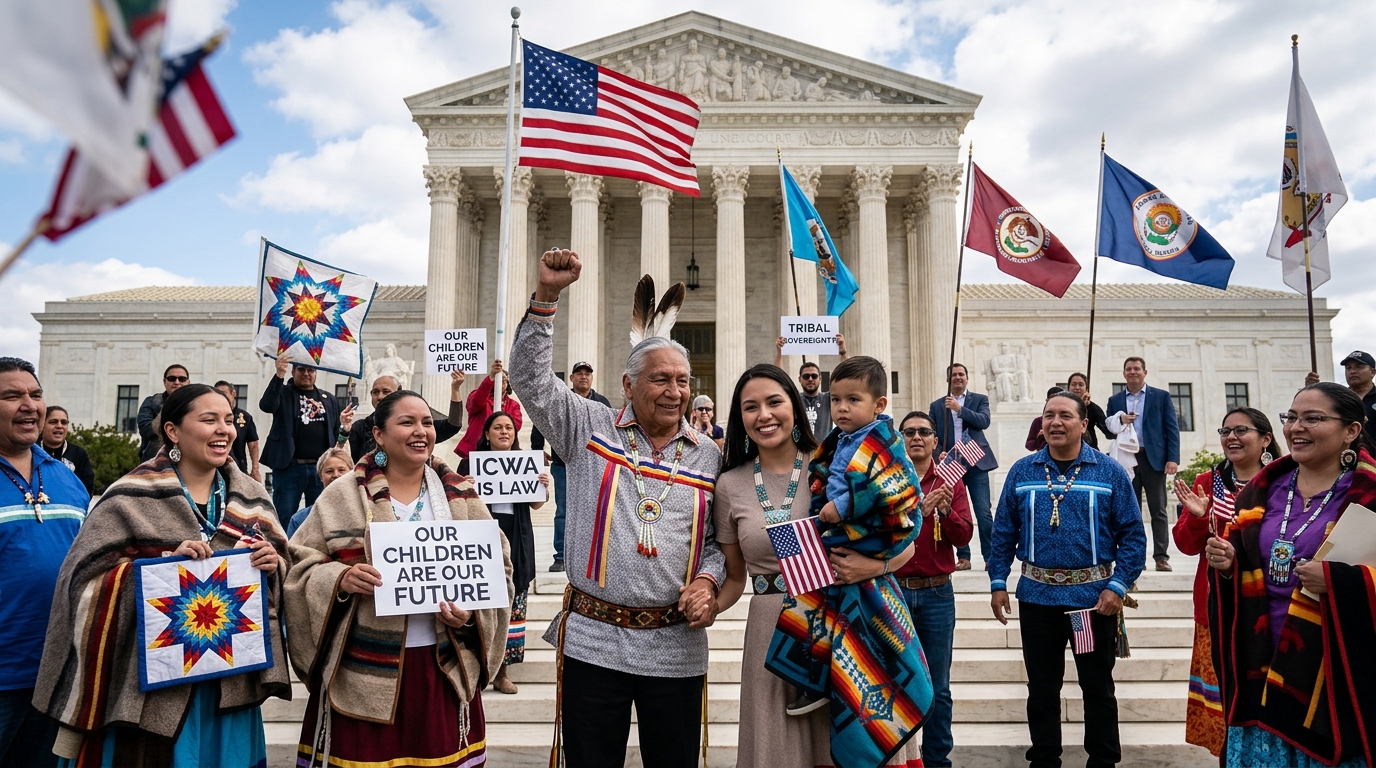
The Era-Defining Affirmation of Indigenous Child Protection
The landscape of family law and indigenous rights has witnessed a monumental turning point with the definitive judicial affirmation of federal statutes designed to safeguard the cultural and familial integrity of Native communities. At the core of this legal milestone is a protective framework established decades ago to rectify systemic, historical injustices that disproportionately fractured indigenous families. The validation of these statutory measures by the highest echelons of the judicial system represents significantly more than a mere legal victory; it is a profound recognition of tribal sovereignty, foundational human rights, and the enduring psychological importance of cultural continuity in child development.
The intersection of child welfare systems and indigenous populations has long been fraught with controversy, marked by policies that often prioritized assimilation over family preservation. In an era where the legal foundations of minority protections are frequently subjected to intense judicial scrutiny, the successful defense of these indigenous child welfare provisions underscores a national commitment to rectifying historical grievances. This comprehensive analysis explores the multifaceted dimensions of this pivotal policy, charting its historical origins, the complex legal challenges it has navigated, and its critical role in shaping the future of vulnerable children and sovereign tribal nations.
The Historical Imperative: Understanding Pre-1978 America
To fully grasp the magnitude of contemporary legal battles surrounding indigenous child welfare, one must traverse the often dark and troubling chapters of early-to-mid 20th-century American policy. Prior to the late 1970s, the child welfare system operated in a manner that systematically dismantled Native American families. The statistics from this era paint a grim picture of systemic overreach and cultural devastation.
During the 1960s and 1970s, widespread surveys and congressional investigations revealed that an astonishing 25 to 35 percent of all Native children were being removed from their homes by state child welfare and private adoption agencies. Of those removed, approximately 85 percent were placed outside of their families and communities, predominantly with non-Native households or in institutionalized boarding schools. These removals were frequently initiated without a foundational understanding of indigenous kinship networks, child-rearing practices, or tribal societal structures. Often, state social workers misinterpreted extended family caregiving—a hallmark of Native communities—as child neglect.
The resulting cultural severance inflicted severe psychological trauma on generations of children, stripping them of their linguistic heritage, traditional customs, and community identity. It became glaringly apparent that without federal intervention, the very survival of tribal nations was at risk. The creation of a robust federal legislative framework in 1978 was a direct, emergency response to this existential threat, establishing minimum federal standards for the removal of Native children and explicitly recognizing the jurisdictional authority of tribal nations over their own citizens.
The Mechanics of the Landmark Supreme Court Decision
The protective statutes enacted in the late 20th century recently faced one of their most formidable existential threats in the federal court system. A coalition of plaintiffs, including several states and non-Native adoptive parents, initiated aggressive litigation aiming to dismantle the core provisions of the act. The central arguments against the indigenous child welfare framework rested on complex interpretations of constitutional law, specifically targeting the Equal Protection Clause and the anti-commandeering doctrine of the Tenth Amendment.
The plaintiffs contended that prioritizing the placement of Native children with Native families constituted unconstitutional race-based discrimination. Furthermore, state plaintiffs argued that the federal government was unconstitutionally “commandeering” state agencies by forcing them to adhere to federal placement preferences in state-run foster care systems. These arguments struck at the very heart of federal Indian law, threatening to unravel decades of legal precedent regarding the relationship between the federal government and sovereign tribal nations.
In a resounding rejection of these challenges, the Supreme Court upheld the constitutionality of the legislation. The Court reinforced a long-standing legal principle: the classification of “Indian” in federal law is a political classification, not a racial one. Because Native American tribes are recognized as distinct, sovereign political entities with a unique government-to-government relationship with the United States, legislation tailored to tribal citizens is subject to rational basis review rather than the strict scrutiny applied to racial classifications. This vital distinction preserved the statutory framework and reaffirmed Congress’s plenary power to legislate on Indian affairs under the Constitution’s Indian Commerce Clause.
The Core Principles of Protective Placement
Beyond the complex constitutional theories, the upheld legislation functions as a highly structured, evidence-based child welfare policy. It operates on the fundamental premise that, whenever safe and possible, a child’s best interests are served by maintaining their connections to their family, culture, and community.
The framework establishes a specific hierarchy of placement preferences when a Native child must be removed from their primary caregivers:
- First Preference: Placement with a member of the child’s extended family, recognizing the critical role of kinship care in child development.
- Second Preference: Placement with other members of the child’s specific tribal nation, ensuring the preservation of the child’s specific cultural and linguistic heritage.
- Third Preference: Placement with other Native American families, acknowledging the shared cultural experiences and systemic understanding present within the broader indigenous community.
This tiered system is not merely an exercise in cultural preservation; it is widely considered the “gold standard” of child welfare by pediatricians, psychologists, and social workers. Extensive research demonstrates that children in foster care experience significantly better mental health outcomes, higher educational attainment, and reduced rates of behavioral issues when they are placed with kin or within their own cultural communities.
Comparing Child Welfare Practices
To understand the profound shift brought about by federal intervention, it is helpful to examine the contrasting landscapes of child welfare practices before and after the implementation of protective federal standards.
| Aspect of Child Welfare | Pre-1978 Practices | Post-1978 Regulated Framework |
|---|---|---|
| Jurisdiction | State agencies maintained nearly exclusive control over all child placement decisions, often ignoring tribal authority. | Tribal courts possess exclusive jurisdiction over children residing on reservations and concurrent jurisdiction elsewhere. |
| Placement Preferences | No mandate for cultural preservation; children routinely placed in non-Native homes or institutional settings. | Strict hierarchy prioritizing extended family and tribal members to ensure cultural continuity. |
| Evidentiary Standards | Vague state standards of “neglect,” frequently based on cultural misunderstandings of communal child-rearing. | Elevated evidentiary requirements, demanding “clear and convincing evidence” supported by qualified expert testimony. |
| Family Reunification | Minimal proactive efforts by states to reunify Native families after removal. | Mandatory “active efforts” required to provide remedial services and rehabilitative programs to prevent family breakup. |
The Intersection of Child Welfare and Tribal Sovereignty
The recent legal triumphs extend far beyond the parameters of child welfare; they are fundamentally about the survival and self-determination of tribal nations. A sovereign nation cannot exist without the ability to protect and govern its most vital resource: its children. By defending the right of tribes to intervene in state court proceedings and dictate the placement of their youth, the judicial system has fortified the broader architecture of tribal sovereignty.
If the political classification of Native Americans had been struck down in favor of a racial classification, the domino effect would have been catastrophic for indigenous rights. Entire bodies of federal Indian law—ranging from healthcare and education provisions to tribal gaming and land management rights—rely on this political distinction. The Supreme Court’s decision, therefore, acted as a critical bulwark against the erosion of Native American self-governance, ensuring that tribes retain the legal authority to determine their own destinies and protect their future generations.
The Role of Broad-Based Advocacy and Amicus Briefs
The successful defense of these critical child welfare provisions was not achieved in a vacuum. It was the result of an unprecedented mobilization of indigenous leaders, legal scholars, medical professionals, and child rights advocates. Leading up to the Supreme Court’s decision, a record-breaking number of *amicus curiae* (friend of the court) briefs were filed in support of the legislation.
These briefs highlighted the broad consensus among child welfare experts that the legislation’s emphasis on family preservation, “active efforts” to prevent removal, and kinship placement aligns perfectly with modern, evidence-based best practices for all children, regardless of background. Prominent national child advocacy organizations, psychiatric associations, and pediatric societies united to educate the judiciary on the severe psychological harms of cultural severance and the demonstrable benefits of maintaining familial and tribal bonds. This unified front played a crucial role in illustrating that the statute is not just legally sound, but practically essential for child well-being.
Frequently Asked Questions (FAQs)
What makes the classification of Native American children “political” rather than “racial”?
In federal law, Native American tribes are recognized as sovereign political entities that existed prior to the formation of the United States. When a law applies to a Native American child, it is based on their citizenship (or eligibility for citizenship) in a federally recognized tribe, much like a law might apply to a citizen of a foreign country. It is a government-to-government relationship, not a racial classification.
Does this legislation completely prevent non-Native families from adopting Native children?
No. While the law establishes a strong preference for placing children with extended family or tribal members, it allows for deviations from these preferences if there is “good cause.” If no suitable placement can be found within the preferred categories, or if there are extraordinary physical or emotional needs of the child that cannot be met within the tribal community, non-Native families can, and do, adopt Native children.
What are “active efforts” in the context of indigenous child welfare?
Unlike standard state foster care protocols which require “reasonable efforts” to reunite a family, the federal framework for indigenous children demands “active efforts.” This means state agencies must take a proactive, thorough, and culturally appropriate approach to providing rehabilitative services, assisting parents in overcoming obstacles, and doing everything possible to prevent the breakup of the Native family before removal or termination of parental rights is considered.
Why is kinship care considered the “gold standard”?
Kinship care minimizes the trauma of family separation. Children placed with relatives or community members experience greater stability, fewer behavioral problems, and maintain essential connections to their siblings, heritage, and identity. For indigenous children, it also ensures the transmission of unique cultural knowledge and language that might otherwise be lost.
The Path Forward: Sustained Vigilance and Implementation
While the definitive ruling from the nation’s highest court marks a monumental victory, the work of protecting indigenous children is an ongoing endeavor. Legal validation alone does not equate to flawless localized implementation. State social service agencies, family court judges, and legal practitioners must continuously be educated on the specific requirements of the law, including the critical mandates for early tribal notification, the execution of “active efforts,” and the prioritization of kinship placements.
The future of indigenous child welfare relies on the vigilant enforcement of these validated standards at the grassroots level. It requires deep collaboration between state and tribal governments, robust funding for tribal child welfare programs, and a persistent commitment to prioritizing the holistic well-being of every child. The legal triumph of this protective framework has secured the foundation; it is now the collective responsibility of the child welfare system to build upon it, ensuring that the dark history of unwarranted family separation remains permanently in the past, and that the cultural heritage of indigenous nations is preserved for generations to come.
References
- Haaland v. Brackeen, 599 U.S. 255 (2023) — Supreme Court of the United States. 2023-06-15. https://www.supremecourt.gov/opinions/22pdf/21-376_7l48.pdf
- Indian Child Welfare Act (ICWA) — U.S. Department of the Interior, Bureau of Indian Affairs. 2024-01-10. https://www.bia.gov/bia/ois/dhs/icwa
- The Indian Child Welfare Act: A Primer — American Bar Association (ABA). 2017-07-01. https://www.americanbar.org/groups/public_interest/child_law/resources/child_law_practiceonline/child_law_practice/vol-36/july-aug-2017/the-indian-child-welfare-act/
- US Supreme Court upholds mandate to keep Native American adoptees with tribes — Reuters. 2023-06-15. https://www.reuters.com/legal/us-supreme-court-upholds-mandate-keep-native-american-adoptees-with-tribes-2023-06-15/
Similar Articles








Read full bio of medha deb


