
When a Gun Reaches the Gate: Legal Risks of Firearms at Airports
How a single handgun at the airport checkpoint can trigger serious state and federal charges, fines and long‑term consequences.
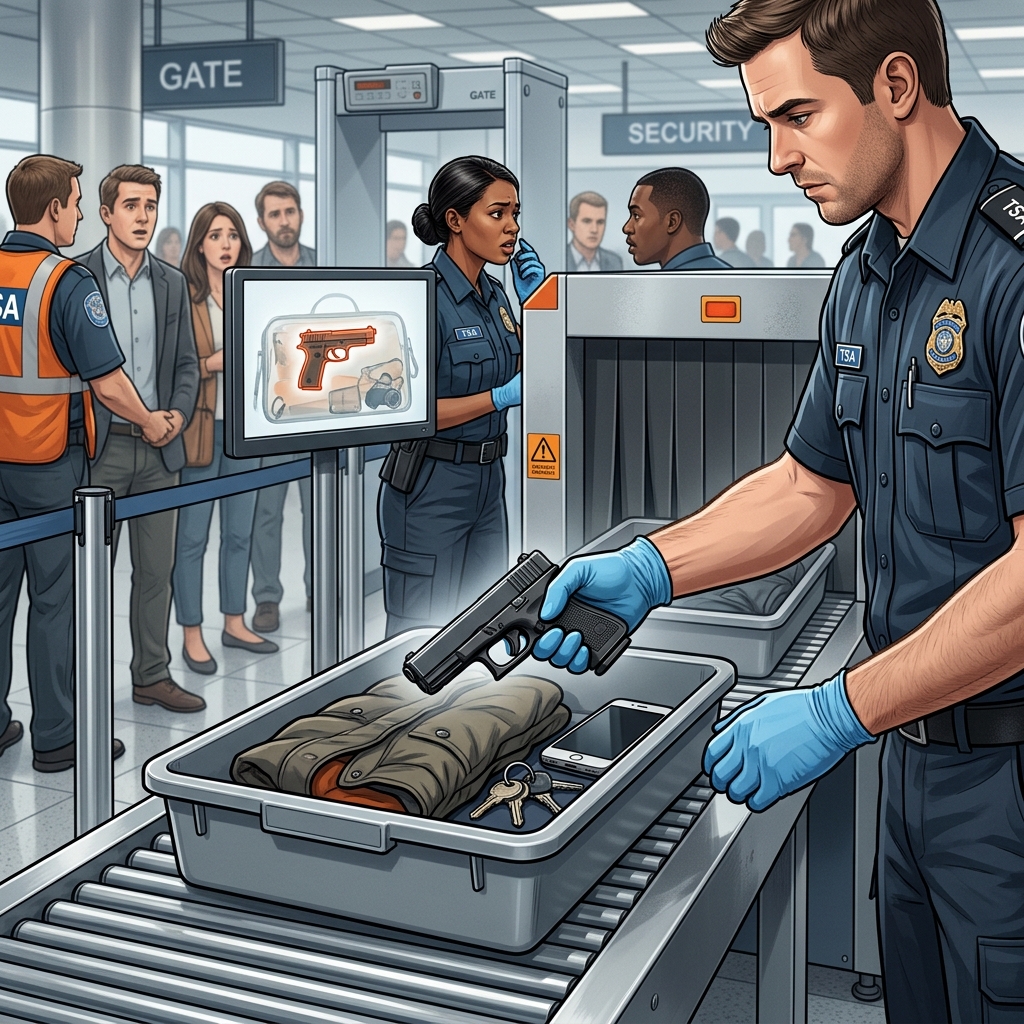
Incidents in which travelers are arrested for bringing guns to airports or onto airplanes are no longer rare. News reports have described cases where otherwise law‑abiding, older professionals, including lawyers in their sixties, were taken into custody after a loaded handgun was found at a checkpoint or discovered in carry‑on luggage once on board a flight. These events illustrate how quickly routine air travel can turn into a criminal investigation when a firearm is involved.
This article uses such cases as a jumping‑off point to explain why firearms at airports trigger serious legal consequences, what rules apply, and how even accidental violations can result in arrest, criminal charges, and substantial civil penalties.
Airports as Legally Sensitive Spaces
Airports are treated as especially sensitive locations under both federal and state law. Once a traveler approaches the security checkpoint, they are entering an area governed by strict prohibitions on weapons and controlled by the Transportation Security Administration (TSA). Any firearm near this secure zone, particularly in carry‑on bags or on a person, is likely to attract immediate law enforcement attention.
- Secure areas: Zones beyond security screening where only screened passengers and authorized staff may enter.
- Public areas: Ticketing halls, drop‑off lanes and some baggage claim areas where weapons laws still apply but may differ.
- Aircraft cabin: A highly regulated environment where unauthorized firearms are categorically prohibited.
Most state criminal codes adopt special rules for these locations. For example, Texas law makes it a felony to intentionally, knowingly, or recklessly bring a firearm into a secured area of an airport, regardless of whether the person holds a license to carry. Other states, such as North Carolina and Florida, likewise prohibit gun possession in passenger terminals except under narrow conditions.
How Gun Cases at Airports Typically Unfold
Although each incident involves unique facts, many airport firearms arrests follow a similar pattern. Understanding this sequence helps explain why seemingly minor oversights, like forgetting a gun in a carry‑on bag, can escalate rapidly.
Discovery of the Firearm
The process usually begins when a bag passes through an X‑ray machine or a traveler steps through a metal detector and triggers an alert. TSA personnel identify a suspicious shape or detect metal consistent with a weapon. They then stop the conveyor belt or the screening lane and call for a bag search.
When the firearm is found, TSA must notify airport law enforcement. At that point, TSA’s role shifts toward documentation and civil enforcement, while police officers or federal agents handle the criminal side, including potential arrest and questioning.
Immediate Detention and Questioning
The traveler is typically escorted away from the screening area to prevent further security disruption. Officers may question them about:
- Ownership of the weapon
- Whether the firearm was loaded
- Where it was stored and how it came to be in the bag or on their person
- Any relevant permits or licenses they hold
In some reported cases, older professionals—including attorneys—have insisted they simply forgot the gun was in their bag, or believed that a license to carry allowed them to bring a firearm on board. Despite such explanations, police often proceed with arrest because many statutes penalize possession in restricted areas regardless of intent.
Arrest and Booking
Once officers conclude that a violation has occurred, they may arrest the traveler on the spot. The individual is removed from the boarding process, taken to a local detention facility, and booked on state and sometimes federal charges.
While cases featuring elderly or professional defendants may garner media attention, the underlying legal framework applies to everyone. Age, occupation, or the absence of prior criminal history rarely prevents charges from being filed when a loaded gun is found at a checkpoint or on an aircraft.
Key Legal Rules Governing Guns in Airports
The rules that matter most in these situations fall into three broad categories: state weapons laws, TSA regulations, and airline policies.
State Criminal Laws
States typically criminalize possession of firearms in certain places, including airport terminals and secured areas. These laws operate independently of TSA rules.
| Jurisdiction (Example) | Typical Offense | Possible Penalty Range |
|---|---|---|
| Texas | Unlawful carrying of a weapon in a secured airport area | Third‑degree felony: roughly 2–10 years in prison and fine up to $10,000 |
| North Carolina | Possession of a firearm at the airport | Class 1 misdemeanor: up to 120 days in jail plus fines; federal conviction can add up to $100,000 and one year imprisonment |
| Florida | Gun possession inside passenger terminal | Range from second‑degree misdemeanor to third‑degree felony, with up to 5 years’ imprisonment for concealed, unlicensed carry |
These examples show that even when a person lawfully owns the gun, carrying it into a restricted part of an airport can still be a criminal offense. In some states, the law specifically notes that the offense applies whether the person acted knowingly or unknowingly, making “I forgot” an ineffective legal defense.
TSA Rules on Firearms
Separate from criminal law, TSA regulations govern how firearms may be transported on aircraft. TSA permits transportation of lawful firearms only in checked baggage, subject to strict conditions:
- The firearm must be completely unloaded.
- It must be locked inside a hard‑sided container that cannot be easily opened.
- The container must be placed in checked luggage, not carry‑on bags.
- The passenger must declare the firearm at check‑in with the airline.
TSA treats bringing an unloaded firearm with accessible ammunition to the checkpoint the same as bringing a loaded firearm, applying identical civil penalties. TSA can impose fines that, depending on the type of weapon and circumstances, range from around a few hundred dollars up to tens of thousands.
Airline Policies
Individual airlines also maintain their own policies on firearms. These policies typically:
- Reiterate TSA’s requirements for checked firearms.
- Prohibit any weapons in carry‑on luggage.
- Specify packaging rules for ammunition and accessories.
Violating airline rules may lead to denied boarding, forfeited tickets, and exclusion from frequent‑flyer programs, even if the traveler avoids criminal conviction. Airlines rely on TSA and local law enforcement to handle enforcement when firearms are detected, so a violation can quickly involve multiple entities.
What Happens After an Airport Gun Arrest?
Once a traveler is arrested for possessing a firearm at an airport, they face parallel processes: a criminal case and a civil enforcement action by TSA.
Criminal Prosecution
Prosecutors review police reports, TSA documentation, and any statements the traveler made to determine appropriate charges. Depending on the jurisdiction and facts, charges may include:
- Unlawful possession of a firearm in a prohibited place
- Carrying a concealed weapon without a valid permit
- Reckless endangerment or similar public safety offenses
Even in jurisdictions where first‑time, non‑violent offenders can sometimes receive probation instead of jail time, the mere existence of a firearm in a secure area can push prosecutors toward more serious treatment. In some states, convictions carry mandatory minimum prison sentences for weapons in secured airport zones.
TSA Civil Penalties
Separately, TSA assesses civil penalties based on factors such as:
- Whether the firearm was loaded
- Presence and accessibility of ammunition
- Prior incidents involving the same traveler
- Any aggravating behavior, such as attempting to conceal the weapon or refusing to cooperate
Civil fines can be substantial, reaching thousands or even tens of thousands of dollars in serious cases. TSA may also revoke trusted‑traveler privileges, such as eligibility for expedited screening.
Long‑Term Consequences
Beyond fines and jail exposure, airport gun arrests can have lasting effects:
- Criminal record that may affect employment, licensing, and professional reputation.
- Impact on firearm rights, especially if a felony conviction results.
- Travel complications, including heightened scrutiny at future screenings.
- Professional discipline for licensed professionals such as lawyers, doctors, or pilots.
Cases involving older professionals, including senior attorneys, highlight these risks; one widely reported incident involved a 65‑year‑old lawyer who was arrested for carrying a loaded handgun onto a commercial flight. Even if such individuals ultimately receive lenient sentencing, reputational damage can be significant and long‑lasting.
Licensed Gun Owners: Common Misunderstandings
Many airport gun arrests involve people who lawfully own their firearms and possess concealed carry permits. Misunderstandings about the scope of those permits often contribute to violations.
Permits Do Not Override Airport Restrictions
Concealed carry licenses authorize firearm possession in many public places but rarely in secured airport areas or aircraft cabins. For example, North Carolina and Florida law acknowledge that some individuals may have pistol purchase or concealed handgun permits, yet still prohibit them from bringing firearms into airport passenger terminals.
Florida law includes a narrow provision allowing licensed individuals to encase a firearm for shipment as checked baggage, explicitly stating that no one is prohibited from carrying a legal firearm into the terminal for the limited purpose of checking it as baggage. However, this does not allow the gun to remain on the person or in carry‑on bags.
“I Forgot It Was in My Bag”
Another recurring theme in media coverage is the claim that the gun’s owner forgot it was in the bag or assumed someone else had removed it. While such explanations may influence how prosecutors and judges view the case, they do not erase the statutory violation in many jurisdictions. Some state laws impose liability for knowingly or recklessly possessing a firearm in a secured airport area; packing a bag without checking for weapons can be viewed as reckless.
Preventive Steps for Gun Owners Who Travel
Gun owners who travel frequently can reduce the risk of airport incidents by taking simple precautions before they head to the terminal.
- Designate a travel‑only bag that never carries firearms or ammunition.
- Conduct a physical bag check before every trip, including all compartments.
- Review TSA guidelines and airline policies on firearms and ammunition before booking.
- Understand local law at both departure and destination airports, including prohibitions on weapons in passenger terminals.
- Store firearms separately from luggage that might be used for air travel.
For those who need to transport firearms legitimately—such as hunters, sports shooters, or law enforcement officers traveling on duty—advance planning is critical. Ensuring weapons are unloaded, properly encased in hard‑sided containers, placed only in checked baggage, and declared at check‑in helps avoid the kind of scenario that has led to arrests of older, otherwise law‑abiding travelers.
Frequently Asked Questions
Can I ever bring a gun into an airport terminal if I have a permit?
In many states, carrying a gun on your person inside a passenger terminal is prohibited, even with a permit. Some laws allow licensed individuals to bring a legally encased firearm into the terminal only for the purpose of checking it as baggage, not for carrying it through security or onto an aircraft.
What happens if TSA finds a gun in my carry‑on bag?
TSA will stop screening, secure the firearm, and notify airport law enforcement. You may be detained, questioned, and arrested under state weapons laws. TSA can also pursue civil penalties, with fines that escalate based on whether the weapon was loaded and other circumstances.
Are unloaded guns treated differently than loaded guns at checkpoints?
From TSA’s perspective, bringing an unloaded firearm with accessible ammunition to a checkpoint carries the same civil penalty as bringing a loaded firearm. Criminal charges may also be similar, since many statutes focus on the presence of the weapon in a restricted area rather than its loaded status.
Could I face federal charges for a gun at the airport?
Yes, in some cases. While many prosecutions occur under state law, federal authorities may pursue charges, particularly if a weapon is discovered on board an aircraft or used in connection with other federal offenses. In North Carolina, for example, a federal conviction tied to possession of a firearm at the airport can carry fines up to $100,000 and up to one year in prison.
Does my concealed carry permit protect me from arrest?
Generally, no. A permit does not authorize you to carry a firearm into a secured airport checkpoint or aircraft cabin. If a gun is found in these areas, you can still be arrested and charged, and TSA may impose fines regardless of your licensing status.
References
- Airport Gun Charges & Arrest — Cole Paschall Law. 2023-05-01. https://colepaschalllaw.com/fort-worth-airport-arrest-lawyer/airport-gun-charges-and-arrest/
- DFW Airport Weapons Charge Lawyer — Law Offices of Jeff C. Kennedy. 2022-09-15. https://www.criminallawyerfortworthtx.com/dfw-airport-weapons-charge-lawyer/
- Charlotte Possession of a Firearm at the Airport Lawyer — Barnett & Falls. 2021-11-10. https://www.barnettfalls.com/charlotte-possession-of-a-firearm-at-the-airport-lawyer/
- Sarasota Bradenton Airport Gun Possession Lawyer — The Law Place. 2022-04-20. https://www.thelawplace.com/areas-we-serve/sarasota-fl/gun-posession-at-bradenton-airport/
- Lawyer nabbed for having gun on plane — Portland Press Herald / Associated Press. 2012-01-19. https://www.pressherald.com/2012/01/19/lawyer-nabbed-for-having-gun-on-plane/
Similar Articles








Read full bio of Sneha Tete




