
Banning Tipping: Legal Hurdles and Business Impacts
Exploring the legal, economic, and practical barriers to eliminating tipping in U.S. service industries and what businesses need to know.
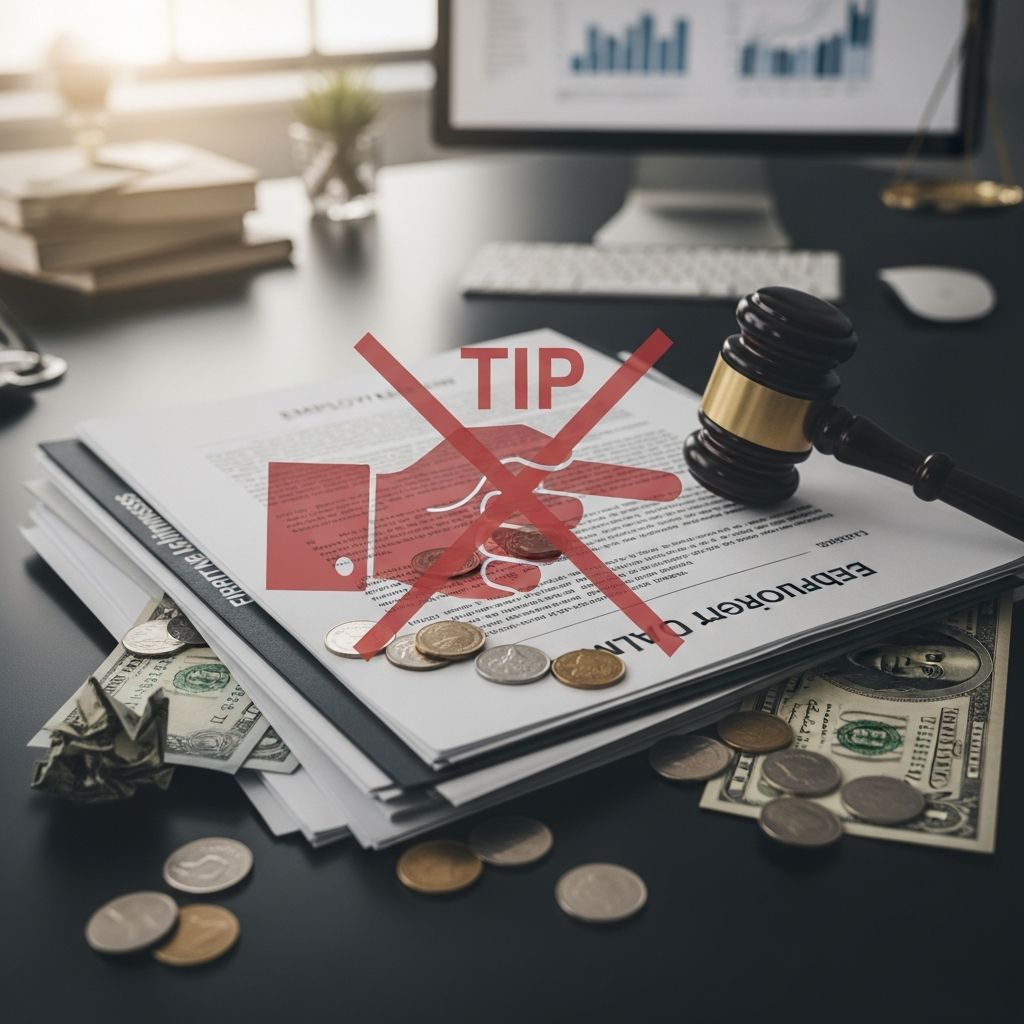
Tipping remains a cornerstone of the U.S. service economy, but calls to ban it grow amid debates over fair wages and customer expectations. Businesses considering no-tip policies face complex legal landscapes shaped by federal and state regulations.
Historical Efforts to Eliminate Tipping in America
In the early 20th century, tipping faced widespread opposition as un-American and classist. Originating from European customs post-Civil War, it clashed with American ideals of equality, prompting organized resistance.
The Anti-Tipping Society of America, founded in 1904 in Georgia, rallied 100,000 members to boycott gratuities for a year. Restaurants displayed signs rejecting tips as foreign to U.S. values. This sentiment escalated into legislation: seven states enacted bans between 1909 and 1915.
- Washington (1909): Classified tipping as a misdemeanor.
- Iowa (1915): Imposed fines or up to 30 days imprisonment for accepting tips.
- Arkansas: Fined waitstaff $10 for gratuities.
- South Carolina, Tennessee, Mississippi, and Georgia followed with similar measures targeting ‘commercial bribes.’
These laws crumbled quickly. By 1919, Iowa’s Supreme Court deemed its statute unconstitutional, influencing repeals elsewhere. By 1926, all were gone, rarely enforced even before. Racial dynamics fueled some opposition, as white patrons resisted compensating Black workers post-slavery, though not advocating living wages.
Federal Framework: FLSA and the Tipped Wage System
The Fair Labor Standards Act (FLSA) of 1938 set the federal minimum wage but excluded restaurant workers, legalizing tip-only pay. Today, employers can pay tipped employees $2.13 hourly, claiming a ‘tip credit’ to reach $7.25 minimum if tips suffice.
Key FLSA rules include:
- Tip credit applies only if employees retain all tips or pool with other tipped staff.
- Employers paying full minimum wage can include non-tipped employees in pools (post-2018 amendments).
- 80/20 rule: No more than 20% of time on non-tipped duties for credit eligibility.
Violations trigger back wages and penalties. Service charges may count as tips if distributed to workers, but mandatory fees risk wage theft claims if not covering minimums.
State Variations in Tipping Regulations
Tipping laws differ sharply by state, complicating nationwide bans. Some abolish tip credits, mandating full minimum wage plus tips.
| State Category | Tip Credit Allowed | Direct Wage Example | Key Notes |
|---|---|---|---|
| No Tip Credit (e.g., CA, NY, WA) | No | $16+ hourly (varies) | |
| Full Tip Credit (e.g., TX, GA) | Yes | $2.13 federal min | Employer covers shortfall. |
| Partial Credit (e.g., FL) | Yes | $9.98 (2025 est.) | Balances state min with tips. |
California bans employer tip retention and credit card fee deductions from tips. Multi-state operators must comply per location, heightening ban challenges.
Constitutional and Contractual Barriers to Bans
A private business banning tipping internally faces few legal hurdles if transparently disclosed, but enforcement issues arise. Customers can’t be forced to accept no-tip policies if expecting gratuities, risking disputes or boycotts.
Legally, tips are voluntary gifts, not enforceable. Banning receipt might violate contracts if employment agreements imply tip access. Courts could view unilateral bans as wage reductions, breaching implied covenants.
Anti-discrimination risks exist: if tipping disproportionately disadvantages minorities (as historically), neutral no-tip policies might face disparate impact suits under Title VII. Though untested, experts warn of class-action potential.
Recent Legislative Moves and Tax Incentives
Instead of bans, reforms target tipped wages. The No Tax on Tips Act (S.129, 119th Congress, intro. 2025) offers up to $25,000 deduction for reported cash tips in customary occupations, excluding high earners (>$160K). It expands employer credits for payroll taxes on beauty service tips.
States push subminimum wage elimination, entitling tipped workers to full minimums. These preserve tipping while boosting security.
Pros and Cons of Eliminating Tipping
Businesses weigh ban benefits against risks.
Advantages
- Simplified payroll: Predictable labor costs via higher base wages.
- Reduced wage theft disputes over tip pools.
- Attracts workers seeking stability over variable income.
- Streamlined pricing: Higher menu prices absorb wages transparently.
Disadvantages
- Price hikes: 20-30% increases to offset tip averages, alienating customers.
- Cultural pushback: Diners expect tips; bans may drive traffic loss.
- Staff retention: Top performers earning $30+/hour via tips may leave.
- Legal exposure: Pooling errors or credit miscalculations invite DOL audits.
Practical Steps for No-Tip Implementations
Successful transitions require planning:
- Price Adjustments: Raise rates 20-25% upfront, market as ‘service-inclusive.’
- Employee Buy-In: Offer base wage hikes matching average tips; use profit-sharing.
- Customer Communication: Train staff, post signage: ‘Fair wages included—no tipping necessary.’
- Compliance Audit: Consult counsel on FLSA/state laws; track hours for 80/20.
- Pilot Test: Trial in one location before scaling.
Chains like some upscale spots have thrived sans tips by emphasizing value.
Potential for Nationwide Change
Full bans unlikely soon, given cultural entrenchment and enforcement failures. Momentum favors wage floors over abolition. DOL oversight ensures tip protections, but businesses pioneering no-tip models influence trends.
Global contrasts: Europe mandates service charges; Japan shuns overt tips. U.S. hybrid could emerge via tech (auto-gratuities) or unions.
Frequently Asked Questions
Can a business legally ban tipping?
Yes, private firms can policy against tips if wages meet minimums and disclosed clearly, but state laws vary.
What happens if tips fall short of minimum wage?
Employers must cover the difference via tip credit rules.
Are tip pools mandatory?
No, but if used without tip credit, can include back-of-house staff.
Does banning tips affect taxes?
No-tip wages are standard income; reported tips qualify for new deductions.
Why did early anti-tipping laws fail?
Courts ruled unconstitutional, poor enforcement, and cultural acceptance.
References
- Why Does America Tip so Much? 7 States Once Tried to Ban Tipping — Business Insider. 2023-05. https://www.businessinsider.com/america-tips-so-much-hates-it-once-banned-7-states-2023-5
- S.129 – No Tax on Tips Act — Congress.gov. 2025-01-16. https://www.congress.gov/bill/119th-congress/senate-bill/129
- Tipping Laws by State Library — Tiphaus. Accessed 2026. https://www.tiphaus.com/resources/tip-regulations-by-state/
- Are Tips Illegal in the United States? — Morgan & Morgan (For The People). 2025-04-25. https://www.forthepeople.com/blog/are-tips-illegal-united-states/
- Gratuity — Wikipedia. Accessed 2026. https://en.wikipedia.org/wiki/Gratuity
- Tip Regulations under the Fair Labor Standards Act (FLSA) — U.S. Department of Labor. Accessed 2026. https://www.dol.gov/agencies/whd/flsa/tips
Similar Articles








Read full bio of Sneha Tete


