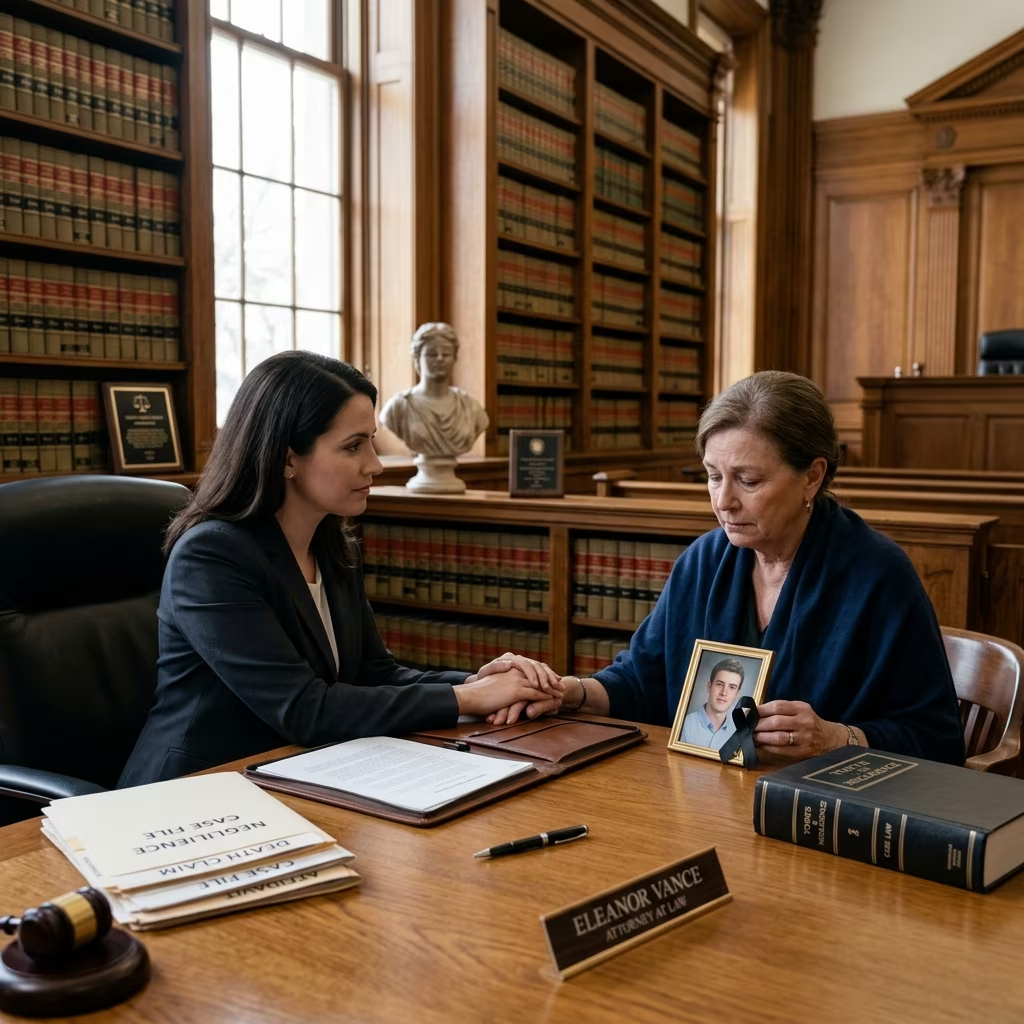
The sudden death of a loved one due to another party’s negligence is both emotionally devastating and legally complex. In addition to grief, families often face urgent questions about accountability, financial stability, and how to navigate the legal system. This guide explains the key legal concepts, practical steps, and timelines involved when you suspect a wrongful death caused by negligence.
Understanding Negligent Death and Wrongful Death Claims
When someone dies because another person or entity failed to act with reasonable care, the law typically treats the case as a wrongful death caused by negligence. A wrongful death claim is a civil lawsuit designed to compensate surviving family members and the deceased’s estate for the losses caused by that death.
What Is Negligence?
In most jurisdictions, negligence is a failure to exercise the level of care that a reasonably prudent person would use under similar circumstances. To prove negligence in a wrongful death case, the plaintiff must usually establish four elements:
- Duty of care — The defendant had a legal obligation to act reasonably to prevent harm (for example, a driver’s duty to follow traffic laws).
- Breach of duty — The defendant acted or failed to act in a way that violated that duty (such as speeding, ignoring safety protocols, or providing substandard medical care).
- Causation — The breach of duty directly contributed to or caused the death.
- Damages — The death resulted in measurable losses, including financial costs and non-economic harms such as loss of companionship.
Together, these elements form the foundation of most wrongful death claims. If any element cannot be established, the claim may fail.
Common Situations That May Lead to Wrongful Death Claims
Negligent deaths can arise in many contexts. Examples frequently seen in legal practice include:
- Motor vehicle collisions involving drunk, distracted, or reckless drivers
- Medical malpractice, such as misdiagnosis or failure to provide appropriate treatment
- Unsafe workplaces where employers ignore safety regulations
- Defective products, including malfunctioning machinery or unsafe consumer goods
- Dangerous property conditions, such as unmaintained premises leading to fatal falls
In any of these situations, the key question is whether the deceased would have had a valid personal injury claim if they had survived. If so, their death may give rise to a wrongful death claim on behalf of their estate and family.
Immediate Practical Steps After a Suspected Negligent Death
In the days and weeks following a loss, families understandably focus on funeral arrangements and emotional support. Still, certain immediate actions help protect both your legal rights and long-term financial stability.
1. Secure Official Documentation
Obtaining accurate records early is critical. These documents often become central pieces of evidence:
- Death certificate — This official record usually lists the cause and manner of death, which can support future legal and insurance claims.
- Medical records — Hospital charts, physician notes, and test results may reveal whether appropriate care was provided.
- Accident reports — Police reports, workplace incident records, or other official documentation can capture key facts and witness information.
Maintain multiple certified copies of the death certificate, as many institutions — including insurers, probate courts, and financial institutions — require them.
2. Preserve Evidence As Early As Possible
Evidence can be lost, altered, or destroyed over time. The sooner you act, the stronger your case may be. Consider documenting the following:
- Photographs and videos of the accident scene, vehicles, or hazardous conditions
- Contact information and written statements from witnesses
- Correspondence with employers, property owners, or medical providers
- Receipts and records of expenses, including medical bills, funeral costs, and travel
- Employment and income records showing loss of financial support
If necessary, an attorney can request preservation of surveillance footage, company records, or other materials that might otherwise be overwritten or discarded.
3. Protect Communication with Insurance Companies
Insurance adjusters often contact family members shortly after a death. Although they may sound sympathetic, their primary duty is usually to minimize payouts. Legal practitioners frequently advise victims to avoid detailed conversations or recorded statements without counsel:
- Do not sign releases or accept settlement offers before understanding the full scope of your losses.
- Politely refer adjusters to your attorney once you are represented.
- Keep written records of all communications with insurance companies.
Early settlements can be much lower than what families are legally entitled to receive, particularly before the long-term impact of the death is fully understood.
Who Is Allowed to Bring a Wrongful Death Claim?
Each state determines who has the legal right to file a wrongful death lawsuit and how any recovery is distributed. Although rules differ, several patterns are common across U.S. jurisdictions.
Personal Representative and Beneficiaries
In many states, the claim must be filed by the personal representative (executor or administrator) of the deceased’s estate. That representative may be:
- An executor named in the will
- An administrator appointed by the probate court when there is no will
- Another qualified person designated by law
Although the personal representative files the lawsuit, specific family members — such as spouses, children, or parents — are usually identified as beneficiaries who receive compensation from any settlement or verdict.
Typical Family Members Who May Benefit
State laws often prioritize close family relationships. Depending on local statutes, potential beneficiaries may include:
- Spouses or domestic partners
- Children, including adopted children and, in some states, stepchildren
- Parents of the deceased, particularly when the person was unmarried or had no children
- Other relatives if closer family members do not exist, according to state intestacy rules
Because eligibility rules are technical and vary significantly, consulting with a lawyer is usually necessary to determine who is entitled to participate in a claim and how any recovery will be divided.
Key Legal Deadlines: Statutes of Limitations
Wrongful death claims are subject to strict time limits known as statutes of limitations. A statute of limitations is the legal deadline for filing a lawsuit; missing it can permanently bar your claim, regardless of its merit.
| Jurisdiction Example | Standard Time Limit | Notes |
|---|---|---|
| Many U.S. states | 1–3 years from date of death | General range for filing wrongful death lawsuits. |
| South Dakota (example) | 3 years from date of death | Strict deadline; filing after three years usually bars the claim. |
| Oregon (example) | 3 years from injury causing death | Special shorter notice requirements for claims against public entities. |
Because some states base deadlines on the date of injury rather than the date of death, and special rules may apply to claims involving government bodies, it is important to seek legal advice as soon as possible.
Types of Damages in Wrongful Death Cases
The purpose of a wrongful death lawsuit is not to put a price on a person’s life, but to provide financial support and recognize the losses experienced by the survivors. Damages in these cases are often divided into economic and non-economic categories.
Economic Losses
- Final medical expenses incurred before death
- Funeral and burial costs or memorial services
- Lost income that the deceased would likely have earned in the future
- Loss of benefits such as health insurance or retirement contributions associated with employment
These losses are typically calculated using documentation such as wage statements, tax returns, medical bills, and invoices.
Non-Economic Losses
- Loss of companionship and consortium for spouses or partners
- Loss of parental guidance and care for children
- Emotional pain and suffering experienced by surviving family members
Although non-economic damages are more difficult to quantify, they reflect some of the most profound consequences of a negligent death. Courts and juries may consider the closeness of relationships, the age of the deceased and survivors, and the specific impact on the family’s life.
Working with a Wrongful Death Attorney
Wrongful death cases require a detailed understanding of negligence law, procedural rules, and evidentiary standards. Families are rarely expected to handle these complex claims alone. Attorneys focus on both building a strong case and shielding families from additional stress.
How Attorneys Help Build the Case
A lawyer experienced in wrongful death matters will typically:
- Conduct a thorough investigation into the circumstances of the death
- Gather and analyze evidence, including expert opinions when needed
- Identify all potentially liable parties, such as individuals, employers, or manufacturers
- Calculate damages to reflect both current and future losses
- File all required court documents within legal deadlines
- Negotiate with insurance companies and defendants for a fair settlement
If negotiations fail, the attorney may take the case to trial, presenting evidence and arguing on behalf of the family before a judge or jury.
Choosing Legal Representation
When selecting counsel, families may wish to consider:
- Experience with wrongful death and serious injury cases
- Familiarity with local courts and procedural rules
- Communication style and willingness to explain complex issues
- Fee structure, such as contingency arrangements where the lawyer is paid only if the case succeeds
Many law firms offer free initial consultations, allowing families to understand their options without immediate financial pressure.
Emotional and Practical Considerations Alongside Legal Action
Legal action is only one part of coping with a negligent death. Families face emotional, financial, and logistical challenges that intersect with the legal process.
Balancing Grief and Legal Responsibilities
Grieving while managing paperwork, court deadlines, and financial matters can feel overwhelming. Entrusting much of the legal process to a representative — whether a personal representative of the estate or an attorney — can reduce the burden and allow families to focus on healing.
Financial Planning After a Loss
Even before a wrongful death claim is resolved, families may need to:
- Review insurance coverage, including life insurance and survivor benefits
- Assess household budgets and long-term financial obligations
- Consult financial advisors about managing any settlement or judgment funds responsibly
Coordination between legal and financial professionals helps ensure that any recovery supports long-term stability.
Frequently Asked Questions
How do I know if my loved one’s death qualifies as wrongful death?
If another party’s negligent or intentional act contributed to the death, it may qualify as wrongful death. A useful starting point is asking whether the deceased would have had a personal injury claim if they had survived. If the answer is yes, a wrongful death claim might be available for the benefit of their family.
Is a criminal case required before I can file a wrongful death lawsuit?
No. Wrongful death lawsuits are civil actions and can proceed regardless of whether prosecutors bring criminal charges. In some cases, both civil and criminal proceedings occur in parallel, but the standards of proof and goals (punishment vs. compensation) differ.
What level of proof is needed to win a wrongful death case?
In most civil wrongful death cases in the United States, the standard is a preponderance of the evidence. This means showing that it is more likely than not that the defendant’s negligence caused the death and resulting losses.
Can I still bring a claim if time has passed since the death?
Possibly, depending on how much time has passed and the statute of limitations in your jurisdiction. Many states allow between one and three years to file, while others provide longer or shorter windows. Because missing the deadline can permanently bar the claim, it is important to consult an attorney quickly to assess your specific situation.
What if multiple parties contributed to the death?
It is common for more than one party to bear responsibility. For example, a driver and a vehicle manufacturer, or a physician and a hospital, might both be liable. The law in many states allows claims against all negligent parties, and courts can allocate fault among them according to evidence.
Will pursuing a wrongful death claim affect my benefits or employment?
Wrongful death claims generally focus on the liability of the party or parties who caused the death and do not directly affect unrelated employment or benefits. However, if the death occurred at work, there may be interactions with workers’ compensation systems and employer-provided benefits. An attorney can explain how these systems intersect in your specific case.
References
- Legal Options After Negligence Causes Wrongful Death — Ben Crump Law. 2023-05-10. https://bencrump.com/legal-options-after-negligence-causes-wrongful-death-2/
- How to Prove Negligence in a Wrongful Death Case — ChasenBoscolo Injury Lawyers. 2022-08-15. https://www.chasenboscolo.com/blog/how-to-prove-negligence-in-a-wrongful-death-case/
- How Wrongful Death Impacts Surviving Family Members — Turbak Law Office. 2022-11-03. https://www.turbaklaw.com/blog/wrongful-death-impact-on-family/
- Steps To Take After Losing A Loved One Due To Negligence — Kruger & Hodges Attorneys at Law. 2023-01-20. https://kva-law.com/steps-to-take-after-losing-a-loved-one-due-to-negligence/
- Oregon Wrongful Death Lawyer: A Guide for Grieving Families — Johnson Law, P.C. 2023-02-14. https://johnsonlaw.com/practice-areas/wrongful-death
- What to Do If You Suspect Wrongful Death: Legal Steps for Families — Bendell Law Firm. 2023-03-09. https://www.bendelllawfirm.com/what-to-do-if-you-suspect-wrongful-death-legal-steps-for-families/