
Key Contract Essentials Every Signer Should Review
Learn the practical elements, risk points, and review steps that matter most before you sign any business or personal contract.
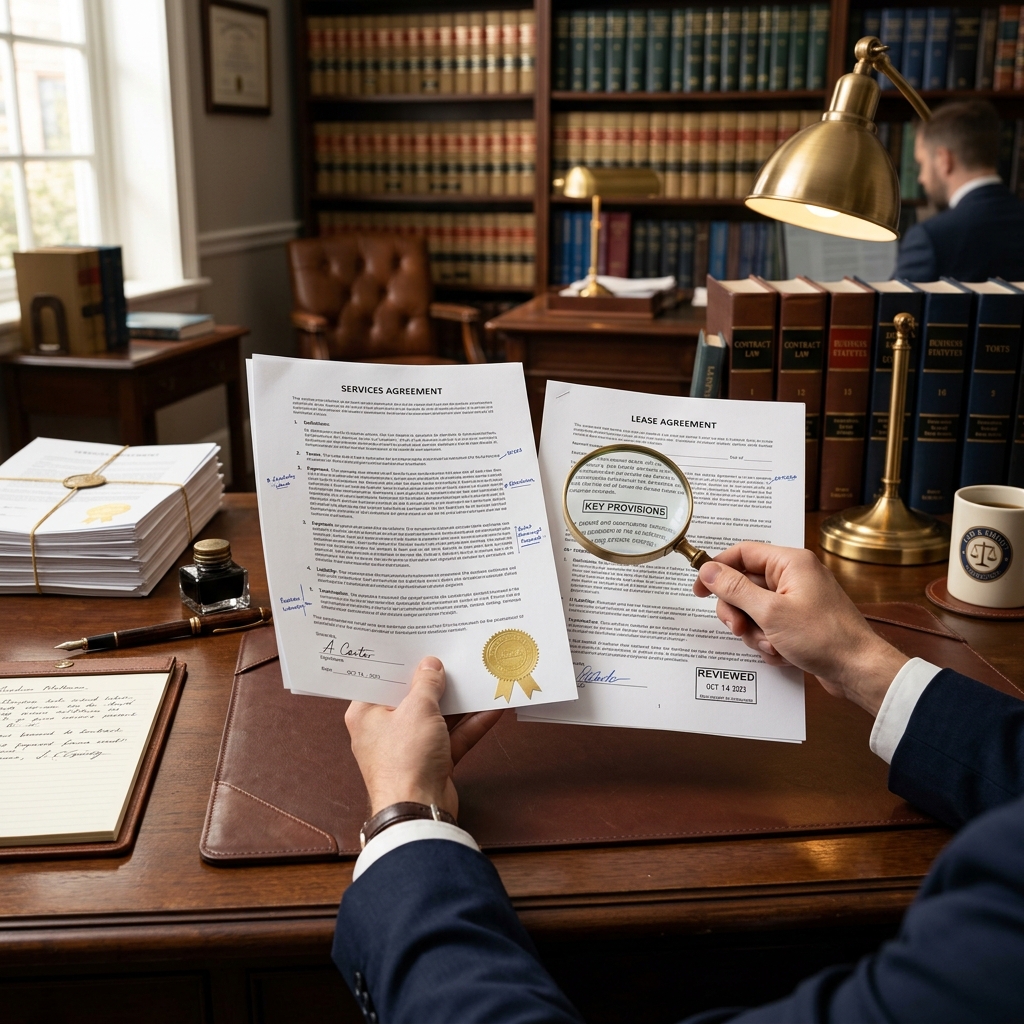
Contracts shape business deals, employment relationships, leases, service arrangements, and countless other transactions. Yet many people sign agreements they only skim, trusting that standard language must be harmless. Taking time to review your next contract carefully can significantly reduce risk, prevent misunderstandings, and make enforcement easier if something goes wrong.
This guide explains core contract elements, the clauses that deserve special attention, and practical steps to follow before you sign. It draws on widely recognized principles of contract law and best practices used by experienced lawyers and institutions.
Understanding What Makes a Contract Enforceable
Before you worry about the fine print, it helps to know what makes a contract legally enforceable in the first place. Modern contract law generally recognizes several essential elements:
- Offer – One party presents clear terms showing what they will do or provide.
- Acceptance – The other party agrees to those terms, usually by signing or performing as required.
- Consideration – Each side gives something of value (money, services, goods, promises) in exchange.
- Awareness or “meeting of the minds” – Both parties understand they are entering an agreement and consent to be bound by it.
- Capacity – The parties have legal ability to contract (for example, not minors and not mentally incompetent).
- Legality – The subject of the agreement is lawful in the relevant jurisdiction.
If any of these elements is missing, the contract may be hard to enforce. When reviewing a draft, ask yourself whether each of these points is clearly satisfied. If you are unsure, that is a strong signal to consult an attorney.
Why Clear, Plain Language Matters
Legal agreements used to be full of dense phrases, Latin terms, and complex sentence structures. Today many lawyers and courts favor plain, straightforward language because it reduces disputes about what a clause means and makes the parties’ obligations easier to understand.
When you read a contract:
- Watch for overly long or complicated sentences, especially those with multiple exceptions or double negatives.
- Highlight any terms you do not recognize or find confusing and ask for clarification in writing.
- Prefer wording that states obligations and rights directly, rather than heavily qualified language that can be interpreted in several ways.
If a key clause feels ambiguous, you should assume that ambiguity could be used against you later. Clear wording protects both parties and often makes litigation less likely.
Setting Objectives, Deliverables, and Scope
Every contract is ultimately about an exchange: money, work, property, or other value. The agreement should spell out exactly what each party is expected to do and what they will receive in return.
Before signing, confirm that the contract accurately reflects:
- The purpose of the arrangement – What business or personal objective are you trying to achieve?
- Scope of work or services – Tasks, milestones, or outputs should be specific and measurable.
- Deliverables – Physical goods, reports, software, or other items should be described with enough detail that you can tell whether they were delivered correctly.
- Timelines and deadlines – Start dates, completion dates, renewal periods, and key milestones must be consistent throughout the document.
- Pricing and payment terms – The amount, payment schedule, and any late fees or discounts should be clear and aligned with your expectations.
Ambiguous or vague performance expectations often lead to conflict. If you cannot easily explain the contract’s obligations to a colleague who has not seen the agreement, the language is likely too unclear.
Core Clauses You Should Carefully Review
Beyond the basic business terms, most contracts include a set of legal clauses that affect risk, liability, and how disputes are handled. Reading these provisions closely is crucial.
Termination and Renewal Terms
Termination clauses describe when and how the parties can end the relationship. Renewal clauses explain whether and how an agreement continues beyond the initial term.
- Check for automatic renewal provisions and the notice you must give to prevent renewal.
- Confirm the termination rights of each party, such as termination for convenience, for cause, or upon certain events.
- Look for any fees or penalties associated with early termination.
Default and Remedies
Most contracts explain what happens if one party fails to meet their obligations. These sections might be labeled “default,” “breach,” or “remedies.”
- Understand what constitutes a default and whether there is a cure period to fix problems before stronger remedies apply.
- Review the available remedies, such as damages, refunds, specific performance, or termination.
- Note any limitations of liability that cap the amount one party can recover.
Force Majeure and Unforeseen Events
A force majeure clause addresses what happens when extraordinary events beyond the parties’ control make performance impossible or extremely difficult, such as natural disasters, war, or government restrictions.
- Check which events are listed and whether epidemics, supply chain disruptions, or technology outages are included.
- Confirm what obligations are suspended and for how long if a force majeure event occurs.
- Determine whether either party can terminate the contract if the disruption persists.
Recent global events have shown how important it is to understand how your contracts handle disruptions. A narrow clause may leave you exposed, while an overly broad clause could excuse performance too easily.
Understanding Parties, Capacity, and Signatures
Even a perfectly drafted contract can fail if the wrong person signs or if the parties are not clearly identified. Misidentification can create enforcement problems and confusion about who is responsible for obligations.
- Verify the legal names of the parties, including corporate entities, and ensure they match any registration or official records.
- Confirm that the person signing on behalf of an organization has authority to bind that entity.
- Include titles or roles next to signatures to clarify capacity (for example, “Chief Financial Officer”).
Where capacity is uncertain—such as agreements involving minors, cross-border contracts, or complex corporate structures—legal advice is particularly important.
Practical Steps for a Thorough Contract Review
Many institutions use formal checklists for reviewing contracts to ensure consistency and reduce risk. You can adapt similar processes for your own agreements.
Step-by-Step Review Process
- Read the entire document from start to finish to understand the overall structure and intent.
- Highlight unclear language and note any terms that do not match the business discussion or your expectations.
- Check definitions and cross-references to make sure terms are used consistently and that referenced sections exist.
- Confirm dates, numbers, and names, looking for errors that could change obligations or costs.
- Review attachments, schedules, and incorporated documents, including any online terms referenced by hyperlink.
- Identify missing provisions such as dispute resolution, governing law, or confidentiality, if those are important for your situation.
Common Red Flags During Review
The following issues often signal that a contract needs revision or expert input:
- Unusually broad indemnity clauses that shift significant risk onto one party.
- Strict limitations of liability that exclude almost all damages, including direct losses.
- Liquidated damages provisions that impose large pre-set penalties.
- Exclusivity requirements that restrict your ability to work with other partners or suppliers.
- Significant obligations described only in external documents that can change without your consent.
Comparing Key Business and Legal Terms
| Aspect | Business Terms | Legal Terms |
|---|---|---|
| Primary focus | Price, scope of work, deliverables, timelines, service levels | Liability, dispute resolution, governing law, termination, remedies |
| Main risk | Paying too much or receiving too little | Unexpected legal exposure, difficult enforcement, unfavorable forum |
| Typical review owner | Business team or project owner | Legal counsel or risk/compliance team |
| Review approach | Compare against deal expectations and budget | Check consistency with law, policy, and risk appetite |
When to Involve Legal and Subject-Matter Experts
Not every contract requires a lawyer, but some situations make professional advice highly advisable. Complex commercial arrangements, high-value deals, cross-border transactions, and agreements with unusual risk allocations often benefit from expert review.
You may want to consult:
- Contract or commercial lawyers for interpretation of legal clauses, negotiation strategies, and alignment with local law.
- Industry specialists when the agreement involves technical requirements, regulatory issues, or specialized services.
- Risk or compliance professionals in organizations that must meet internal standards or regulatory obligations.
Experts can clarify how standard certain provisions are in your industry, which terms are negotiable, and how to adjust language to better match your goals.
Maintaining a Deliberate Contract Lifecycle
Contracts should not be rushed. A disciplined approach to drafting, reviewing, negotiating, signing, and storing agreements helps organizations avoid costly mistakes later.
To manage the contract lifecycle effectively:
- Allow sufficient time for internal review and external feedback before signing.
- Document all requested changes and keep a clear record of revisions.
- Ensure the final version signed by both parties matches the version that was approved internally.
- Store executed copies securely and track renewal and expiration dates.
Returning to a contract with fresh eyes after initial review often reveals issues you missed the first time. Many experienced practitioners recommend setting the document aside and then reviewing it again before finalizing.
Frequently Asked Questions
Do I need a lawyer for every contract?
Not every agreement requires legal counsel, but you should strongly consider it for high-value transactions, complex commercial deals, cross-border contracts, or documents with unfamiliar clauses. A lawyer can explain the legal effect of provisions and suggest changes that better protect your interests.
What is the most important part of a contract to read?
The entire contract matters, but you should pay particular attention to the scope of work, pricing and payment terms, termination rights, remedies for nonperformance, limitations of liability, and any force majeure or dispute resolution clauses.
Can unclear language make a contract unenforceable?
Ambiguous wording can make it harder to enforce a contract and may lead courts to interpret terms against the party that drafted the agreement. Clear language improves enforceability and reduces the likelihood of disputes over meaning.
Why do contracts include force majeure clauses?
Force majeure clauses allocate risk when extraordinary events beyond the parties’ control prevent or delay performance. They are intended to protect parties from liability in circumstances such as natural disasters, war, or government actions that make performance impossible or impracticable.
What should I do if I find a mistake in a draft contract?
Identify the error clearly, propose corrected language, and ensure the change is incorporated into the next draft. Before signing, confirm that all corrections appear in the final version, as even small mistakes can alter obligations or create ambiguity.
References
- The essential elements of a contract — Thomson Reuters. 2021-03-10. https://legal.thomsonreuters.com/blog/the-essential-elements-of-a-contract/
- The 6 Essential Elements of a Contract — DocuSign. 2022-06-15. https://www.docusign.com/blog/the-6-essential-elements-contract
- A Guide for Reviewing Contracts — United Educators / Pepperdine University. 2017-01-01. https://community.pepperdine.edu/hr/content/forms/united_educators_checklist_guide_for_reviewing-contracts.pdf
- 7 Contract Review Tips & Complete Contract Review Checklist — Malbek. 2023-05-02. https://www.malbek.io/blog/7-tips-for-reviewing-contracts
- Reviewing Contracts: 6 Things To Look For — Sivia Law Firm. 2020-09-14. https://www.sivialaw.com/reviewing-contracts-6-things-to-look-out-for
- Five Things To Look for in Your Next Contract — Super Lawyers. 2019-11-20. https://www.superlawyers.com/resources/contracts/five-things-to-look-for-in-your-next-contract/
Similar Articles








Read full bio of medha deb


