
Juvenile vs. Adult Criminal Courts: Key Legal Differences
Explore how juvenile proceedings differ from adult criminal cases in goals, procedures, rights, and long‑term consequences.
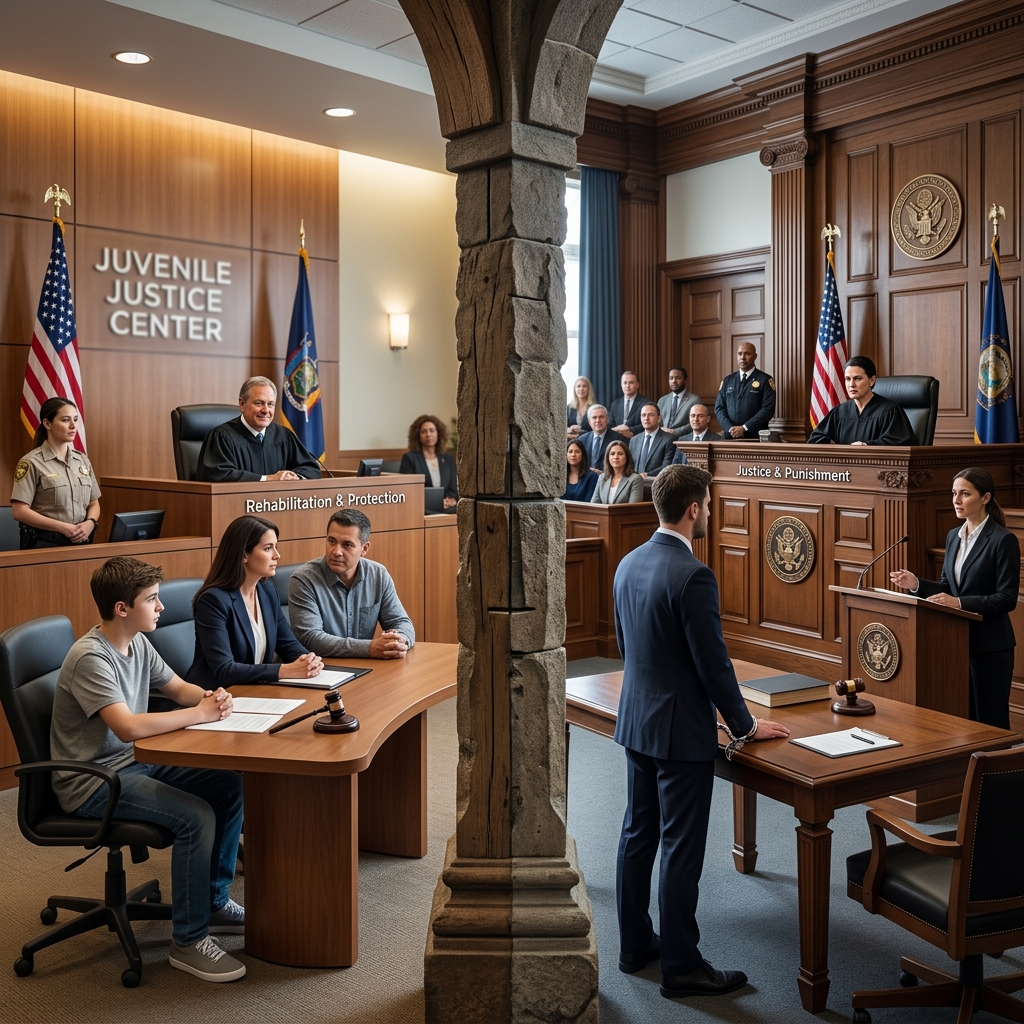
When a young person is accused of breaking the law, the case may go through a juvenile court instead of an adult criminal court. Although both systems address unlawful behavior, they operate under very different philosophies, rules, and procedures. Understanding these differences is essential for parents, youth, and anyone facing charges or supporting a young person through the process.
This guide explains how juvenile proceedings differ from adult criminal prosecutions, focusing on goals, terminology, courtroom process, legal rights, records, and the circumstances under which youth can be tried as adults.
1. Two Systems, Two Core Purposes
The most fundamental distinction between juvenile and adult courts lies in their purpose.
1.1 Purpose of the Juvenile Justice System
The modern juvenile justice system was created to respond to youth offending with an emphasis on rehabilitation, accountability, and developmentally appropriate support rather than purely punitive sanctions.
- Rehabilitation first: Juvenile courts aim to help young people change their behavior and successfully re-enter their communities.
- Balanced objectives: Many state laws describe juvenile justice goals as balancing public safety, youth development, and accountability to victims and the community.
- Developmental focus: Policies recognize that adolescents are still maturing mentally, emotionally, and socially, and thus respond differently to interventions than adults.
As a result, juvenile judges typically consider factors such as family circumstances, school performance, and prior involvement with the justice system when determining an appropriate response.
1.2 Purpose of the Adult Criminal Justice System
Adult criminal courts are primarily designed to determine guilt and impose punishment for violations of criminal law.
- Punitive focus: Sentencing in adult court often centers on incarceration, fines, and other penalties designed to punish and deter criminal conduct.
- Limited rehabilitation emphasis: While some correctional programs offer treatment and education, rehabilitation is not the core legal purpose of adult courts.
- Public accountability: Proceedings are generally open to the public, with outcomes forming part of a permanent criminal record.
| Feature | Juvenile Court | Adult Criminal Court |
|---|---|---|
| Primary Goal | Rehabilitation and reintegration | Punishment and deterrence |
| Typical Outcomes | Supervision, services, treatment, limited confinement | Incarceration, fines, probation, long-term sanctions |
| View of Offender | Developing youth capable of change | Legally responsible adult |
2. Age, Jurisdiction, and Who Qualifies as a Juvenile
Whether a case belongs in juvenile or adult court depends heavily on the age of the accused and state law defining juvenile jurisdiction.
2.1 Age Boundaries of Juvenile Court
In most jurisdictions in the United States, juvenile courts have jurisdiction over individuals who were under a specified age when they committed the alleged offense—commonly under 18.
- As of 2019, the upper age for delinquency prosecution in juvenile court was 17 in the great majority of states, with a few states using 16 as the cutoff.
- Many states allow youth to remain under juvenile court supervision until approximately age 21 in certain circumstances.
- Separate rules often apply to “status offenses” (such as truancy), with upper age limits typically around 17 or 18.
The age at which a person is automatically subject to adult criminal court is often called the age of criminal responsibility or age of majority.
2.2 Transfer to Adult Court
Even when an individual is legally a juvenile, certain serious cases can be transferred to adult court. Policies vary but usually consider factors such as the youth’s age, offense seriousness, prior record, and perceived risk to public safety.
- Judicial waiver: A juvenile court judge may have authority to send a case to adult court after a hearing.
- Prosecutorial direct file: In some jurisdictions, prosecutors can file eligible cases directly in adult court.
- Statutory exclusion: Certain offenses or age combinations are automatically excluded from juvenile court and must be handled in adult court.
Research indicates that transferring youth to adult court can be associated with higher recidivism and other negative outcomes compared with handling similar cases in juvenile court, underscoring the importance of these decisions.
3. Language, Labels, and How Cases Are Described
Juvenile and adult systems use different terminology to describe similar stages and outcomes, reflecting their divergent philosophies.
3.1 Common Juvenile Court Terms
- Delinquent act: The juvenile equivalent of a criminal offense.
- Petition: A formal request asking the juvenile court to determine whether a youth committed a delinquent act.
- Adjudication: A hearing where the judge decides whether the allegations are proven; youth are not “found guilty” but may be adjudicated delinquent.
- Disposition: The stage at which the court orders services, supervision, or sanctions.
3.2 Common Adult Criminal Court Terms
- Charge or indictment: The formal criminal accusation.
- Trial: A formal proceeding, often with a jury, to decide guilt or innocence.
- Conviction: A finding that the defendant is guilty of the charged offense.
- Sentence: The punishment imposed, which may include prison, probation, fines, or other penalties.
These language differences matter because they affect how young people are perceived by courts, schools, employers, and the community. “Delinquent” status is generally treated differently than a criminal conviction, especially in terms of long‑term consequences.
4. Court Procedures: What Happens in Each System
Juvenile proceedings and adult criminal trials share some basic elements—such as presenting evidence and questioning witnesses—but they differ in structure, formality, and participants.
4.1 Typical Juvenile Court Process
While procedures vary by state, many juvenile cases follow a similar sequence:
- Intake or screening: Authorities review the case and may choose to divert the youth to community programs instead of formally filing charges.
- Informal resolution options: For less serious matters, youth may receive warnings, referrals to counseling, or agreements to complete specific tasks such as community service or apology letters.
- Adjudication hearing: A judge hears evidence and determines whether the allegations are true, in a process that resembles but is generally less formal than an adult trial.
- Disposition hearing: If the youth is adjudicated delinquent, the court decides on appropriate measures, often combining supervision with services or treatment.
Parents or guardians typically play an active role, being notified of proceedings and often involved in court‑ordered interventions such as family therapy.
4.2 Typical Adult Criminal Court Process
Adult criminal cases usually follow a more rigid and public process:
- Arrest and charging: Law enforcement and prosecutors file formal charges based on alleged criminal conduct.
- Arraignment and pretrial hearings: The accused is informed of charges, enters a plea, and may litigate issues such as bail or evidence admissibility.
- Trial: The case is presented either to a judge (bench trial) or a jury, which determines guilt beyond a reasonable doubt.
- Sentencing: If convicted, the court imposes a penalty, often guided by statutory ranges and sentencing guidelines.
5. Rights and Protections for Youth vs. Adults
Historically, juvenile courts were informal and did not always provide the same constitutional protections as adult criminal proceedings. This changed significantly after key Supreme Court decisions, especially In re Gault, which recognized that youth in delinquency cases must receive many of the same due process rights as adults.
5.1 Core Rights in Juvenile Proceedings
According to constitutional standards and modern practice, youth in juvenile delinquency hearings generally have:
- Right to counsel: Access to an attorney to advise, advocate, and protect their legal interests.
- Right to notice of charges: Written notice of the alleged delinquent acts sufficiently in advance of a hearing.
- Right to confront and cross‑examine witnesses: Ability to challenge the testimony against them.
- Privilege against self‑incrimination: Protection from being compelled to testify against themselves.
Many states also recognize additional rights specific to youth, such as access to education and developmentally appropriate treatment while in custody.
5.2 Rights in Adult Criminal Court
Adults accused of crimes have a broad range of constitutional protections, including:
- Right to a jury trial in most serious criminal cases.
- Right to counsel when incarceration is a possible outcome.
- Protection against unreasonable searches and seizures and against cruel and unusual punishment.
- Rights to due process, including notice of charges, opportunity to defend, and fair procedures.
One notable procedural difference is that juveniles often do not have a right to a jury trial; adjudication is typically conducted by a judge alone.
6. Privacy, Records, and Long‑Term Consequences
Another key distinction is how each system treats records and public access to information. This has major implications for a young person’s future opportunities.
6.1 Confidentiality in Juvenile Proceedings
Juvenile courts generally prioritize privacy:
- Closed hearings: Juvenile proceedings are often closed to the general public to protect the youth’s identity.
- Limited disclosure: Juvenile records are typically confidential and accessible only to specific agencies or individuals.
- Expungement options: Many states allow juvenile records to be sealed or expunged after a set period, especially when the youth does not reoffend.
Because of these protections, involvement in juvenile court may have less impact on future schooling, employment, and housing than an adult criminal record, though consequences can still be significant.
6.2 Public Nature of Adult Criminal Records
Adult court operates with far less privacy:
- Public hearings: Adult criminal proceedings are generally open to the public and often reported in media and online court systems.
- Permanent records: Convictions commonly remain on an individual’s criminal record and can be accessed by employers, landlords, and licensing boards.
- Collateral consequences: Adult convictions may affect voting rights, eligibility for certain jobs, professional licenses, public benefits, and immigration status.
These differences underscore why families and attorneys often work to keep youth in the juvenile system whenever legally possible.
7. Types of Dispositions and Sentences
Juvenile courts and adult courts have different tools available when responding to offenses, which reflects the systems’ contrasting goals.
7.1 Juvenile Court Dispositions
Juvenile courts can impose a wide range of consequences, often individually tailored:
- Verbal warnings or formal reprimands.
- Community service or restitution to victims.
- Counseling, mentoring, or family‑based therapy.
- Participation in educational, vocational, or behavioral programs.
- Probation with conditions such as school attendance, curfew, or treatment participation.
- Placement in residential treatment or juvenile facilities, sometimes up to age 21 depending on the jurisdiction.
Juvenile courts typically do not use mandatory minimum sentences, allowing judges flexibility to craft responses that match the youth’s needs and risks.
7.2 Adult Court Sentences
Adult criminal courts rely more heavily on standardized punishment:
- Incarceration in jail or prison.
- Fines and restitution.
- Probation with conditions such as treatment, work requirements, or geographic restrictions.
- Mandatory minimum sentences for certain offenses in some jurisdictions.
Unlike juvenile dispositions, adult sentences are generally focused on punishment, deterrence, and public safety, with less emphasis on individualized treatment.
8. Role of Families and Community Supports
Family involvement is a defining trait of juvenile proceedings; parents and guardians are usually central to both the process and the response plans.
8.1 Families in Juvenile Court
Juvenile systems often expect family participation because youth depend on adults for stability, support, and supervision.
- Parents are notified of charges and court dates and are encouraged—or required—to attend hearings.
- Court‑ordered interventions may include family therapy or parenting programs to address underlying issues.
- Youth may be released to parents or guardians instead of detained, depending on risk and circumstances.
8.2 Families in Adult Court
In adult court, the defendant is treated as fully responsible for their own actions and compliance. Family members may provide support but do not have a formal legal role in the process.
9. Practical Implications: Why These Differences Matter
The distinctions between juvenile and adult proceedings are more than technical. They shape outcomes, opportunities, and long‑term trajectories for young people.
- Risk of reoffending: Evidence suggests youth handled in juvenile courts often fare better, with lower recidivism than similarly situated youth tried as adults.
- Access to education and treatment: Juvenile systems more consistently provide schooling and therapeutic services tailored to adolescents.
- Future opportunities: Confidential records and expungement options can reduce barriers in adulthood, whereas adult convictions can limit education, employment, and housing prospects.
- Developmental impact: Placement in adult facilities can expose youth to greater violence and negative influences, while age‑appropriate juvenile programs aim to support healthy development.
10. Frequently Asked Questions (FAQs)
10.1 Is juvenile court always better for youth than adult court?
Juvenile courts are generally designed to better serve youth through rehabilitation and tailored interventions, and research often finds better outcomes than when youth are treated as adults. However, juvenile systems vary in quality, and some critics highlight issues such as inconsistent services or inadequate protections. The specific circumstances of the case and the jurisdiction’s resources matter greatly.
10.2 Can a juvenile ever get a jury trial?
In most jurisdictions, juveniles do not have a right to a jury trial in delinquency proceedings, and adjudication is conducted by a judge. There are limited exceptions depending on state law, but bench hearings are the norm.
10.3 Do juvenile records disappear automatically when the youth turns 18?
No. While juvenile records are often confidential and some states provide mechanisms to seal or expunge them, this usually requires meeting specific conditions and sometimes filing legal requests. Simply reaching adulthood does not guarantee that records vanish.
10.4 What does “adjudicated delinquent” mean?
“Adjudicated delinquent” refers to a court finding that a youth committed the alleged delinquent act. It is roughly analogous to a conviction in adult court but is used only in juvenile proceedings and carries different legal and social implications.
10.5 When can a juvenile be tried as an adult?
Youth may be tried as adults in serious cases, often involving violent felonies or repeat offending. Whether this occurs depends on state law, prosecutorial decisions, and judicial rulings. Factors frequently considered include the youth’s age, offense seriousness, prior record, and amenability to rehabilitation.
References
- Youth in the Justice System: An Overview — Juvenile Law Center. 2023-05-10. https://jlc.org/youth-justice-system-overview
- Age Boundaries of the Juvenile Justice System — Office of Juvenile Justice and Delinquency Prevention (OJJDP). 2021-11-01. https://ojjdp.ojp.gov/model-programs-guide/literature-reviews/age-boundaries-of-the-juvenile-justice-system
- Youth Courts vs. Adult Courts: Why the Juvenile Justice System Works Better — The Sentencing Project. 2023-02-15. https://www.sentencingproject.org/policy-brief/youth-courts-vs-adult-courts-why-the-juvenile-justice-system-works-better
- Youth in the Justice System: An Overview (Gault decision discussion) — Juvenile Law Center. 2023-05-10. https://jlc.org/youth-justice-system-overview
- Juvenile vs Adult Court Key Differences — New Jersey Children's Mental Health Organization. 2022-09-20. https://njcmo.org/services/court-involvement/how-juvenile-court-differs-from-adult-criminal-court/
- What are the Differences Between Adult and Juvenile Courts? — Proper Defense Law Firm. 2021-06-01. https://properdefenselaw.com/what-are-the-differences-between-adult-and-juvenile-courts/
- Should Youth Be Charged as Adults in the Criminal Justice System? — American Bar Association. 2018-09-01. https://www.americanbar.org/groups/litigation/resources/newsletters/childrens-rights/should-juveniles-be-charged-adults-criminal-justice-system/
Similar Articles








Read full bio of Sneha Tete




