
How to Report a Crime or File a Complaint with U.S. Authorities
Understand when, where, and how to report crimes, civil rights violations, and government misconduct to the appropriate U.S. authorities.
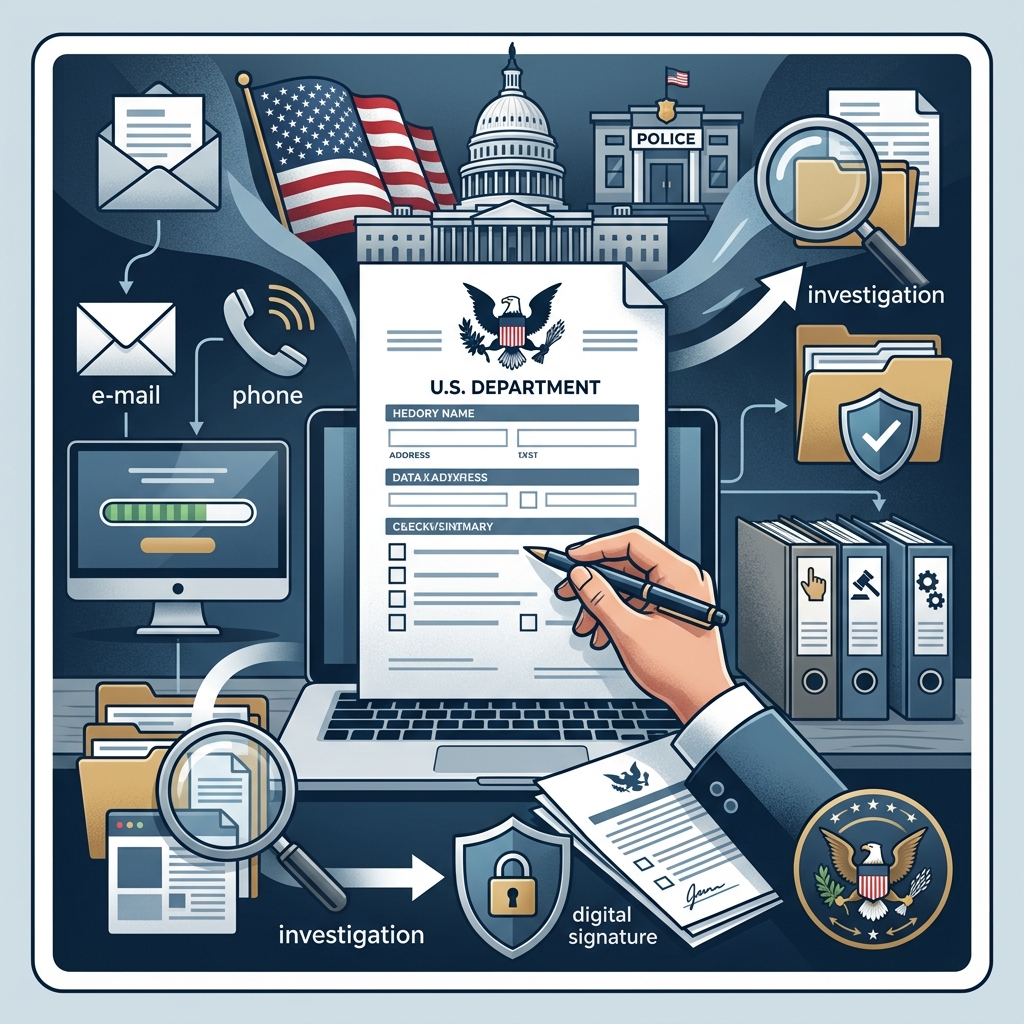
Knowing how to report a crime or submit a complaint is essential for protecting yourself, your community, and your rights. In the United States, different agencies handle different types of crimes and misconduct, and choosing the correct channel can significantly affect how quickly and effectively your issue is addressed. This guide explains when to call 911, when to contact local police or federal agencies, and how to report civil rights violations, cybercrime, fraud, and government misconduct.
1. First Step: Decide If It Is an Emergency
The most important decision is whether the situation is an immediate emergency. This determines whether you should call 911 or use another reporting option.
1.1 When to Call 911
Dial 911 for urgent situations where people or property face an immediate threat. Emergency operators can dispatch police, fire, or medical services and coordinate with other agencies when federal crimes are involved.
- Ongoing violent assaults or domestic violence
- Active robbery, burglary, or home invasion
- Gunfire, explosives, or arson in progress
- Serious injuries or medical emergencies
- Threats involving terrorism or weapons where danger is imminent
In any situation where you believe someone is in immediate danger, calling 911 is the safest and fastest way to seek help.
1.2 When Not to Call 911
Some crimes and complaints are serious but not urgent. These are more appropriately reported through non-emergency numbers, online forms, or dedicated hotlines.
- Crimes discovered after the fact (e.g., property damage or theft where no one is currently at risk)
- Cybercrime and online fraud without an immediate physical threat
- Pattern of discrimination or civil rights violations
- Government misconduct or administrative issues
Using non-emergency channels for these issues helps keep 911 available for people in life-threatening situations while still ensuring your complaint is properly recorded and investigated.
2. Local vs. Federal Reporting: Who Handles What?
The United States uses a layered system of law enforcement. Local police handle most common crimes, while federal agencies such as the Department of Justice (DOJ) and the Federal Bureau of Investigation (FBI) address violations of federal law, large-scale schemes, and specific categories of crime.
| Type of Issue | Primary Contact | Typical Examples |
|---|---|---|
| Local crime / immediate danger | 911 or local police department | Assault, burglary, vandalism, neighborhood disturbance |
| Federal crime or multi-state scheme | FBI or relevant DOJ component | Organized fraud, terrorism, human trafficking, large-scale corruption |
| Civil rights violation | DOJ Civil Rights Division portal | Discrimination in policing, housing, education, public services |
| Cyber-enabled crime | Internet Crime Complaint Center (IC3) | Online scams, hacking, account takeover, ransomware |
| Government misconduct within DOJ | DOJ Inspector General or Office of Professional Responsibility | Waste, fraud, abuse, or ethical violations by DOJ employees |
Understanding this division helps you aim your report at the agency best positioned to investigate and act.
3. Reporting Common Crimes and Threats
Many crimes fall into everyday categories like violent crime, property crime, or threats against specific groups. The Department of Justice provides multiple entry points to make reporting more direct for these situations.
3.1 Violent Crime and General Criminal Activity
For most violent or serious crimes, you will start with local law enforcement. However, the FBI also accepts tips related to federal offenses, organized schemes, and threats that cross state or national borders.[10]
- Use 911 for immediate threats or ongoing violence.
- Contact your local police department’s non-emergency number for non-urgent reports.
- Submit an online tip to the FBI for suspected federal crimes, terrorism-related information, or organized criminal activity that may involve multiple states or countries.[10]
3.2 Crimes Against Children
Crimes targeting children, including exploitation or abduction, are treated with particular urgency. The Justice Department directs many of these reports to specialized organizations.
- Contact local law enforcement immediately if a child is missing or in danger.
- Report online exploitation or suspected trafficking involving minors to the National Center for Missing & Exploited Children (NCMEC), which forwards reports to law enforcement.
Specialized centers work closely with the DOJ and state agencies to rapidly respond to these cases.
3.3 Domestic Violence and Human Trafficking
Victims of domestic abuse and trafficking often face significant barriers to reporting. Confidential hotlines and federal resources are designed to provide both safety and information.
- Contact 911 if you or someone else is in immediate danger due to domestic violence.
- Use national domestic violence hotlines for confidential help, safety planning, and referrals.
- Report suspected human trafficking to the National Human Trafficking Hotline, which coordinates with federal and local authorities.
These hotlines provide crisis counseling, connect victims with shelters and services, and help law enforcement understand the scope of trafficking and abuse.
4. Reporting Cybercrime and Online Fraud
Cyber-enabled crime—such as phishing, online fraud, identity theft, and ransomware—has grown dramatically. The Internet Crime Complaint Center (IC3), operated by the FBI and DOJ, serves as the main federal intake point for these complaints.
4.1 When to Use IC3
You should file a complaint with IC3 if a crime involves the internet or computer systems as a significant component.
- Online investment, romance, or charity scams
- Phishing emails or messages that led to loss of money or data
- Unauthorized access to accounts or devices
- Business email compromise and invoice fraud
- Ransomware, data breaches, or extortion using digital means
IC3 collects complaints, aggregates data, and shares reports with law enforcement agencies nationwide, increasing the likelihood of identifying patterns and perpetrators.
4.2 Information to Include in a Cybercrime Complaint
When filing with IC3 or any cybercrime reporting tool, detailed information helps analysts understand what happened.
- Dates and times of suspicious activity
- Email addresses, websites, phone numbers, or social media profiles involved
- Amounts of money lost, if any
- Copies or screenshots of emails or messages (with sensitive information redacted)
- Steps you took after the incident, such as contacting your bank or changing passwords
While IC3 may not respond to each individual report, your complaint contributes to investigations and public alerts about emerging threats.
5. Reporting Civil Rights Violations
The DOJ Civil Rights Division enforces laws that protect people from discrimination and violations of constitutional rights in areas such as policing, housing, voting, disability access, education, and public accommodations.
5.1 What Counts as a Civil Rights Violation?
Not every unfair or unpleasant experience is a civil rights violation, but federal law prohibits specific types of discrimination and misconduct.
- Discriminatory treatment based on race, color, national origin, sex, religion, disability, age, or other protected characteristics
- Misconduct or excessive force by police or correctional staff
- Denial of reasonable disability accommodations in public places or programs
- Harassment or exclusion in schools, housing, or public services because of protected traits
- Retaliation for reporting discrimination or exercising legal rights
These issues can be reported directly to the DOJ through its civil rights reporting portal.
5.2 How to File a Civil Rights Complaint with DOJ
You can submit a complaint online or by mail, describing the discrimination or violation you experienced or observed.
- Online portal: The DOJ civil rights reporting portal guides you through a series of questions to categorize your complaint and collect essential details.
- Mail-in form: Printed forms can be mailed to the DOJ Civil Rights Division in Washington, D.C. for those who prefer or need a paper format.
Typical information requested includes:
- Your contact information (you may file anonymously, but then DOJ cannot follow up with you directly)
- The location of the incident, such as the name and address of a facility or organization
- What happened, including dates and a detailed description in your own words
- The characteristics (such as disability, race, gender, or religion) that you believe motivated the discrimination
- Any steps you already took, such as internal grievance or complaint processes
DOJ staff review complaints to determine whether federal civil rights laws apply and, if so, how best to respond.
6. Reporting Government Misconduct, Waste, and Fraud
Public trust depends on government employees and agencies using resources responsibly and acting ethically. The Department of Justice and its independent oversight offices accept complaints about misconduct, waste, fraud, and abuse within the DOJ and related programs.
6.1 Types of Misconduct You Can Report
Internal reporting mechanisms focus on behavior by federal officials and recipients of federal funds, rather than private citizens.
- Misuse of federal funds or resources
- Fraud in grant programs or contracts
- Abuse or unethical conduct by DOJ employees
- Violation of civil liberties by law enforcement or correctional staff
- Professional misconduct by attorneys working for DOJ
Complaints may go to the DOJ Office of the Inspector General, the Office of Professional Responsibility, or specialized units depending on the allegations.
6.2 How to Submit a Misconduct or Fraud Complaint
For misconduct involving DOJ personnel or programs, you can typically report through online forms, hotlines, or written submissions. The DOJ Action Center page directs you to specific options for:
- Reporting waste, fraud, abuse, or misconduct in DOJ operations
- Reporting violations of civil rights or civil liberties by government officials
- Filing complaints against recipients of DOJ financial assistance, such as grant-funded programs, if they discriminate or misuse funds
These reports help oversight offices detect patterns, conduct investigations, and recommend corrective actions or discipline.
7. Preparing an Effective Crime or Complaint Report
Whether you are contacting local police, the FBI, IC3, or the DOJ Civil Rights Division, clear and specific information makes your report more useful. While every agency has its own form or process, several best practices apply across the board.
7.1 Key Details to Gather Before Reporting
Take time, when safe to do so, to write down or collect relevant facts.
- Who was involved (people, organizations, online identities)
- What happened (describe the actions or omissions in plain language)
- When the incident occurred (date, time, and whether it is ongoing)
- Where it happened (physical location or online platform)
- How you were affected (financial loss, physical harm, rights violated)
Agencies often advise complainants to focus on concrete facts rather than legal interpretations; investigators will determine which laws may apply.
7.2 Protecting Your Safety and Privacy
Reporting crime or misconduct can be stressful, particularly if the person or entity you are reporting has power over you. Consider the following:
- Ask whether you can file anonymously or keep your contact information confidential.
- Use secure devices and networks, especially when reporting cybercrime.
- Seek guidance from victim assistance organizations or legal advocates if you worry about retaliation.
- Save copies of your submission and any confirmation numbers for your records.
If your safety is at risk, prioritize emergency services and trusted support organizations before filing detailed complaints.
8. Frequently Asked Questions (FAQs)
8.1 Can I report a crime anonymously?
Many law enforcement agencies and hotlines allow anonymous tips. Local police often accept anonymous information by phone or online, and federal tip forms may permit you to omit identifying details.[10] However, if you remain anonymous, authorities may not be able to follow up with you for clarification.
8.2 What if the crime happened in another city or state?
If the emergency is happening now, you should contact the local law enforcement agency in the location where the incident is occurring. For non-emergency crimes in another jurisdiction, you can search for that area’s police department or sheriff’s office and file a report directly with them.
8.3 Will the DOJ or FBI investigate every complaint?
DOJ and FBI staff review submissions to determine whether a complaint falls within their jurisdiction and meets enforcement priorities. Not every report leads to a full investigation, but complaint data informs broader enforcement strategies and may be combined with other reports to identify patterns.
8.4 How do I know which federal agency to contact?
As a general rule, the DOJ Action Center and USA.gov guidance suggest starting with local law enforcement for immediate threats and then using specialized federal tools for civil rights, cybercrime, and fraud. If you are unsure, you can submit a tip to the FBI or contact the DOJ, and they may redirect your complaint to the appropriate office.
8.5 What happens after I file a civil rights complaint?
The Civil Rights Division reviews complaints to determine whether federal civil rights laws apply and whether further action is warranted. Possible responses include opening an investigation, referring you to another agency, requesting more information, or, in some cases, deciding not to pursue the matter. Even when DOJ cannot take direct action, your report helps inform its understanding of civil rights issues nationwide.
References
- Report a Crime or Submit a Complaint — U.S. Department of Justice. 2024-03-15. https://www.justice.gov/action-center/report-crime-or-submit-complaint
- Report a crime — USA.gov. 2023-08-01. https://www.usa.gov/report-crime
- Contact the Department of Justice to report a civil rights violation — U.S. Department of Justice Civil Rights Division. 2024-02-20. https://civilrights.justice.gov/report/
- Filing a Complaint with U.S. Department of Justice (DOJ) for Criminal Legal System Issues — Disability Rights North Carolina. 2022-11-10. https://disabilityrightsnc.org/resources/filing-a-complaint-with-u-s-department-of-justice-doj-for-criminal-legal-system-issues/
- Home Page – Internet Crime Complaint Center (IC3) — FBI/IC3. 2024-04-05. https://www.ic3.gov/
- Electronic Tip Form — Federal Bureau of Investigation. 2023-09-12. https://www.fbi.gov/tips
- Criminal Division — U.S. Department of Justice. 2023-05-30. https://www.justice.gov/criminal
Similar Articles








Read full bio of medha deb




