
How to File Complaints About Prisons in the U.S.
Learn the step-by-step process to complain about local, state, and federal prisons and seek help for unsafe or unlawful conditions.
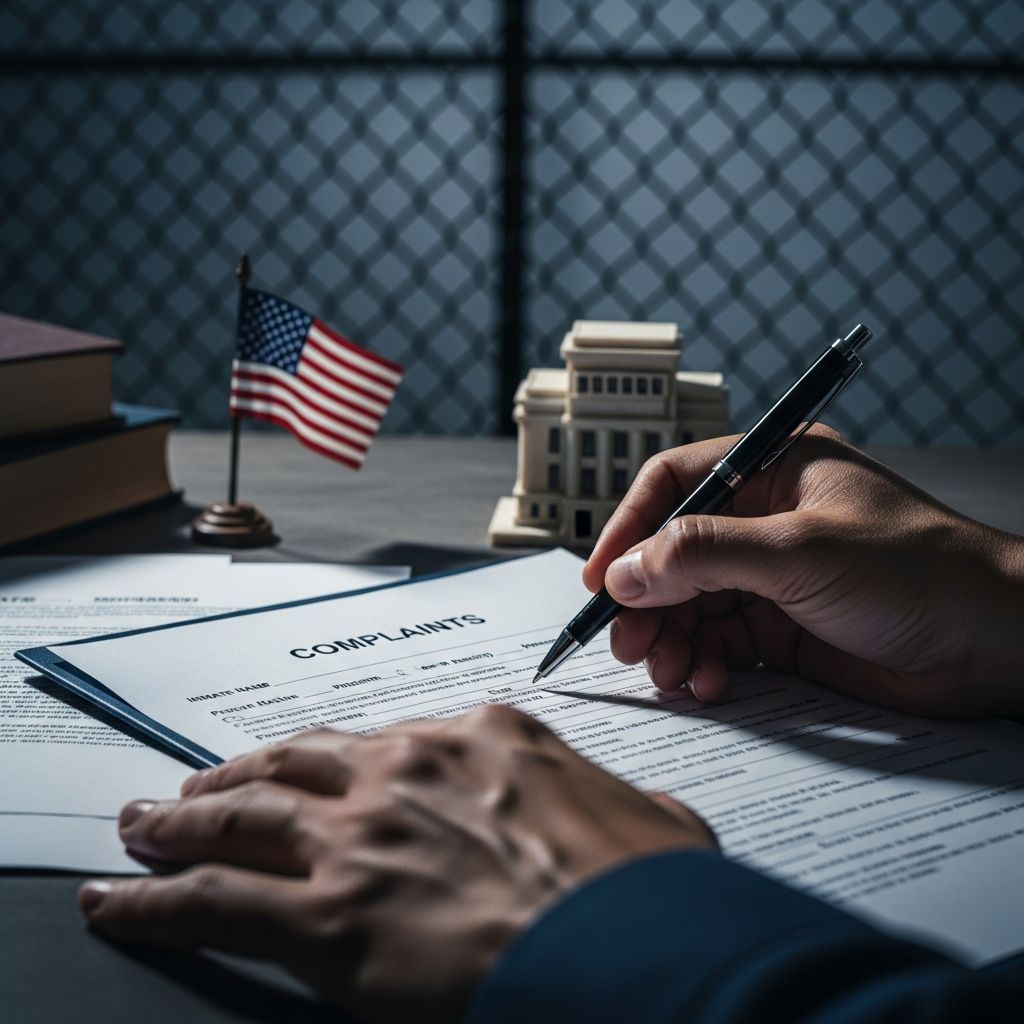
People in custody, as well as their families and advocates, often need to report unsafe conditions, abuse, or violations of rights in U.S. prisons and jails. This guide explains how to raise concerns about local, county, state, and federal prisons, what agencies handle complaints, and when to seek legal or civil rights remedies.[10]
1. Understanding Who Oversees Different Types of Prisons
The correct place to file a complaint depends on the type of facility and which level of government runs it.[10]
- Local or county jails – Operated by city or county governments, often under a sheriff or local corrections department.
- State prisons – Run by a state department of corrections or similar state agency.
- Federal prisons – Operated by the Federal Bureau of Prisons (BOP)
- Private prisons – Sometimes contracted by state or federal authorities, but complaints still usually go through the contracting government agency.
Before filing, try to confirm who has legal authority over the prison, because that determines which complaint paths are available.
2. Common Reasons to Complain About a Prison
Complaints can cover a wide range of issues related to the treatment and safety of incarcerated people.
- Unsafe or unsanitary living conditions (e.g., overcrowding, lack of heat or ventilation, pests).
- Physical, sexual, or verbal abuse by staff or other incarcerated people.
- Denial of medical, mental health, or disability-related care.
- Retaliation for using the grievance process or speaking to lawyers or advocates.
- Discriminatory treatment based on race, religion, disability, or other protected characteristics.
- Improper use of segregation, restraints, or force.
- Restrictions on mail, visitation, or access to the courts that violate policy or law.
When possible, document specific dates, times, names, and locations related to the problem. Detailed, factual descriptions typically receive more focused review.
3. Local, County, and State Prisons: Starting With Internal Grievances
Most local jails and state prisons require people in custody to use the internal grievance or complaint system before outside agencies will step in. This is also crucial because a federal law, the Prison Litigation Reform Act (PLRA), generally requires incarcerated people to exhaust internal remedies before bringing many federal lawsuits.
3.1 Typical Internal Grievance Steps
Every facility’s rules are different, but many follow a similar pattern.
- Informal complaint – Telling a staff member or supervisor about the problem and asking for a solution, sometimes in writing.
- Formal written grievance – Filling out a grievance form or written complaint according to the jail or prison’s policy.
- Administrative appeal – If the prisoner disagrees with the response, they may appeal to a higher-level official within the facility or department.
3.2 Information to Include in a Grievance
Clear, organized information makes it easier for prison officials and outside agencies to evaluate a complaint.
- Date and approximate time of the incident.
- Location within the facility (unit, cell block, medical, yard, etc.).
- Names or descriptions of staff or witnesses involved, if known.
- What happened, described in neutral but detailed language.
- What harm occurred or could occur (physical, medical, safety, property, rights).
- What resolution is requested (medical attention, transfer, policy change, investigation, etc.).
3.3 Tips for Using Jail or Prison Grievance Systems
- Act quickly – Many systems have strict deadlines for filing after an incident (for example, a few days or weeks).
- Follow all steps – Complete each level of the process, including appeals, if available, to meet PLRA exhaustion requirements.
- Keep copies – Save copies or handwritten notes of each grievance, response, and appeal whenever possible.
- Avoid threats or abusive language – Respectful, factual wording reduces the risk of disciplinary charges and helps agencies take the complaint seriously.
4. Escalating Complaints About State Prisons
If the internal process does not resolve the problem, there are often ways to raise the issue to higher state-level offices.
4.1 State Department of Corrections or Oversight Units
Many states allow people to complain directly to the state department of corrections or a central grievance or ombuds office after local remedies are used.
- Central offices may review whether prison staff followed policies and state law.
- Some states have independent bodies such as a corrections ombuds or inspector general that investigate patterns of abuse or serious incidents.
- Family members and advocates may be able to submit complaints on behalf of incarcerated people, depending on state rules.
4.2 State-Level Civil Rights and Legal Options
In addition to internal and oversight channels, some issues may violate state constitutions, disability laws, or other protections.
- State civil rights agencies or attorneys general offices sometimes review complaints alleging discrimination or systemic abuse.
- Legal aid organizations or private attorneys can help evaluate whether conditions may support a lawsuit in state court.
- Even when a lawsuit is possible, courts often check that internal and administrative steps were followed first because of the PLRA.
5. Complaining About Federal Prisons
For facilities run by the Federal Bureau of Prisons (BOP), both incarcerated people and outside parties have specific complaint paths.
5.1 Administrative Remedy Program for Federal Prisoners
The BOP operates a formal Administrative Remedy Program for people in its custody.
- Prisoners usually must first try to resolve issues informally with staff at the institution.
- If not resolved, they may file a written request to the warden, followed by appeals to regional and central BOP offices, subject to strict timeframes.
- This process is the main path for addressing conditions of confinement and is central to meeting PLRA exhaustion requirements.
5.2 Reporting Concerns as a Family Member or Advocate
The BOP provides ways for people outside prison to report concerns about incarcerated individuals.
- Online or written concern forms may be available for reporting staff misconduct or serious safety issues.
- Families can also contact wardens, regional offices, or public information officers to request review of urgent matters.
- When the concern involves fraud, abuse, or misconduct by Department of Justice staff, complaints may also be sent to the DOJ Office of the Inspector General (OIG).
5.3 DOJ Office of the Inspector General (OIG)
The OIG investigates allegations of waste, fraud, abuse, or misconduct relating to Department of Justice programs, employees, and contractors.
- Complaints can be submitted online, by mail, or sometimes by phone.
- OIG reviews include matters such as staff corruption, serious policy violations, and misuse of funds but do not replace ordinary prison grievance procedures.
- OIG does not provide personal legal representation or directly change prison sentences.
6. When Prison Conditions Violate Federal Civil Rights
Some prison conditions or practices may rise to the level of violations of the U.S. Constitution or federal civil rights laws.[10]
6.1 Federal Civil Rights Protections in Prisons
Courts have recognized that incarcerated people retain certain fundamental rights, although they may be limited by legitimate security needs.
- Eighth Amendment protection against cruel and unusual punishment, which can apply to serious deliberate indifference to medical needs or extreme conditions.
- Fourteenth Amendment due process protections in some disciplinary or segregation decisions.
- Federal statutes such as 42 U.S.C. § 1983 (for state officials) and Bivens-type actions (for some federal officials) for civil rights claims.
- Disability-focused laws like the Americans with Disabilities Act (ADA) and Rehabilitation Act, which can cover access to programs, services, or facilities.
6.2 Federal Civil Rights Complaint Forms
The federal courts provide model forms for incarcerated people who wish to bring civil rights cases, such as the Complaint for Violation of Civil Rights (Prisoner) form.
| Aspect | Internal Prison Grievance | Federal Civil Rights Complaint |
|---|---|---|
| Main purpose | Resolve issues within the prison or corrections department. | Ask a federal court to address violations of constitutional or federal rights. |
| Who reviews it | Prison or jail officials, sometimes central correctional offices. | Federal judge (and possibly jury) in a U.S. district court. |
| PLRA requirement | Usually must be completed (including appeals) before a federal lawsuit. | May be dismissed if internal remedies were not exhausted, unless an exception applies. |
| Remedies available | Policy changes, transfers, provision of services, responses from staff. | Injunctions, damages, orders to change unconstitutional conditions (if successful). |
7. Practical Documentation Strategies for Complainants
Strong documentation can help both internal complaints and external investigations, especially when patterns of abuse or neglect are involved.
- Maintain a timeline – Keep a chronological record of incidents, grievances, responses, and appeals.
- Save written materials – Hold on to medical slips, disciplinary reports, housing assignments, and any written orders or memos.
- Record requests for help – Note dates when staff, medical, or mental health were notified about safety or health concerns.
- Identify witnesses – When safe, record names or ID numbers of staff and incarcerated people who observed the problem.
- Protect sensitive information – When involving sexual abuse or retaliation risks, follow any procedures for confidential or third-party reporting.
8. When to Seek Legal Advice
Serious or ongoing violations of rights, physical injury, or complex legal questions are strong reasons to consult an attorney or legal aid organization.
- Lawyers can explain how the PLRA, state law, and federal rights apply to a specific situation.
- They may help frame grievances in a way that preserves key legal issues.
- They can assess whether class actions or systemic lawsuits might be appropriate when many people face the same problem.
9. Quick Reference: Where to Direct Prison Complaints
The following summary highlights common complaint destinations. Exact procedures vary by state and facility.[10]
| Type of Facility or Issue | Typical First Step | Possible Next Steps |
|---|---|---|
| Local or county jail | Use the jail’s grievance system or speak with a supervisor. | County corrections administration, sheriff’s office, local or state oversight bodies, or legal counsel.[10] |
| State prison | File a grievance according to prison policy and appeal internally. | State department of corrections, ombuds or inspector general, state civil rights or attorney general offices.[10] |
| Federal prison (BOP) | Follow BOP Administrative Remedy Program steps. | BOP regional or central office; DOJ Office of the Inspector General for misconduct or abuse by DOJ staff.[10] |
| Alleged federal civil rights violations | Complete prison grievance/appeal process to meet PLRA requirements. | File civil rights complaint in federal court using appropriate forms, often with legal help.[10] |
Frequently Asked Questions (FAQs)
Q1: Can family members file a complaint if the incarcerated person is afraid of retaliation?
In many systems, yes. Family members, lawyers, and advocates can often contact wardens, departments of corrections, oversight offices, or the BOP to report concerns about safety or abuse.[10] However, internal grievance rules may still require the incarcerated person to participate for certain remedies, especially under the PLRA.
Q2: What if a prison ignores or delays responses to grievances?
Policies commonly require prisons to respond within set timeframes. If responses are not provided, prisoners should document the dates submissions were made and any follow-up requests, then raise the issue on appeal or with higher-level oversight offices. Courts reviewing PLRA exhaustion sometimes consider whether administrative remedies were effectively unavailable when prisons refuse to process grievances.
Q3: Does filing a complaint guarantee that someone will be moved to a different facility?
No. While some complaints lead to transfers or changes in housing, many systems treat transfers as discretionary decisions and may instead focus on investigating staff conduct or correcting conditions. Complainants should clearly describe safety risks and requested outcomes, but final placement decisions remain with corrections officials.
Q4: Are prison complaint processes confidential?
Certain types of complaints, such as those involving sexual abuse or severe retaliation concerns, may be handled through more confidential channels, including specialized hotlines or outside investigators. However, many ordinary grievances are reviewed by staff at the facility, so it is important to ask how confidentiality is handled under local rules.
Q5: Can someone sue a prison without using the grievance system?
Under the Prison Litigation Reform Act, people in custody generally must exhaust all available administrative remedies before filing federal lawsuits over prison conditions. There are limited exceptions, but courts often dismiss cases when grievance procedures are not followed. Speaking to a lawyer early can help avoid missed deadlines or procedural problems.
References
- File a complaint about a state or federal prison — USAGov. 2025-11-17. https://www.usa.gov/complaint-about-prison
- Complaints: Mechanisms for prisoner participation? — Gill et al., Health & Justice. 2023-09-25. https://pmc.ncbi.nlm.nih.gov/articles/PMC10576193/
- A Guide to the Grievance Process for Inmates in Washington State Jails — Disability Rights Washington. 2019-04-01. https://homepagedisabilityrightswashington.wpcomstaging.com/publications/guide-grievance-process-inmates-washington-state-jails/
- Grievances & Complaints – Resources for Families of Inmates — Texas State Law Library. 2023-06-01. https://guides.sll.texas.gov/resources-family-inmates/grievances-complaints
- The OCO Complaint Review Process — Washington Office of Corrections Ombuds. 2022-08-15. https://oco.wa.gov/about-us/oco-complaint-review-process
- Inmate Grievance Procedures — Office of Justice Programs, Jail Operations Bulletin. 1989-01-01. https://www.ojp.gov/ncjrs/virtual-library/abstracts/inmate-grievance-procedures-0
- Complaint for Violation of Civil Rights (Prisoner) — U.S. Courts. 2020-12-01. https://www.uscourts.gov/forms/civil-rights-complaint-forms/complaint-violation-civil-rights-prisoner
- Inmate Concerns — Federal Bureau of Prisons. 2024-01-01. https://www.bop.gov/inmates/concerns.jsp
- Submitting a Complaint — U.S. Department of Justice, Office of the Inspector General. 2023-03-01. https://oig.justice.gov/hotline/submit_complaint
- Complaints against the government — USAGov. 2024-05-01. https://www.usa.gov/complaints-against-government
Similar Articles








Read full bio of Sneha Tete


