
How Police Secretly Monitor Your Cell Phone
A practical guide to how law enforcement tracks phones, the legal rules that apply, and what you can do to protect your privacy.
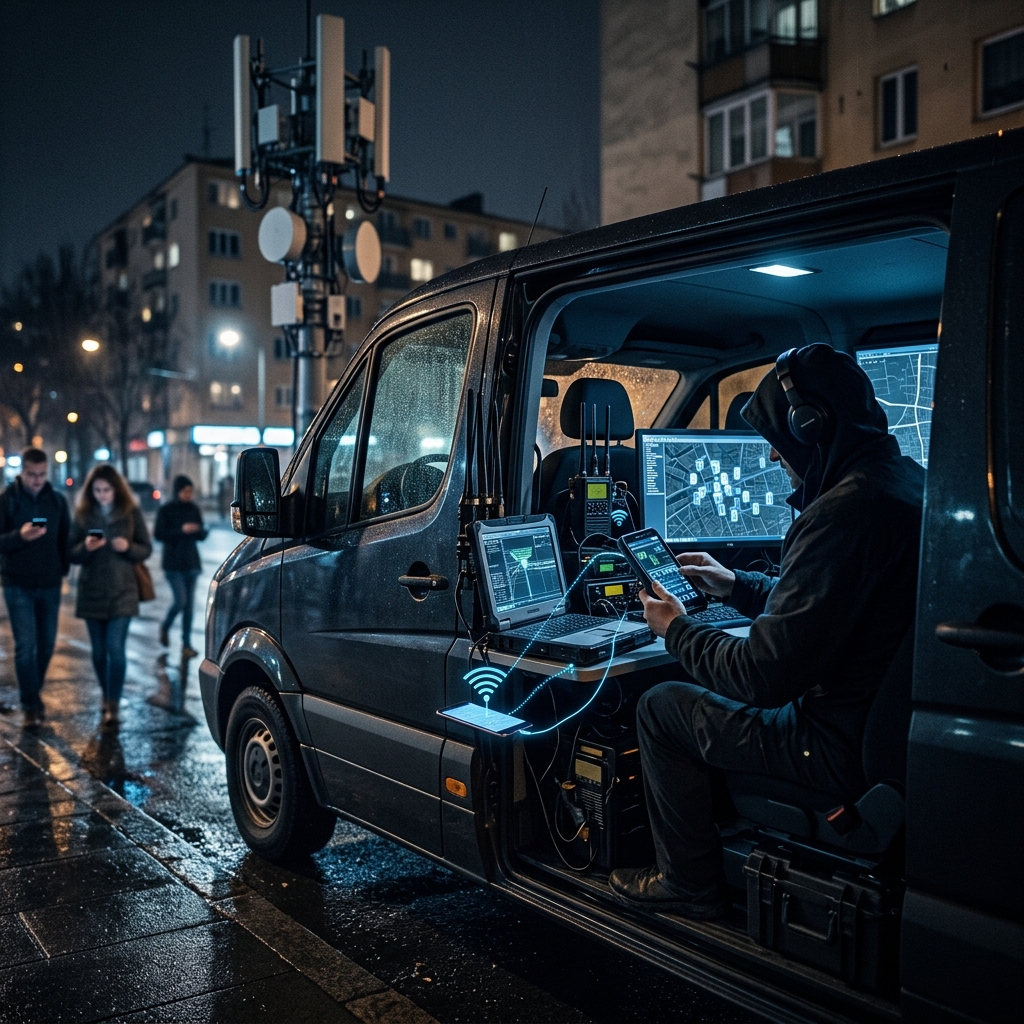
Your cell phone constantly broadcasts data: where you are, which cell tower you connect to, what apps you use, and more. That information is enormously valuable to law enforcement — and in many situations it can be obtained even without a traditional search warrant. At the same time, courts and lawmakers are still catching up with the privacy implications of this technology.
This article explains how police monitor phones, when they need a warrant, and what legal protections and risks exist. It draws on credible reporting, civil liberties research, and official policy documents to give you a clear, practical overview of modern phone surveillance.
Why Cell Phone Surveillance Matters
Cell phone tracking has become a routine part of criminal investigations. Location data can place someone at a crime scene, reveal who they meet, map their daily habits, or show participation in protests. Because phones are almost always with us, surveillance can quickly turn into a detailed portrait of our lives over weeks or months.
- Prevalence: Many U.S. law enforcement agencies have adopted specialized tools to track or monitor cell phones, sometimes thousands of times over periods of years.
- Secrecy: Non-disclosure agreements and internal policies often keep these practices hidden from the public, courts, and even criminal defendants.
- Legal uncertainty: Different courts and jurisdictions apply different rules, especially around when a warrant is required.
The central tension is between effective policing and constitutional protections against unreasonable searches. The U.S. Constitution’s Fourth Amendment protects areas where people have a reasonable expectation of privacy, but courts are still defining how that concept applies to continuous digital location tracking.
Core Technologies Used to Monitor Phones
Police use several technical methods to access phone-related data. Some require cooperation from phone companies or app providers; others involve law enforcement deploying their own hardware.
1. Cell-Site Location Data from Carriers
Your phone regularly connects to nearby cell towers. Carriers log this connection history, which can be used to infer where you were at particular times. Law enforcement can seek:
- Historical location data: Where a phone was over a past period of days or weeks.
- Real-time pings: Ongoing updates on where a phone is right now.
In many investigations, police request these records from carriers using court orders under statutes originally drafted in the 1980s for older forms of communication. The legal threshold for these orders can be lower than that required for a traditional search warrant, which raises privacy concerns.
2. Cell-Site Simulators (“Stingrays”)
Cell-site simulators, often called Stingrays, are portable devices that mimic a cell tower and prompt nearby phones to connect. When deployed, they can capture identifying information and location data for all phones in range, not just a specific target.
- Mass collection: Devices can obtain data from bystanders’ phones in addition to suspects, because they do not technically distinguish between devices in the area.
- Use for locating suspects: Police can use the information to pinpoint where a particular phone is located — inside a building, at a protest, or moving through a neighborhood.
- Secrecy enforced by NDAs: The FBI has required many agencies to sign nondisclosure agreements that limit what can be revealed about Stingray use, even in court.
Civil liberties groups have criticized these agreements for preventing defendants from learning how evidence against them was obtained and for limiting judicial oversight.
3. Commercial Location Data from Apps
There is a growing market in commercially collected location data. Mobile apps often gather precise GPS information and share or sell it to data brokers. Some law enforcement agencies have purchased access to these datasets — a practice highlighted by investigations into platforms such as Fog Reveal.
- Source of data: App developers may sell geolocation signals to brokers, who aggregate billions of data points per day.
- Law enforcement access: Agencies can buy access and then query historical device movements over extended periods, sometimes up to 90 days or more.
- Legal rationale: Authorities argue that because users voluntarily shared data with third parties, police can obtain it from brokers without a warrant — a concept tied to the “third-party doctrine.”
This practice exploits a gap between traditional warrant requirements and modern data markets, raising questions about whether purchasing sensitive data should bypass constitutional protections.
4. Content Interception and Wiretaps
Some phone surveillance targets the content of communications — voice calls, text messages, or other transmitted information. This typically requires a higher legal threshold and is governed by detailed wiretap laws.
- Lawful interception: Governments can legally intercept communications under specific legal procedures, often requiring a judge to approve a wiretap based on probable cause.
- Scope: Interception may include listening to live calls, recording them, or capturing text messages and metadata such as who called whom and when.
Because content interception is considered highly intrusive, it tends to be more tightly regulated than simple location tracking.
Do Police Need a Warrant to Track Your Phone?
Whether police need a warrant to monitor your phone depends on the type of data, the duration of surveillance, and the jurisdiction. Rules differ across states and courts, and they continue to evolve.
Different Standards: Court Orders vs. Warrants
Traditional search warrants require investigators to show probable cause that evidence of a crime will be found. Some statutes allow law enforcement to obtain phone-related data with a lower standard — for example, showing that information is “relevant” to an investigation.
| Legal Tool | Standard Required | Typical Use |
|---|---|---|
| Search warrant | Probable cause to suspect criminal activity | Accessing phone contents, extended location tracking in many jurisdictions |
| Court order under statute | Reasonable grounds to believe data is relevant to an investigation | Historical call records, some types of location data depending on state law |
Because the legal standard for court orders is lower, privacy advocates worry that this allows law enforcement to obtain sensitive location data without meeting the full requirements for a warrant.
Variation Across States
State law and court decisions create a patchwork of rules on phone tracking:
- Stricter states: Some jurisdictions, such as parts of New York and California, often require warrants for cell phone tracking, especially for ongoing or precise location data.
- More permissive states: Other states, including Florida as reported in past coverage, have allowed certain forms of phone tracking without a warrant depending on statutory interpretation.
- Active litigation: Magistrate judges in some federal districts have started to question warrantless tracking, denying requests and pressing for clearer standards.
This lack of uniformity means your privacy protections may differ considerably depending on where you live or where your case is investigated.
Secrecy, NDAs, and Transparency Problems
One of the most striking features of modern phone surveillance is how little the public — and sometimes even courts — know about it. Non-disclosure agreements and internal policies can keep details about surveillance tools out of the record.
FBI Pressure and Local NDAs
Records obtained by the American Civil Liberties Union show that the FBI has required state and local agencies to sign nondisclosure agreements to use certain cell-site simulators. These agreements:
- Restrict what agencies can disclose about the devices’ existence, capabilities, or use, even to courts and defendants.
- Limit references to the technology in warrants or other legal documents, sometimes encouraging alternative explanations for how evidence was obtained.
Critics argue that this secrecy undermines defendants’ constitutional right to challenge evidence and raises serious questions about transparency and accountability.
Examples from Major Police Departments
Documents released in New York revealed that the city’s police department has used Stingray devices more than 1,000 times since 2008, for both serious crimes and relatively minor incidents. Yet, according to public reporting, the department historically told the public it did not use such tools and kept policies vague.
Similar patterns have emerged elsewhere: agencies spend significant funds on cell phone surveillance technology, deploy it repeatedly, and provide limited information about safeguards, oversight, or the impact on bystanders’ data.
Constitutional and Legal Issues
Cell phone surveillance raises complex constitutional questions. The central issues include the scope of the Fourth Amendment, the role of statutory frameworks from earlier technological eras, and the impact of data-sharing with third parties.
Reasonable Expectation of Privacy
The Fourth Amendment protects people from unreasonable searches and seizures. Courts ask whether a person has a reasonable expectation of privacy in the information being accessed. Historically, the home has strong protection — police generally need a warrant to search it.
Location tracking challenges older assumptions. When police can reconstruct your movements over many days using phone signals, they gain insight into activities that might previously have remained private — such as religious attendance, medical visits, political meetings, or intimate associations.
Legacy Statutes and Modern Data
Many legal rules for electronic surveillance originate in laws passed in the 1980s, well before smartphones and constant GPS logging. These statutes authorize access to certain types of records, sometimes using standards below probable cause.
- One statute has been used to justify access to historical location data stored by carriers.
- Another permits real-time collection of calling data, but not precise location — yet the boundaries between these categories have blurred.
As technology capabilities increased, some prosecutors argued that warrants were not necessary for specific kinds of data because older statutes did not explicitly require them. Courts are gradually revisiting these interpretations as the privacy stakes become clearer.
Third-Party Doctrine and Data Brokers
The “third-party doctrine” is a legal concept that limits privacy expectations in information voluntarily shared with third parties, such as banks or phone companies. Law enforcement has relied on this doctrine to argue that purchasing app-derived location data from brokers is permissible without a warrant.
However, civil liberties advocates and some judges question whether users truly consent to pervasive tracking and resale of their location simply by accepting app terms and conditions. They argue that the sheer scale and sensitivity of modern data collection call for renewed constitutional scrutiny.
Practical Steps to Protect Your Phone Privacy
No strategy can guarantee complete protection against surveillance, especially when lawful court orders are involved. However, you can reduce unnecessary exposure and increase your control over your data.
Limit Location Sharing
- Review app permissions regularly and disable location access for apps that do not genuinely need it.
- Use operating system settings to restrict location tracking to “while using the app” rather than “always,” where possible.
- Consider turning off location services entirely when not needed.
Reduce Third-Party Data Collection
- Avoid installing unnecessary apps that collect extensive personal data.
- Delete old apps you no longer use, especially those with broad permissions.
- Look for privacy policies that explicitly limit sharing or selling of location data.
Physical and Technical Precautions
- Turn off your phone — and in some cases remove the battery if possible — when you need to be sure it is not broadcasting signals.
- Be mindful that near certain sensitive locations, police may deploy cell-site simulators that capture data from all nearby phones.
- Use strong authentication (PINs, biometrics) to protect the content of your device in case it is seized.
These measures do not prevent lawful access obtained through warrants or court orders, but they can reduce data available to commercial brokers and opportunistic tracking.
FAQs: Common Questions About Phone Monitoring
Can police track my phone without telling me?
Yes. In many cases, law enforcement can seek location data or deploy tracking tools without notifying the phone’s owner at the time of surveillance. Individuals often discover such monitoring only if location evidence is later used in a criminal proceeding.
Do police always need a warrant to get my phone records?
No. Some phone records can be obtained with court orders under specific statutes that require a lower standard than probable cause. However, many jurisdictions now require warrants for access to extended or highly precise location histories, and content interception typically demands a full warrant.
Can police read my text messages with a Stingray?
Public reporting indicates that cell-site simulators are primarily used to identify and locate phones and may, in some implementations, have the capability to intercept certain communications. However, agencies often decline to disclose precise technical details, and the legal framework for content interception is separate and more restrictive.
Is buying data from brokers really legal?
Many agencies currently rely on the third-party doctrine to argue that purchasing app-derived location data is legally permissible without a warrant. This practice is subject to ongoing debate, and future court decisions or legislation may impose stricter rules.
How can I find out if my local police use Stingrays?
Public records requests, investigative reporting, and disclosures by civil liberties organizations have revealed Stingray programs in various cities. However, nondisclosure agreements and limited transparency can make it difficult to obtain complete information about local usage.
References
- New Records Detail How the FBI Pressures Police to Keep Use of Shady Phone Surveillance Technology a Secret — American Civil Liberties Union. 2022-07-18. https://www.aclu.org/press-releases/new-records-detail-how-the-fbi-pressures-police-to-keep-use-of-shady-phone-surveillance-technology-a-secret
- Police May Be Able to Secretly Monitor Your Phone — FindLaw. 2013-08-27. https://www.findlaw.com/legalblogs/law-and-life/police-may-be-able-to-secretly-monitor-your-phone/
- Vice: We Know Terrifyingly Little About How Cops in New York Track Cell Phones — The Bronx Defenders (summary of Vice article). 2016-09-22. https://www.bronxdefenders.org/vice-we-know-terrifyingly-little-about-how-cops-in-new-york-track-cell-phones/
- Cell phone Surveillance by the Police — Loevy & Loevy. 2014-11-06. https://www.loevy.com/cell-phone-surveillance-by-the-police/
- Police Are Tracking Your Phone WITHOUT a Warrant (Here’s How) — YouTube / LegalEagle. 2022-10-05. https://www.youtube.com/watch?v=Xbd5WFvbrb0
- Cellphone surveillance — Wikipedia (background reference only, not directly cited in main text). Last updated 2024-01-10. https://en.wikipedia.org/wiki/Cellphone_surveillance
Similar Articles








Read full bio of Sneha Tete


