
How Parental Incarceration Affects Children
A clear look at how a parent’s incarceration can reshape a child’s emotional, educational, and financial life.
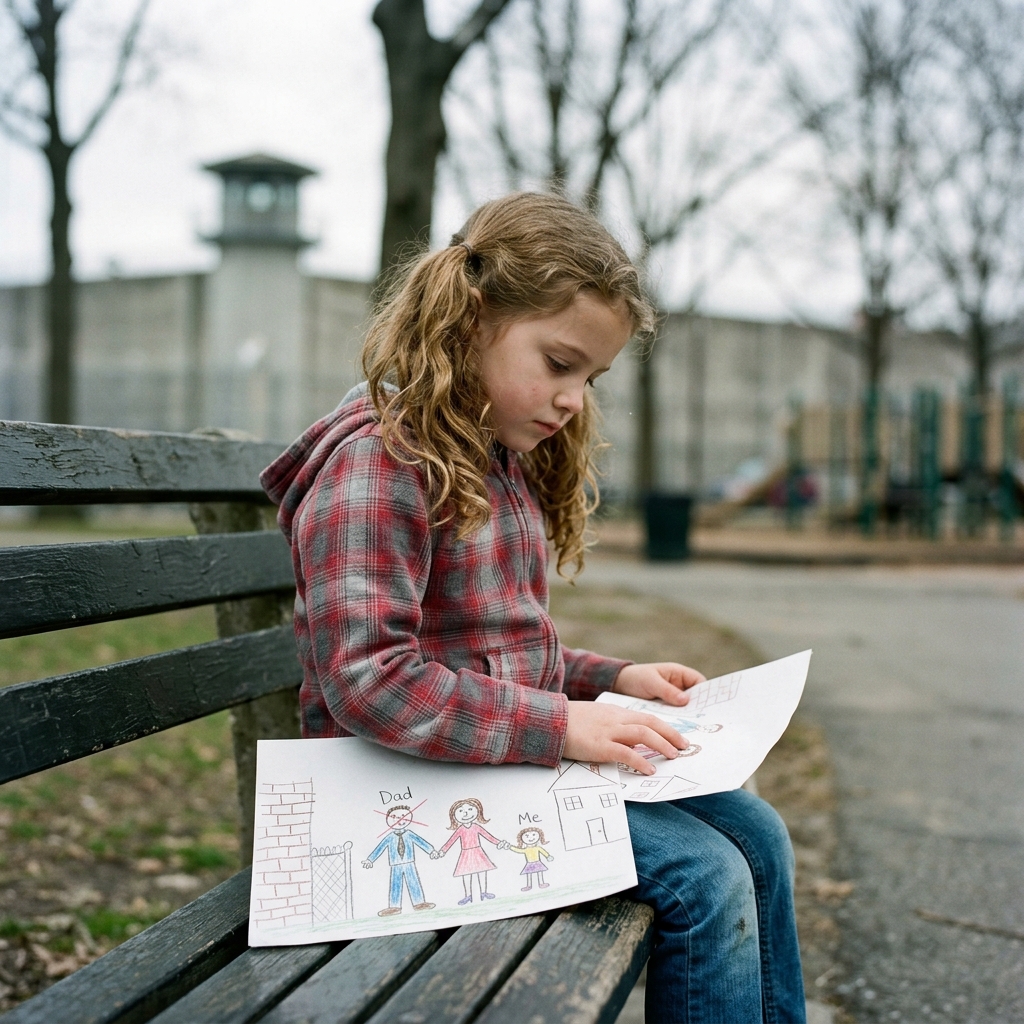
When a parent goes to jail or prison, the consequences do not stop with the person convicted of a crime. Children often experience the loss immediately and deeply, through changes in care, income, routines, and emotional security. Research shows that parental incarceration can affect a child’s mental health, school performance, physical well-being, and long-term stability, although outcomes vary depending on age, support systems, and family circumstances.
The impact is usually not caused by one factor alone. Instead, children may face a combination of separation from a parent, stigma at school, transportation barriers to visits, a drop in household income, and stress in the remaining caregiver’s home. Those pressures can build over time and make it harder for a child to feel safe, connected, and able to thrive.
Why the separation is so disruptive
For many children, the most painful part is not the legal process itself but the sudden loss of daily contact with a parent. That change can be especially difficult for young children, who depend on routine, familiarity, and attachment to caregivers in order to feel secure.
Incarceration can interrupt ordinary family life in ways that are difficult to replace. A parent may no longer help with homework, prepare meals, attend school events, or provide emotional comfort at bedtime. Even when communication is possible through calls or visits, the cost, distance, and prison rules can make those connections inconsistent.
- The child may not understand why the parent is gone.
- The child may worry about whether the parent will return.
- The child may blame themself for the separation.
- The child may struggle to trust that adults will remain available.
Emotional and mental health effects
Studies and policy reviews consistently show higher rates of emotional distress among children with an incarcerated parent. Common reactions include sadness, anxiety, guilt, shame, anger, withdrawal, and trouble regulating emotions.
Some children respond by becoming quieter and more cautious. Others show outward signs such as aggression, defiance, or difficulty following rules. These reactions are not signs of “bad behavior” in the ordinary sense; they often reflect stress, grief, and instability in the child’s environment.
Stigma can intensify the problem. Children may feel embarrassed to talk about the parent’s incarceration or may be teased by peers. That social pressure can lead to isolation, lower self-esteem, and reluctance to seek help from teachers, counselors, or relatives.
Common emotional challenges
| Challenge | How it may appear |
|---|---|
| Anxiety | Constant worry, fear of abandonment, trouble sleeping |
| Depression | Sadness, loss of interest, low energy, hopelessness |
| Shame or guilt | Withdrawing from others, refusing to discuss family life |
| Anger | Arguments, aggression, resistance to authority |
School performance and behavior can suffer
Parental incarceration is linked with educational disruption, including weaker school readiness, more attention problems, repeating a grade, lower grades, absenteeism, and, in some cases, dropout risk. These effects may begin early and continue into adolescence.
School can become harder when the child is worried, tired, or frequently moving between caregivers. A child may have trouble concentrating, completing assignments, or remembering instructions. Missed school meetings, unstable housing, and changes in transportation can also interfere with regular attendance.
Some children also act out at school. Researchers have observed more externalizing behaviors such as fighting, skipping class, and conflict with teachers among some children with an incarcerated parent. At the same time, others become unusually withdrawn and quiet, which can be overlooked by adults even though it still signals distress.
Educational risks to watch for
- Difficulty concentrating in class
- Lower academic confidence
- Behavior referrals or suspensions
- Frequent absences
- Loss of interest in school activities
Physical health and daily stability may change
The effects of parental incarceration are not only emotional or academic. Research has found links with a range of health and stability concerns, including migraines, asthma, sleep disorders, and higher rates of food insecurity, homelessness, and poverty.
These problems often arise because the household’s financial and caregiving structure changes at the same time. When a parent is removed from the home, the family may lose income, health coverage, transportation support, or help with childcare. The remaining caregiver may struggle to cover basics such as rent, groceries, medical visits, and school supplies.
In some families, incarceration also brings more frequent moves, overcrowded housing, or placement with relatives. Those changes can disrupt sleep, routines, and access to medical care, all of which affect a child’s sense of stability and well-being.
Age matters: children do not all react the same way
The impact of incarceration depends partly on the child’s age and developmental stage. Younger children may not grasp why a parent is absent and may react with clinginess, tantrums, or developmental regression. School-age children may experience shame, behavior problems, or trouble keeping up academically. Teenagers are more likely to struggle with anger, peer stigma, and risk behaviors.
Researchers have also found that younger children can show attachment-related distress when a parent disappears from daily life, while older children may be more likely to understand the prison system but still suffer from loss, embarrassment, or economic strain.
Why some children are more affected than others
No two families experience incarceration in exactly the same way. The child’s outcomes depend on many protective and risk factors, including the quality of the relationship before incarceration, the caregiver’s stability, the availability of relatives, the child’s temperament, and access to counseling or community support.
Children are generally more vulnerable when the parent’s incarceration is combined with other hardships, such as substance abuse, domestic violence, mental illness, poverty, or repeated involvement with the criminal justice system. In contrast, children may do better when they have predictable routines, honest age-appropriate explanations, healthy contact with the incarcerated parent, and strong support from another adult.
Protective factors that can help
- Reliable caregiving from a stable adult
- Consistent school attendance
- Open, age-appropriate communication
- Access to counseling or mentoring
- Safe and frequent contact with the incarcerated parent when appropriate
Support for children and caregivers
Families dealing with incarceration often need practical help as much as emotional support. A child may benefit from therapy, school counseling, mentoring, or support groups that normalize the experience and reduce shame.
Caregivers may need help explaining incarceration in a way that is truthful without overwhelming the child. They may also need assistance with transportation to visits, childcare, public benefits, housing, or legal navigation. Because the stress is often financial as well as emotional, access to stable services can make a meaningful difference.
Schools can also play a major role. Teachers and counselors who recognize the signs of stress can respond with flexibility, privacy, and consistency. That may include extra time for assignments, quiet check-ins, or a plan for handling difficult dates such as court hearings, birthdays, or anniversaries.
What families can do next
If a parent is facing incarceration, early planning can reduce some of the harm to children. Families may want to identify a stable caregiver, preserve important routines, and create a communication plan that fits the child’s age and needs. When possible, it helps to explain the situation in simple, honest language rather than leaving the child to imagine the worst.
It is also useful to keep records of school changes, medical issues, and behavioral concerns. That information can help caregivers, doctors, and counselors respond more effectively. If the family is involved in a legal case, an attorney may also be able to explain how custody, visitation, or support obligations could be affected.
Most importantly, the presence of an incarcerated parent does not determine a child’s future. Research shows increased risk, not certainty. With steady support and access to resources, many children are able to adapt and continue developing healthy relationships and skills.
Frequently asked questions
Does having an incarcerated parent always harm a child?
No. Research shows higher risk of emotional, educational, and financial problems, but outcomes vary. Children with strong caregiving, predictable routines, and access to support may fare better than those facing multiple stressors at once.
Are younger children affected differently from teenagers?
Yes. Younger children are more likely to struggle with attachment and confusion, while older children and teens may experience stigma, anger, academic problems, or risk behaviors.
Can contact with the incarcerated parent help?
In many cases, healthy and age-appropriate contact can help maintain attachment and reduce uncertainty, but the quality and safety of the relationship matter. Contact should be considered in light of the child’s needs and the circumstances of the case.
What are some warning signs that a child is struggling?
Warning signs may include sleep problems, declining grades, fighting, withdrawal, frequent complaints of stomachaches or headaches, changes in appetite, or statements of guilt, shame, or hopelessness.
Where can families look for support?
Support may come from schools, mental health professionals, community organizations, relatives, faith communities, and legal aid providers. Families often benefit most from a combination of emotional, practical, and financial help.
References
- How Mass Incarceration of Parents Affects Child Development — Loyola University Chicago Law Journal via eCommons. n.d. https://lawecommons.luc.edu/cgi/viewcontent.cgi?article=1276&context=clrj
- Parental Incarceration, Development, and Well-Being — National Institutes of Health / PubMed Central. 2023. https://pmc.ncbi.nlm.nih.gov/articles/PMC9967200/
- Children of Incarcerated Parents — Annie E. Casey Foundation. n.d. https://www.aecf.org/resources/a-shared-sentence
- Let Kids Be Kids: The Effects of Parental Incarceration on Children — Center on Juvenile and Criminal Justice. n.d. https://www.cjcj.org/news/blog/let-kids-be-kids-the-effects-of-parental-incarceration-on-children
- Hidden Consequences: The Impact of Incarceration on Dependent Children — National Institute of Justice. n.d. https://nij.ojp.gov/topics/articles/hidden-consequences-impact-incarceration-dependent-children
- Effects of Parental Incarceration on Young Children — Urban Institute. n.d. https://www.urban.org/sites/default/files/publication/60691/410627-Effects-of-Parental-Incarceration-on-Young-Children.PDF
- Life Beyond Bars: Children with an Incarcerated Parent — Institute for Research on Poverty, University of Wisconsin–Madison. n.d. https://www.irp.wisc.edu/publications/factsheets/pdfs/Factsheet7-Incarceration.pdf
Similar Articles








Read full bio of medha deb


