
Holiday Guests and Rental Homes: What Landlords Can Legally Do
Understand how leases, local laws, and safety rules affect holiday guest limits so landlords and tenants can celebrate without legal conflict.
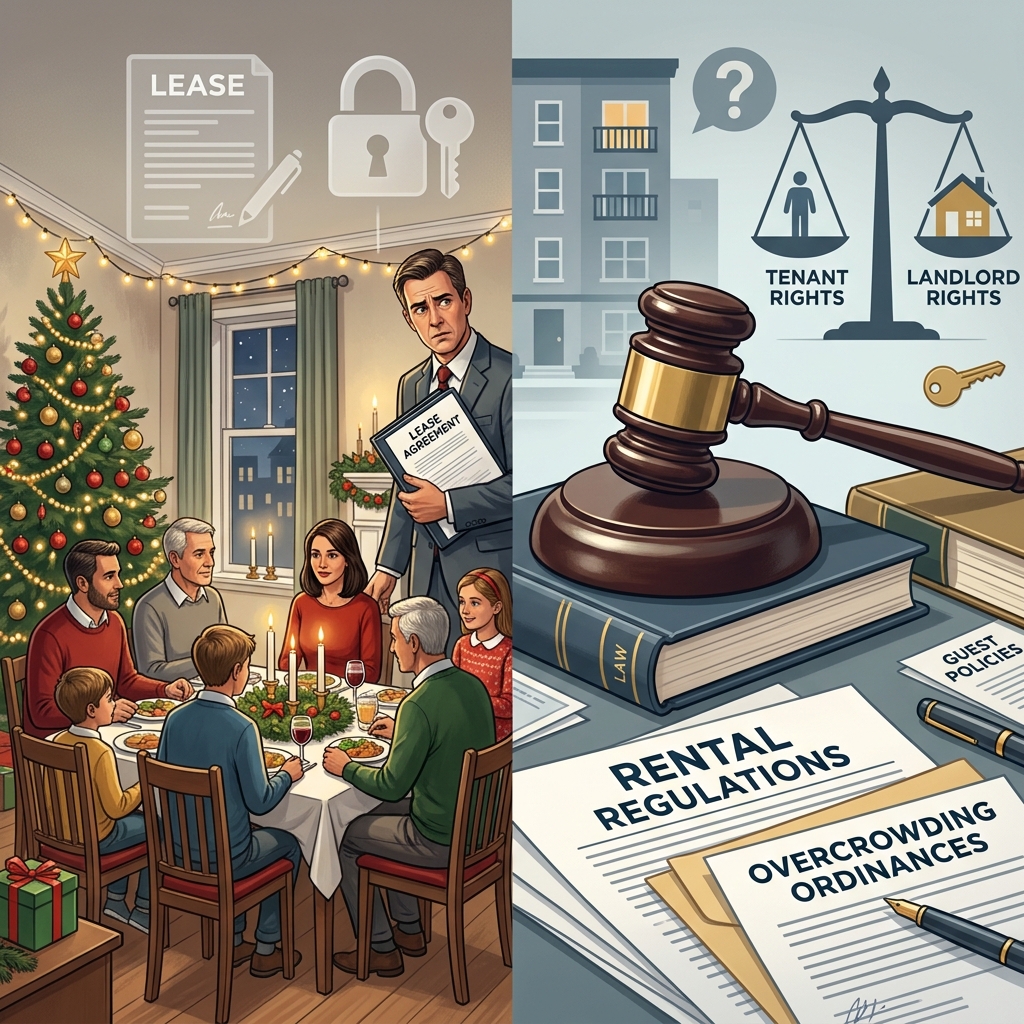
Holiday gatherings often mean full living rooms, overnight visitors, and more cars parked outside than usual. For renters and landlords, this seasonal spike in guests raises important questions: Can a landlord limit the number of holiday visitors? Are overnight guests always allowed? And at what point does a frequent visitor turn into a legal tenant with rights of their own?
This guide explains how guest limits typically work in rental housing, how lease agreements and local laws interact, and what both landlords and tenants can do to keep holiday celebrations lawful and neighbor‑friendly.
Why Holiday Guests Raise Legal Issues
Most of the year, guest visits are predictable and relatively quiet. During major holidays, however, the situation changes. Landlords may worry about:
- Noise and disturbances affecting other tenants
- Overcrowding in individual units and common areas
- Parking shortages and traffic around the property
- Potential damage to the premises or shared amenities
- Fire code and safety compliance, especially in older buildings
Tenants, on the other hand, typically expect to host family and friends as part of the normal use of their home. Many landlord–tenant laws recognize a tenant’s right to quiet enjoyment of the premises, which often includes having reasonable guests.
Lease Agreements: The Core Tool for Managing Guests
The primary way to regulate holiday visitors is through the written lease or rental agreement. A lease can legally include reasonable rules about guests, as long as those rules do not violate state or local law.
Common Guest-Related Clauses in Leases
While language varies, many leases address guest behavior in one or more of the following ways:
- Maximum occupancy: Sets the total number of people allowed to reside in a unit.
- Guest stay limits: Caps how many nights or days a guest may remain before they must be added to the lease.
- Noise and quiet hours: Requires tenants and guests to avoid disturbing neighbors, often with specific quiet periods at night.
- Use of common areas: Limits how many guests may use pools, lounges, or other shared amenities at one time.
- Compliance with laws and fire codes: Requires adherence to safety rules, such as maximum room occupancy and clear exits.
These provisions apply year‑round but become especially important when a tenant plans a large holiday event.
Reasonable vs. Unreasonable Restrictions
Many jurisdictions allow landlords to set guest rules, but unreasonable restrictions may not be enforceable. For example, a clause that permanently bans all visitors might conflict with a tenant’s basic right to use the premises as a home.
Reasonable guest rules often:
- Apply uniformly to all tenants, not just certain groups
- Allow ordinary social visits and short stays
- Focus on safety, noise, and property protection
- Allow longer stays with notice or landlord consent
Local Laws: How Jurisdictions Treat Guest Limits
Guest policies do not exist in a vacuum. They operate alongside state landlord–tenant statutes, local housing codes, and sometimes city ordinances. These laws can affect how and when landlords may restrict guests.
Guest Stay Limits in Some States
In several states, law or widely accepted practice sets rough limits on how long a guest can stay before they are treated as a tenant. These thresholds often appear in legal guides and landlord resources and may be reflected in local ordinances or case law.
| State | Example Threshold for Guest Becoming Tenant* |
|---|---|
| Arizona | Up to about 29 consecutive days as a guest before tenant status issues arise |
| California | Often around 14 days in six months or 7 consecutive nights, depending on lease and local practice |
| Florida | Similar 14 days in six months or 7 nights in a row commonly used in policies |
| Montana | Some guidance treats guests as tenants after roughly 7 consecutive days without clear lease limits |
*These figures come from landlord guidance materials and may reflect how laws and common practice interact; specific legal standards can vary by city and individual lease terms.
Privacy and Illegal Landlord Actions
Legal resources emphasize that while landlords may limit length of guest stays, they must avoid overstepping into illegal behavior, such as harassment, discrimination, or retaliation against tenants for exercising lawful rights.[10]
- Rules targeting protected classes (for example, single tenants only) may raise discrimination concerns.
- Retaliating against tenants who complain about conditions by suddenly enforcing harsh guest rules may be unlawful in some states.[10]
- Intrusive monitoring of who visits and when, without legitimate safety or occupancy concerns, can conflict with tenants’ privacy expectations.
Can Landlords Limit the Number of Holiday Guests?
Whether a landlord may limit holiday guests depends on three main factors:
- The lease language
- Applicable state and local law
- Building safety and occupancy requirements
Situations Where Limits Are Usually Permitted
Landlords typically have stronger justification to impose guest limits when:
- The number of visitors would exceed maximum occupancy under fire or building codes.
- Common areas, such as pools or clubhouses, could be overcrowded or damaged.
- Noise and traffic are likely to disturb other tenants, especially late at night.
- Past events at the property have involved damage, police calls, or safety incidents.
For example, a lease might allow social gatherings but cap the number of people who can use shared facilities at once or require advance notice for large events.
Situations Where Limits May Be Problematic
On the other hand, limits are more legally questionable when they:
- Prohibit all guests at all times, with no exceptions.
- Apply only to certain tenants, such as single individuals, but not families.
- Prevent ordinary family visits during holidays without safety or capacity concerns.
- Are imposed suddenly mid‑lease, without contractual or legal basis.
Legal guidance materials note that unreasonable or overly broad guest restrictions may not be enforceable and may conflict with tenants’ rights to use and enjoy their homes.
Holiday Parties vs. Overnight Stays
Holiday guests fall into two broad categories, each with different legal implications:
- Short‑term visitors: People attending a dinner, party, or gathering for a few hours.
- Overnight or extended guests: Friends or relatives who sleep over or stay multiple days.
Short-Term Holiday Visitors
For short‑term visitors, the main concerns are noise, parking, and behavior. Lease clauses often address these issues through general rules:
- Quiet hours (e.g., no loud noise after a certain time)
- Parking rules, such as where guests may park
- Prohibitions on illegal activity or property damage
As long as tenants comply with these rules, landlords usually have limited grounds to object to short‑term holiday guests.
Overnight Guests and Extended Stays
Overnight and extended stays raise more complex issues, especially when visitors stay repeatedly or for long periods. Legal guides explain that landlords may include guest stay limits in leases to prevent a long‑term visitor from informally becoming an additional resident.
Typical lease policies might:
- Allow overnight guests for a certain number of nights per month or per six‑month period.
- Require landlord approval if a guest will stay beyond that limit.
- Treat guests who exceed the limit as potential tenants who must sign the lease.
When Does a Guest Become a Tenant?
One of the most important legal thresholds is the point at which a guest gains tenant status. A tenant has legal rights and obligations, such as protection from eviction without proper process, whereas a guest generally does not.
Factors Courts and Landlords Consider
In states without clear numerical rules, courts may look at a combination of factors to decide whether someone is a tenant rather than a guest:
- Length of stay: How many days and nights the person stays at the property.
- Frequency: Whether they are present most nights or treat the unit as their primary home.
- Mail and address use: Whether they receive mail or list the property on identification or official documents.
- Financial contributions: Whether they pay rent or share utilities and household expenses.
- Daily activities: Whether they store belongings, keep regular routines, and live at the property as a resident.
Landlord resources note that many lease policies consider guests who stay beyond about 10–14 days in a six‑month period, or roughly 7 consecutive nights, as crossing into tenant territory.
Implications of Tenant Status for Long-Term Guests
Once a guest effectively becomes a tenant, the landlord usually cannot simply demand that they leave without following legal eviction procedures. In many places, the landlord may need to:
- Add the person to the lease through a formal amendment.
- Screen them with the same application criteria used for other tenants.
- Serve proper notices and follow legal steps if there are later problems.
Designing a Fair and Effective Holiday Guest Policy
Landlords who want to manage holiday guests without violating tenant rights should focus on clear, balanced lease language and good communication.
Key Points to Address in the Lease
Legal and professional landlord resources suggest that guest policies work best when they address practical details upfront.
- Maximum number of residents: Define how many people may officially live in the unit.
- Guest limits: Specify how many guests can be present at one time and how long they may stay.
- Overnight stay caps: Set a reasonable maximum number of nights for guests per month or per six‑month period.
- Notification requirements: Explain when tenants must inform the landlord about long‑term visitors, especially over holidays.
- Process for adding tenants: Describe how and when a guest must be added to the lease.
- Consequences of violations: Outline warnings, possible fees if legally allowed, and potential eviction steps for serious or repeated breaches.
Balancing Safety, Community, and Tenant Rights
Effective policies strike a balance among several interests:
- Safety: Respect fire codes and occupancy limits to protect everyone on the property.
- Neighbor relations: Minimize noise and crowding so other tenants can relax during the holidays.
- Tenant autonomy: Preserve the tenant’s ability to host reasonable guests and enjoy their home.
- Predictability: Provide clear rules so tenants know what is allowed before making holiday plans.
What Landlords Can Do When Holiday Guests Cause Problems
Even with good policies, conflicts can arise. Legal guides often recommend a stepped approach rather than immediately moving to eviction.
Step 1: Review the Lease and Document the Issue
- Check the lease for relevant guest, noise, and occupancy clauses.
- Note dates, times, and specific problems (noise, damage, blocked parking, etc.).
- Keep records of complaints from neighbors and any communication with the tenant.
Step 2: Communicate with the Tenant
- Start with a friendly but clear conversation, explaining the concern.
- Refer to specific lease provisions rather than general dissatisfaction.
- Offer practical solutions, such as ending the event at a certain time or reducing guest numbers.
Step 3: Written Warnings and Formal Notices
- If problems continue, send a written warning referencing the lease and observed behavior.
- Explain what must change and by when.
- In serious or repeated situations, consider serving formal notices consistent with local law.
Step 4: Involving Law Enforcement for Ongoing Disturbances
- For ongoing disruptive parties where the tenant refuses reasonable requests, contacting local law enforcement may be appropriate.
- Police can address noise, crowd control, and safety issues if needed.
Tips for Tenants Planning Holiday Gatherings
Tenants can reduce conflict by planning ahead and understanding their rights and responsibilities.
- Read your lease: Check guest limits, quiet hours, and any rules about large gatherings.
- Respect occupancy limits: Avoid overcrowding rooms beyond safe capacity.
- Inform your landlord if needed: For extended family stays, consider giving advance notice.
- Coordinate parking: Keep driveways and fire lanes clear.
- Manage noise: Close windows, set reasonable end times, and respond quickly to complaints.
Frequently Asked Questions About Holiday Guest Limits
Can my landlord ban all guests during the holidays?
A blanket ban on all guests is often considered excessive and may conflict with a tenant’s basic right to use the rental as a home. However, landlords may set reasonable limits to prevent overcrowding, noise, and safety issues, especially in multifamily buildings.
How many nights can a holiday guest stay before they become a tenant?
The answer depends on state law, local practice, and your lease. Many landlord policies treat guests who stay more than roughly 10–14 days in six months or about 7 consecutive nights as crossing into tenant territory, but specific thresholds vary by jurisdiction.
Do I have to tell my landlord if my relatives stay for two weeks?
Some leases require tenants to notify the landlord about extended stays, particularly if a guest will remain long enough to be considered a tenant under local law. Check your lease and local regulations; in many places, notice is recommended even if not strictly required.
Can a landlord use guest rules to evict me?
A landlord may issue warnings or, in serious cases, begin eviction proceedings if a tenant repeatedly violates reasonable, lawful guest rules in the lease. However, eviction must follow legal procedures, and tenants may challenge unreasonable or discriminatory restrictions.[10]
What if my landlord’s guest policy feels discriminatory?
If guest rules target only certain groups of tenants or appear to punish you for exercising legal rights (such as complaining about repairs), they may raise discrimination or retaliation concerns. Tenants in many states can seek legal advice or contact consumer or housing agencies about these issues.[10]
References
- Rental Privacy: Guest Stay Limits and Illegal Landlord Actions — Nolo. 2023-05-01. https://www.nolo.com/landlord-tenant/guest-stay-limits-and-illegal-landlord-actions.html
- Can Landlords Limit the Number of Holiday Guests? — Rocket Lawyer. 2023-11-15. https://www.rocketlawyer.com/real-estate/landlords/legal-guide/can-landlords-limit-the-number-of-holiday-guests
- When Does a Guest Become a Tenant? Guest-to-Tenant Policies — All Property Management. 2022-08-10. https://www.allpropertymanagement.com/blog/post/create-and-enforce-your-tenant-guest-policy/
- When Could a Guest Be Considered a Tenant? — SmartMove (TransUnion). 2023-02-20. https://www.mysmartmove.com/blog/when-does-a-guest-become-a-tenant
- Law Facts: Tenant & Landlord Rights and Obligations — Ohio State Bar Association. 2021-06-01. https://www.ohiobar.org/public-resources/commonly-asked-law-questions-results/law-facts/law-facts-tenant–landlord-rights-and-obligations/
- Lease Loopholes: Navigating the Guest vs. Tenant Dilemma — Rent Portland Homes. 2022-09-15. https://portlandrentalhomes.com/lease-loopholes-navigating-the-guest-vs-tenant-dilemma/
Similar Articles








Read full bio of medha deb


