
HIV Criminalization and the Justice System
How criminal laws shape HIV stigma, disclosure, and public health outcomes
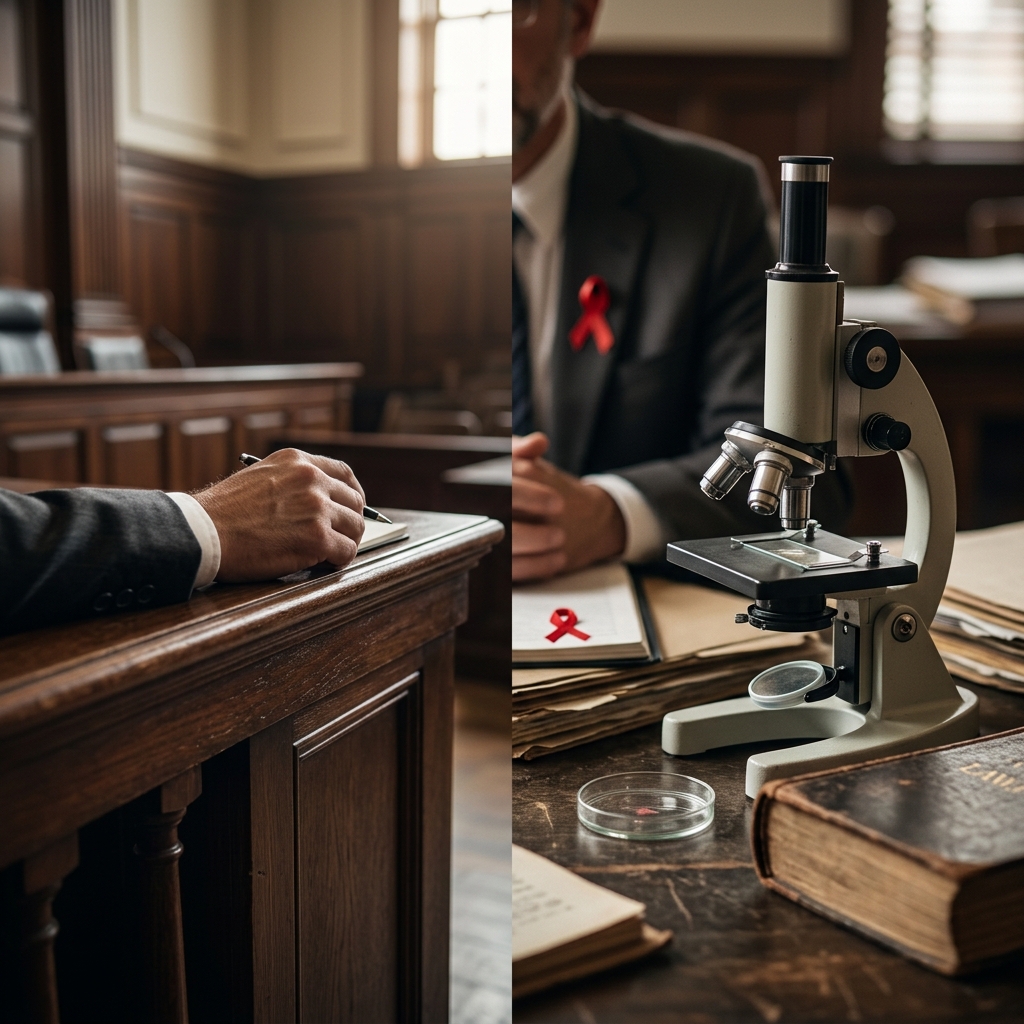
HIV-related criminal laws sit at the intersection of public health, civil rights, and criminal justice. In the United States, many states and some federal provisions still allow people living with HIV to be punished for conduct that may involve no meaningful risk of transmission, which has raised persistent concerns among public health researchers and legal advocates.
Why these laws matter
At first glance, HIV criminalization laws may appear to be narrow tools designed to punish intentional harm. In practice, however, these laws often sweep much more broadly. Research from public health and legal organizations shows that many jurisdictions criminalize exposure, nondisclosure, or conduct linked to HIV status even when transmission does not occur and even when the actual risk is extremely low.
This matters because criminal law does more than assign penalties. It can shape how people behave, whether they seek testing, how open they are with healthcare providers, and whether they feel safe disclosing their status to partners. Scholars have argued that laws framed as prevention tools may instead reinforce stigma and discourage the very behaviors that public health systems rely on.
How HIV criminalization works
HIV criminalization is not a single rule. It is a patchwork of statutes and penalty enhancements that differ widely by state. Some laws focus on alleged exposure, some on nondisclosure, and some on conduct such as biting, spitting, or donating blood and bodily fluids. A small number of states require proof of actual transmission or intent to transmit for certain offenses, while others allow prosecution without either.
These differences matter because they determine how easily a person can be charged, what prosecutors must prove, and how severe a sentence may be. The legal standard may turn on whether the accused knew their HIV status, whether they disclosed it, or whether a court believes a particular act created a legal risk, even if medical science says the transmission risk was negligible.
Public health concerns behind the legal debate
Public health experts have repeatedly warned that criminalization can work against HIV prevention. A major concern is that people may avoid testing if a positive diagnosis could later become evidence in a criminal case. If someone does not know their status, they cannot start treatment early or benefit from prevention counseling in the same way they might after testing.
Another issue is stigma. Laws that single out HIV can suggest that people living with the virus are uniquely dangerous, even though modern treatment can reduce viral load dramatically and make transmission far less likely. That message can deepen discrimination in healthcare, relationships, and workplaces, making it harder to encourage honest conversations about sexual health.
Researchers have also found little evidence that criminalization reduces HIV incidence. A review published in the biomedical literature noted that while many jurisdictions had laws criminalizing exposure or transmission, there was not strong evidence that those laws lowered infection rates. That gap between legal theory and public health outcomes is one reason many advocates argue for modernizing the law.
The legal landscape in the United States
State laws vary widely, but the overall pattern is clear: many jurisdictions still have HIV-specific criminal statutes or sentence enhancements. Recent research from the Center for Public Health Law Research found that, as of the end of 2024, 38 states including Puerto Rico had laws specifically criminalizing HIV, STI, or infectious-disease exposure. Other national mapping efforts have likewise documented extensive HIV-related criminalization across the country.
Some states rely on broad public health offenses, while others use laws that directly reference HIV status. In some places, available defenses are written into the statute, and consent is the most common one. In others, the statute itself may not clearly reflect modern scientific understanding of transmission risk, which leaves wide discretion to prosecutors and courts.
| Legal feature | What it can mean in practice |
|---|---|
| Exposure-based offense | Prosecution may be possible even if transmission never occurs. |
| Intent requirement | Some states require proof that the person intended to transmit HIV for at least certain crimes. |
| Penalty enhancement | HIV status can increase the seriousness of an unrelated offense or raise the sentence. |
| Broad prohibited acts | Some statutes reach conduct with little or no transmission risk, such as spitting. |
Why science and law often diverge
One of the central criticisms of HIV criminalization is that some statutes were written in a period when HIV was less understood and treatment options were far less effective. Today, medical science makes it possible to measure viral suppression, transmission risk, and the role of treatment far more accurately than in the past. Yet many laws still reflect older assumptions about danger and exposure.
That mismatch can create legal outcomes that feel disconnected from medical reality. A person may be prosecuted not because they deliberately harmed someone, but because a law treats HIV status itself as inherently suspicious. Public health specialists have argued that if the criminal system is used at all, it should be reserved for cases involving deliberate and actual transmission, not for low-risk or no-risk conduct.
What reform advocates are asking for
Reform efforts generally do not argue that all HIV-related wrongdoing should be ignored. Instead, they call for laws that are precise, scientifically current, and consistent with general criminal law principles. Advocates often want statutes to focus on intentional harm, require proof of real risk, and eliminate punishment for behaviors that cannot plausibly transmit HIV.
- Limit criminal liability to conduct involving actual intent to harm.
- Remove penalties for activities with no meaningful risk of transmission.
- Use evidence-based standards when courts consider transmission risk.
- Ensure that HIV is treated consistently with other communicable diseases unless a genuine legal distinction is justified.
- Reduce sentence enhancements that punish people more harshly simply because of their status.
These reforms aim to align law with science. They also seek to preserve trust in public health systems by making sure legal rules do not discourage testing, treatment, and honest communication with healthcare providers.
The human cost of prosecution
Beyond the legal text, HIV criminalization can have lasting consequences for individuals and communities. A prosecution can bring jail time, fines, registration requirements in some contexts, social isolation, job loss, and permanent stigma. Even when a case does not result in conviction, the investigation itself can be devastating.
People living with HIV may also experience a chilling effect in relationships and healthcare settings. If they fear that a diagnosis might later be used against them, they may avoid disclosure, delay treatment, or rely on silence rather than informed consent. That is the opposite of what public health systems are designed to encourage.
Where the debate stands now
The national conversation is no longer about whether HIV is a serious public health issue; it is about whether criminal law is the right tool for responding to it. Many health organizations and legal researchers now favor approaches grounded in education, access to treatment, harm reduction, and anti-stigma strategies rather than punishment.
At the same time, criminal statutes remain on the books in many jurisdictions, and enforcement patterns continue to evolve. That means advocates, lawmakers, and public health agencies still face a practical question: how can the justice system respond to genuine misconduct without undermining prevention, equity, and trust?
Frequently asked questions
Is HIV criminalization the same as laws against deliberate infection?
No. Some laws are written broadly enough that they can apply even without proof of intent or actual transmission, while others are narrower. The breadth of the law depends on the state and the specific offense.
Do these laws help stop HIV spread?
Available research has not shown clear public health benefits. In fact, researchers have warned that criminalization can discourage testing and strengthen stigma, both of which may undermine prevention efforts.
Why do advocates oppose broad HIV-specific laws?
Advocates argue that HIV should be addressed through science-based public health policy, not through laws that punish status or create harsher penalties than those used for comparable conditions. They also point out that punishment can make it harder to reach people with testing, treatment, and prevention services.
Are all HIV-related prosecutions based on actual harm?
No. Some prosecutions have involved conduct with no transmission, limited or no risk, or cases where the legal issue centered on nondisclosure rather than injury. That is one of the main reasons the laws remain controversial.
Why modernizing the law matters
Modernizing HIV laws is not just a legal housekeeping exercise. It is a chance to bring criminal statutes into closer alignment with current science, reduce unnecessary stigma, and support the public health goal of getting more people tested and treated early.
When laws are too broad, they can send the wrong message: that HIV status alone makes a person suspect. A more careful approach would reserve criminal punishment for truly culpable conduct and leave prevention to the tools that public health has proven to be effective, such as education, access to care, and voluntary disclosure supported by trust.
References
- New Research Examines State HIV Criminalization Laws — Temple University Beasley School of Law, Center for Public Health Law Research. 2026-02. https://phlr.temple.edu/news/2026/02/new-research-examines-state-hiv-criminalization-laws
- State HIV Criminalization Laws — LawAtlas. 2024-12-31. https://lawatlas.org/datasets/state-hiv-criminalization-laws
- Mapping HIV Criminalization Laws in the U.S. — Center for HIV Law and Policy. 2025. https://www.hivlawandpolicy.org/maps
- United States — HIV Justice Network. 2025. https://www.hivjustice.net/country/us/
- HIV Criminalization — American Academy of HIV Medicine. 2025. https://aahivm.org/hiv-criminalization/
- Criminalization of HIV Transmission and Exposure — National Institutes of Health / PMC. 2014-03-01. https://pmc.ncbi.nlm.nih.gov/articles/PMC3966663/
- HIV Criminalization Laws — Movement Advancement Project. 2025. https://mapresearch.org/equality-map/hiv-criminalization-laws/
Similar Articles








Read full bio of Sneha Tete




