
Halloween Restrictions For Sex Offenders: Compliance Tips Now
A practical guide to Halloween restrictions, supervision rules, and legal consequences.
How Halloween Restrictions for Sex Offenders Work
Many states impose special Halloween rules on people required to register as sex offenders, especially those under probation, parole, or other forms of community supervision. These rules are designed to reduce unsupervised contact with children, limit participation in holiday events, and give supervising agencies a clear way to monitor compliance during a high-traffic evening for families and children.
The exact requirements vary widely by state and sometimes by county or supervising agency. In some places, restrictions are set by statute. In others, they come from supervision conditions or administrative policies. That means two people with the same offense history may face different Halloween obligations depending on where they live and whether they are still under supervision.
Why States Create Holiday-Specific Rules
Halloween creates a predictable setting in which children move from house to house, visit unfamiliar residences, and attend social gatherings where costumes can make identification harder. Lawmakers and correction agencies often treat that environment as one that calls for extra caution. The goal is not to criminalize the holiday itself, but to reduce opportunities for conduct that could endanger children or interfere with supervision.
These restrictions are generally framed as public-safety measures. They may also help probation and parole officers verify where a person is during a busy evening when monitoring can be more difficult. In some states, the rules are narrow and targeted. In others, they are broad enough to bar decorating the home, distributing candy, answering the door, or attending local Halloween events.
Common Types of Halloween Limits
Although no two jurisdictions are identical, several kinds of restrictions appear repeatedly in state laws and supervision policies.
- Staying inside during designated hours: Some states require registrants to remain at home for a specific window on Halloween evening.
- Turning off outdoor lights: This can signal that the residence is not participating in trick-or-treating.
- Posting warning signs: Certain laws require signs stating that no candy or treats are available at the residence.
- Avoiding contact with children: Many restrictions prohibit any Halloween-related interaction with minors.
- No candy distribution: Some jurisdictions bar the handing out of candy or treats altogether.
- No costumes or decorations: In stricter states, even wearing costumes or displaying decorations may be prohibited.
- No attendance at events: Registrants may be barred from Halloween parties, haunted houses, parades, festivals, or trunk-or-treat events.
What Supervision Status Means
Whether a person is subject to Halloween restrictions often depends on supervision status. Individuals on probation or parole usually face the most direct oversight because they are still under active correctional supervision. In those cases, the supervising agency can impose a curfew, home confinement requirement, or a list of activity bans tied specifically to Halloween night.
By contrast, a person who is no longer on supervision may still be subject to registration requirements but may not automatically face Halloween-specific limits. Some states impose these rules by law on all registrants, while others apply them only to people under active supervision. The distinction matters because registration alone does not always mean the person is on a holiday lockdown.
Examples of State Approaches
State rules differ enough that it is helpful to look at broad patterns rather than assume one state’s law applies everywhere. Missouri, for example, requires registered sexual offenders to avoid Halloween-related contact with children, stay inside during a set evening window, post a sign at the residence, and keep outside lights off. A violation is treated as a criminal offense under state law.
South Carolina has announced Halloween curfews for certain supervised sex offenders, especially those whose offense involved a child. Under that kind of policy, supervised offenders may be ordered to remain home during the relevant hours, keep exterior lights off, avoid candy distribution, and stay away from parties or carnival-type activities.
Arkansas has also used holiday-specific limits. According to state guidance, some offenders on supervision are monitored closely during the Halloween season and may be barred from handing out candy, trick-or-treating, or attending costume-related events. Some offenders may also have to post a notice warning children not to approach the residence.
Other states take a more limited approach. North Carolina, for instance, does not appear to have a Halloween-only statute, but general restrictions on where certain registrants may be present can still affect whether someone may attend a festival, a trunk-or-treat event, or another gathering where minors are present.
| State approach | Typical rule style | Common consequence |
|---|---|---|
| Statutory restriction | Specific Halloween duties written into law | Criminal charge for violation |
| Supervision condition | Curfew, home confinement, or event bans | Probation or parole violation |
| General registry law | Broad limits on presence near children or child events | Possible separate criminal or supervision consequences |
Why Some Laws Go Further Than Others
The differences among state laws usually reflect local policy choices rather than a single national standard. Some legislatures want a visible and simple rule that officers can enforce quickly. Others prefer to rely on existing probation or parole conditions instead of creating a separate Halloween code. A few jurisdictions may leave more discretion to supervising officers, who can tailor restrictions to the offender’s history, risk level, or compliance record.
This explains why one person may be ordered to stay home and keep the lights off, while another may only be barred from attending events where children are expected. The stricter the supervision framework, the more likely it is that Halloween activities will be tightly controlled.
What Counts as a Halloween Activity
Many laws are written broadly, and that can make the term “Halloween activity” more expansive than people expect. It may include obvious conduct such as trick-or-treating, attending costume parties, or handing out candy. It can also extend to more indirect behavior such as decorating the porch, wearing a mask, or participating in a neighborhood event where children gather.
Some jurisdictions focus less on the holiday label and more on the setting. If a gathering is open to minors, involves costumes, or is organized around seasonal recreation, it may fall under a supervision ban even if the event is not called a Halloween party. That is one reason people subject to these rules are often told to get their supervision instructions in writing.
How Violations Are Penalized
Penalties depend on the source of the restriction. If a Halloween rule is written into criminal law, violating it may lead to a misdemeanor or felony charge. Missouri, for example, classifies a violation as a class A misdemeanor. Arkansas has treated violations of its Halloween restrictions as a felony-level offense for certain offenders under supervision. Other states may not create a separate offense but instead treat the violation as a breach of probation or parole conditions.
For someone on supervision, the consequences can include arrest, revocation hearings, stricter conditions, electronic monitoring, or incarceration. Even if the person is not prosecuted for a new offense, a violation can still lead to significant custody-related consequences. In practical terms, that often makes Halloween compliance a serious issue rather than a minor holiday inconvenience.
Questions People Often Ask About These Rules
Because the laws are state-specific, people often ask the same questions each year. The answers usually turn on the exact wording of the law and the individual’s supervision status. A person who is still on probation may be under a much stricter set of rules than a person whose supervision ended years ago. Likewise, a state that bans candy distribution may still allow someone to keep a porch light on, while another state may prohibit both.
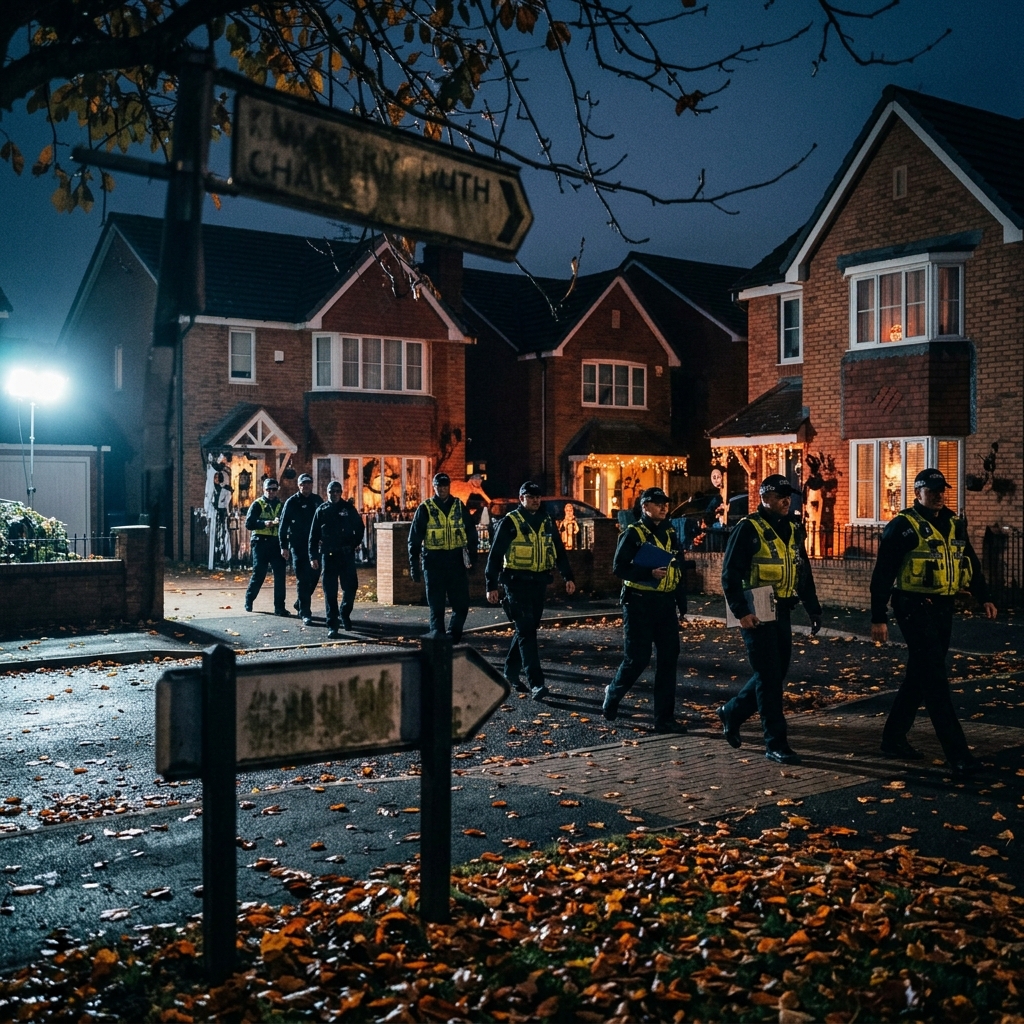
When a rule is unclear, the safest course is to ask the supervising officer or review the written conditions in advance. Informal assumptions can create serious problems, especially when Halloween restrictions are enforced during evening hours and officers may be making compliance checks.
Does the Law Treat Everyone the Same?
No. The law does not treat all registrants the same. Restrictions may vary based on offense type, risk level, supervision status, and whether the offense involved a child. Some policies apply only to people whose underlying offense involved minors. Others apply to all registered offenders or all people under active supervision for a sex offense. A few states also distinguish between people on community supervision and those who have completed all supervision obligations.
That distinction is important because registration alone does not always mean a person is prohibited from every holiday-related activity. A person no longer under supervision may still have registry obligations, but the state may not have authority to impose the same curfew or home confinement rules unless a statute specifically says so.
Practical Compliance Tips
- Review all supervision conditions well before Halloween evening.
- Do not assume neighborhood customs override legal restrictions.
- Avoid attending events where children are expected unless the rules clearly allow it.
- Keep written proof of any exception, work obligation, or emergency travel need.
- When in doubt, contact the supervising agency before participating in any holiday activity.
Clear communication can prevent avoidable violations. A short phone call or written confirmation can be far less costly than a supervision hearing or criminal charge.
Frequently Asked Questions
Are Halloween restrictions only for people on probation or parole?
Not always. Some states apply Halloween restrictions directly to all registrants, while others use the rules only for people under active supervision. The exact answer depends on state law and the person’s legal status.
Can a registrant hand out candy at home?
In some states, no. In others, maybe. Laws and supervision conditions may ban candy distribution entirely, while more limited systems may allow it if no minors are contacted and no other restriction is triggered.
Can a person attend a trunk-or-treat event?
Often not if the event is treated as a recreational gathering where children are present. Some laws may classify these events as prohibited contact with minors or as attendance at a restricted child-centered activity.
Are these rules permanent?
No. Halloween restrictions usually apply only during a short time window, often on October 31 or surrounding hours. However, the broader supervision condition or registration requirement may continue long after the holiday ends.
What happens if someone ignores the rules?
Depending on the state, the person may face a new misdemeanor or felony charge, or a probation or parole violation that can lead to arrest or incarceration.
Why Legal Advice Matters
Because these laws are so state-specific, legal advice can be essential for anyone who is unsure how a Halloween rule applies to them. A defense lawyer or supervision attorney can review the statutory language, the terms of supervision, and any local enforcement practices. That review is especially important when a rule is vague, when a person has multiple legal obligations, or when the event at issue is not a classic trick-or-treat setting.
For families, neighbors, and registrants alike, the practical point is the same: Halloween restrictions are not uniform, and the details matter. A person should not guess at what the law allows when the possible consequences include arrest, revocation, or a new criminal charge.
References
- Halloween Regulations for Sex Offenders in Arkansas — Arkansas Department of Corrections. 2024-10-??. https://doc.arkansas.gov/stories/halloween-regulations-for-sex-offenders-in-arkansas/
- Halloween Curfew Announced for Sex Offenders on Probation and Parole — South Carolina Department of Probation, Parole and Pardon Services. 2024-10-??. https://ppp.sc.gov/news/halloween-curfew-announced-sex-offenders-probation-and-parole
- Revised Statutes of Missouri, RSMo Section 589.426 — Missouri Revisor of Statutes. 2026-07-09. https://revisor.mo.gov/main/OneSection.aspx?section=589.426
- Halloween and Sex Offenders — UNC School of Government. 2024-10-??. https://www.sog.unc.edu/blogs/nc-criminal-law/halloween-and-sex-offenders
- Sex Offenders on Lock-Down for Halloween — Georgia State Board of Pardons and Paroles. 2012-10-31. https://pap.georgia.gov/press-releases/2012-10-31/sex-offenders-lock-down-halloween
- Guidelines for Sex Offenders on Halloween in Wisconsin — Wisconsin Department of Corrections guidance as reproduced by Stangl Law. 2024-10-??. https://www.stangllaw.com/blog/guidelines-for-sex-offenders-on-halloween-in-wisconsin
Similar Articles








Read full bio of medha deb




