
Guns in the Sanctuary: Law, Faith, and Safety
How U.S. churches navigate gun laws, security planning, theology, and community expectations in an age of rising public violence.
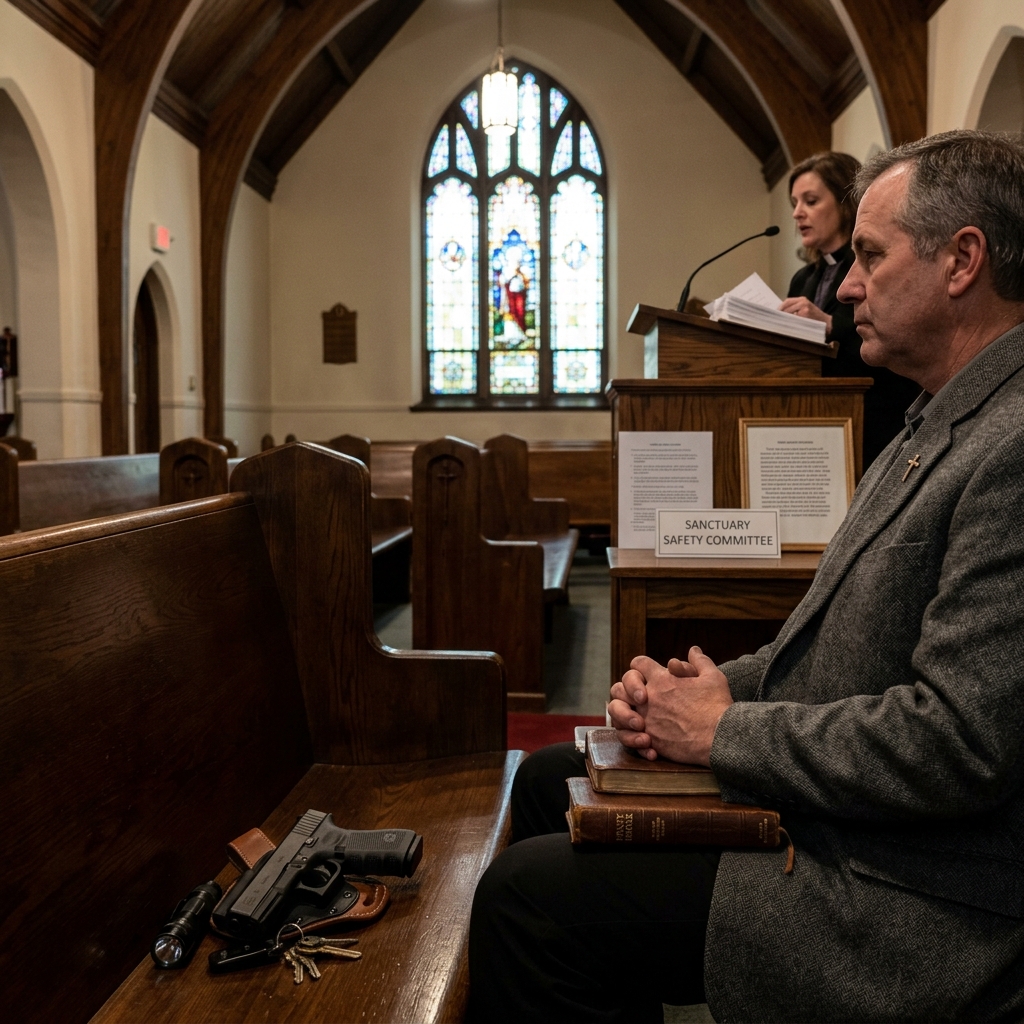
For many religious communities in the United States, the question of whether people may bring guns into a house of worship has shifted from a theoretical concern to a weekly reality. High-profile shootings in churches, synagogues, mosques, and temples, combined with deeply held beliefs about self-defense and gun rights, have forced congregations to decide how they will respond. The result is a complex intersection of state firearm laws, theology, security planning, and pastoral care.
This article explains how churches and other religious bodies are approaching firearms in their spaces, what the law generally says, and how faith leaders can think through policy options while honoring both safety and conscience.
Why Guns in Churches Have Become a Pressing Issue
Mass shootings in the United States have intensified public debate about gun policy, including in religious settings, and have shaped how congregants perceive risk even when actual statistical risk remains relatively low. Public tragedies at churches and other houses of worship have elevated questions such as:
- Should congregants be allowed or encouraged to carry weapons during services?
- Does a visible security presence support or undermine the feeling of sacred space?
- How do theological commitments about peace and nonviolence fit with a desire to protect vulnerable people?
At the same time, religious organizations have become increasingly vocal in broader gun-violence debates, calling for policy reforms and public-health responses.
Legal Baselines: Firearms on Religious Property
In the United States, there is no single national rule about guns in churches. Instead, state law and sometimes local ordinances determine whether firearms may be carried onto religious property, by whom, and under what conditions.
State Law Approaches to Guns in Churches
States handle firearms in religious spaces in markedly different ways:
- Explicitly restricted unless permitted by the congregation: Some states treat churches and other religious facilities like other sensitive locations (such as schools or day-care centers), banning firearms unless the institution gives explicit permission to specific individuals.
- Generally permitted but subject to property-owner control: Other states allow licensed individuals to carry firearms on church property unless the church posts signage or otherwise provides notice that weapons are prohibited.
- Special rules where churches share space: Where a church operates a school or child day-care center, firearm restrictions that apply to those facilities may also extend to church property during certain days or hours.
For example, guidance in Ohio notes that places of worship are among the locations where concealed carry is prohibited unless specific permission is granted by the worship site, emphasizing the role of congregational policy. In Texas, state-level guidance explains that license holders may carry on religious property unless the church posts notice under applicable trespass and handgun laws, effectively shifting the choice to the property owner.
Private Property Rights and Religious Freedom
Regardless of the specific statutory scheme, most churches operate as private property. That means leadership can usually:
- Set internal rules about whether firearms are allowed or prohibited on the premises.
- Decide how to communicate those rules (signage, bylaws, membership materials, or verbal announcements).
- Designate certain individuals—often law-enforcement officers or trained security personnel—to carry weapons even if the general rule is no firearms.
In some cases, religious institutions also invoke their religious-freedom commitments when they argue for specific positions on gun policy, both internally and in public advocacy.
Theological and Ethical Questions for Faith Communities
Legal permission is only one piece of the puzzle. Many congregations ask whether firearms are compatible with what they understand their sacred space to represent. Religious bodies have taken diverse positions on this question:
- Peace traditions: Denominations rooted in historically pacifist traditions often emphasize nonviolence and may discourage or prohibit weapons on church grounds, seeing them as inconsistent with worship and reconciliation.
- Security and stewardship: Other communities frame security planning, including trained armed response, as a form of stewardship and protection of vulnerable congregants, particularly children, elders, and visitors.
- Public witness: Some national religious organizations argue that the presence or absence of guns in worship spaces sends a broader message about how followers respond to fear, risk, and community violence.
National-level statements from several major denominations explicitly link gun violence with the religious duty to protect human life and advocate for policy reforms to reduce harm. Other groups highlight the role of faith communities in public education, trauma recovery, and coalition-building around gun-violence prevention.
Common Policy Models Churches Consider
When leadership teams sit down to draft a policy, they often choose among a small set of models, sometimes combining elements of more than one.
| Policy Model | Core Idea | Advantages | Challenges |
|---|---|---|---|
| Total prohibition | Ban firearms and other weapons on all church property, with narrow exceptions. | Clear rule; aligns with nonviolence teachings; easier community messaging. | May concern congregants who see personal carry as essential to self-defense. |
| Permission by exemption | Prohibit guns generally, but allow specific vetted individuals to carry. | Maintains a non-armed culture while providing some armed security capacity. | Requires screening, documentation, and ongoing oversight. |
| Professional armed security | Hire off-duty law enforcement or licensed security firms for protection. | High level of training; clearer liability and insurance structures. | Costly; visible security may change the tone of worship. |
| In-house volunteer security | Train members of the congregation to form a safety team, possibly armed. | Builds on existing relationships; may be more affordable. | Requires substantial training, supervision, and legal review. |
Total or Near-Total Prohibition Policies
A number of congregations, especially those influenced by nonviolent theology, adopt policies stating that weapons are not allowed on church property. Sample policies from religious districts emphasize commitments to safety and explicitly state that the congregation does not endorse or require members to bring weapons to church.
Even in these settings, churches may write in limited exceptions, such as:
- On-duty law-enforcement officers acting within the scope of their responsibilities.
- Contracted security personnel with specific training and insurance coverage.
Permission-by-Exemption Approaches
Some churches allow individuals to request permission to carry weapons by following a formal internal process. A typical approach includes:
- Submitting a written request explaining why an exemption from the general prohibition is being sought.
- Providing proof of any required state-level concealed-carry license or similar qualification.
- Review by pastoral staff and governing elders or trustees, with a written decision retained in confidential church records.
In addition, many churches limit such exemptions to people with relevant experience, such as current or former law-enforcement officers, and reserve the right to revoke permissions at any time.
Professional Security and Volunteer Safety Teams
Where state law permits firearms in churches, some congregations decide to incorporate firearms into structured security programs. Risk-management guidance from church insurers and safety consultants often encourages leadership to prioritize professional or thoroughly trained teams over informal or uncoordinated armed carry.
Typical options include:
- Hiring off-duty law-enforcement officers: Often seen as the safest and most defensible option because officers bring formal training, ongoing certification, and familiarity with use-of-force laws.
- Contracting with licensed security firms: Provides access to trained personnel, liability coverage, and clear scopes of work.
- Developing an in-house team: When congregations form their own teams, best practices call for recurring training by qualified professionals, written role definitions, scenario planning, and coordination with local law enforcement.
Practical Steps for Drafting a Church Firearm Policy
Each congregation’s context is different, but several practical steps can help leadership develop a thoughtful and legally informed approach.
1. Review Applicable Law and Insurance Requirements
Before setting policy, churches should:
- Identify state statutes and local ordinances that apply to religious property and, if relevant, church-operated schools or day-care programs.
- Clarify whether the church may restrict weapons through posted signage, written notices, or membership conditions.
- Consult insurance policies and risk-management resources, which often address firearms, security staffing, and liability exposure for violent incidents.
2. Clarify Theological and Pastoral Values
Legal possibilities still leave room for values-based choices. Leadership may wish to discern:
- How the presence of weapons aligns or conflicts with the congregation’s understanding of worship, trust, and the role of fear.
- How the church’s public stance on gun violence, if any, relates to on-site practices.
- The pastoral impact on survivors of violence, children, and visitors who may react strongly to seeing firearms in a sacred space.
3. Engage the Congregation in Communication and Education
Once leadership has a draft policy, careful communication can help avoid misunderstanding and conflict. Useful tools include:
- Publicly sharing the basic policy in accessible language on the church website, bulletins, and welcome materials.
- Holding listening sessions or forums to hear concerns and explain the rationale for the policy.
- Clarifying how the church will respond if someone violates the policy, including respectful and safety-centered steps for de-escalation.
4. Integrate Firearm Policy into a Wider Safety Plan
Gun policies work best when they are part of a broader emergency and safety strategy. Churches often:
- Develop detailed plans for medical emergencies, fires, severe weather, and disruptive behavior.
- Coordinate with local law enforcement and emergency services for training and response drills.
- Address non-firearm safety issues such as lighting, access control, child-protection procedures, and mental-health crisis response.
Pastoral Care, Trauma, and Community Impact
Decisions about weapons at church are not only legal and logistical; they are deeply emotional. Many people in a congregation may have personal experiences with gun violence, either as survivors, family members, or first responders. Others may feel that carrying a firearm is tied to family history, cultural identity, or personal safety.
Religious organizations that engage in gun-violence prevention work often emphasize the importance of trauma-informed ministry. This may include:
- Providing space for lament and grief in worship after public or local shootings.
- Offering pastoral counseling to those affected by violence or fearful of attending public gatherings.
- Collaborating with community coalitions or public-health initiatives that address the root causes and impacts of gun violence.
National church bodies have also developed educational resources, liturgies, and advocacy campaigns to help congregations connect their internal policies with broader efforts to reduce gun-related harm.
Frequently Asked Questions (FAQs)
1. Are guns automatically banned in all churches in the United States?
No. Whether guns are allowed in churches depends primarily on state law and the church’s own property rules. Some states list places of worship as locations where firearms are generally prohibited unless explicit permission is given, while others allow carry unless the property owner posts notice or otherwise restricts it.
2. Can church leadership prohibit firearms even if state law allows them?
In many states, churches function as private property and can set rules banning or limiting firearms on their premises, typically by posting clear signage or communicating restrictions through written policies and notices. However, the details of how to enforce those restrictions and what notice is required depend on state law, so legal advice is important.
3. Is it safer to have armed volunteers in the congregation?
There is no one-size-fits-all answer. Risk-management experts often recommend that, if a church wishes to have armed security, it should prioritize professionally trained law-enforcement officers or licensed security personnel and provide formal training and oversight for any in-house volunteers. Churches must weigh potential deterrent effects against risks of accidents, misuse, or escalation.
4. Do national religious organizations take positions on gun policy?
Yes. Many denominations have adopted resolutions calling for stronger gun-safety measures and highlighting the moral and spiritual dimensions of gun violence. These statements frequently encourage congregations to engage in education, advocacy, and pastoral support for affected communities.
5. How should a church begin creating a firearm policy?
Effective policy development usually involves several steps: reviewing applicable state and local law, consulting insurance and risk-management guidance, clarifying theological and pastoral values, drafting written rules, and communicating them clearly to the congregation. Many churches also seek legal counsel to ensure compliance and minimize liability.
References
- Religious Property – Gun Laws — Texas State Law Library. 2023-02-10. https://guides.sll.texas.gov/gun-laws/religious-property
- Guns in Churches — Mennonite Mutual Insurance Company. 2022-03-01. https://www.mennonitemutual.com/wp-content/uploads/2025/05/guns_in_churches_03-2022.pdf
- Congregational Firearm Policy (Sample) — Florida-Georgia District, Lutheran Church–Missouri Synod. 2021-11-01. https://flgadistrict.org/wp-content/uploads/2021/11/CONGREGATIONAL-FIREARM-POLICY.docx
- Episcopal Church Policies on Gun Safety and Gun Reform — The Episcopal Church Office of Government Relations. 2022-06-01. https://www.episcopalchurch.org/ogr/episcopal-church-policies-on-gun-safety-and-gun-reform/
- Religious Organizations Are Integral to the Fight Against Gun Violence — Center for American Progress. 2019-06-18. https://www.americanprogress.org/article/religious-organizations-are-integral-to-the-fight-against-gun-violence/
- Gun Violence Prevention & Response — Presbyterian Church (U.S.A.). 2023-01-15. https://www.pcusa.org/how-we-serve/justice-peace/gun-violence-prevention-response
- Examining Religious Influences on Gun Control Attitudes in the United States — Gunsalus, R.S., et al., Religions (MDPI). 2018-05-31. https://doi.org/10.3390/rel9060189
Similar Articles








Read full bio of Sneha Tete


