
Updating Contracts: The Essential Guide to Amendments
Master the art of modifying agreements legally and effectively to adapt to changing business landscapes without starting from scratch.
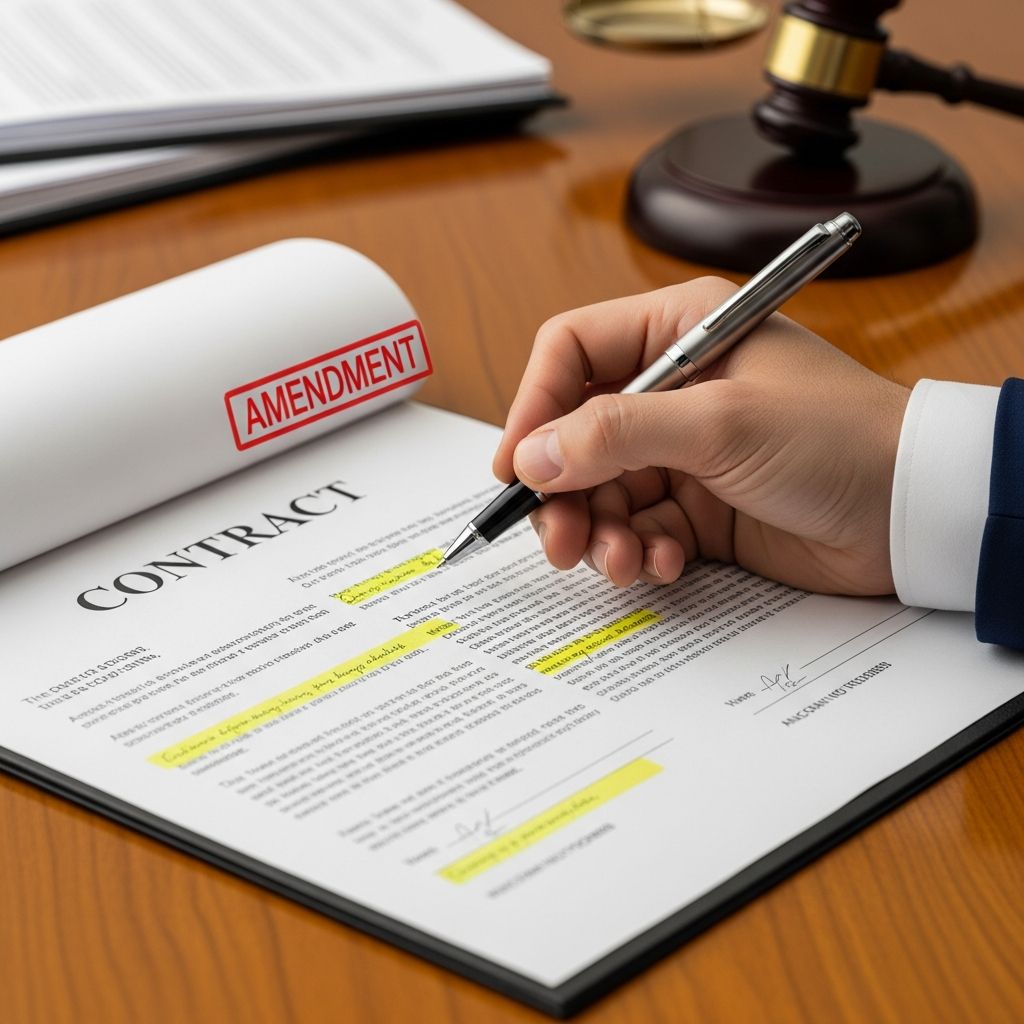
Contracts form the backbone of business relationships, but circumstances evolve, necessitating adjustments to original terms. A contract amendment serves as a formal tool to alter specific provisions while preserving the core agreement. This approach saves time and resources compared to drafting new documents. Understanding the mechanics of amendments ensures modifications remain legally sound and mutually beneficial.
Why Businesses Need to Modify Agreements
Market dynamics, regulatory shifts, or internal strategy changes often render initial contract terms outdated. For instance, supply chain disruptions might require revised delivery schedules, or business growth could demand expanded service scopes. Amendments address these without voiding the entire deal. Key triggers include:
- Changes in economic conditions affecting pricing or payment terms.
- Evolving project requirements due to technological advancements.
- Regulatory updates mandating compliance adjustments.
- Performance issues prompting clearer obligations or remedies.
Proactively managing these via amendments prevents breaches and fosters stronger partnerships.
Core Principles of Legally Binding Amendments
For an amendment to hold up in court, it must satisfy fundamental contract law elements. These include mutual consent, adequate consideration, and proper documentation. Under common law and statutes like the Uniform Commercial Code (UCC), amendments mirror original contract formation requirements.
| Element | Description | Why It Matters |
|---|---|---|
| Mutual Agreement | All parties must explicitly consent to changes. | Prevents unilateral impositions that courts deem invalid. |
| Consideration | Each side receives value, such as concessions or benefits. | Ensures the modification isn’t one-sided. |
| Writing Requirement | Most amendments must be documented, per Statute of Frauds for certain contracts. | Provides evidence against disputes. |
| Capacity and Legality | Signers have authority; changes aren’t illegal. | Avoids unenforceability. |
Failure in any area risks the amendment being struck down, potentially reverting to original terms or terminating the contract.
Step-by-Step Process for Creating Amendments
Systematic execution minimizes errors. Begin by pinpointing the exact need for alteration, supported by data or events justifying it.
- Examine the Original Document: Locate the amendment clause, which dictates procedures like writing mandates or approval paths. Note interconnected terms to avoid unintended ripples.
- Draft Precisely: Reference the original contract’s identifiers (date, parties). Specify altered sections verbatim, state unchanged terms persist, and set an effective date.
- Negotiate Collaboratively: Discuss via meetings or tracked edits. Record agreements to build a clear audit trail.
- Secure Approvals: Route through legal, finance, and executives per internal policies. Verify signatories’ authority.
- Execute Formally: Obtain signatures, possibly electronic or notarized. Distribute copies and integrate into records.
This structured method, drawn from enterprise practices, reduces litigation risks.
Unilateral Modifications: When One Party Can Act Alone
Though rare, some agreements permit single-party changes, especially in government or standardized deals with ‘change orders.’ Verify the clause authorizes it, provide detailed notice, and document thoroughly.
- Common in construction for scope adjustments.
- Requires proof of contractual permission and fairness.
- Disputes may arise, necessitating resolution mechanisms.
Absent such provisions, unilateral attempts fail, as contract law demands consensus.
Best Practices for Drafting Effective Amendments
Precision averts misunderstandings. Employ unambiguous language, numbering changes clearly, and using recitals to explain rationale.
- Be Specific: Quote exact original text being replaced, e.g., “Section 3.2 is deleted in full and replaced with…”.
- Preservation Clause: Affirm, “All other terms remain unchanged.”.
- Date Management: Distinguish amendment effective date from execution date.
- Review Rigorously: Involve lawyers and stakeholders for multi-angle checks.
- Tech Tools: Use platforms for collaborative editing and e-signatures to streamline.
These habits enhance enforceability and operational alignment.
Navigating Multi-Party Agreements
In deals with multiple signatories, every bound party must approve amendments. Partial signatures bind only consenting parties, risking fragmentation. Strategies include:
- Joinder forms for absent parties’ later consent.
- Clear notices to all, even non-affected ones.
- Escalation clauses for consensus building.
This upholds unity and prevents selective enforcement challenges.
Common Mistakes and How to Avoid Them
Pitfalls abound without diligence. Overlooking original clauses leads to invalid processes; vague wording invites interpretations favoring one side.
| Mistake | Consequence | Avoidance |
|---|---|---|
| Vague Descriptions | Disputes over intent | Use precise cross-references |
| No Consideration | Unenforceable mod | Include mutual benefits |
| Incomplete Signatures | Partial or no effect | Require all parties |
| Ignoring Impacts | Downstream breaches | Holistic reviews |
Addressing these proactively safeguards interests.
Legal and Regulatory Framework
Governing rules vary by jurisdiction. UCC Article 2 applies to goods sales, allowing modifications sans new consideration if in good faith. Statute of Frauds mandates writing for long-term or high-value deals. Common law emphasizes intent evidence. Federal Acquisition Regulation (FAR) structures government unilateral changes. Always align with forum law.
Alternatives to Traditional Amendments
Sometimes full rewrites suit better, termed ‘amend-and-restate.’ Handwritten marginal notes work for minor tweaks if permitted. Side letters clarify without altering core terms, though riskier. Choose based on change scale.
Frequently Asked Questions
Can a contract be amended orally?
Possibly, if not prohibited and provable, but risky due to evidence issues. Most include ‘no oral mods’ clauses favoring writing.
What if one party refuses to amend?
Changes can’t proceed unilaterally; negotiate or terminate per terms. Unapproved alterations are void.
Do amendments need notarization?
Not typically, unless specified or for real estate. E-signatures suffice under ESIGN Act.
How do amendments affect prior breaches?
They don’t waive unless stated; include release language if needed.
Is software helpful for amendments?
Yes, for tracking versions, approvals, and integrations with CLM systems.
Mastering amendments empowers adaptive business practices. Implement with care for enduring agreements.
References
- Contract Amendment: Comprehensive Guide to Processes — Sirion. 2023. https://www.sirion.ai/library/contract-management/contract-amendment/
- Contract Amendments 101 — Ironclad. 2023. https://ironcladapp.com/journal/contract-management/contract-amendments
- Amending Contracts — Charity Lawyer Blog. 2021-09-27. https://charitylawyerblog.com/2021/09/27/amending-contracts/
- Contract amendment basics: how to amend a contract — Juro. 2023. https://juro.com/learn/contract-amendment
- Contract Amendments and Renegotiations — Pence Law Firm, PC. 2023. https://www.pencelawok.com/blog/contract-amendments-and-renegotiations/
- Amendment Provisions in Contracts: What Every Business Owner Must Know — Michael Best. 2023. https://www.michaelbest.com/insights/amendment-provisions-in-contracts-what-every-business-owner-must-know-102k02m/
- Amending an Existing Contract — Nolo. 2023. https://www.nolo.com/legal-encyclopedia/amending-existing-contract-33348.html
Similar Articles








Read full bio of medha deb




