
Does An Eviction Hurt Your Credit? 5 Steps To Limit Damage Now
Learn how eviction, collections, and tenant screening can shape your credit and housing prospects.
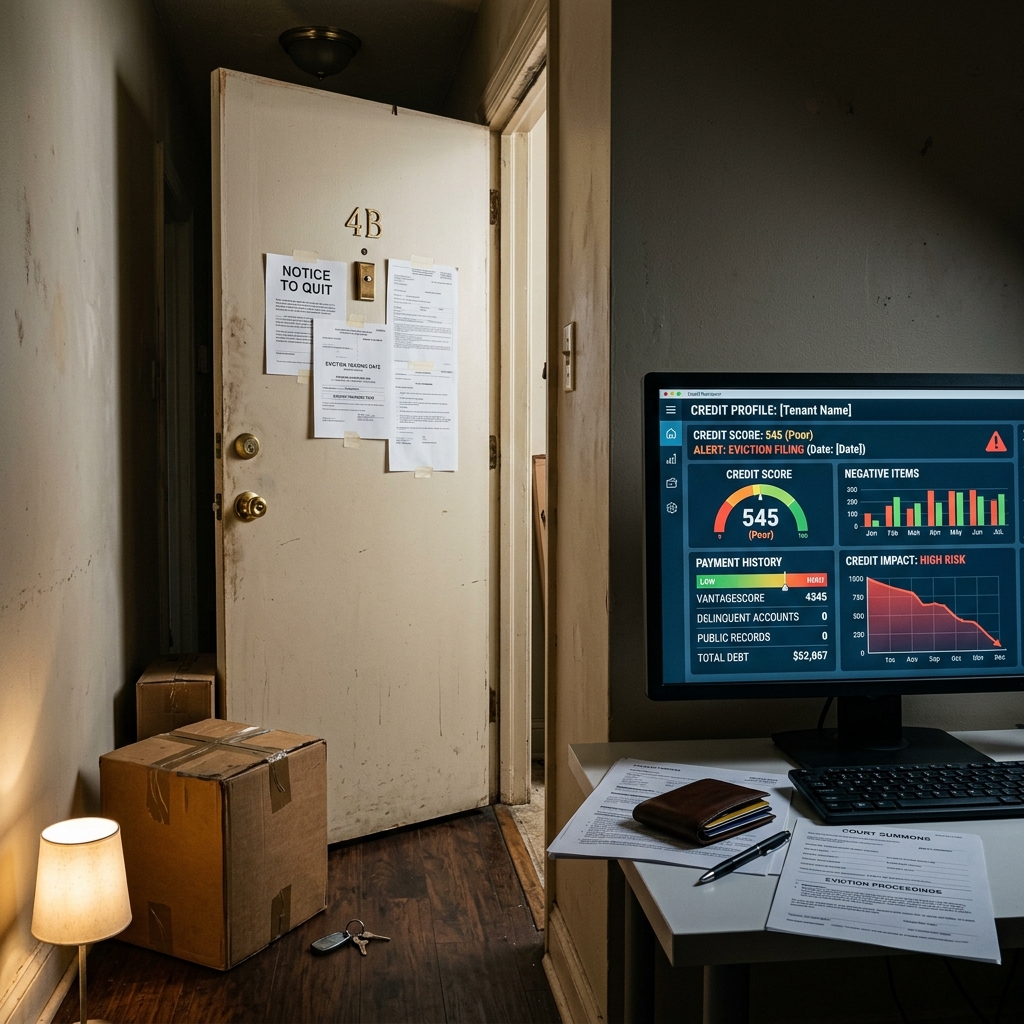
An eviction usually does not appear directly on a standard credit report, but the financial fallout from the process can still cause serious problems. Unpaid rent, court-related costs, and collections can all hurt your credit profile and make it harder to rent again.
What an eviction does and does not do
The eviction itself is a legal process used by a landlord to remove a tenant from a property. Credit reports are designed to track debt and repayment history, not every housing dispute. That means the eviction filing or judgment is generally separate from your consumer credit file.
However, people often use the word “eviction” to describe the entire chain of events around a failed tenancy. Once rent goes unpaid or fees are added to your account, those balances may be reported to a collection agency and later appear on your credit report.
| Issue | Usually on credit report? | Possible effect |
|---|---|---|
| Eviction filing | No | May appear in tenant screening or court records |
| Eviction judgment | Usually no | May be visible in public records |
| Unpaid rent sent to collections | Yes | Can lower credit scores |
| Court fees or move-out charges | Sometimes | Can become reported debt if unpaid |
Why the eviction itself is usually invisible to lenders
Traditional credit bureaus focus on financial obligations such as credit cards, loans, and other debts. They do not usually list a landlord’s eviction action as a separate item in the same way they list a missed loan payment.
That distinction matters. If you were removed from a property after a lease dispute but you owed no money and no collection was opened, the event may not affect your credit score at all. Still, other parts of your financial and housing record can make the situation visible to future landlords.
How unpaid rent turns an eviction into a credit problem
The most common way an eviction affects credit is through collections. If you owe back rent, cleaning charges, legal fees, or other lease-related balances, your landlord may send the debt to a collection agency. Once that happens, the debt can appear on your credit report and damage your score.
Collection accounts are treated as negative credit information because they show a debt went unpaid long enough to leave the original creditor’s hands. Even a relatively small balance can matter if you are trying to qualify for a new apartment, car loan, or credit card.
- Back rent is the most common balance that gets reported.
- Lease-breaking fees may also be sent to collections.
- Court costs and related charges can become reportable if they remain unpaid.
- Settled debts may still remain visible as negative items for a period of time.
Public records and tenant screening are separate from credit scoring
Even when an eviction does not appear on your credit report, it may still show up in other screening systems. Landlords often use tenant screening services and public court records to check rental history. These reports can reveal that a case was filed, whether a judgment was entered, and whether any debts remain unpaid.
This creates a practical problem: you may have a credit report that looks relatively clean, but a landlord reviewing your rental background could still see the eviction case. In other words, the event can affect your housing options even when it does not lower your credit score.
How long eviction-related problems can follow you
The time a negative item stays visible depends on the type of record involved. A collection account can remain on a credit report for years, while an eviction or related court record may appear in tenant screening reports for a similar period. The exact timeline can vary by reporting system and by whether the debt is paid, disputed, or updated.
For many renters, the most important issue is not just the existence of a record but how recent it looks. A fresh eviction case or new collection account tends to be more damaging than an old one with no further activity. Time alone can help, but only if no new negative information is added.
What landlords may care about beyond the credit score
Future landlords usually evaluate more than a credit score. They may want to know whether you have a history of late rent, lease violations, prior judgments, or unpaid housing debt. Some property managers treat prior eviction cases as a warning sign even if the applicant has an otherwise strong credit profile.
That means your goal is not only to protect your score. It is also to reduce the chance that a future rental application will uncover information that suggests you may be a higher-risk tenant.
- Payment history with past landlords
- Outstanding rental debt
- Prior court filings involving housing disputes
- Evidence of stable income and on-time payments since the eviction
Steps to limit the damage after an eviction
If you are already dealing with an eviction or its aftermath, quick action can reduce the long-term impact. The first priority is to identify what, if anything, has been reported. Then you can decide whether to pay, settle, dispute, or document the account.
- Check your credit reports from all three bureaus for collection accounts or inaccurate balances.
- Review tenant screening reports if a future landlord is likely to use them.
- Contact the landlord or collection agency to confirm the amount owed.
- Ask whether the debt can be paid in full, settled, or put on a payment plan.
- Keep written proof of every payment, agreement, or dispute.
Disputing errors matters more than many renters realize
Not every eviction-related entry is accurate. Debts may be reported in the wrong amount, duplicated across accounts, or attached to the wrong person. If you see an error, dispute it promptly with the credit bureau and with any company that furnished the information.
Good documentation can make a difference. Lease agreements, payment receipts, bank statements, and written communication with the landlord can all help establish that a debt was paid, overstated, or never valid in the first place.
How to rebuild credibility with future landlords
Recovering from an eviction is not only about fixing a credit file. It is also about rebuilding trust. Many landlords want to see a pattern of stability after a setback, especially if the prior problem involved unpaid rent.
You can improve your profile by showing that the issue was temporary and that your current finances are stronger. Consistent bill payments, a stable job, lower debt balances, and savings for move-in costs can all help.
- Pay every current account on time.
- Reduce credit card balances when possible.
- Save enough for deposits and moving expenses.
- Prepare a clear explanation for what happened and what changed.
- Gather references from employers or prior landlords when available.
Can paying the debt remove the eviction?
Paying a rental debt can help, but it does not automatically erase every trace of the problem. A paid collection is usually better than an unpaid one, yet the original negative event may still remain in records for some time. That said, payment often improves your chances with future landlords and may stop the debt from growing through added fees or collection activity.
In some situations, paying the balance can also support a request to resolve, seal, or correct a court record, depending on local rules. Those options vary widely by state and county, so renters usually need to check the specific court and housing rules that apply where the case was filed.
When an eviction may not hurt credit at all
There are cases where a housing dispute has little or no effect on credit. If a tenant leaves before a court judgment, owes no money, and has no collection account, the event may never show up on a credit report. A lease disagreement can still be stressful, but not every dispute becomes a credit event.
This is why it is important to separate the legal concept of eviction from the financial consequences that sometimes follow it. The first does not automatically damage credit; the second often can.
Frequently asked questions
Does an eviction show up on a credit report?
Usually no. The eviction action itself is generally not listed on a consumer credit report, but related unpaid debts may be reported if they are sent to collections.
Can a landlord tell other landlords about an eviction?
Yes, indirectly. Landlords can use tenant screening reports, public court records, and rental history checks to see prior eviction cases or unresolved housing debt.
Will paying off rent debt remove the damage?
Paying the debt helps, but it does not always remove the original negative record right away. It can, however, improve your housing prospects and stop the balance from getting worse.
What is the biggest credit risk after an eviction?
The biggest risk is usually a collection account created from unpaid rent or fees. That account is much more likely to affect your score than the eviction filing itself.
Can you rent again after an eviction?
Yes. Many renters do find new housing after an eviction, especially if they resolve outstanding debt, keep steady income, and explain the situation honestly to prospective landlords.
References
- What Happens to Your Credit When You Get Evicted — Credit.com. 2024-03-27. https://credit.com/blog/what-happens-to-your-credit-when-you-get-evicted
- Does Getting Evicted Hurt Your Credit? — InCharge Debt Solutions. 2024-02-08. https://www.incharge.org/housing/eviction/does-getting-evicted-hurt-your-credit/
- Impact of Eviction on Credit and Future Housing — Texas Law Help. 2024-01-16. https://texaslawhelp.org/article/impact-of-eviction-on-credit-and-future-housing
- How Long Does an Eviction Stay on Your Record? — Experian. 2024-02-20. https://www.experian.com/blogs/ask-experian/how-long-does-eviction-stay-on-report/
- Does an Eviction Affect Your Credit? — Rocket Lawyer. 2025-01-01. https://www.rocketlawyer.com/family-and-personal/personal-finance/legal-guide/does-an-eviction-affect-your-credit
Similar Articles








Read full bio of Sneha Tete




