
Essential Legal Documents Every Dad Should Have
A practical, plain-language guide to the must‑have legal documents dads need to protect their kids, partner, and financial legacy.
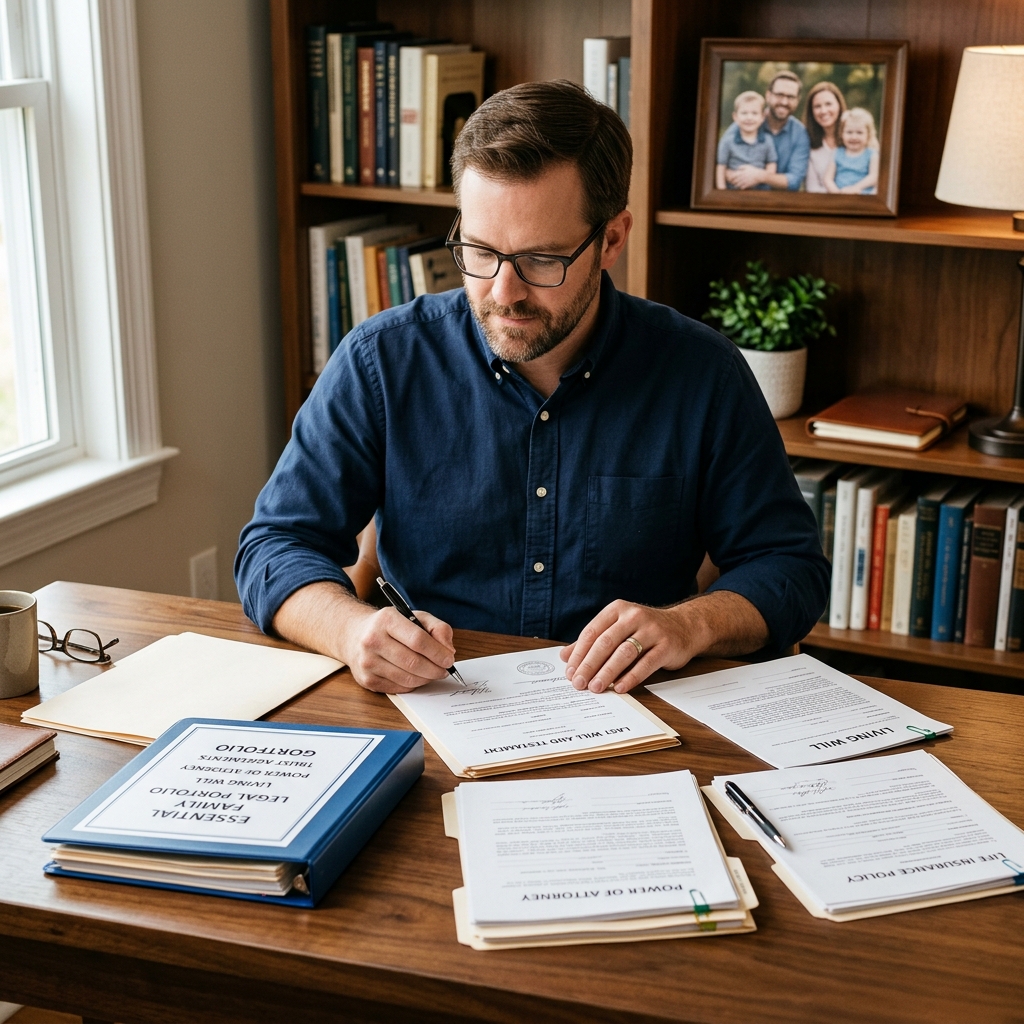
Becoming a dad changes what you worry about. It is no longer just your own future that matters, but whether your children and partner would be financially secure and emotionally supported if something unexpected happened to you. One of the most practical ways to protect them is to put key legal documents in place so that your wishes are clear and legally enforceable.
This guide explains, in everyday language, which documents most dads should consider, how they fit together, and what decisions you will need to make as you create or update them. It is not a substitute for a lawyer, but it will help you walk into a legal or financial planning meeting prepared and confident.
Why Dads Need a Basic Estate Plan
An estate plan is a set of legal documents that describe what happens to your assets if you die, and who can make decisions for you if you are seriously ill or injured. Even a simple plan can protect your family from confusion, conflict, and avoidable costs.
What an Estate Plan Can Do for Your Family
- Provide for your children by naming who manages money for them and who raises them if you die while they are young.
- Avoid default state rules that decide who inherits if you do not have a will or other planning documents.
- Reduce court involvement and delays by giving clear instructions about your property and decision-makers.
- Protect your partner or co-parent financially, especially if you are not married or have children from previous relationships.
- Ease stress for loved ones by eliminating guesswork at a time when they are already grieving or overwhelmed.
Key Documents Most Dads Should Consider
| Document | Main Purpose | Applies When |
|---|---|---|
| Last Will and Testament | Distributes assets and names guardians for minor children. | After death |
| Financial Power of Attorney | Authorizes someone to handle your money and property. | During incapacity |
| Health Care Power of Attorney | Designates who can make medical decisions for you. | During incapacity |
| Advance Health Care Directive / Living Will | States your preferences for life support and end-of-life care. | During serious illness |
| Trust (optional but powerful) | Manages and distributes assets with more control and privacy. | During life and after death |
Your Will: The Foundation of a Dad’s Plan
A will, formally called a last will and testament, is usually the cornerstone of an estate plan. It lets you decide who receives your property and who takes responsibility for your children.
What a Will Typically Covers
- Who receives your assets that do not pass by beneficiary designation (like some bank accounts or life insurance).
- Who serves as the executor (sometimes called a personal representative) to manage your estate and follow your instructions.
- Who becomes the guardian of your minor children if the other parent cannot care for them.
- Whether assets for children are held in a simple trust or custodial account until they reach a certain age.
- Specific gifts you want to make to individuals or charities.
Choosing Guardians for Your Children
For dads of young kids, deciding who would raise them if you are gone is often the most emotionally difficult part of estate planning. But it is also one of the most important.
When evaluating potential guardians, consider:
- Values and parenting style: Do they approach discipline, education, and lifestyle in a way that feels compatible with yours?
- Emotional connection: Are your children already comfortable and bonded with them?
- Stability: Do they have a stable home life, job, and support system?
- Health and age: Will they likely be able to care for young children until adulthood?
- Location: Would your children need to move far away from friends, school, and extended family?
It is often wise to name both a primary guardian and at least one backup in case your first choice cannot serve.
Coordinating With the Child’s Other Parent
If you share parenting with someone else, that parent typically continues to have parental rights if you die. A guardian usually only steps in if the other parent is unable or unfit to care for the children. Even so, your will can express your preferences and provide clear guidance about who you would want if a guardian is needed, which can be helpful to a court and to your family.
Powers of Attorney: Who Makes Decisions If You Cannot
Many dads focus only on what happens after death, but it is equally important to plan for a situation where you are alive but unable to manage your own affairs due to illness or injury. That is where powers of attorney come in.
Financial Power of Attorney
A financial power of attorney authorizes a trusted person (called an agent or attorney‑in‑fact) to handle your money and property if you cannot.
Depending on your state’s law and how the document is written, your agent may be able to:
- Pay household bills and manage bank accounts.
- Handle insurance claims and benefits.
- File tax returns.
- Manage investments or a family business.
- Sell or refinance property, if needed.
You can usually choose whether the power of attorney is effective immediately or only if a doctor declares you incapacitated (sometimes called a “springing” power). Many parents prefer a durable power of attorney that remains in effect if they become incapacitated.
Health Care Power of Attorney
A health care power of attorney (also called a medical power of attorney or health care proxy) names someone to make medical decisions for you if you are unable to speak for yourself.
This person may be asked to:
- Approve or refuse medical treatments on your behalf.
- Choose doctors or hospitals.
- Access your medical records (as allowed by privacy laws).
- Participate in discussions with your care team about your prognosis and options.
Many dads choose their spouse or partner as primary health care agent and name at least one alternate in case that person is not available.
Advance Directives and Living Wills: Your Medical Wishes
An advance directive is a document where you explain your preferences for medical treatment, particularly at the end of life. A common form of advance directive is a living will.
What a Living Will Can Address
- Whether you want life‑sustaining treatments, such as mechanical ventilation, if you are unlikely to recover.
- Whether you want artificial nutrition and hydration in certain conditions.
- Your preferences about pain relief and comfort care, even if such care may shorten your life.
- Organ and tissue donation choices.
Documenting these wishes in advance can relieve your loved ones from having to guess what you would want in a crisis, and may reduce family conflict during emotionally charged situations.
Trusts: Added Protection and Control for Families
Not every dad needs a trust, but for many families a trust is a powerful tool. A trust is a legal arrangement in which a trustee holds and manages property for the benefit of one or more beneficiaries, according to rules you set.
When Dads Commonly Use Trusts
- Minor children: A trust can manage money for children until they reach responsible ages, instead of giving them everything at 18.
- Blended families: You can provide for a current spouse while ensuring that some assets ultimately pass to children from a prior relationship.
- Special needs planning: A properly drafted trust can supplement government benefits for a child or relative with a disability without disqualifying them from those benefits.
- Privacy and control: Some trusts can keep asset distribution private and allow more detailed instructions than a simple will.
Trusts can be created during your lifetime (often called living trusts or revocable trusts) or in your will (testamentary trusts). Because trust law is complex and varies by state, it is wise to work with an experienced estate planning attorney if you think a trust may be appropriate.
Beneficiary Designations and Naming Authorized Contacts
Some assets pass directly to a named beneficiary and do not follow the instructions in your will. These include many life insurance policies, retirement accounts (like 401(k)s and IRAs), and sometimes payable‑on‑death or transfer‑on‑death accounts.
Review and Update Beneficiaries
As a dad, you should periodically review your beneficiary forms to make sure they match your current wishes. Life changes that often require updates include:
- Birth or adoption of a child.
- Marriage, divorce, or remarriage.
- Death of a previously named beneficiary.
- Major financial changes, such as selling a business or receiving a large inheritance.
Failing to update these forms can result in ex‑partners or unintended relatives receiving assets instead of your children or current partner.
Authorized Contacts and Digital Access
In addition to formal legal documents, it is smart to identify people who can access practical information if something happens to you. Consider making a list of:
- Online account logins (stored securely, not in plain text).
- Key financial accounts and institutions.
- Insurance policies and policy numbers.
- Contacts for your employer, benefits administrator, and retirement plans.
Some financial institutions allow you to name an authorized contact who can be alerted if there are concerns about your wellbeing or unusual account activity. Check with your bank or investment company for their specific options.
Practical Steps to Get Your Documents in Place
It is easy to feel overwhelmed, but you do not need to finish everything in one day. Think of estate planning as a series of manageable steps that build a safety net for your family over time.
Step‑by‑Step Roadmap
- Make a list of your priorities. For many dads, the top concerns are guardians for children, providing income for the family, and making medical wishes clear.
- Gather information. Inventory major assets (home, accounts, retirement plans, insurance), debts, and existing documents such as old wills or beneficiary forms.
- Choose your decision‑makers. Decide who you trust to act as executor, guardians, trustees, and agents under powers of attorney.
- Consult qualified professionals. Consider meeting with an estate planning attorney and, if relevant, a financial planner. The U.S. Department of the Interior notes that beneficiaries should have some form of estate plan; professionals can ensure your plan follows state law.
- Sign documents properly. Follow your state’s rules for witnessing and notarization so your documents are valid.
- Store and share wisely. Keep originals in a safe but accessible place, and tell key people where to find them.
- Review regularly. Revisit your plan after major life events or every few years to keep it current.
Common Mistakes Dads Make—and How to Avoid Them
Even well‑intentioned dads can leave gaps in their planning. Here are some frequent pitfalls:
- Having no plan at all: If you die without a will (called dying intestate), state law decides who gets your property, and a court may choose a guardian for your children without your input.
- Relying only on a will: A will does not cover everything. It does not control many accounts with beneficiaries, and it does not authorize someone to act for you if you are incapacitated. You still need powers of attorney and health directives.
- Not updating after life changes: Outdated beneficiaries or guardians can undermine your intentions, especially after divorce, remarriage, or the birth of new children.
- Ignoring debts and taxes: Your estate may still owe debts and taxes after your death. A good plan considers how those obligations will be handled and how to keep more resources available for your family.
- Keeping loved ones in the dark: If no one knows your wishes or where documents are stored, they may not be able to use your plan effectively.
Frequently Asked Questions from Dads
Do I really need an estate plan if I am young and healthy?
Yes. Government guidance stresses that all beneficiaries should have some form of estate plan, because accidents and sudden illness can occur at any age. As a dad, you are responsible not only for your own future but also for your children’s security. Even a simple will, powers of attorney, and updated beneficiaries can make a meaningful difference.
Can I use online forms, or do I need a lawyer?
Many dads start with templates, but laws vary by state and personal situations can be complex. Large financial institutions and government agencies emphasize the importance of consulting an attorney to ensure documents are properly drafted and executed, especially for significant assets or complicated family structures. At minimum, consider having a professional review your documents.
How often should I review my documents?
Financial experts generally suggest reviewing your estate plan when major life events occur—such as marriage, divorce, birth or adoption of a child, or a major change in net worth—and at least every few years even if nothing dramatic has changed. This helps ensure guardians, agents, and beneficiaries still reflect your current wishes.
What is the difference between a will and a trust?
A will takes effect after you die and typically must go through the court‑supervised probate process. A trust, by contrast, can begin operating while you are alive and continue after your death, letting a trustee manage and distribute assets according to your instructions. Some trusts can help streamline or reduce probate and provide more privacy and control, but they require more upfront work and often professional guidance.
Where should I keep these documents?
Store originals in a safe but accessible location, such as a home safe, fire‑resistant box, or with your attorney. Make sure your executor, spouse or partner, and at least one other trusted person knows where the documents are and how to access them. Keeping copies in a separate secure location can add extra protection.
References
- Planning for the Future — U.S. Department of the Interior, Office of the Special Trustee for American Indians. 2023-04-12. https://www.doi.gov/ost/planning-future
- Do you need an estate plan? — Fidelity Investments. 2022-08-31. https://www.fidelity.com/viewpoints/personal-finance/do-you-need-an-estate-plan
- Estate Planning for Dads: Passing on More Than Just Assets — Herbert Law Office. 2021-06-01. https://www.herbertlawoffice.com/estate-planning-for-dads-passing-on-more-than-just-assets/
- Planning for Your Family — Offit Kurman / Seiter Law commentary on fathers and estate planning. 2020-06-15. https://seiterlawpllc.com/uncategorized/how-fathers-shape-estate-planning-for-the-family/
- Planning for Your Family’s Future: Estate Planning Basics — U.S. Consumer Financial Protection Bureau (CFPB). 2021-10-05. https://www.consumerfinance.gov/consumer-tools/retirement/before-you-claim/estate-planning/
Similar Articles








Read full bio of medha deb


