
Undefined Federal Gambling Device Registration: Annual Guide
Understand annual federal registration duties for gambling-device businesses and the information DOJ expects.
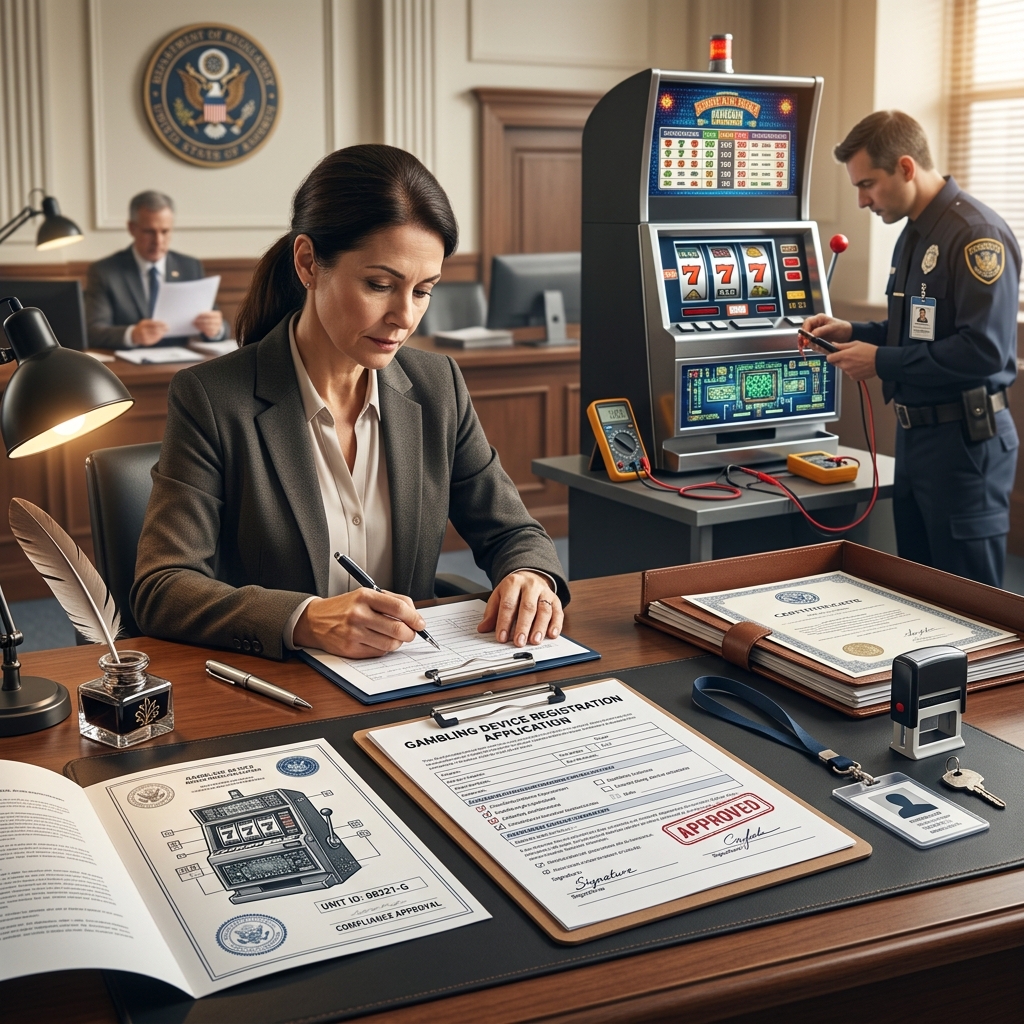
Federal registration for gambling-device businesses is not a licensing substitute; it is a separate compliance duty that applies before covered devices enter interstate or foreign commerce. The registration requirement is tied to annual reporting and applies to a broad range of activities, including manufacturing, repairing, buying, selling, leasing, reconditioning, using, or making gambling devices available to others.
For companies that work with gaming equipment, the practical question is not only whether a machine is legal to operate, but whether the business handling that machine is properly registered for the year in which it plans to do business. Understanding the scope of the rule, the timing of the filing, and the information DOJ expects can prevent avoidable delays and compliance gaps.
What the federal registration rule is designed to do
The Gambling Devices Act of 1962 created a federal framework for tracking businesses involved with gambling devices. Its registration system gives the Department of Justice visibility into the companies that are manufacturing, moving, or otherwise placing these devices into commerce. The rule is aimed at businesses, not casual owners or one-time transactions, and it applies before covered devices enter interstate or foreign commerce.
This means the registration duty is triggered by business activity. If an entity plans to engage in one of the covered activities during a calendar year, it must submit a written request for registration for that year before beginning the activity. The registration becomes effective on the date DOJ receives all required information.
Who generally must register
The statute reaches a wide range of commercial conduct involving gambling devices. Businesses that may fall within the rule include those that:
- manufacture gambling devices
- repair or recondition gambling devices
- buy or sell gambling devices
- lease gambling devices
- use gambling devices in business operations
- make gambling devices available for use by others
The key point is that the federal requirement attaches to the business role being played with respect to the device. A company does not avoid registration simply because it is not the original manufacturer. If the company participates in a covered activity, it may need to register each calendar year before it begins that work.
This annual filing is separate from any state or local gaming approval. A business can be subject to the federal rule even when it also needs permits, licenses, or approvals from state gaming authorities or local governments.
How the annual filing cycle works
Registration is requested in writing each calendar year. The filing is not a one-time event that carries forward indefinitely. Instead, the business must submit a fresh request for the year in which it intends to operate. DOJ guidance indicates that requests are made before engaging in business and that the registration is effective once all required information is received.
In practical terms, businesses should plan ahead. Because the filing is tied to the calendar year, waiting until operations are already underway can create risk. A company that knows it will begin handling gambling devices in the coming year should prepare the request in advance and make sure the submission is complete.
A useful compliance habit is to treat this as a recurring administrative obligation, similar to annual renewals in other regulated industries. The business should verify its filing status at the end of each year and assemble the next request before the new cycle begins.
What information the request should include
DOJ expects the registration request to identify both the business and the activities it plans to conduct. The required information includes several core details that allow the Department to identify the registrant and understand its role in the gambling-device market.
| Information area | Examples of what to provide |
|---|---|
| Registrant identity | Legal name of the business and any trade names used |
| Business locations | Address of each place of business |
| Records location | Street address in any state or U.S. possession where gambling-device records can be inspected |
| Ownership or management | Names and titles of officers or owners |
| Planned activities | The specific covered activities the business intends to carry out during the calendar year |
That information is designed to give DOJ enough detail to connect the registrant to its operations and to the physical or administrative locations where records are maintained. It also helps determine which business activities fall within the scope of the registration request.
Because the request must be complete, businesses should review the form carefully before submitting it. Missing or inconsistent information can delay processing and may affect when the registration becomes effective.
Why records and addresses matter
The requirement to list a street address where records may be viewed is not a minor technical detail. It reflects the government’s interest in being able to inspect or verify compliance-related information. Businesses involved in gambling devices should therefore maintain organized records and ensure the listed location is accurate and accessible.
This is especially important for companies with multiple facilities, remote offices, or distributed operations. If records are stored at one site while the business operates elsewhere, the registration should clearly identify the records location. That reduces confusion and helps ensure the filing matches the actual compliance structure of the business.
Timing and effectiveness of the registration
The registration is effective on the date DOJ receives all required information. That means the filing is not considered complete until the Department has everything it needs. Businesses should not assume that sending a partially completed request is enough to satisfy the rule.
For planning purposes, it is safer to regard the process as complete only after the submission has been accepted in full. If the business is preparing for a new line of work, it should build in time for review, corrections, and resubmission if necessary.
Because the requirement is annual, it is best practice to prepare early enough to avoid last-minute compliance problems. A company that waits until the first day of operations may create avoidable exposure if the request is not yet complete.
Common compliance mistakes to avoid
Although the federal registration process is not complex, errors often come from incomplete planning rather than difficult legal questions. Businesses can reduce risk by avoiding a few common mistakes:
- assuming state licensing alone satisfies the federal rule
- failing to file a new request for the current calendar year
- leaving out trade names used in the business
- listing incomplete or outdated business addresses
- omitting owner or officer information
- failing to identify every covered activity the business intends to perform
Another common issue is underestimating the importance of timing. Since the registration must be requested before engaging in business, a company should not treat the filing as something that can be handled later in the year after operations begin.
How businesses can organize an effective filing process
Companies that handle gaming equipment can make compliance easier by building a repeatable annual process. A practical filing workflow usually includes gathering ownership details, confirming business names, verifying all locations, and identifying the exact activities the company plans to conduct in the coming year.
It also helps to assign responsibility internally. One employee, compliance officer, or outside counsel can be tasked with preparing and tracking the request each year. That person should maintain copies of submitted forms and confirmation records so the company can quickly reference prior filings when preparing the next request.
Because the filing is tied to the calendar year, records from the prior year often provide a strong starting point. However, the company should still review every field rather than simply reusing old information. Changes in ownership, office locations, trade names, or business scope should be reflected in the new request.
When registration is not the same as licensing
One of the most important misunderstandings is assuming that DOJ registration functions like a gaming license. It does not. Registration under the Gambling Devices Act is a federal reporting and identification requirement. It does not replace state gaming licensing, local permits, zoning approval, or other regulatory permissions that may also be required.
That distinction matters because a business may satisfy one layer of compliance while still being out of step with another. A company should therefore think of gambling-device registration as one part of a broader regulatory checklist, not as the final step in getting ready to operate.
Questions businesses often ask
Companies new to this process often ask the same practical questions. The answers usually turn on the annual nature of the requirement and the scope of the covered activities.
For example, businesses sometimes ask whether the request can wait until after operations start. The federal rule requires the request before engaging in business, so the safer interpretation is to file first and operate later. Others ask whether the same filing can be reused forever. Because the request is required each calendar year, a new submission is expected for each year of intended activity.
Businesses also want to know whether the filing is limited to large manufacturers or national distributors. The statutory language is broader than that. It applies to a range of entities that handle gambling devices in commerce, including those that lease, repair, recondition, or make the devices available for use by others.
Practical checklist for a compliant annual submission
Before sending a request, a business can use a short checklist to confirm that the filing is ready:
- confirm the exact legal name of the registrant
- list every trade name used in the business
- verify all business addresses
- identify the records inspection address
- name all relevant owners or officers with titles
- describe each covered activity planned for the year
- review the form for completeness and consistency
- submit the request before operations begin
Using a checklist reduces the chance of missing information and helps the filing reflect the business as it actually operates. That is especially valuable for companies with multiple locations or changing business structures.
When to seek additional help
Businesses should consider legal or compliance support when their operations are complex, when ownership has changed, or when they are uncertain whether a particular activity falls within the statute. Companies that operate across state lines may also want support coordinating federal registration with state and local gaming obligations.
Even for straightforward filings, outside review can be useful when the company is new to gaming-device work or has not filed recently. A short compliance review can catch mistakes before they create delays.
Frequently asked questions
Is federal gambling-device registration required every year? Yes. The request is submitted each calendar year for the year in which the business intends to engage in covered activity.
Does registration replace a gaming license? No. It is a separate federal requirement and does not substitute for state or local licensing.
When does registration take effect? It becomes effective on the date DOJ receives all required information.
What kinds of businesses may need to file? Businesses that manufacture, repair, recondition, buy, sell, lease, use, or make gambling devices available for use by others may be covered.
Does the request need to include business names and locations? Yes. DOJ expects the registrant’s name, trade names, business addresses, records location, ownership or officer information, and the planned activities for the year.
References
- Criminal Division | Gambling Device Registration — U.S. Department of Justice. 2026-07-10. https://www.justice.gov/criminal/criminal-oeo/gambling-device-registration
- Frequently Asked Questions About Registering Under the Gambling Devices Act — U.S. Department of Justice. 2026-07-10. https://www.justice.gov/criminal/criminal-oeo/file/623891/dl?inline
- Gambling Devices Act of 1962 Information Sheet — Illinois Gaming Board. 2026-07-10. https://igb.illinois.gov/content/dam/soi/en/web/igb/documents/video/forms/gamblingdvc-1962.pdf
- Request for Registration under the Gambling Devices Act of 1962 — U.S. Department of Justice, Office of Information and Regulatory Affairs. 2026-07-10. https://www.reginfo.gov/public/do/DownloadDocument?objectID=12608501
Similar Articles








Read full bio of Sneha Tete


