
Free Speech and Police Dogs: Where the First Amendment Stops
Exploring whether barking at police dogs counts as protected expression or punishable conduct under U.S. law.
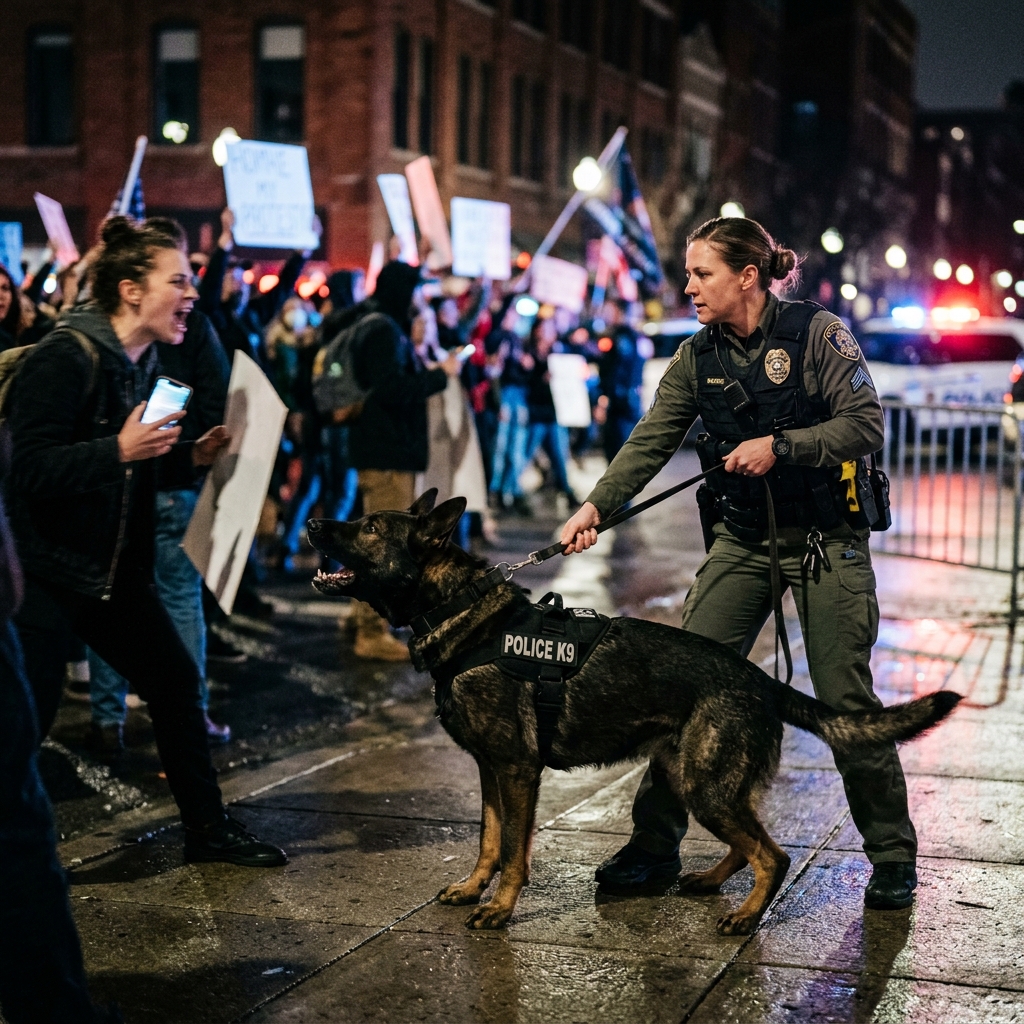
The image of someone barking at a police dog sounds almost comical, but it raises a serious constitutional question: is that behavior protected by the First Amendment, or can it be punished as a crime? This issue sits at the intersection of free expression, public order, and the specialized role of law enforcement animals.
This article uses real-world cases and First Amendment doctrine to unpack how courts think about unusual forms of expression like barking, teasing, or taunting police dogs. It explains when such conduct may be treated as protected speech, when it becomes unprotected fighting words or disorderly conduct, and how state laws governing police dogs affect the analysis.
Free Speech Basics: What the First Amendment Protects
The First Amendment prohibits government from abridging freedom of speech, but not every sound or gesture is treated the same way under U.S. constitutional law. Courts distinguish deliberately expressive conduct from purely disruptive or dangerous behavior.
- Protected expression includes political speech, criticism of public officials, symbolic acts (like flag burning), and everyday commentary.
- Content-based restrictions on speech are presumed unconstitutional and must satisfy strict scrutiny, meaning the government needs a compelling interest and a narrowly tailored law.
- Unprotected categories of speech include true threats, incitement to imminent lawless action, obscenity, and narrow forms of “fighting words” that are likely to provoke immediate violence.
Verbal criticism of police officers, even in harsh terms, is generally protected. However, speech combined with physical conduct—blocking officers, interfering with arrests, or provoking animals trained for public safety—can be punished when it crosses into non-expressive, obstructive behavior.
Is Barking Speech, Conduct, or Both?
To decide whether barking at a police dog is protected, courts first ask if the behavior is expressive in a constitutional sense. The Supreme Court has long held that non-verbal actions can qualify as speech when they are intended to convey a message and are reasonably understood as doing so.
Barking at a police dog could be interpreted in several ways:
- As mockery or ridicule of law enforcement using the dog.
- As provocation aimed at the animal, potentially affecting safety.
- As disruptive conduct in a public space with no meaningful message.
Courts often look at context—location, tone, duration, and surrounding actions—to determine whether a person is trying to engage in expressive conduct or simply disrupt police operations. In at least one Ohio case, an appellate court dismissed charges against a man who barked back at a police dog that barked at him first, signaling judicial discomfort with criminalizing this type of behavior as a speech offense.
Police Dogs as Law Enforcement Tools
Police dogs are not typical pets; they are trained working animals used for search, detection, tracking, and sometimes crowd control. Many states treat interference with police animals as a distinct offense and impose enhanced penalties when the animal is harmed or obstructed.
Common features of police dog statutes include:
- Criminalizing injury to a police dog or attempts to injure it.
- Prohibiting interference with a police dog’s duties, such as obstructing a search or distracting the animal during an operation.
- Elevated penalties compared to ordinary animal cruelty laws, reflecting law enforcement interests.
These laws are usually framed around conduct—hitting, poisoning, or physically obstructing a police dog—rather than mere speech. However, aggressive verbal or non-verbal behavior that makes the dog harder to control can be argued to be interference, especially in tense or dangerous situations.
Animal Cruelty and Free Expression
Animal-related laws and the First Amendment have collided before. In United States v. Stevens, the Supreme Court invalidated a federal law criminalizing depictions of animal cruelty, ruling that such depictions could not be categorically excluded from First Amendment protection. The Court emphasized that:
- New categories of unprotected speech cannot be created simply because the subject matter is disturbing.
- Laws regulating content are presumed invalid and must meet stringent constitutional tests.
While Stevens dealt with videos, the decision underscores that expression involving animals, including dogs, does not automatically lose constitutional protection. That principle is relevant when considering whether teasing or provoking a police dog is treated as expressive conduct or simply misconduct.
Fighting Words, Disorderly Conduct, and Police Encounters
Courts sometimes uphold speech-related convictions under doctrines like fighting words or disorderly conduct. Understanding these categories helps explain why some verbal confrontations with police are protected and others are not.
What Counts as Fighting Words?
In Chaplinsky v. New Hampshire, the Supreme Court recognized “fighting words” as a narrow class of unprotected expression. Legal scholars and courts typically define fighting words as:
- Direct, abusive language aimed at a specific person.
- Words that, by their very utterance, tend to provoke immediate violence or a breach of the peace.
- Expressions that do not advance ideas or contribute to public discourse.
Modern decisions have greatly limited this category. The Supreme Court has invalidated many fighting-words convictions and stated that the First Amendment protects substantial verbal criticism of police officers, including profanity. In practice, courts often require not just harsh words but accompanying conduct—such as threatening gestures or physical aggression—before upholding a conviction.
Disorderly Conduct and Public Order
Disorderly conduct statutes exist in all states and are often used when speech and behavior together create a public disturbance. Typical elements include:
- Engaging in violent, tumultuous, or threatening behavior.
- Making unreasonable noise or using abusive language in public.
- Creating a risk of harm or provoking a breach of the peace.
According to First Amendment advocacy groups, courts sometimes rely on fighting-words reasoning to uphold disorderly conduct convictions where the defendant engaged in harassing or aggressive conduct alongside speech. Barking at a police dog in an intimidating way, especially near bystanders or in a volatile environment, could be framed as disorderly conduct rather than a pure speech offense.
When Barking at a Police Dog Might Be Protected
Not every instance of barking or joking with a police dog will justify arrest or prosecution. Under First Amendment principles, protection is more likely when the behavior is clearly expressive, non-threatening, and not interfering with law enforcement duties.
Factors that may weigh toward protection include:
- Non-disruptive context: The incident occurs in a calm public setting with no ongoing police operation.
- Short duration: The barking is momentary, not sustained harassment.
- Lack of interference: The dog remains under control, and officers are not delayed or obstructed.
- Clear expressive intent: The person is clearly mocking or commenting on police use of dogs, rather than attempting to provoke a dangerous reaction.
In such situations, punishing the behavior may look more like penalizing criticism of law enforcement, which courts view with skepticism. Some appellate decisions have dismissed charges where the alleged offense was essentially non-violent expressive conduct directed toward a police dog.
When Barking Becomes Punishable Conduct
Free speech protections are not absolute. Barking at a police dog can cross the line into criminal conduct when it poses safety risks, interferes with operations, or reasonably appears threatening. Police and prosecutors may argue that even non-verbal sounds can be part of aggressive behavior.
Conditions that often support charges include:
- Active police operation: The dog is assisting with an arrest, search, or crowd control, and the barking distracts or agitates the animal.
- Escalating behavior: The person moves close to the dog, makes sudden gestures, or continues despite warnings.
- Public safety risk: There is a realistic possibility the dog or officers could react violently, endangering bystanders.
- Local statutes: State law explicitly prohibits teasing or interfering with police animals.
Police departments often justify limitations on speech in these contexts by emphasizing operational efficiency, discipline, and public safety. Courts allow restrictions when the government demonstrates that particular conduct causes disruption or creates a reasonable likelihood of interference with law enforcement functions.
Police Discretion, Warnings, and Trespass Actions
Even if a barking incident does not lead to a criminal conviction, police may respond through other lawful measures. For example, officers can issue warnings, ask a person to leave an area, or initiate trespass procedures if the conduct occurs on property where they have authority to control access.
Informal legal commentary suggests that behavior such as taunting a police dog may lead to consequences like trespass warnings or removal from events, even without a successful disorderly conduct charge. These actions implicate fewer constitutional concerns than direct punishment for speech, especially when the focus is on site access and maintaining order.
Speech Rights of Police Officers and Public Employees
The analysis changes when the speaker is not a private citizen but a police officer. Public employees, including law enforcement, have more limited free speech rights when acting in their official capacity. Courts apply a different test to determine whether their speech is protected.
| Speaker | Context | Protection Standard |
|---|---|---|
| Private citizen | Public speech or conduct (e.g., barking at a police dog) | Full First Amendment protection, subject to narrow unprotected categories (fighting words, threats, incitement). |
| Police officer | Speech made in the course of official duties | Limited protection; employer may regulate speech to preserve efficiency, discipline, and morale. |
| Police officer | Speech as a citizen on a matter of public concern | Potential protection if public concern is involved and disruption to the department is minimal. |
Guidance for law enforcement officers explains that they retain First Amendment rights but can be disciplined for speech made pursuant to their official duties when it undermines departmental interests. This framework does not directly apply to citizens barking at police dogs, but it shows how courts balance speech against operational concerns in law enforcement contexts.
Practical Takeaways for the Public
From a constitutional standpoint, the right to criticize police, including their use of dogs, is robust. However, turning that criticism into close-range, provocative behavior directed at a police animal can have legal and practical consequences.
Guidelines for Staying on the Right Side of the Law
- Maintain distance from police dogs and avoid actions that could be perceived as an attempt to provoke or distract them.
- Use words, not aggression: If you wish to express disagreement with police tactics, do so verbally, avoiding threatening gestures or behavior.
- Heed warnings: If officers instruct you to step back or stop interacting with a police dog, compliance reduces the risk of arrest or trespass action.
- Know local laws: Some states have specific provisions penalizing interference with police animals, which may broaden what counts as unlawful conduct.
In short, while courts are reluctant to criminalize mere speech, they are far more willing to uphold penalties when speech is intertwined with conduct that threatens public safety or disrupts police operations.
Frequently Asked Questions (FAQs)
Is barking at a police dog always illegal?
No. Whether it is illegal depends on context, intent, local laws, and the impact on police operations. If the behavior is brief, non-threatening, and does not interfere with the dog or officers, courts may treat it as protected or at least not criminally punishable.
Can I criticize police use of dogs without risking arrest?
Yes. The First Amendment protects a significant amount of verbal criticism and challenge directed at police officers, including strong language, so long as you do not cross into threats, incitement, or physically obstructive behavior.
What kinds of speech are not protected during police encounters?
Unprotected speech includes true threats, incitement to imminent violence, and narrow categories of fighting words that are likely to provoke immediate violence. Speech accompanied by aggressive conduct can also support charges like disorderly conduct.
Does teasing a police dog count as interfering with law enforcement?
It can. If teasing distracts the dog, impedes a search, or affects an ongoing operation, police may view it as interference and rely on statutes that protect law enforcement animals or general public-order offenses to justify arrest.
Do police officers have the same free speech rights as civilians?
Not in the workplace. When speaking as part of their official duties, police officers are subject to departmental rules and can be disciplined for speech that undermines efficiency, morale, or discipline. When speaking as private citizens on matters of public concern, they enjoy more protection, although employers can still impose some limits.
References
- Police Officer’s Right to Free Speech — International Conference of Police Support (ICOPS). 2020-01-01. https://icops.org/police-officers-right-to-free-speech/
- Is Barking at Police Dogs Protected Free Speech? — FindLaw Legal Archive. 2014-03-01. https://archive.findlaw.com/blog/is-barking-at-police-dogs-protected-free-speech/
- Taking a Bite Out of Speech Regulation: The Supreme Court, Depictions of Animal Cruelty, and the First Amendment — Mercer Law Review. 2010-01-01. https://digitalcommons.law.mercer.edu/cgi/viewcontent.cgi?article=1811&context=jour_mlr
- Fighting Words Overview — Foundation for Individual Rights and Expression (FIRE). 2023-01-01. https://www.fire.org/research-learn/fighting-words-overview
- The Law Enforcement Officer’s Right to Free Speech After the U.S. Supreme Court’s Decision in Garcetti v. Ceballos — National Fraternal Order of Police. 2012-01-01. https://fop.net/wp-content/uploads/2021/04/leo-right-to-free-speech-garcetti-v-ceballos.pdf
- First Amendment Protects Barking But Not Commercial Speech? — National Center for Public Policy Research. 2003-06-01. https://nationalcenter.org/ncppr/2003/06/01/legal-brief-first-amendment-protects-barking-but-not-commercial-speech-bingo-with-a-twist-doctors-flee-pernnsylvania/
Similar Articles








Read full bio of Sneha Tete




